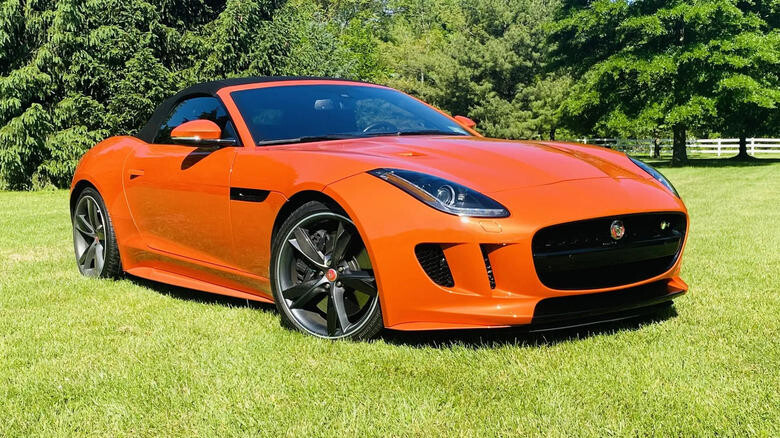
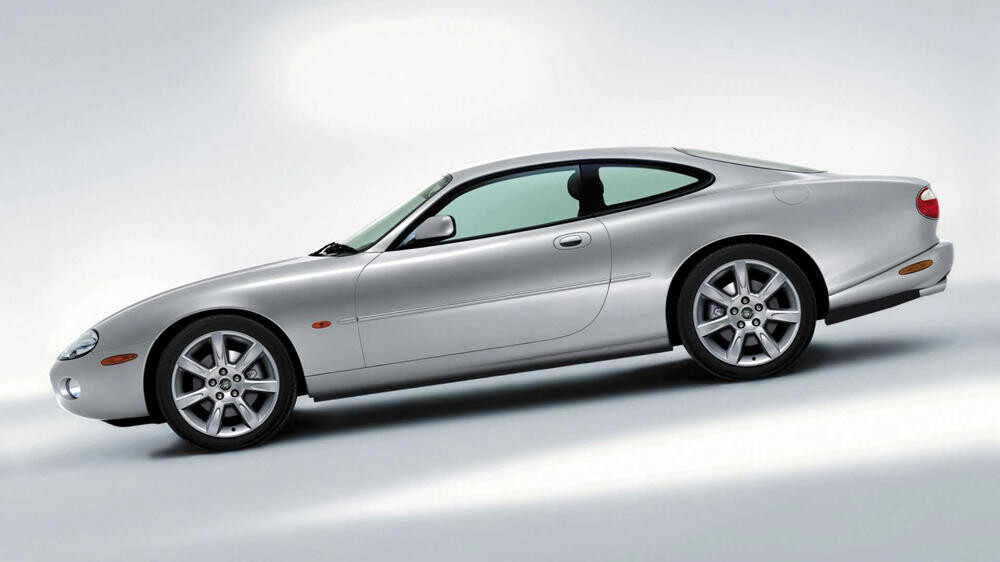
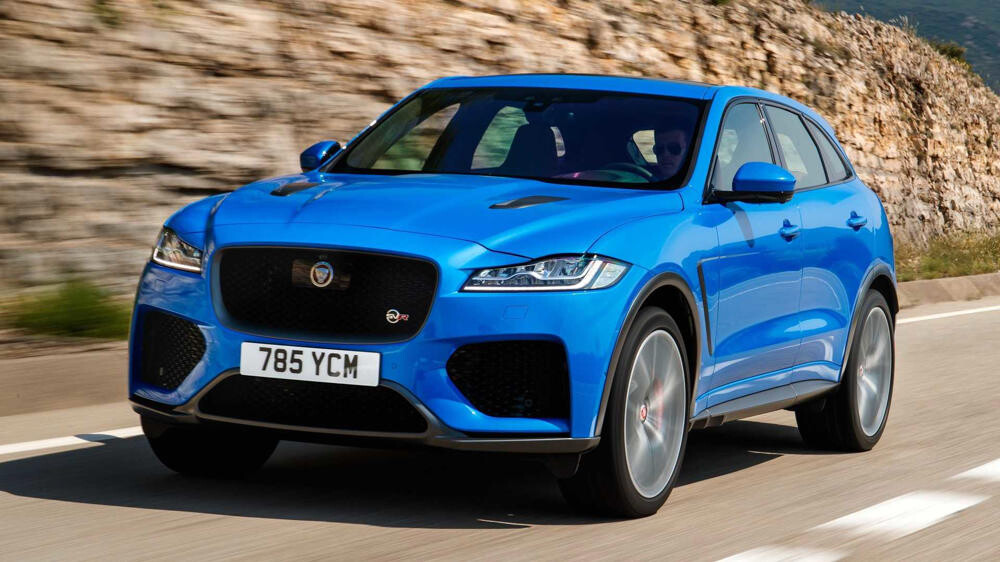
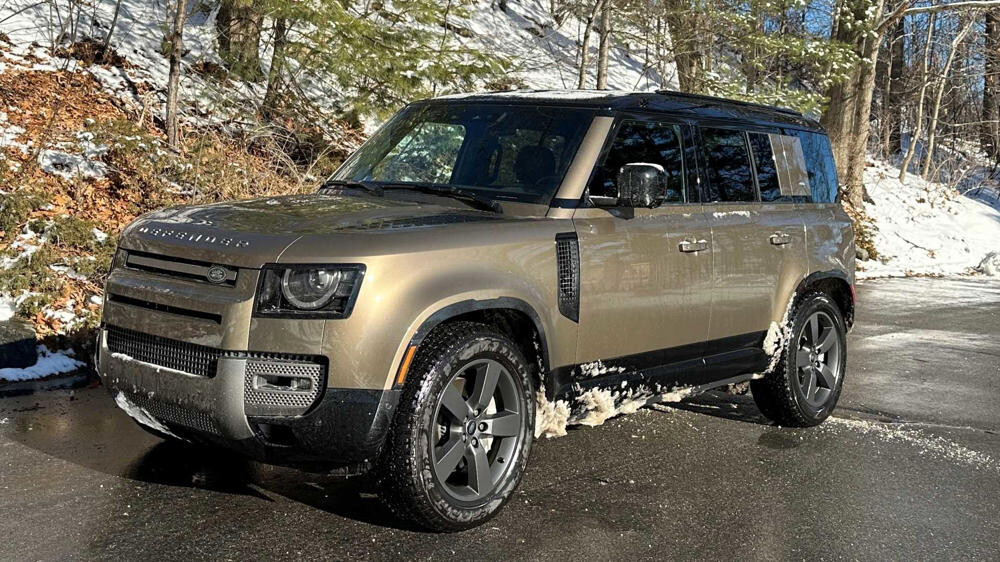
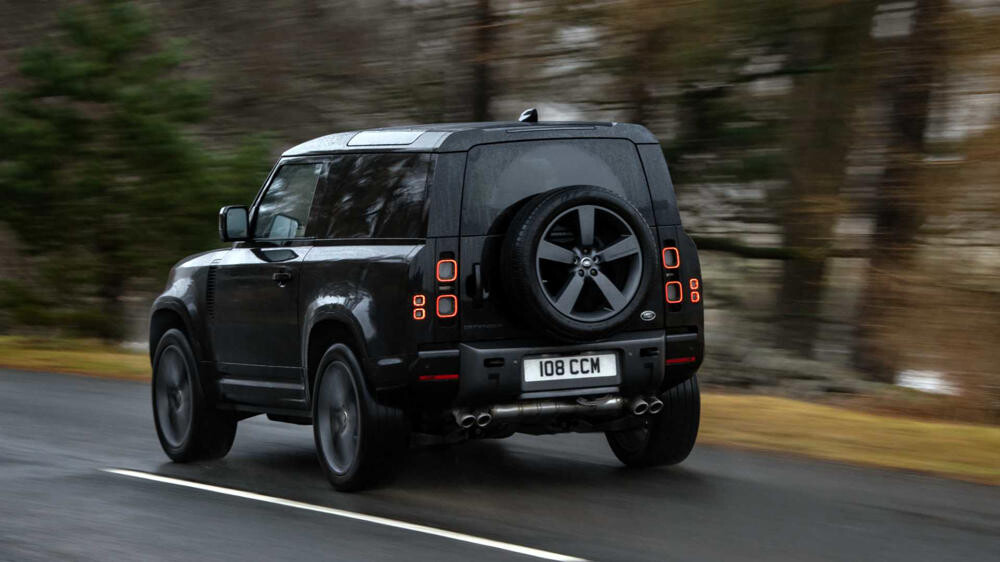
As if we haven't fallen down the Plinko board of life enough times this year,JaguarLand Roveris officially done with its in-house V8 engine. The very last of these V8s can be found in the 2026 Jaguar F-Pace SVR and certain Defender (90/110/130) models, both of which are still sitting on dealership lots as the last call bell rings out. Fitted with an Eaton supercharger, the last of the AJ family of V8 engines delivered strong power to all four corners across a range of applications. The Defender turned into quite the boisterous bus with the extra weight up front, and the F-Pace was only made better with the aural pleasures only a singing V8 can provide. Let’s review what we’ll miss the most about these powerhouses and the engine that breathed life into them. 30 Years Of Service Ends With The AJ133 2012 Jaguar XKR 5.0L Supercharged AJ-V8 Gen III V8 Engine The first AJ engine reported for duty in the mid-1990s with the job of downsizing the brand’s engine options. Jaguar was utilizing a newly revised inline-six alongside its infamous V12 across the lineup. The latter accumulated two distinct titles: the world’s longest-produced V12 and the world’s most unreliable V12. For 26 years, Jaguar put its 12-cylinder into everything from sedans to grand tourers to endurance racers. The refreshed AJ16 straight-six proved itself an unworthy successor to the robust AJ6 – the engine most commonly referred to as the most reliable engine Jaguar ever produced. The 1996 XK8 was the first to carry the brand-new engine, followed by the XJ8 in 1997. The aluminum-block 4.0-liter DOHC V8 boasted a square bore and stroke (86 millimeters each) and a compact design despite its wide 90-degree bank angle. It was packaged in both naturally aspirated and supercharged form, pumping out 290 horsepower and 370–375 horsepower respectively. Unfortunately, this engine had its fair share of issues as Jaguar was experimenting with Nikasil-coated cylinders, resulting in bore wear and even engine failure when compromised by fuels with a high concentration of sulfur. 2009 Land Rover LR3 off roading (2)-1 A refreshed version of the AJ V8 arrived by 2005, now offered in Land Rover vehicles starting with the LR3 (Discovery 3). These engines, which feature 4.2 and 4.4 liters of displacement depending on the model, are considered some of the most reliable powertrains used in Land Rover vehicles. Supercharged 4.2-liter V8s found their way into models like the Range Rover, Range Rover Sport for the first time, as well as every Jaguar by 2009. The second-generation AJ V8s aren't known for their power, something the third and final generation of V8s would address, unfortunately sacrificing reliability to do so. The 5.0-liter variant of the AJ V8, known as the AJ133, is the most powerful of all the V8 engines milled by JLR. Its nearly-square design of 92.5mm bore and 93mm stroke was taken right from the original, but it’s largely considered a clean-sheet design that merely drew inspiration from the original batch of engines. Variable valve timing was added to both inlet and exhaust camshafts, and power was rated from the factory at 385 horsepower naturally aspirated (510 with supercharger) in early models. These were engines used in the F-Type SVR and the mighty XE SV Project 8, among many more of our favorite models. The F-Pace And Defender Are Worthy Of This Last Round Put to work in two distinctly different vehicles for different purposes, the last two supercharged V8s to come from JLR – probably ever – are in SUVs more than capable of showing you why this engine matters. We’re certainly going to miss it. Both the Defender and the F-Pace showcase the engine's strengths as the dynamic power plant it will be remembered as. 2019-2026 F-Pace SVR The F-Pace’s chassis was tuned for more than just family hauling. Because it’s a Jaguar, it’s one of the most athletic SUVs still on the market, but not for much longer. There are still plenty of F-Paces with four and six-cylinder engines, both of which are elegant and capable on twisty back roads. Better yet is the supercharged V8 available in SVR models, which first appeared in 2019. Early models produced 550 horsepower and 503 lb-ft of torque, able to leap forward with every throttle blip and downshift of the ZF 8-speed automatic. We’ll miss the F-Pace’s growl, and it being the only V8-powered luxury compact crossover means the market will have one less vehicle in a category all by itself. No other SUV the size of the Jaguar packed a powertrain as brawny as this, which is why the F-Pace will always be akin to a V8-powered hot hatch thanks to its size and genre-bending dynamics. Later models kept a good thing going, producing upwards of 567 horses and 516 lb-ft of torque. Aside from the more aggressive looks these models offer, the updates also bring sharper handling and better ride quality. The cabin is quieter, and less of that V8 snarl makes it inside compared to older models, giving each generation of SVRs distinct qualities. 2020-2026 Defender X-Dynamic SE & V8 2024 Land Rover Defender 110 front quarter Starting with 2027 models, the only V8 offered in a Defender—and every other Land Rover with eight cylinders—comes from BMW in mild-hybrid form. The twin-turbocharged 4.4-liter V8 is standard kit on Octa models, not to mention available in both the Range Rover and Range Rover Sport. The swift powertrain suits the two Range Rovers well, but not so much the Defender. Likely an unpopular opinion, but the 5.0-liter supercharged V8 connected the Defender with its roots—all while making a pleasing baritone rasp. The outgoing V8 might have been a Wurlitzer first and a means of propulsion second, because what it lacked in performance and handling, it more than made up for in a glorious exhaust and engine note. The V8 adds much more weight over the front wheels, making the 110 and 130 models act larger than they really are. Four-cylinder models, which are also gone after 2026, provided more than enough power to move the Defender about and were pleasant, dare we say, better, through the corners. The fact that a Land Rover can feel light on its feet is shocking, though that’s nowhere to be found in V8 models. What is, however, are the V8 noises we’re going to miss most of all. So Long, Old-School V8s. You Will Be Missed The BMW-sourced V8s used in the Defender Octa, Range Rover, and Range Rover Sport are excellent. They’re swift, efficient, and quiet in the Range Rovers, and all but the third characteristic in the Octa. That is exactly why the supercharged 5.0s are the ones to get if you want a V8 in a Defender. The electric assist and hot-vee configuration of the turbocharged V8 found in the Octa is great for power available the second the throttle is mashed. But it does so with no V8 pomp and circumstance. A whoosh from the turbos and a banshee bellow from the exhaust are the accompanying noises to an otherwise unremarkable pull. Do the same in a supercharged Defender, and the experience is akin to tearing up the pavement between stoplights on Woodward Avenue in a Chevelle. Each tap of the gas is rewarded with all the right sounds – sounds befitting a Defender, no less. While this V8 didn’t provide any more useable power in a Defender (the 4.4-liter twin-turbo unit helped it win its class at Dakar), it’s a reminder that we, as humans, straddle the line of the animal and the intellectual. We like to go faster, but we also like the noises associated with a rapid increase in velocity. It’s why electric vehicles are unsettling to some, and why we love loud machines that sound like they can go a million miles an hour. We like speed, but we like the sounds even more. That’s the charm the Defender and all of Jaguar have just lost as the last of these engines have rolled out. We’ll always remember them, not for being the fastest machines, but for sounding like they were. Sources: Jaguar Land Rover, RoverParts.com, JLR Engine Specialists

 Liked by Leo Scott, Mason Fortin




















 Liked by Leo Scott, Mason Fortin