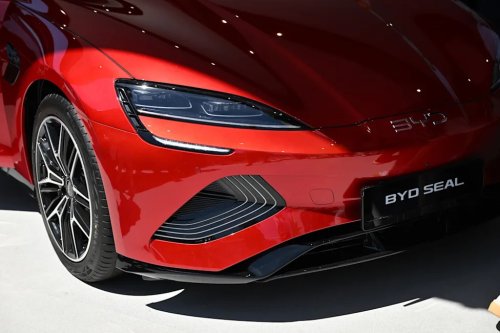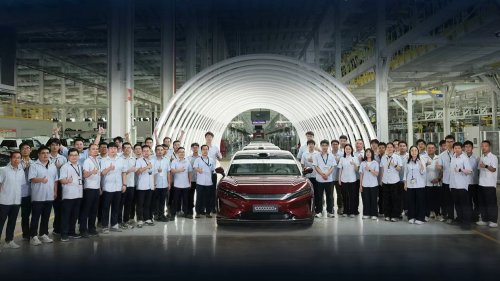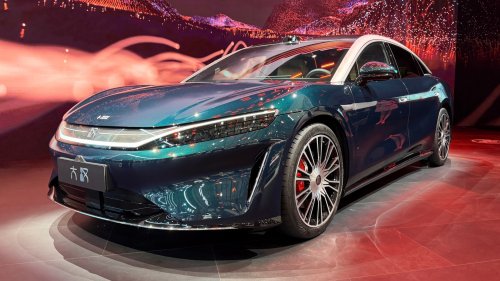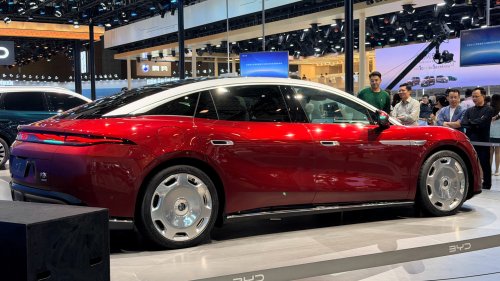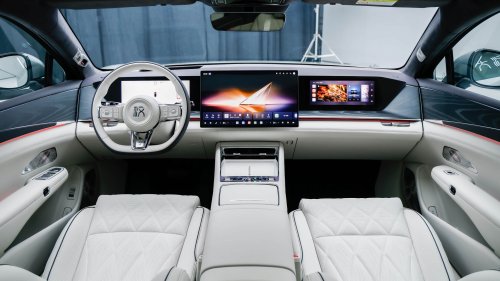




















The train that arrived a decade late may have been worth the wait. When Line 17 entered revenue service in São Paulo last March 31, it closed a long-troubled infrastructure chapter with a system that behaves differently from the metro lines the city is used to. Built with BYD SkyRail technology, the line combines automated operation, onboard energy storage, and a compact elevated footprint designed for constrained urban corridors. The project first came into the books in 2021. What years of civil-works delays obscured is now clear: this is not a conventional heavy-rail expansion. It is a medium-capacity system engineered to fit into a city that no longer has space for traditional rail geometry. The state government’s framing has been notably practical: complete a delayed link, connect dense districts to Congonhas Airport, and relieve pressure on chronically congested roads rather than introduce a showcase technology. “BYD SkyRail is a new technological achievement. Line 17 Gold will be a modern and convenient means of transport, connecting the second-largest airport in Brazil and improving mobility for tourism and daily travel in São Paulo,” João Doria, governor of São Paulo, said. A concrete beam, not a steel corridor The SkyRail straddles a single concrete guide beam roughly 800 mm wide. No tunnels, no wide rail corridors, and minimal land acquisition. That footprint is what allows Line 17 to connect the airport to the existing network in districts where conventional rail would struggle to fit. The geometry is the enabling factor. Curves down to about 45 meters and gradients approaching 10 percent allow the alignment to follow the city as built, rather than forcing large-scale redesign around the railway. In dense environments, that flexibility often determines whether a project moves forward at all. “This rollout marks not only the production of SkyRail trains but also progress toward a more sustainable future. We will work with local universities to establish an R&D center and bring innovation to São Paulo. We will continue working with local partners to electrify public transportation, with the goal of delivering high-performance electric vehicles to consumers in the near term,” Stella Li, executive vice president of BYD Company Limited and CEO of BYD Americas, stressed. The powertrain borrows from the EV playbook Each five-car trainset draws 750V DC from rails integrated into the guideway. That is standard for systems of this class. The additional layer is onboard lithium-iron-phosphate battery storage, the same chemistry used in vehicles such as the BYD Seal and BYD Shark. Its role is not propulsion under normal conditions but continuity under failure. In a full power interruption, trains retain enough stored energy to travel several kilometers, allowing them to reach the next station instead of stopping between spans. For passengers, that changes a worst-case scenario from evacuation to delay. Regenerative braking feeds energy back into the system during deceleration. Projected emissions reductions are in the tens of thousands of tonnes of CO₂ annually. Though, the larger impact will depend on how much road traffic the line ultimately displaces. The physics is straightforward, but the system-level benefit will only become clear with sustained ridership. Representing China’s strategic focus on fostering “new infrastructure,” BYD’s rail transit solutions are warmly received as it strikes up new partnerships, bringing Chinese technology to the world. In the future, BYD will continue to work hard with its leading new energy technology and high-quality rail transit offerings to help cities around the world build low-carbon transportation and achieve sustainable development. Level 4 autonomous operation Line 17 operates at Grade of Automation 4, meaning fully unattended train operation. Communication-based train control manages spacing using moving-block logic, allowing tighter headways than fixed-block systems. Monitoring extends beyond signaling into system health. Traction equipment, battery status, and tire conditions are tracked continuously, reflecting a shift toward software-managed operations rather than mechanically constrained ones. The system’s behavior is increasingly defined by control logic rather than fixed operating limits, which is where BYD’s “software-defined” framing has some grounding, even if it is not unique to this project. Line 17 is not designed to compete with high-capacity metro corridors. Its relevance is in deployment: a system that can be inserted into dense, already-built cities where heavy rail is impractical and bus systems are no longer sufficient. The approach is pragmatic. Elevate the line on a narrow beam, use electric traction with an onboard energy buffer, and rely on automated control to maintain frequency and reliability. That aligns closely with how São Paulo’s government has presented the project: not as a technological first, but as overdue infrastructure finally entering service. For transport authorities still dependent on diesel commuter lines, the São Paulo opening is less a claim about being first and more a demonstration of execution. A project that stalled for years is now operational, using a configuration that prioritizes fit, resilience, and continuity. Whether it scales beyond this corridor will determine its longer-term significance. Line 17 Skyrail before its maiden voyage. Photo from BYD.