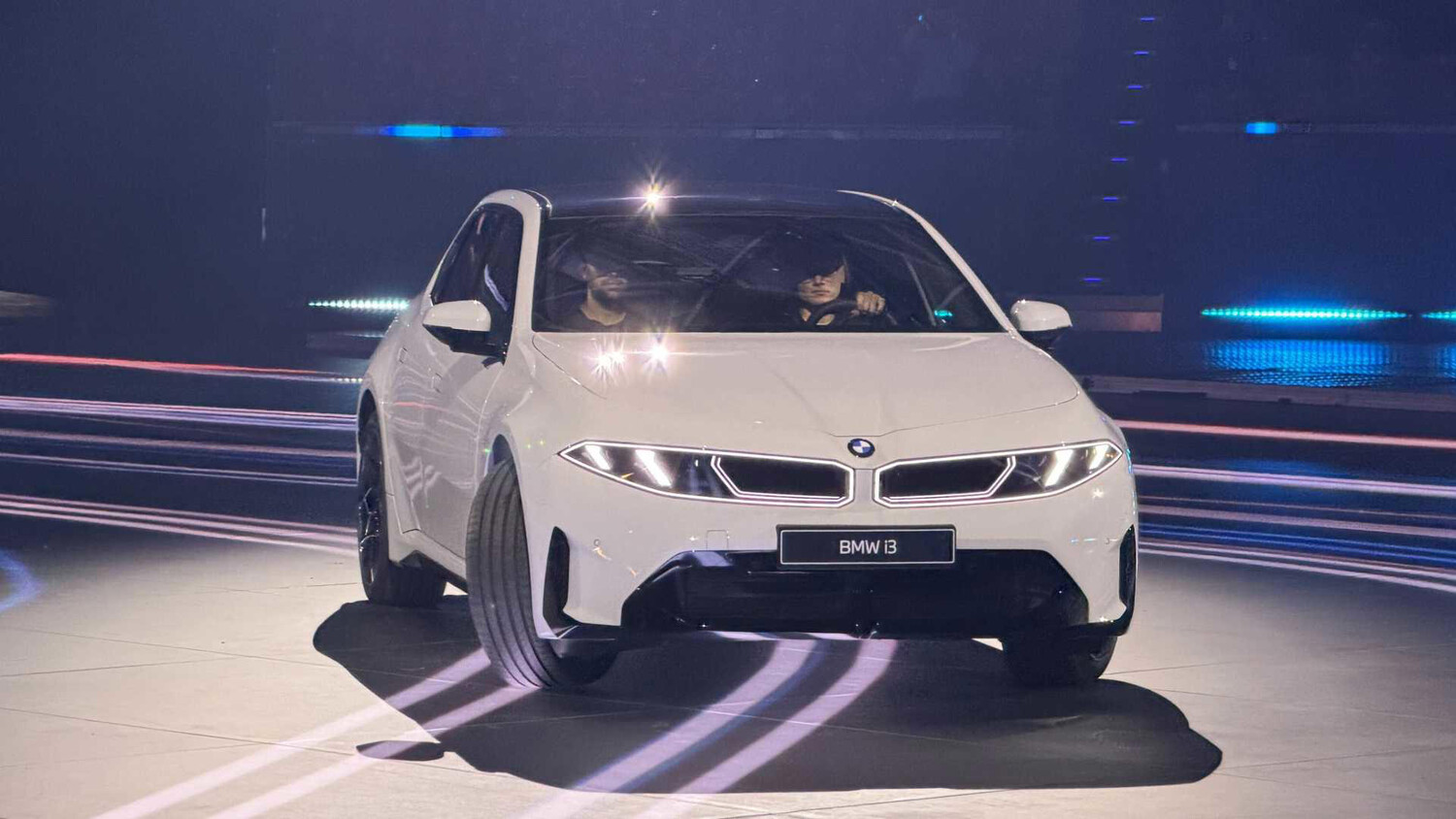
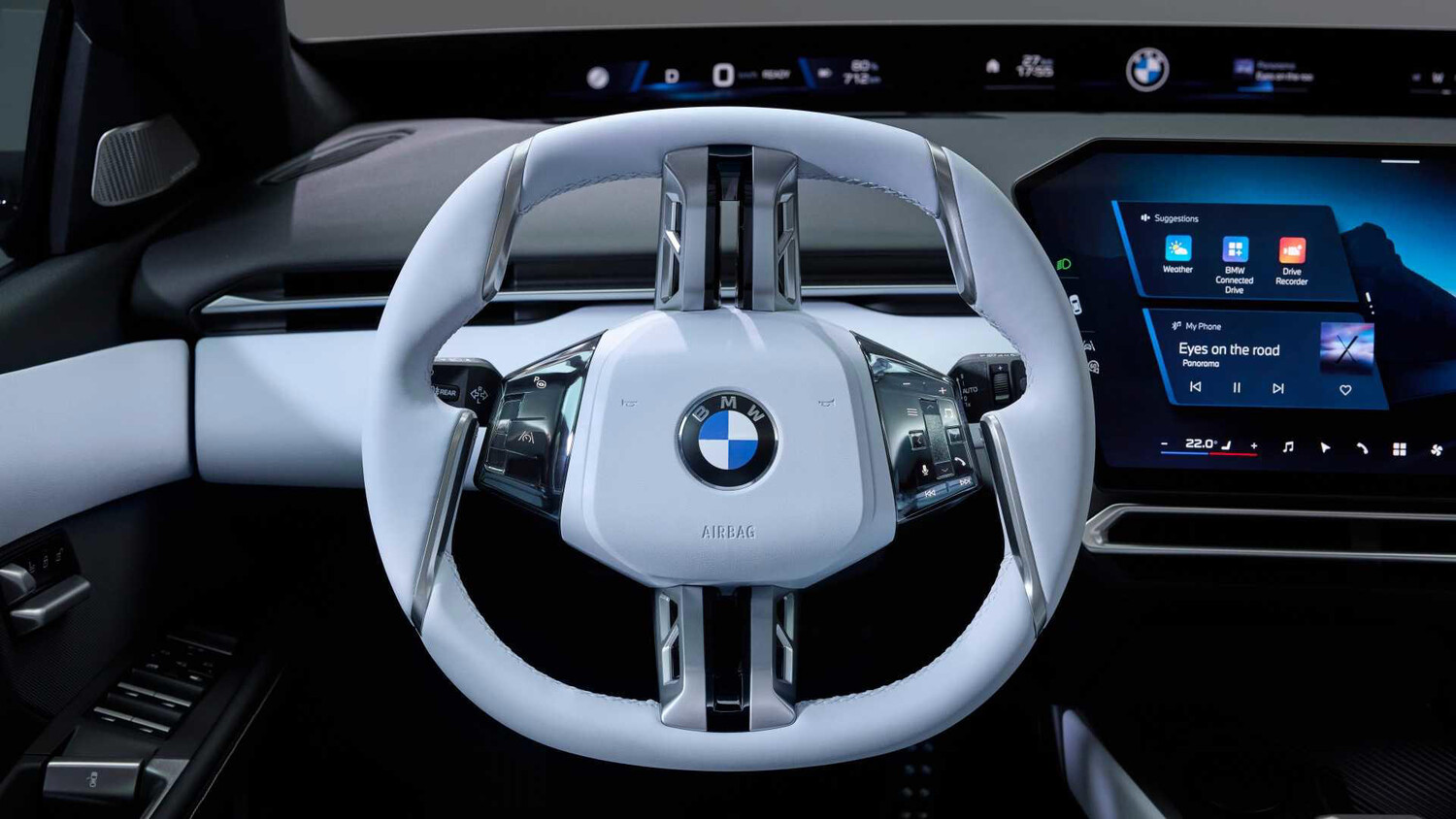
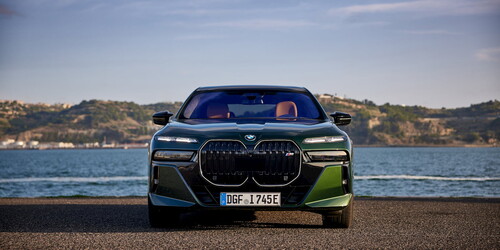
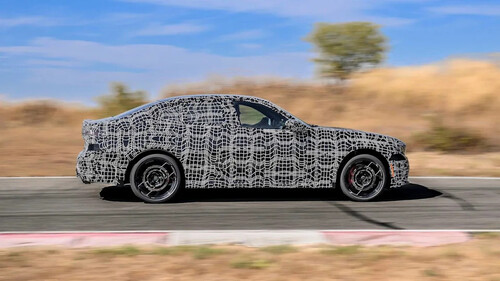
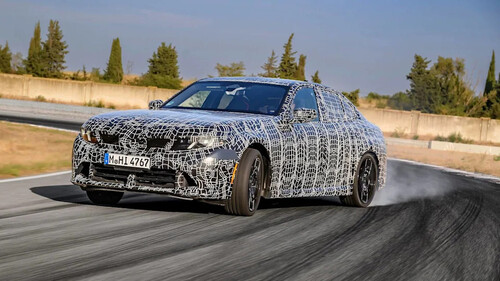
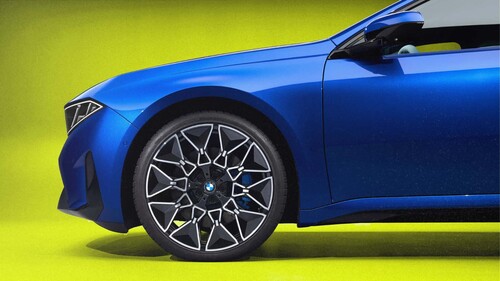
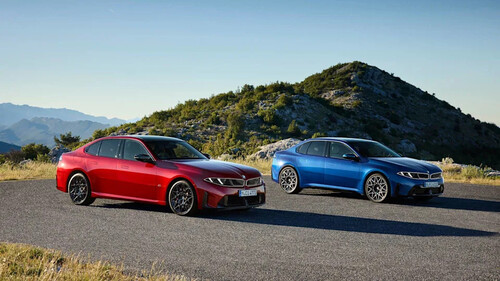
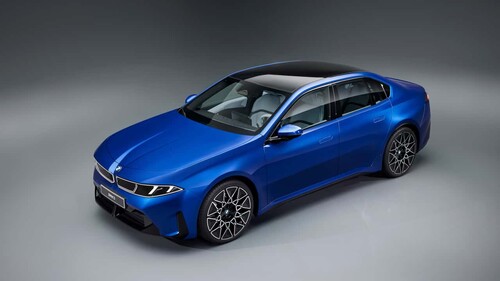
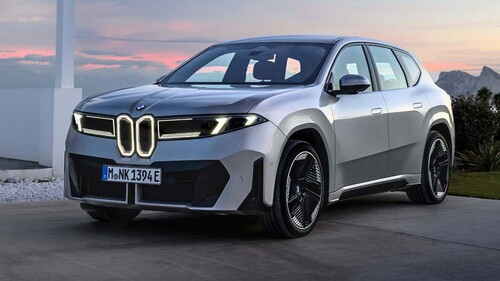
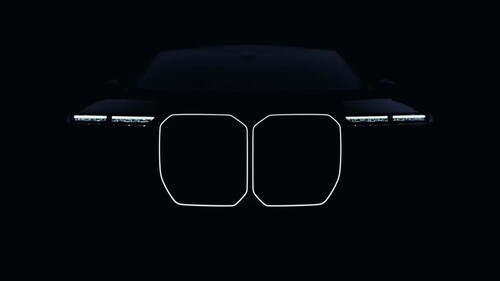
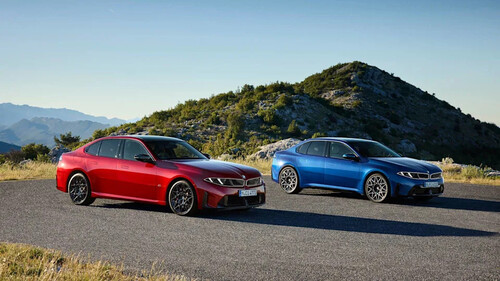
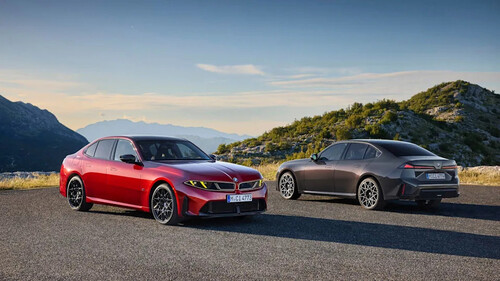
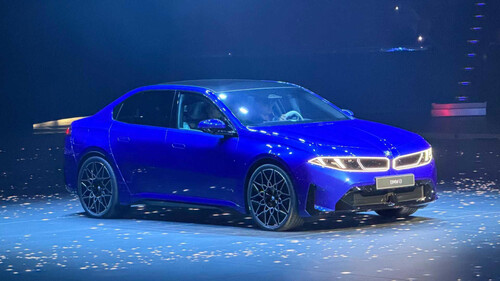
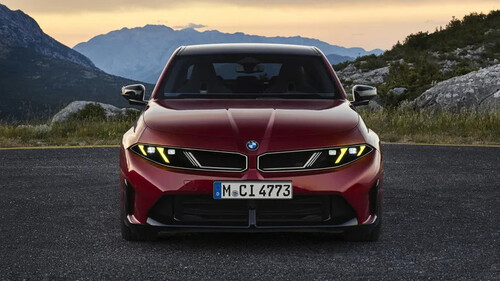
UPDATE: 2026/03/18 7:26 EST Live Imagery AddedThis article has been updated with new images live from the global reveal in Munich, Germany.Despite slowing worldwide interest in EVs, BMW is forging ahead with its latest product based on the all-electric Neue Klasse platform, and although it may borrow a name from one of the company's first battery-powered cars, that's where the similarities end. The 2027 BMW i3 is the automaker's take on a 3 Series EV, with a timeless design inspired by its first sedans of the 1960s and 1970s. But underneath that slightly retro styling is a thoroughly modern electric luxury sedan, with a dual-motor, 463-horsepower drivetrain and a range estimate of 440 miles per charge – plus one of the fastest DC charge rates we've ever seen. The future is here, and it's dressed up like the past. A Handsome New Look For BMW 2027 BMW i3 Neue Klasse - Brett T Evans (29)In a significant departure from the automaker's toothy, grille-forward designs of the past few years – we're looking at you, BMW XM and 4 Series – the 2027 i3 has an understated, crisp new look that borrows more than a few notes from the Neue Klasse iX3 crossover. Up front is a quad set of angular headlights arranged side-by-side, with sharp daytime running lamps surrounding nearly invisible high/low-beam LED projectors. The chiseled hood first seen on the current-generation BMW M3 and M4 shows up here as well, with the familiar BMW roundel living in a recessed notch on the front bumper. Best of all for brand purists, the kidney grille motif is substantially smaller and sleeker, with a horizontal design that helps the i3 sedan have its own visual identity versus its iX3 sibling.BMWThe side profile reveals a somewhat squatter design than we were expecting based on spy photos of the next-generation, internal-combustion 3 Series, but the distinct sedan proportions and tall greenhouse recall the legendary 2002 somewhat, so we won't complain. Subtle fender flares call attention to the i3 50 xDrive launch model's bold, M-branded 21-inch wheels, with a flat, chamfered radius around the arches that ties in some of the current BMW lineup's identity such as the iX.2027 BMW i3 Exterior Studio Side Profile 1Notably absent, however, is the crisp head-to-tail shoulder line seen in most Bimmers since the 1960s, replaced with a rising wedge profile. And although we're thrilled to see the company bring back a conventional shape for the Hofmeister kink (first seen on the original Neue Klasse) in the C-pillar, we wish the rear door opening didn't divide the design element in two.The narrow taillights are another departure from BMW tradition, which give the rear of the car a modern, contemporary design and recalling some of the company's current products, like the 7 Series sedan and 4 Series coupe. A chiseled rear bumper features an aggressive diffuser and sharp corners, which, when combined with the flat underbody and low-slung design of the car, should contribute to a pretty impressive coefficient of drag, although BMW hasn't released specific numbers. Engineered To Impress Speaking of, the 2027 BMW i3 avoids the stylistic sin of most other EVs – a top-heavy shape due to a thick battery in the floor – thanks to a number of advancements. The 800-volt electrical system enables more efficient operation, which allows the energy-dense cylindrical battery cells to sit flatter, making the pack itself thinner than it might be using more outdated technology. Furthermore, the Neue Klasse platform's pack-to-open-body design means the battery is a structural component of the i3's floor, rather than sandwiched in between the unibody chassis and interior panels. That saves weight, allows for a lower center of gravity, and enables better aero.BMWThe automaker hasn't announced the battery's nominal or usable capacity just yet, but the iX3 will receive a 112.2-kilowatt-hour unit in the US. We presume the smaller i3 will also have a smaller battery, yet BMW still claims an internal range estimate of 440 miles using the EPA's testing protocol – the crossover runs out of juice at around 400 miles. That means the i3 could have long enough legs to travel from Boston to Washington, D.C. or from Los Angeles to San Francisco without stopping to charge.BMWAnd when it finally is time to pull over, the 800-volt electrical system will be able to DC fast-charge at a rate of 400 kilowatts. Some back-of-the-napkin math suggests a 10-to-80-minute charge time of 20 minutes or so, which equates to 308 miles of range added in less time than it takes to order a burger from McDonald's.Furthermore, the battery can also serve as backup energy during a power outage at home, and it can charge equipment like e-bikes at a rate of 3.7 kilowatts. The i3 even works as a solar battery if your place is so equipped. When properly connected to an at-home BMW wallbox, your house's solar panels can temporarily store energy in the i3, then offload it at night or during periods of low sun. It can also provide energy to the grid, which could reduce your power bill each month. The car's owner always has control over the charging, however, meaning you can set a minimum battery level to ensure you've got enough range for your daily activities.2027 BMW i3 Exterior Dynamic Front View A Dynamic Driving Experience The aforementioned all-wheel-drive powertrain consists of an electrically excited syncronous motor on the rear axle, which provides the i3 with its primary motive force, with the magnetized unit providing consistent and even torque output from zero to the motor's maximum operating rpm.A supplemental asynchronous motor up front steps in when additional traction or torque vectoring are needed, giving the Bimmer a total output of 463 hp and 476 pound-feet of torque – we bet it'll hit 60 miles per hour in around 4 seconds. If that's not enough for you, the rumored iM3 (which could instead be called the i3 M) will have a quad-motor powertrain and hit 60 faster than any M3 in history.Brett T. Evans/CarBuzz/ValnetControlling all that energy is the Neue Klasse platform's supercomputer system, with four ECUs in the car instead of 20 or more in comparable systems. The "Heart of Joy" control unit is responsible for driving dynamics, with the remaining three devoted to driving and parking assistance, infotainment, and comfort and convenience functions. The localized systems reduce electronic complexity and allow for thinner and lighter wiring elements, providing even better energy efficiency despite having 20 times the computing power of previous BMW electronic systems.Under the skin is a two-link independent front and five-link independent rear suspension with standard amplitude-reactive dampers. That means that short, sudden impacts will meet less resistance from the shocks for a smoother ride, while consistent inputs – like body roll on the outside wheels during a corner – will have firmer control. The completely passive system should give the i3 a good balance of comfort and stability. An M adaptive suspension will be available as an option with electronically controlled dampers.Brett T. Evans/CarBuzz/ValnetAnd when it's time to stop, the electric sedan makes almost complete use of energy recuperation, rather than friction brakes. BMW calls the new system Soft-Stop, which reportedly reduces the suddenness of traditional regenerative brakes. Using the pedal amps up the electric motors' recuperation function, theoretically providing a more familiar driving experience for internal-combustion transplants. The friction brakes will still come online in dynamic driving and emergency stops, however. High-Tech Haute Couture Inside, the 2027 BMW i3 will look very familiar to anyone who's seen the iX3, meaning a futuristic-looking four-spoke steering wheel, a Panoramic Vision gauge display, and a parallelogram-shaped infotainment touchscreen measuring 17.9 inches.2027 BMW i3 Interior Steering WheelThe pillar-to-pillar Panoramic Vision instrument cluster is partially customizable, with crucial car operation functions permanently displayed in front of the driver, and its location near the base of the windshield ensures a minimal glance from the road to the gauges to reduce distraction. The center and left sides of the gauge cluster can be reconfigured to keep preferred info close at hand.The steering wheel also incorporates "shy tech" for its multifunction buttons and controls. That means that the only buttons illuminated are those currently available – parking controls wouldn't show up at higher speeds, for example. Raised detents on the spokes should help drivers use the control panels without looking away from the road, although we're concerned that they only provide haptic feedback when operated. We'd prefer physical buttons.BMWThe front seat design reminds us a bit of the current BMW iX, no bad thing since that electric SUV has some of the most supportive and comfortable chairs on the market today. Meanwhile, the battery pack design gives the rear cabin a completely flat floor, an odd and welcome addition that should improve toe and legroom for folks in the second row. BMW didn't provide specific measurements, but given the slightly cab-forward design of the i3, we think it'll probably offer near-5 Series levels of space inside.2027 BMW i3 Interior Frunk 1The cabin also offers a good amount of storage thanks to the open binnacle under the center console, a large armrest cubby, and room for two phones just beneath the infotainment screen. There's even a compact frunk under the hood, which looks just big enough for a tire repair kit and a mobile charging cord, plus maybe some safety gloves or shop towels – although it's not huge, any amount of additional storage helps keep the rest of the cabin and cargo area free of detritus. Is This Your Next BMW? Built at the automaker's home plant in Munich, the 2027 BMW i3 will enter series production in August 2026, with the first cars expected to be delivered this fall. BMW hasn't released specific pricing for the i3 yet. At launch, the only model available will be the 50 xDrive, although we presume a cheaper 40 eDrive will come a bit later.BMWConsidering the similarly powerful BMW iX3 is anticipated to start at around $60,000 when it arrives in US showrooms later this year, we presume the i3 sedan will be a bit cheaper yet – figure a base price of $58,000 or so, making it a great value compared to the similarly priced but less advanced i4 Gran Coupe and the internal-combustion 3 Series sedan. That would also make it only marginally more expensive than the Tesla Model 3 Performance, despite offering much more range.The arrival of the less powerful i3 40 model should bring prices down further, and a rear-drive i3 20 could come as well. We also hope that as the Munich facility scales up production of Neue Klasse cars – it will solely produce EVs starting next year – BMW will be able to reduce costs further. But even if not, as the first all-electric 3 Series variant in history, the 2027 i3 could be a real game-changer for the automaker.2027 BMW i3 Neue Klasse - Brett T Evans (1)Source: BMW