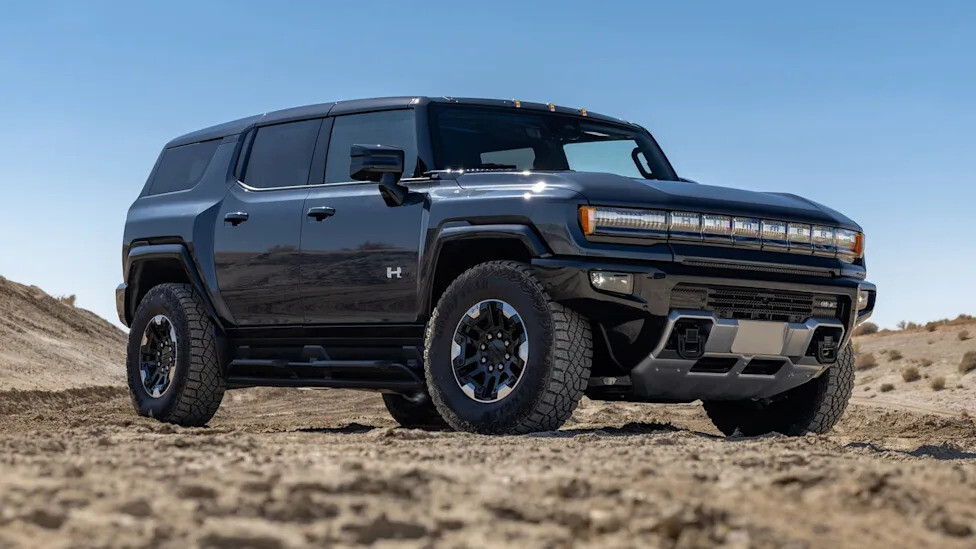
Alexander Campbell · 6 months ago@alexandercampbell22Porsche Profit Plunges 92.7% to €413 Million in 2025 Liked by+6 othersporschePost commentRelated PostsJalopnik Best Of 2026 AwardsJenna Green · 23 days agoThis Is The Last Remaining Production 4-Liter 6-Cylinder Engine In The USJacob Côté · 14 days ago2027 GMC Hummer EV SUV 35 · Benjamin Brown · 25 days agoNissan 300ZX, Exocet, Pinzgauer 710k: The Dopest Cars I Found For Sale OnlineLiam Smith · 14 days agoHalf Of The World Car Of The Year Contenders Are Chinese 80 · Samuel Wright · 26 days agoThis Porsche 911 With A Front-Mounted 1,200-HP Twin-Turbo LS V8 Will Anger The PuristsConnor Côté · 14 days ago12 Quick EVs That Can Hit 60 MPH In 3.5 Seconds Or Less 42 · Adam Clark · 27 days agoJaguar reveals a $130,000 all-electric vehicle. Why?Jenna Anderson · 14 days agoPorsche 911 Safari Builds Just Got Easier With New Lift Kit 35 · Emma Hall · 28 days agoPorsche CEO Rules Out Gas 718, Says Boxster and Cayman Will Stay EVsMatthew Johnson · 14 days agoThese are the 12 quickest Porsche EVs 35 · Daniel Girard · 28 days agoPorsche's Most Uncompromising Race Car Had Carcinogenic BrakesMorgan Scott · 14 days agoPorsche’s Budget 911 Just Unlocked Safari Style on the Low 81 · Audrey Young · 1 months agoFrench Police Bust A Man Driving His Porsche 911 At 194 MPHVictoria Mitchell · 14 days agoBentley’s debut electric SUV can out-accelerate many supercars, travel for 375 miles on a single charge, and comes with its own orchestra 93 · Lily King · 1 months agoNo, This Porsche 356 on BaT Is Not 100 Percent OriginalOwen Clark · 14 days ago"If You Can Afford a Porsche, the Price of Gas Shouldn't Be a Big Deal": Woman Buys a New Porsche, But Is Then Shocked by the Cost To Fill It Up 23 · Victoria Smith · 1 months agoMercedes-Benz 300 SL Roadster Wins Best of Show at Bugatti-Led Concurso de Elegancia Costa del Sol 2026Logan Roy · 14 days agoHere's How My 15-Year-Old Porsche Cayenne Held Up To 10,000 Miles Of Driving In 16 Days 36 · Hannah Côté · 1 months agoI drove the Polestar 5 – the electric super-GT ready to take on the Porsche TaycanEmily Roy · 14 days ago




 +6 others