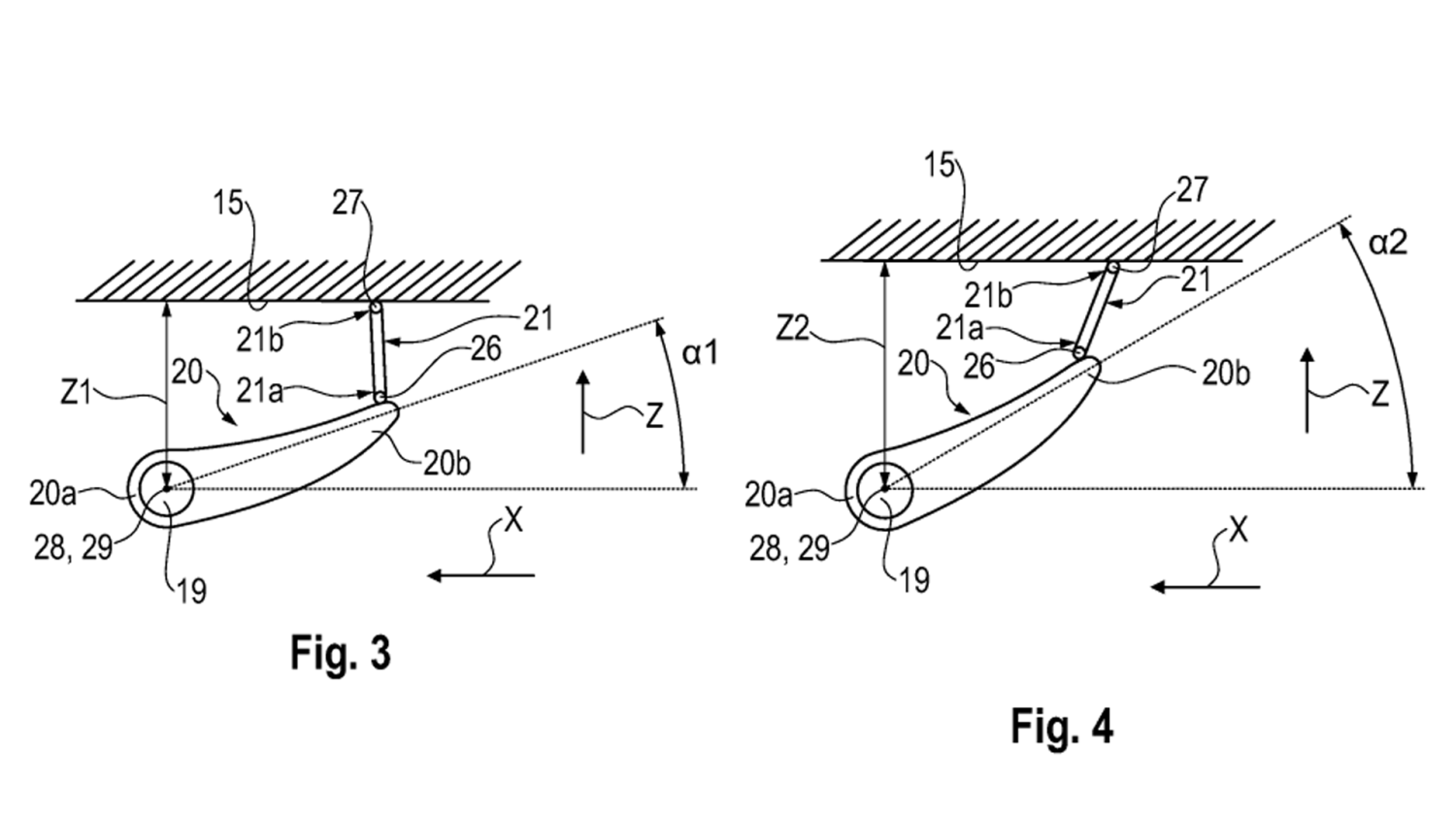
Automakers will go to extreme lengths to maximize aerodynamic performance. Active wings and spoilers at the back and active air flaps at the front might be just the beginning. Automakers have already figured out that putting small fins on the suspension arms can adjust the balance and handling of a car, and now Porsche wants to make things even wilder – by putting active aero elements on the suspension. Wings For Everything, Even The Suspension Porsche Adding plastic covers to suspension arms is nothing new. Such covers help smooth and direct airflow, and they've been around since at least the 1990s. Porsche has long been using suspension arms that were themselves shaped to improve airflow and even increase downforce, notably on the latest 911 GT3 RS. The latest invention, in a patent uncovered by the CarBuzz researchers, proposes one that can actually move.Even on a vehicle with a track-ready suspension design like the GT3 RS, the suspension links move up and down. Not just with the road, but with the aerodynamic forces acting on it at high speeds. A wing or spoiler-shaped control arm takes advantage of the air moving over that part, but its effectiveness relies on the vehicle's suspension travel. This takes advantage of that.The wing is mounted to the suspension along its leading edge. The trailing edge is attached to the body of the vehicle through a link and two pivots.When the vehicle suspension compresses, the wing flattens out, reducing its angle of attack. When the suspension elongates, or rebounds, the angle of attack is increased, and more downforce is produced. More Stability, More Complexity Porsche In the patent, Porsche says that this can "increase driving stability, particularly when driving through a curve or over a crest." When you crest a hill, the wheels initially fall away from the body, which continues to move upward for a few moments. That suspension drop makes the wing angle change, and adds downforce to help keep the tires on the ground.When you turn, the outside suspension compresses and the inside extends. Adding downforce to the inside tires helps add more grip to those tires. It will also work when the car is braking, adding downforce to the rear tires as weight shifts forward and unloads the rear suspension. In that situation, it could help stop the rear end from coming around, and even shorten stopping distances.Porsche describes it working on the front and rear suspension of a car, and even how to make it work on the rear suspension of a vehicle with rear-wheel steering.The patented idea is complicated, but not complex. We're also not sure how much of an effect it could really have, since control arms or suspension wishbones aren't exactly long. That's especially on a Porsche, where suspension travel is limited. It might work better on a vehicle like a Ram TRX or Ford Raptor, where longer suspension arms mean more wing surface. Then again, Porsche did just match the Chevrolet Corvette ZR1's Nurburgring lap using just half the horsepower. They know a thing or two about aero.How long before half of the car can move to add cornering grip and high-speed stability like the Hoonigan Family Huckster? Maybe not long at all.Patent filings do not guarantee the use of such technology in future vehicles and are often used exclusively as a means of protecting intellectual property. Such a filing cannot be construed as confirmation of production intent.Source: DPMA


















 +67 others