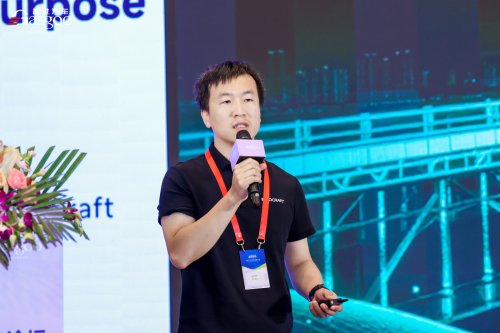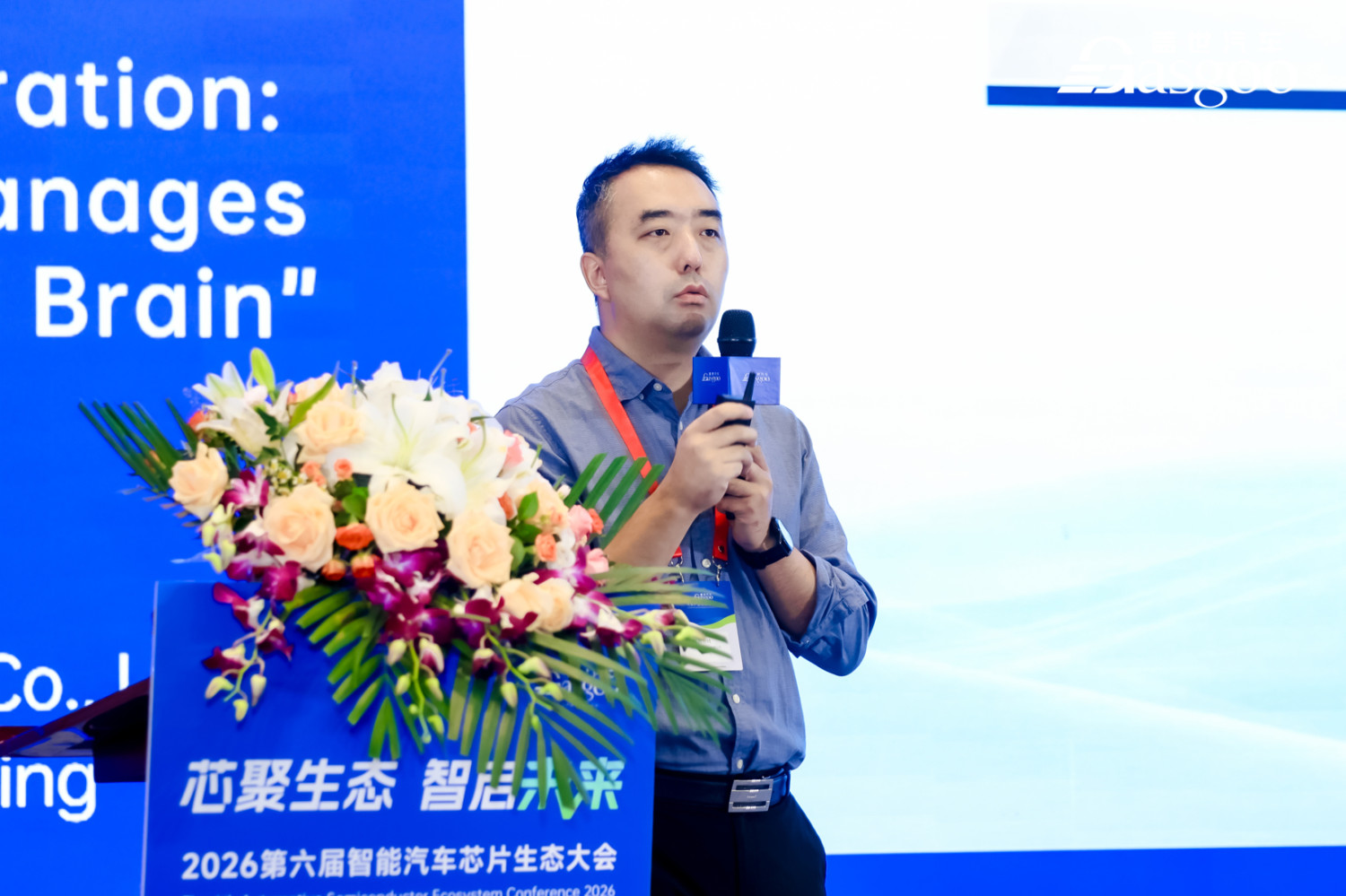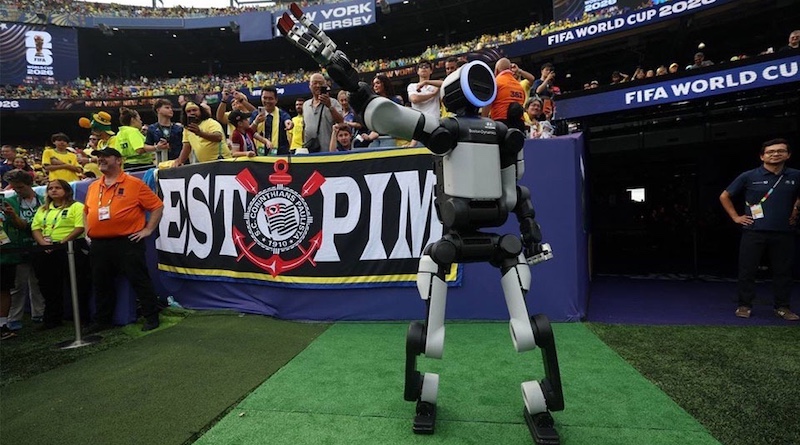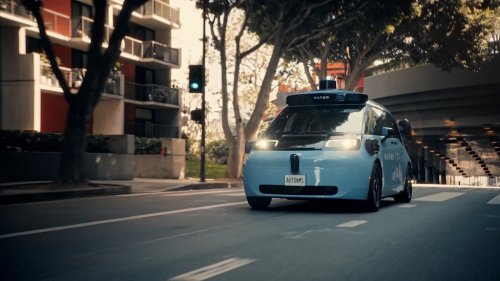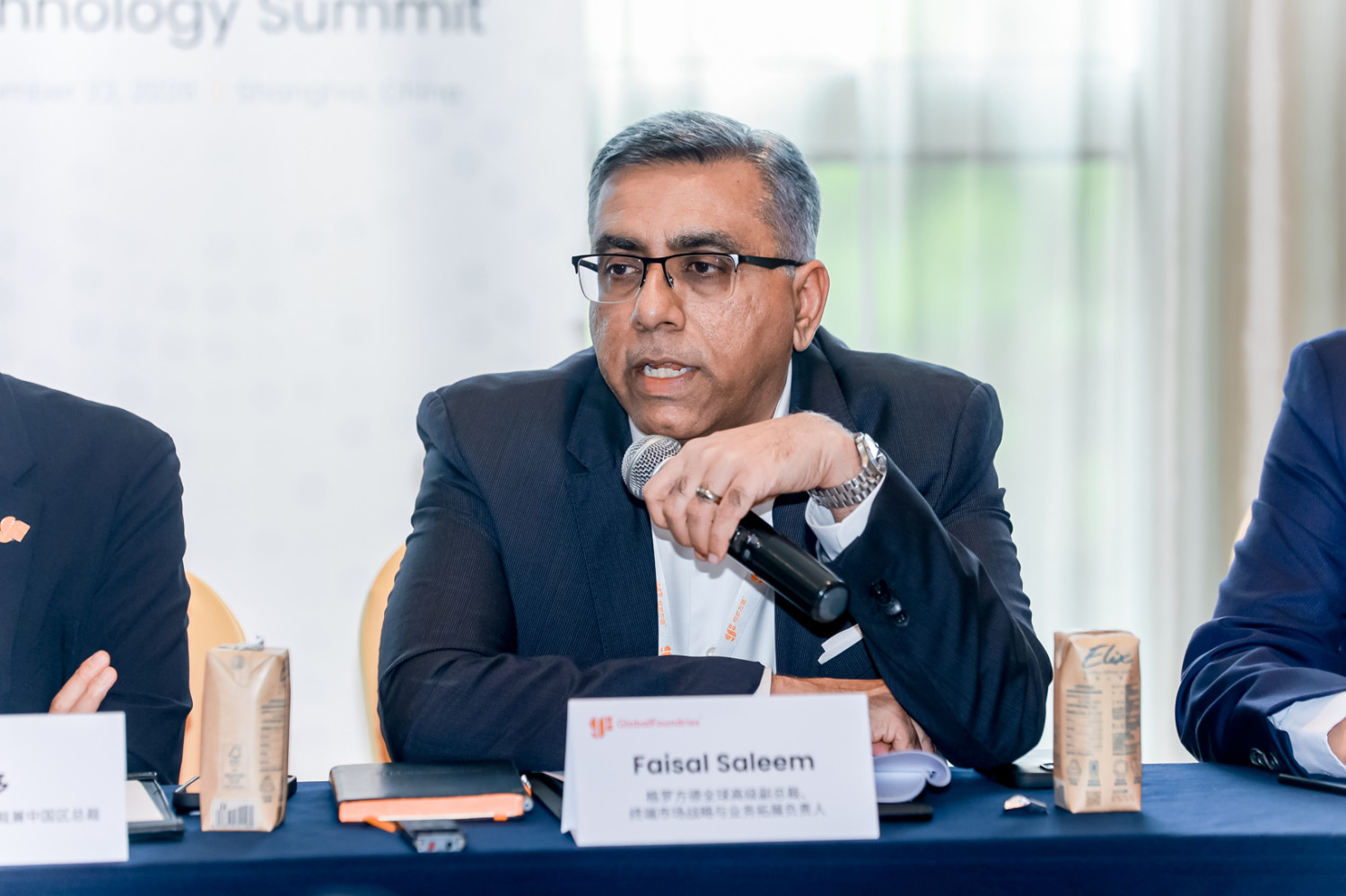
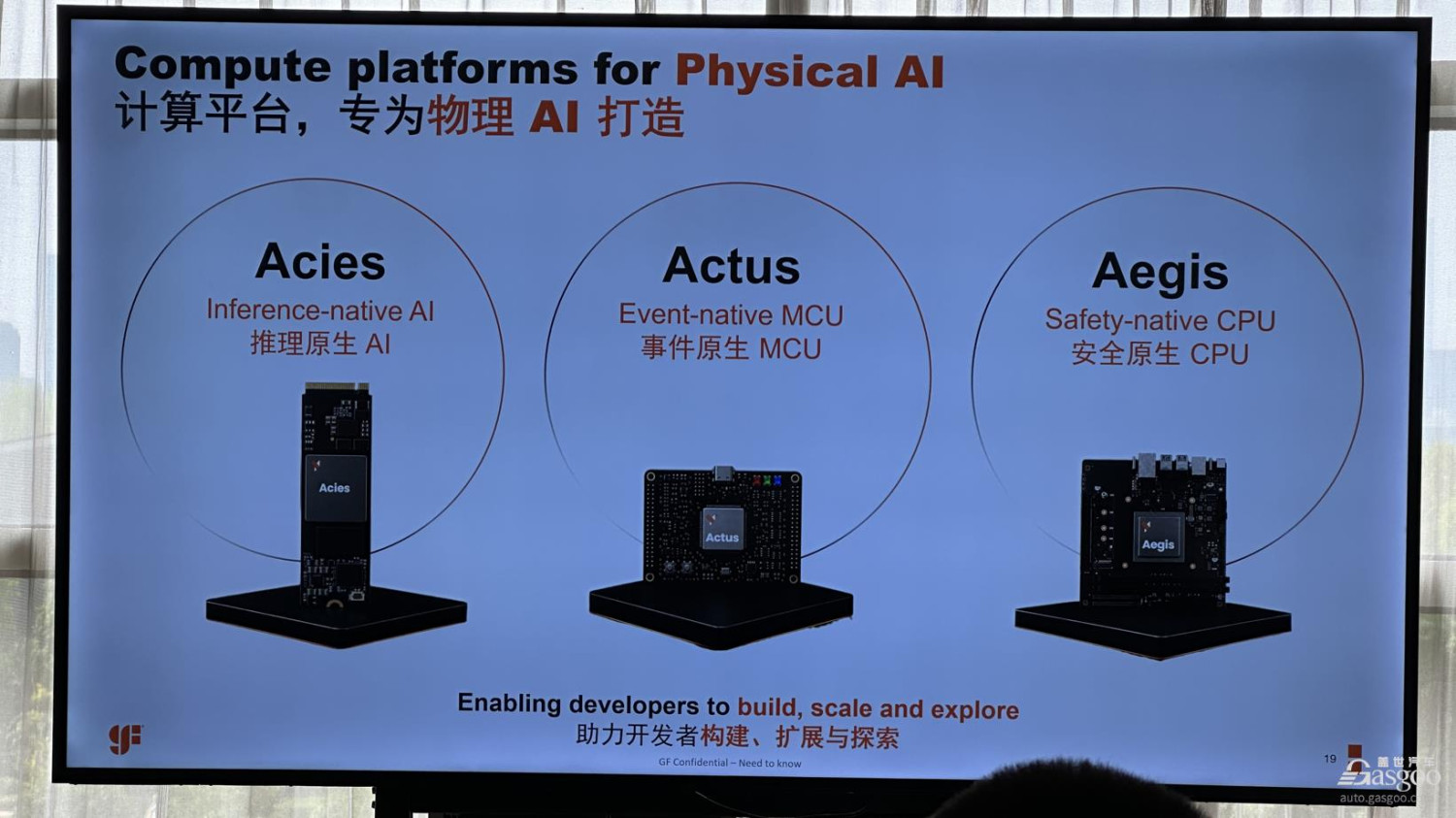
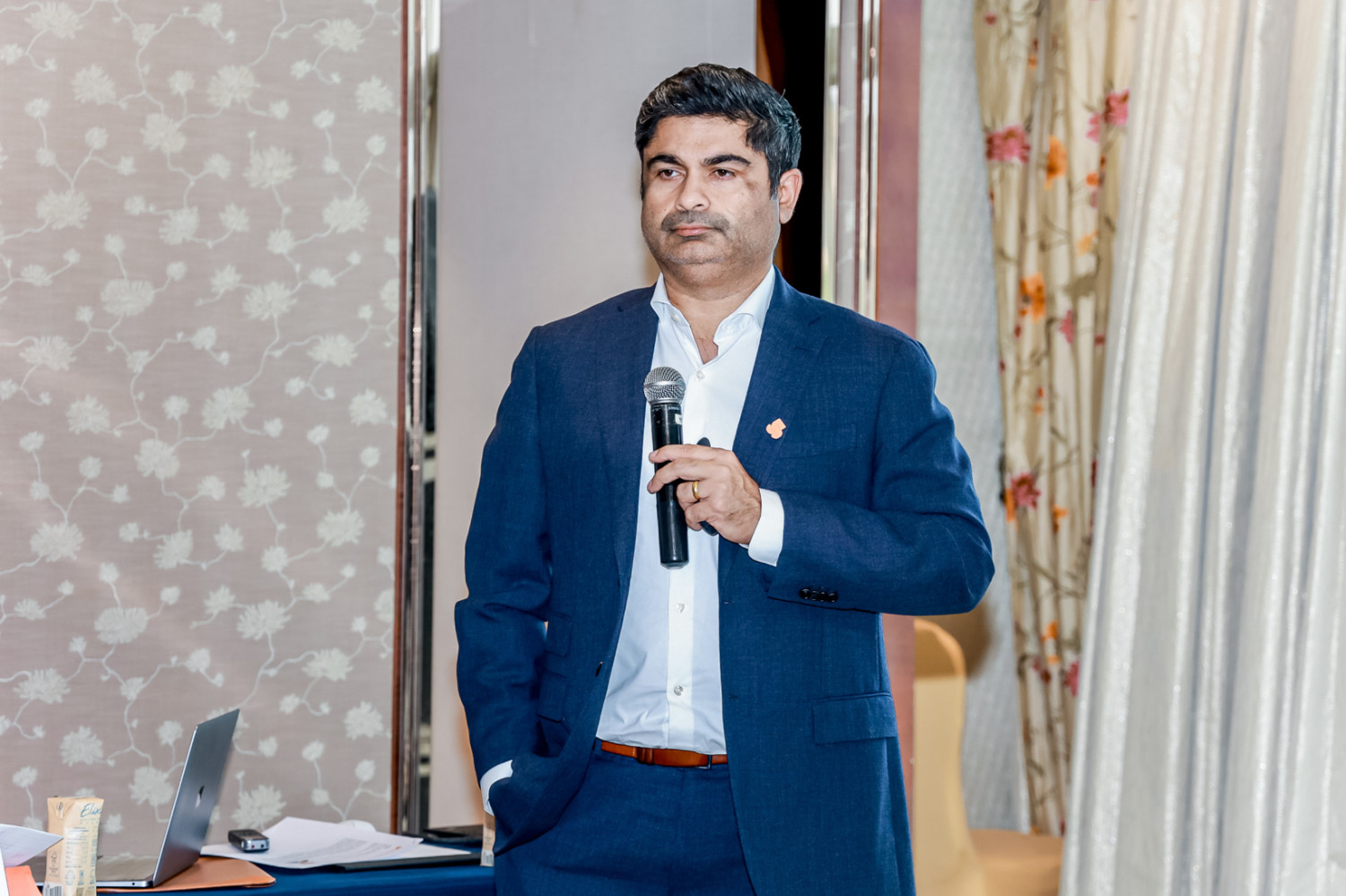



















Gasgoo Munich-On September 28, AMD announced a definitive agreement to acquire World Labs, founded by Fei-Fei Li, in an all-stock transaction valued at approximately $8.2 billion. The deal, which still requires regulatory approval, is expected to close by the end of this year. World Labs focuses on spatial intelligence and world models; upon completion, Li will join AMD as executive vice president and chief scientist.A chip company renowned for its CPUs and GPUs is now integrating a model research team into its technological landscape.Elsewhere, GlobalFoundries is extending beyond wafer manufacturing. In August 2025, it completed the acquisition of MIPS; this June, it also snapped up Synopsys' ARC Processor IP business. RISC-V processor IP, software tools, custom design, and manufacturing are now being folded into a unified "software-to-silicon" ecosystem.AMD is shifting from chips to models, while GlobalFoundries moves from manufacturing to IP and software. The directions differ, but they point to a shared shift: AI is migrating from the digital realm into the physical world.Cars must judge the road on their own; robots need to reach out and grasp objects; industrial equipment must adjust movements in real time based on their surroundings. Once AI truly starts "doing," the chip industry's once-clear boundaries make the old division of labor impossible to maintain.A Single Big Chip Can't Contain Physical AITo grasp this shift, we first need to see what new challenges Physical AI poses for chip design.MIPS CEO Sameer Wasson describes Physical AI as a closed loop of "perception, reasoning, action, and communication." Sensors observe the real world, processors handle understanding and inference, and control systems translate those results into movement—whether for motors, steering wheels, or mechanical joints—all while nodes communicate continuously.The easiest misconception is treating AI upgrades as simply swapping in a larger GPU or NPU.Wasson’s assessment is precisely the opposite. Large, centralized processors will persist, but vast amounts of low-power intelligence will also be distributed across sensors, MCUs, actuators, and communication nodes. Centralized computing and distributed intelligence are set to coexist for the long haul.The automotive industry has already run through this script.In recent years, electrical and electronic (E/E) architectures have steadily shifted from distributed ECUs to domain controllers, central computing, and zone control. Yet radar, cameras, high-speed comms, power management, and safety MCUs haven't vanished—they've simply evolved.GlobalFoundries Senior Vice President Faisal Saleem reveals that while the number of vehicles powered by GlobalFoundries chips has held steady at roughly 9 million over the past five years, the chip count per vehicle continues to climb.GlobalFoundries Senior Vice President Faisal Saleem; Image Source: GlobalFoundriesRobots embody this stratification even more thoroughly.Large models can understand "bring me the cup," but the motor loops, force control, balance, and collision detection across dozens of joints can't wait for a slow-thinking model. One handles high-level tasks; the other manages millisecond-level actions. They are fundamentally different workloads.That is why MIPS repeatedly emphasizes "workload-native" design. Confronted with Physical AI, it isn't trying to handle every task with a single processor. Instead, it splits computing needs into AI inference, real-time response, and safety-critical computing. That said, the race for raw computing power hasn't stopped—its NPX6 AI accelerator boasts a nominal performance of 3,500 TOPS.Viewed together, these two trends reveal a compelling dynamic.The compute race isn't over—it's just that in the era of Physical AI, raw power is becoming the entry ticket, not the solution itself.The shifts extend even to power delivery. Answering a question from Gasgoo about 48V architectures, Faisal noted that as power consumption rises for central CPUs, ADAS, and zone controllers, the transition from 12V to 48V systems is "inevitable and imperative"—even if the switch will take time.When AI truly begins to control the physical world, running the entire system becomes far harder than simply building a more powerful chip.Systems Grow More Complex, Pushing Chip Companies OutwardAs system-level challenges multiply, suppliers naturally refuse to settle for selling just one small piece of the puzzle.At a recent media briefing, Sameer Wasson made it clear: MIPS aims to evolve from an IP vendor into a full-stack technology solutions provider, with custom chips becoming a cornerstone of its future business.Even more telling was his follow-up remark: IP licensing remains MIPS’s core business, but a significant portion of future market growth and revenue will come from chip manufacturing and post-tape-out customer delivery.MIPS CEO Sameer Wasson; Image Source: GlobalFoundriesThe business logic is straightforward.Selling an IP captures value at one point in the chain. Extending into software, custom design, and final chip delivery embeds the supplier deeper into the customer's development cycle.By its own metrics, MIPS is currently the world’s largest RISC-V IP supplier and the second-largest processor IP vendor globally, trailing only Arm. Its technologies ship in roughly 3.5 billion chips annually, with more than 200 million chips sharing the same microarchitecture already deployed in ADAS systems. Its client roster exceeds 500, including 9 of the world’s top 12 automakers and all of the top 5 robotics and industrial automation firms.So what MIPS is changing now isn't just its product catalog—it's the depth of its engagement within the system.GlobalFoundries' acquisitions of MIPS and ARC follow the same logic. Once focused on manufacturing, it is now integrating processor IP, software tools, and custom chip capabilities into its ecosystem. AMD, approaching from the other direction, is pulling world model and spatial intelligence research into the chip company.It isn't that chip companies suddenly want to do "full-stack"; it's that customer problems no longer reside within a single chip.Technical complexity pushes companies up and down the supply chain, while new revenue streams make the expansion worth the effort.Automotive and Robotics Sectors Are Starting to 'Borrow' TechAs companies extend vertically, technology is flowing horizontally.On September 8, XPeng officially launched its automated robotics production line, where the IRON robot walked off the line autonomously after assembly. According to XPeng, IRON features 76 degrees of freedom and carries three Turing AI chips delivering 2,250 TOPS of effective compute. The quality systems and manufacturing capabilities honed in its automotive business have been transplanted directly to the robotics line.This is a classic case of internal reuse. With cars, AI chips, models, and robots all under one corporate roof, the technology and manufacturing foundations already invested in automotive can be amortized across robotics.Independent robotics firms, however, are taking a different path.UBTech currently relies on established computing ecosystems, but this June it co-founded Xixuan Chuangzhi with firms like Maxio. With a registered capital of CNY 100 million, the venture is developing dedicated chips for embodied intelligence on the edge, targeting tape-out in the second half of 2027 and mass production in 2028.Using mature platforms to build products first, then circling back to influence chip definition once workloads, costs, and scale become clearer—that is also a valid strategy.Conversely, automotive chipmakers are moving into robotics.SemiDrive has assembled a robotics chipset portfolio featuring the R1 "brain," D9 "smart control cerebellum," and E3-R execution control MCU. Its website indicates that the D9-Max is already in mass production at leading humanoid robot manufacturers.SemiDrive Vice President Zhang Xitong said at the CIFTIS trade fair in September that in SemiDrive’s view, automotive chipmakers entering robotics can "reuse 70% to 80% of their capabilities." Yet its own product evolution shows that reuse isn't a simple copy-paste: when it comes to joints, dexterous hands, and motion control, redesigns around new workloads are still required.Safety capabilities are migrating, too. This June, NVIDIA launched Halos for Robotics, extending the Halos safety framework honed in autonomous driving to humanoid and industrial robots. Agility Robotics became the first partner to integrate elements of this capability into its own robot safety systems.XPeng brings chips and manufacturing from cars to robots; UBTech moves upstream from robotics to define chips; SemiDrive repurposes automotive-grade capabilities for robot products; and NVIDIA extends automotive safety frameworks into robotics.Technology can be reused across industries, but complete systems cannot simply be transplanted.Underlying capabilities are increasingly like a set of public building blocks, but every new terminal requires them to be reassembled from scratch.Full-Stack Has Limits, and Openness Comes at a CostIf the story ended here, the conclusion would be simple: every company will become increasingly "full-stack" in the future.Reality, of course, is not that simple.Suppliers must first confront their own capability limits.In 2018, GlobalFoundries paused 7nm FinFET development to divert resources toward differentiated processes like FDX, RF, and analog mixed-signal. Today, acquiring MIPS and ARC extends its reach into IP, software, and custom design based on existing strengths—rather than re-entering the fray across all advanced logic nodes.Nor will customers naturally accept an increasingly closed platform.This January, an automotive open-source initiative led by the VDA and Eclipse expanded to 32 companies, aiming to build an open, interoperable software foundation. In May, Automotive Grade Linux launched the SoDeV reference platform, with a core goal of decoupling software development from specific hardware platforms.This creates direct tension with the full-stack expansion of chip companies.Suppliers want to tightly integrate IP, chips, runtimes, toolchains, and even models. This reduces integration overhead, shortens development cycles, and boosts revenue.OEMs, however, see the flip side: if chips, compilers, middleware, and safety systems are all bundled together, switching suppliers next time won't mean just "swapping a chip"—it will mean redoing the software and verification from scratch.A complete solution buys efficiency; a closed ecosystem exacts a price.RISC-V brings this contradiction into sharper focus.MIPS CTO Yankin Tanurhan warns that if companies build extensive proprietary extensions before unified standards are settled, they may be forced to rework and re-adapt once the official standards are locked in.But RISC-V's entry into automotive is no longer just theoretical. Infineon, the leader in automotive MCUs, has announced it will launch a RISC-V product family within its AURIX lineup. Quintauris—a joint venture founded by Bosch, Infineon, Nordic, NXP, Qualcomm, and STMicroelectronics—is advancing a RISC-V reference architecture for automotive real-time computing, and MIPS is already collaborating with the group.China's automotive industry is also catching up on standards. The first industry standard for RISC-V in automotive is currently being drafted, with dozens of companies participating.The question used to be whether RISC-V could "make it into the car." Now, the more practical question is whether different companies can get in under the same set of rules.Openness does not mean a lack of standards. On the contrary, the more open the ecosystem, the more it needs a set of standards that everyone is willing to follow.Once robots truly enter mass production, they will face the same hurdle.Today, mature platforms allow for the fastest path to a working machine. Tomorrow, as shipment volumes rise, power consumption, BOM costs, real-time control, and algorithm loads will force companies to recalculate: what to keep buying, what to co-define, and what to hold in-house.Physical AI hasn't rendered the traditional division of labor obsolete, but it is forcing every company to find its place anew.Some move from manufacturing to IP, others from chips to models. Some bring automotive tech into robotics, while others circle back from robotics to define chips. Meanwhile, standards, open source, and multi-supplier systems are constantly drawing new boundaries around this expansion.The more complete the platform, the more customers demand a clear exit strategy.Physical AI is redrawing the boundaries of the chip industry.In the next stage, the real story won't be about who can control the entire supply chain.It will be about who has the power to decide where the industry divides its labor next.