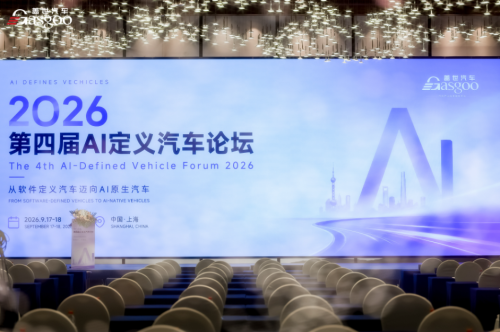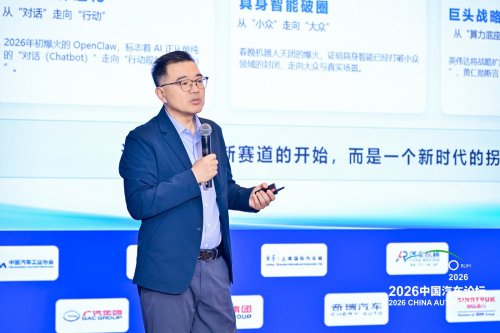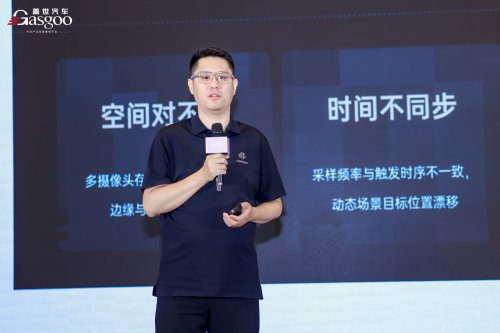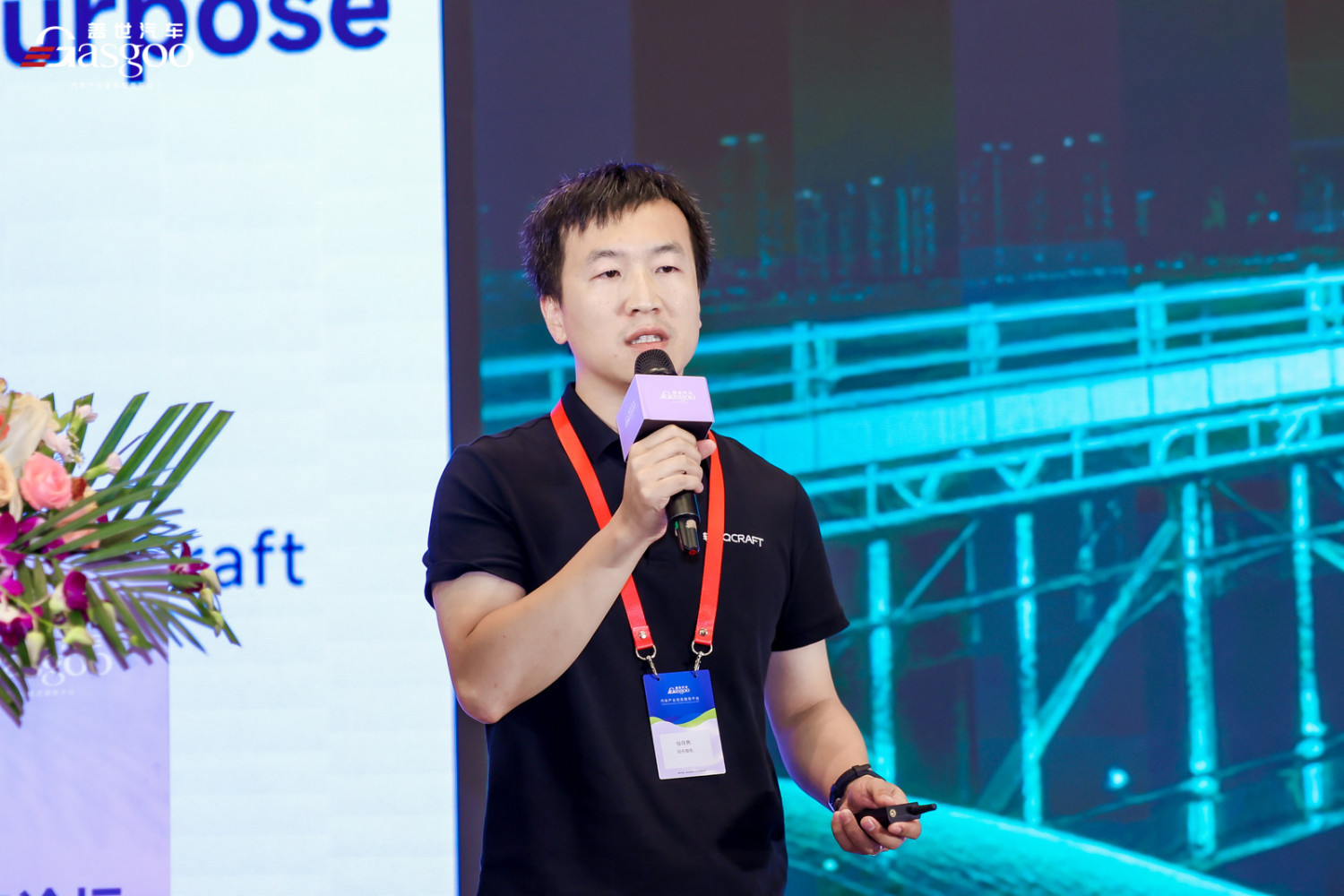



















Gasgoo Munich- On Sept. 18, at Gasgoo's 4th AI-Defined Vehicle Forum, Qian Xiangjun, vice president of technology at QCraft, delivered a presentation titled "Sharing on QCraft's Physical AI." He systematically outlined the deployment path, technical architecture, mass production progress, and future roadmap for physical AI.Qian noted that autonomous driving is the first large-scale commercial application of physical AI—and the one delivering the most user value—serving as the cornerstone for general physical AI development. The physical world is rife with uncertainty, requiring autonomous systems to handle core challenges like recognizing new scenarios and predicting changes in unknown environments. World models and reinforcement learning, he argued, are the bridge connecting the digital AI world with the physical one, and an essential path toward general physical AI.Regarding the technical architecture, Qian introduced QCraft's "Cloud World Model + Vehicle World Behavior Model" dual-system framework. The cloud world model acts as the foundation, boasting three core capabilities: highly controllable video generation, a zero-shot generation engine, and low-cost pre-simulation. It can extrapolate traffic flow variations, irregular obstacles, and high-risk rare scenarios from basic scenes. It also supports natural language instructions to directly generate scenarios, covering complex conditions like snow, fog, and rain, as well as adversarial situations such as wrong-way drivers, strong light interference, and sudden obstacles. The vehicle world behavior model integrates VLA and reinforcement learning algorithms to achieve full-chain modeling from perception to action. Together, these two models rely on an automotive data closed-loop system covering the entire process—from mining and cleaning to generation—creating a continuous "data + model" dual-engine mechanism for self-iteration.On mass production, Qian shared QCraft's latest scorecard. Its assisted driving solutions are now equipped in over 1 million vehicles, spanning more than 40 production models and 10 automaker brands—a scale that validates the maturity of its technology through a data closed-loop. In terms of product matrix, QCraft offers a three-tier solution—L, Pro, and Max—covering full-scenario needs from low-to-medium computing power to high-performance platforms. Notably, the Pro platform was the first to deliver high-experience city NOA on the 128 TOPS Horizon Journey 600M chip, with multiple models entering mass production and delivery in the second half of this year. The high-performance Chengfeng Max platform, built on the "world model + reinforcement learning" architecture, leverages over 500 TOPS of on-board computing to deliver an experience exceeding 1,000 TOPS. It can handle complex scenarios like nighttime glare, disappearing lead vehicles, and continuous high-speed obstacle avoidance, ensuring primary safety.Regarding autonomous logistics, Qian stated that L2++ and L4 systems share a unified physical AI technology base. This allows for rapid replication of capabilities across scenarios without stacking high-cost hardware. Currently, autonomous logistics vehicles are undergoing test operations in Jinhua, Suzhou, Guangzhou, and other regions, entering the mass production and scaled growth phase. They are adaptable to diverse environments, including cities, rural areas, and narrow alleyways.On global expansion, Qian emphasized that physical AI has no borders, relying on a general physical AI methodology to adapt to different traffic environments worldwide. QCraft's test vehicles are already operating in Munich, Paris, and other European cities. The company plans to gradually advance its presence in overseas markets, continuing to deliver L2++ and L4-level products globally.Concluding his speech, Qian shared QCraft's mission and vision: to create better AI through safe and benevolent intelligence, aiming to become a global leader in general physical AI. He expressed that QCraft will continue to cultivate autonomous driving—the core cornerstone leading to physical AI—and drive the deployment of physical AI technology across an even wider range of scenarios.