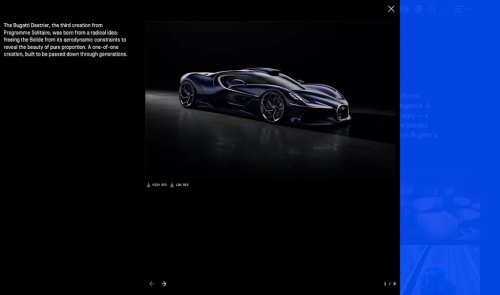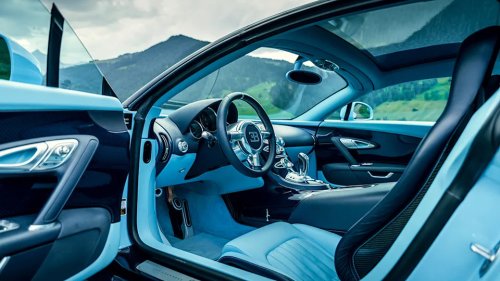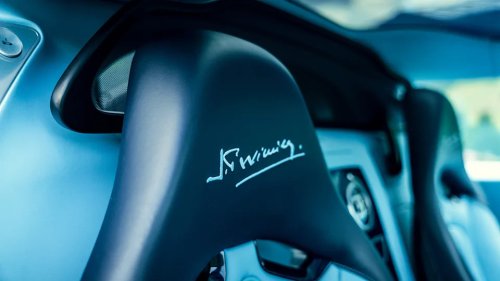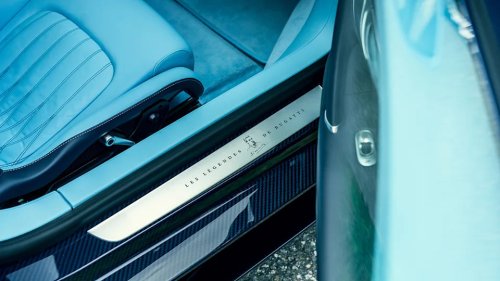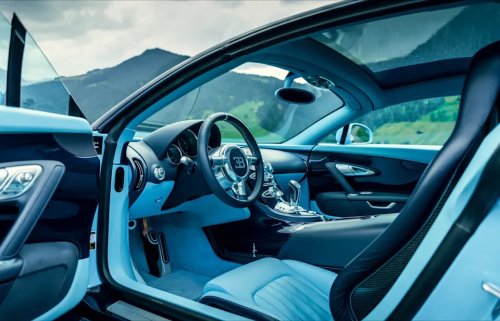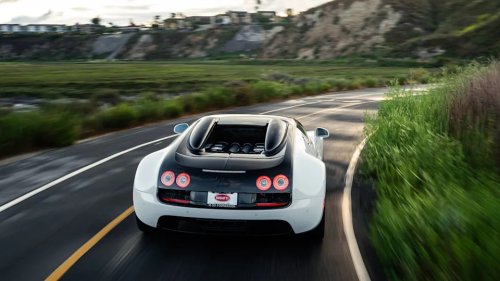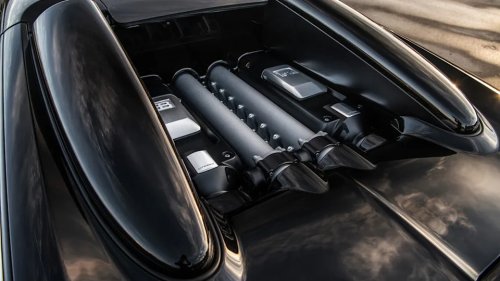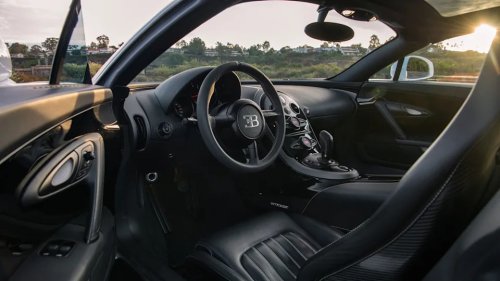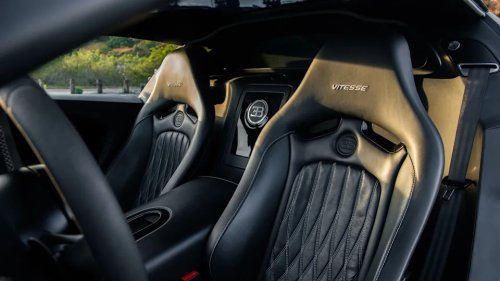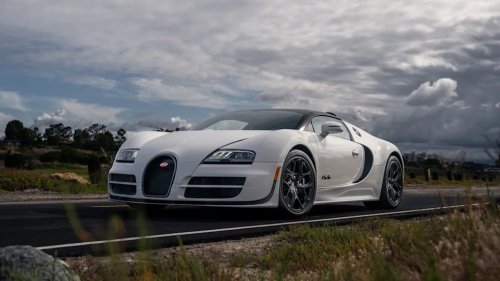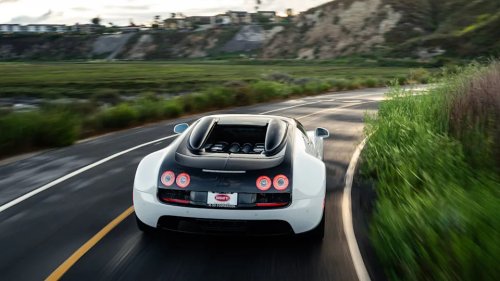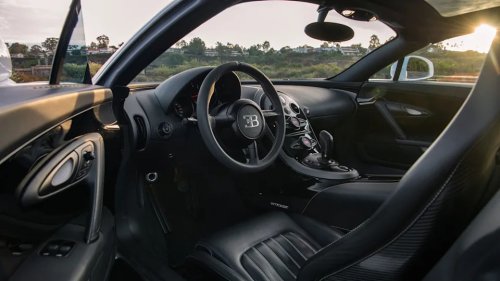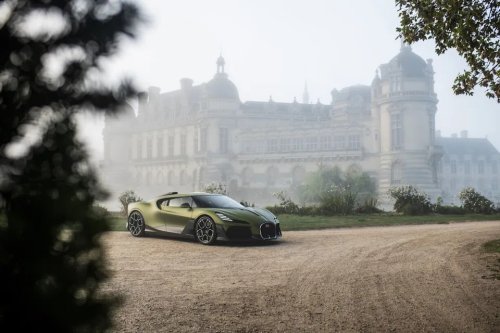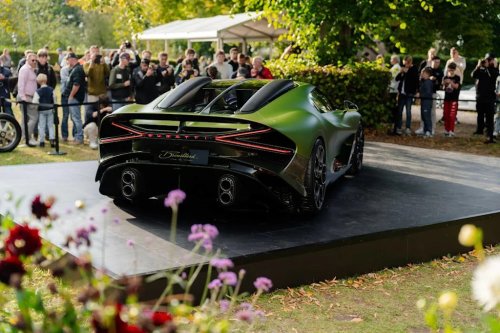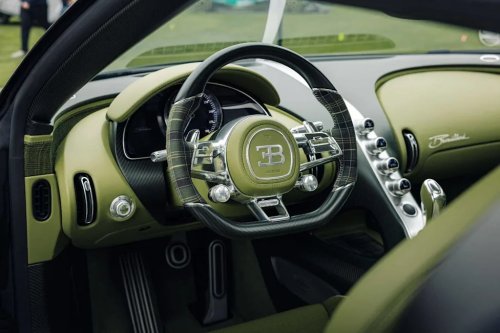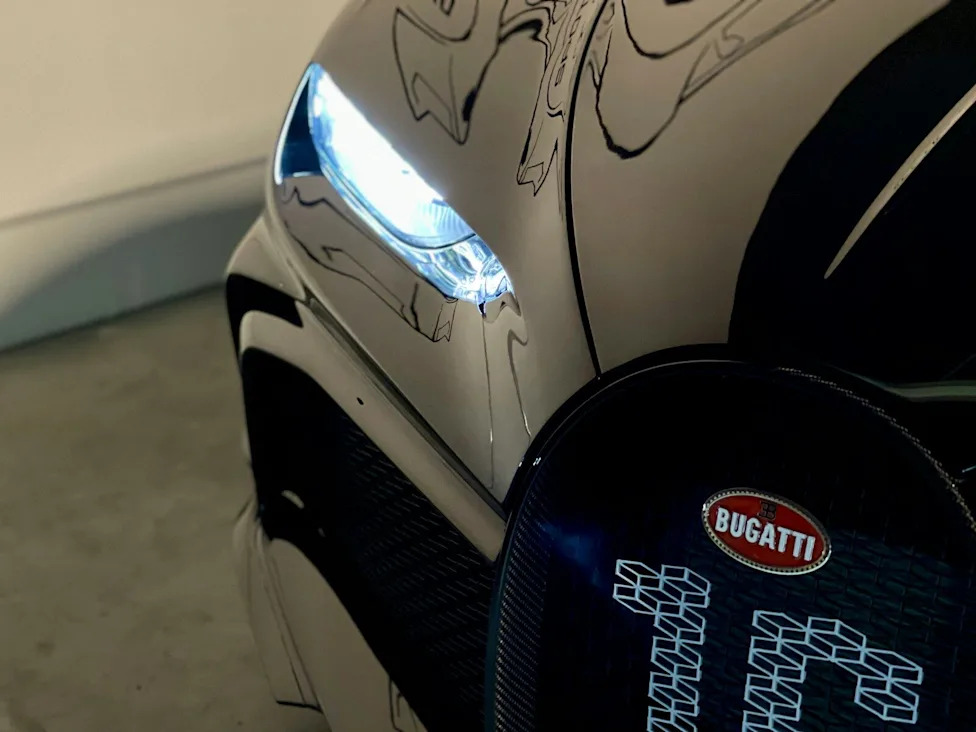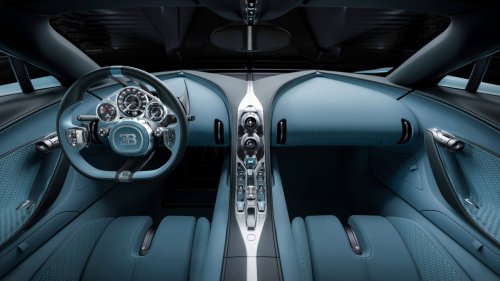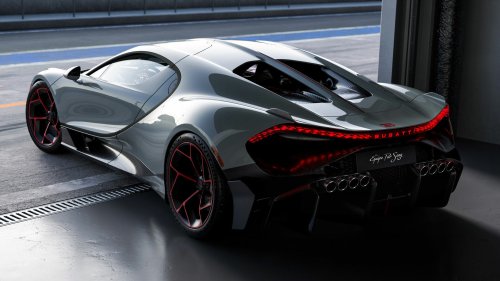






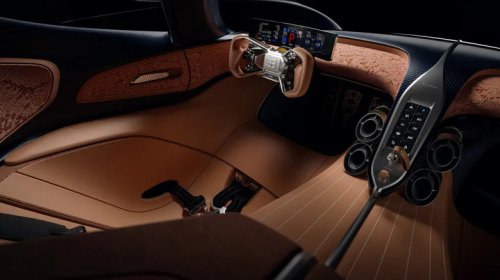
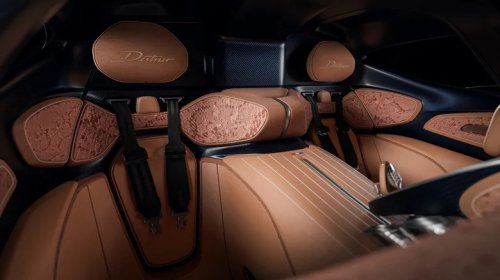




















BugattiOver the past couple decades we've seen a huge surge in popularity of one particular microniche of the automotive world: very expensive, limited-run, track-only supercars, many of which aren't even directly based on an existing road car or race car. We've seen examples from Ferrari, Porsche, McLaren, Lamborghini, Aston Martin, Maserati, Pagani, Koenigsegg... The list goes on. But none have more extreme in design or performance than the Bugatti Bolide.The Bolide was revealed in concept form in 2020 before entering production in 2024, and the last of the 40-unit production run was built at the end of 2025. Beyond just the fact that it uses Bugatti's venerated quad-turbo W16 engine, the 1,578-horsepower Bolide set itself apart from other track-day specials with all-wheel drive, a completely bonkers aerodynamic package, air conditioning, and a higher top speed than an F1 car. It's the peak expression of what Bugatti can do when it focuses on performance.But what if Bugatti focused on pure exaggerated design instead, using the Bolide as the basis but without any of the wings and vents necessary for race track performance? That's exactly what the brand's Programme Solitaire division did for its third one-off, the spectacular new Destrier. Bugatti describes it as "a celebration of breathtaking proportion and beauty," and I'd have to agree.AdvertisementAdvertisementRead more: The Different Types Of W Engines ExplainedLet's get medievalBugattiWhile the Bolide was named after the French term for exceptionally bright meteors, the Destrier is named after a type of horse. Specifically, "the finest and strongest type of medieval knight's horse" that were used in battles, jousts and tournaments. But unlike with the Brouillard one-off from last year, which was named after Ettore Bugatti's favorite horse, there are no horse styling motifs to be found here.Bugatti likens the Destrier to models like the Type 57, where the company built a chassis that underpinned both race cars like the Le Mans–winning Type 57G Tank, and gorgeous road cars such as the Type 57SC Atlantic. (Those two cars are hand-laser-engraved into a plate above the windshield.) Only here, instead of using the Chiron's normal road-car platform like all of Bugatti's other special models and one-offs, the Destrier's chassis is the Bolide's carbon-fiber monocoque, which was developed with Dallara. Said chief designer Frank Heyl:Destrier is not a car you understand with your head, it is a car you feel with your heart. The Bolide gave us the most extreme proportions we have ever created, and by freeing them from the Bolide's relentless pursuit of downforce, we let them speak as pure sculpture. Just as the Type 57 chassis gave the world both a Le Mans winner and the Atlantic, one platform has now produced two entirely different masterpieces. I believe Destrier will be gracing Concours lawns 50 years from now.It's lower than a GT40BugattiThe result is a car that's even lower to the ground than a Ford GT40 — Bugatti says the Destrier is only 39.4 inches tall, just a skosh more than a Bolide. Though its overall shape and proportions are clearly reminiscent of the Bolide, along with some details like the vents ahead of the rear wheels and the exhaust placement, the Destrier feels like its own distinct car. The front fenders are some of the best I've ever seen, dramatic and reminiscent of cars from the 1930s, and the rear haunches are gorgeous as well. Its front wheels are 20-inchers while the rears are 21s, which really helps enhance the stance compared to the Bolide's 18s.BugattiAdvertisementAdvertisementAlmost every Bugatti features the company's C-line that frames the greenhouse and wraps around the body side, but on the Destrier the polished aluminum strip is more dynamic and "breathes" just before the front wheel arch, resuming just ahead of it in the nose as another trim strip that sits below the headlights. There's even more polished trim, a welcome sight on a car like this — the frame of the horseshoe grille, the diamond-cut wheels, the brand's also-signature center spine running from the nose across the roof.I'm glad the roof scoop remained, and it probably had to as the Destrier has more subtle air intakes hidden behind that C-line, instead of using giant intakes on top of the rear wheel arches. The lower bodywork is still quite technical and complex, though, with a bunch of sharp aero pieces that contrast well against the sculptural bodywork. Who doesn't love diamond-inspired sparkle?BugattiIn addition to the brightwork, I'm glad there is almost no exposed carbon fiber to be seen, aside from the stuff being used on the absolute lowest sections of the front splitter, side skirts and the mega rear diffuser. It's all perfectly color-matched to the paint, at least. The unique color, called Sapphire Celeste, is a multi-layer paint that has "diamond-inspired sparkle" within its structure. Bugatti says the color is a callback to Type 57SC Atlantic chassis 57591, which was originally blue before it was repainted black by its current owner, a guy named Ralph Lauren.The horseshoe is squat and wide, with the Bugatti "macaron" badge placed on a spine that aligns with the chrome mustache lines. Though you can't see through some of the holes to the front suspension like on a Bolide, the shape of the nose and hood is really intense, clearly functional but still curvaceous, and the same goes for the lower bumper. Along with the fairly simple headlights — which do have a lovely crease that continues over the fender peak, and eight LED segments on each side — this is probably the pretty least-aggressive front end we've seen from a new Bugatti in a while.Baby got backBugattiProbably the biggest styling differences from the Bolide come at the rear of the Destrier, and it's also probably the car's wildest view. There's no more giant race car wing, for one. The Bolide's aero package provides it almost three tons of downforce, and I doubt the Destrier comes close to that. Who cares, when it looks this good? It's a shame that the Destrier has single slim taillights instead of the Bolide's X shape, but I love how the pattern of the lights reflects off the bodywork below and the underside of the spoiler above it.BugattiAnd my word, what a spoiler it is. Just look at the way the edges interact with the rear haunches! From every angle it's sublime. Fixed instead of an active unit like on most other Bugattis, it flows beautifully across the rear end, and the center mount's small vertical CHMSL is aligned with an F1-style light in the diffuser. Like the Tourbillon and a lot of other new supercars, the diffuser is shaped in a way that we can see a lot of the rear tires, and in this case those tires have the French flag colors subtly integrated in the tread pattern.AdvertisementAdvertisementOf course, it's impossible to miss the gigantic exhaust pipes, made up of two stacked pairs. The giant W16 engine isn't exposed to the elements, but there is a prominent hump with an aluminum plate showing the cylinder placement. That aluminum has a hammered finish, a reference to the armor of the knights who would ride Destrier horses. Still racy insideBugattiThe interior of the Destrier is largely similar to that of the Bolide, all the way down to the race car–like driver display and steering wheel, but there's a lot of new details that luxe it up. Along with leather and nubuck in Ambre Voyageur brown, the Destrier features a 3D-knitted textile with copper yarn woven into it in "a circular 'halo-line' pattern." It looks fab, especially with how much of the cabin is covered in an actual colored material. There's more hammered aluminum in here, used on the side sills, steering wheel hub, air vents and door pulls.Though not quite as extreme as the Bolide's seats, the Destrier's passengers basically sit on thick pads that are moulded directly to the car's structure, with four-point harnesses, wraparound pieces at the shoulders and more normal headrests. Beyond simply the act of getting in and out, it does seem like visibility out the visor-like side windows will be pretty minimal. There aren't really armrests, per se, and everything not covered in one of the brown materials is just exposed blue carbon.Don't worry, there's air conditioningBugattiThe center console is covered in leather with nice lines of stitching, but it doesn't look like there's any cupholders in the Destrier. That's a shame. It does have air conditioning, though, with the air vents being those exhaust-aping holes. That's a feature carried over from the Bolide, which itself is one of (if not the only) track-day specials to have AC. The slim dashboard panel has buttons for park, the hazards, headlights and foglights, a windshield defroster, stability control, and door locks; that last function is the only one not found on the Bolide. In place of the Bolide's big red "STOP" and "FIRE" buttons, below the button stack seems to be a physical key you have to put into a slot, with an ignition toggle switch below that.AdvertisementAdvertisementBugatti swapped out some of the racing features on the Bolide's steering wheel for buttons that control the turn signals and horn, but don't worry, there's still buttons for "ACK" and "BRI," whatever those mean, as well as a twist knob for the traction control. The bezel for the gauge cluster screen is more refined, but the graphics themselves are exactly what you get in a Bolide, one of the only parts of the Destrier that's all function, no form. And before you ask, no, I don't think it has Apple CarPlay.Debuting in the metal next weekBugattiAw, you want to know powertrain details or any sort of specs? Too bad. The car's height is the only dimension or figure we know, and all that Bugatti says about the powertrain are these lines in the very last paragraph of the press release:Beneath the bodywork sits the Bolide's complete W16 powertrain, producing 1,600 PS – Bugatti's quad-turbocharged 8.0-litre engine at the peak of its development. True to the spirit of the project, it is a detail offered almost in passing: as with the great Concours-winning cars of the past, Destrier's story is one of proportion and craftsmanship, not outright performance.We also don't know how much the Destrier cost its owner to commission (expect a pricetag well into eight figures) or what region of the world or even country it will be going to. I have a few guesses myself — I'm hoping it's the Swiss collector who sat on his Bolide's door sill with a cigarette and an ash tray at The I.C.E. in February.The Destrier will make its public debut at Monterey Car Week, where it'll be shown at the Quail on Friday and at the Concours d'Elegance on Sunday, but it'll likely be another year or two before it actually gets delivered to its owner. Bugatti's one-offs go through just as rigorous a testing regimen as its series production cars, to ensure they're road-legal and meet all the same safety and performance metrics. Got any questions about this glorious thing? In Monterey next week I'll be interviewing Clark Wu, the lead exterior designer for the project.AdvertisementAdvertisementWant more like this? Join the Jalopnik newsletter to get the latest auto news sent straight to your inbox, and follow us or add us as a preferred search source on Google.Read the original article on Jalopnik.