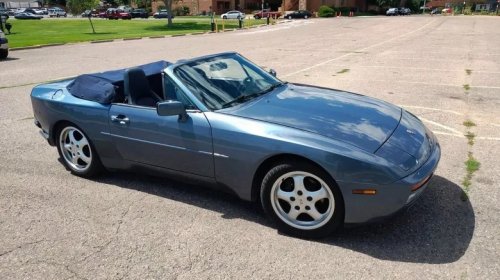
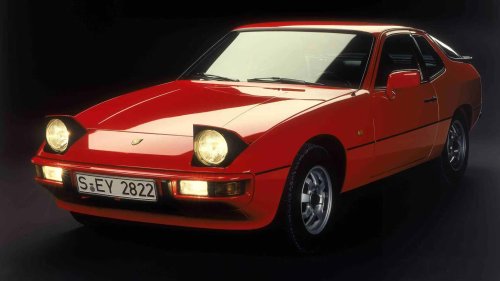
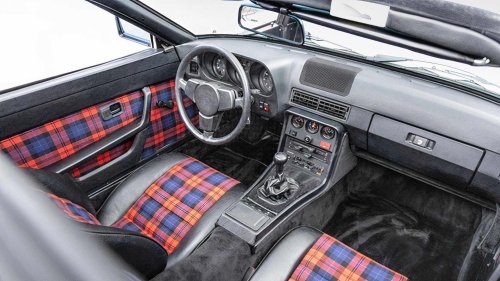
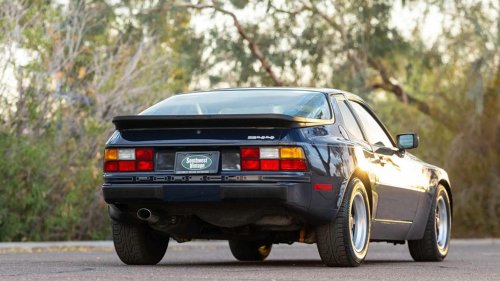
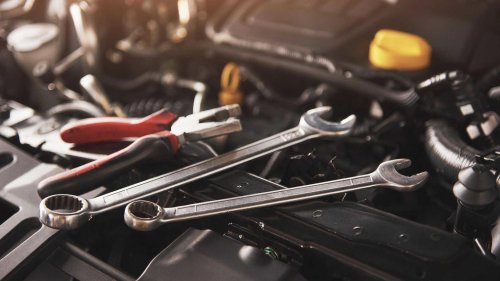
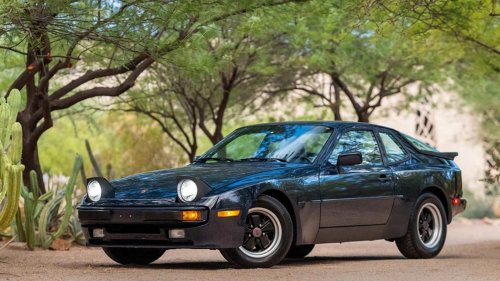
Usually, when Porsche is toying with a new idea in the name of perfecting its recipe for sports cars, it bears fruit in practical areas like overall performance or comfort. The byproduct of its brilliance over the last 78 years has been technology that has trickled down to other brands. Things like series turbocharging and even targa roofs come to mind, not to mention several other Porsche-perfected pieces of engineering. Fortunately for us, one idea didn't spread beyond its cars and across the industry. Whether through competition or sheer copying, ideas that Porsche pioneered have spread throughout the industry for the better. On the other side of that is a piece of technology that solved a small problem Porsche felt was unignorable. A Brilliant Idea Fails Miserably PorscheYou won't find any mention of the device in reviews, press literature, window stickers, or even build sheets. The legend of Porsche’s soft-centered clutch disk is told only by those recounting their tales of plucking shards of rubber out of the clutch bell housing on Porsche enthusiast forums such as Rennlist and Pelican Parts.I thought I would be among those telling my story of repairing one of these clutches when I dug into my 944. Alas, someone else had beat me to it and replaced it with a diaphragm spring clutch—something you’re more likely to find in other manual gearboxes.Before Porsche breathed more life into its dual-clutch PDK, it had a different approach to gearbox performance, stemming from an unconventional rubber-centered clutch. The idea was to reduce noise, vibration, and harshness (NVH) from the powertrain encroaching into the cabin. The rubber portion of the clutch plate reduces vibrations from the engine rattling the driveshaft, especially in front-engine cars. The lifespan of these clutches varies. How the car was driven and the car's age are the major factors that determine the clutch’s longevity; some owners reported needing repairs after 30,000-40,000 miles, whereas others said their clutch lasted twice as long.When the rubber clutches failed, most were replaced with diaphragm spring clutches due to their greater reliability and high-speed performance. These clutches last far longer and are better suited to the kind of driving Porsches are subjected to. Sachs is the most popular producer of replacement clutch kits for Porsches, offering only diaphragm-spring clutch packs to swap in after drivers hear an expensive noise emanating from the back of the engine. Thankfully, when the rubber clutches finally ripped themselves apart, the metal splines would latch down and keep the drivetrain coupled, acting as a sort of mechanical “limp-home” mode.Making up for the issue, which no one really knew about when these cars were new, was a sports car with excellent handling chops and a sophisticated powertrain. Yes, that can be said with a straight face despite the original 924 being a Volkswagen parts-bin special built for Audi, but once VW backed out on the idea, Porsche got to make the car it wanted from the start. Known Models to come Equipped with Rubber Clutches Porsche Common Practice: Swapping out the Rubber Clutch Bring a TrailerReplacing the clutch with a more conventional unit is a common modification among owners. For starters, the fear of shredding your flimsy clutch becomes null, and you can drive with confidence. Granted, the original clutches in these cars might still be working if the cars weren’t driven often enough to wear them out.Swapping out a rubber clutch for another rubber clutch is uncommon in the realm of repairing and restoring the cars that first came with them. There are no remanufactured rubber clutches, which also drives most owners to swap in a diaphragm spring clutch rather than purchase a used original from another car. Original rubber clutches can fetch between $350 to $450.As far as driving goes, there are nearly zero differences in powertrain characteristics. In my naturally aspirated 944, the powertrain delivers power to the rear wheels and feels lighter than a Mazda MX-5. You’re not going any faster than a Miata, but the 2,700-pound car quickly becomes cloud-like over 25 miles per hour.If you're looking to undertake this repair yourself, there are many guides available online, including forums and YouTube videos. Instructional videos go in-depth with tips and tricks that make life much easier, one of which involves cutting a notch in the clutch bell housing to make installing it much easier after you've spaced the speed and reference sensors the correct distance from the set screws in the flywheel. Ironically, the hardest part of the job isn't related to the clutch mechanism at all; rather, it is because of three sensors that tell the computer where the flywheel is relative to top-dead center, as well as how fast it is spinning to measure RPMs. How Hard Is It To Replace? Standret via FreepikIf you don’t have help and you’re not used to performing major repairs on cars, this is one of the most difficult jobs to perform on a transaxle Porsche. First, you drop the exhaust, remove any heat shields protecting the underside of the body, disconnect the CV axles from the transmission, remove the transmission, move the torque tube backward, pull out the flywheel speed and reference sensors from their bracket, and remove the clutch bell housing to expose the clutch. Then, once the clutch has been addressed, you put everything back together. On paper, the steps are clear. The actual work, however, requires the patience of a saint.The main attraction, of course, is the clutch, which normally costs $1,000-$1,200, depending on the kit you order. Basic kits come with the clutch disk, pressure plate, fork bearings, a release bearing, and a rear main seal. Some might even come with a new clutch fork, pin, and slave cylinder, but those are the most expensive kits. The list of things owners look to address while the transmission is out is the CV axles, shift linkage, and fuel filter. When the clutch is out, resurfacing the flywheel is going to help the clutch friction plate grab onto it better, so find a machine shop that quotes a fair price.Bring a Trailer If you're sending your transaxle Porsche to a shop to have the clutch replaced, specialty Porsche shops would be the most expensive option. A few thousand bucks buys you "the best in the business," but it also drains your wallet on a job that doesn't require a Porsche guru's book of incantations. To do this yourself, you're looking at paying between $1,200-$2,000 depending on how many other parts need to be replaced while the transmission is out and the clutch bell housing is off. Combined with purchasing one of the cheapest Porsche models there is, the total cost to get one back on the road that just needs a little love is likely not the worst idea you've had today.Every YouTube video warns that the job is difficult and that only master technicians should attempt it. This is mainly to ward off anyone likely to cause more problems than necessary to fix the main issue. I had help from someone well-versed in tinkering, but not everyone has this kind of help available, so it's best to avoid doing this unless you have some experience and no help. Otherwise, you'll have a nice transmission-shaped dent in your garage floor and no one to ask, "Does this look right?" in times of doubt.Sources: Porsche















![Porsche, It's finally here: Porsche puts wireless EV charging into production [video]](https://cdn.topcarnews.net/thumb/id/aHR0cHM6Ly9pMC53cC5jb20vZWxlY3Ry-ZWsuY28vd3AtY29udGVudC91cGxvYWRz-L3NpdGVzLzMvMjAyNi8wOS93aXJlbGVz-c19tYWluLmpwZWc_dz0xNTAwJmFtcDtx-dWFsaXR5PTgyJmFtcDtzdHJpcD1hbGwm-YW1wO3NzbD0x/1a04f9f19968e2d3eb15f335c21c92a5.jpeg?t=20260926&post_id=63825)
![Porsche, It's finally here: Porsche puts wireless EV charging into production [video]](https://cdn.topcarnews.net/thumb/id/aHR0cHM6Ly9lbGVjdHJlay5jby93cC1j-b250ZW50L3VwbG9hZHMvc2l0ZXMvMy8y-MDI1LzAzL0RFUy0xMDM4X0VsZWN0cmVr-LUJhbm5lcnNfRVZzXzA3OTdjMi5wbmc/e850e929e3168f8c7ff73cd888e54add.png?t=20260926&post_id=63825)