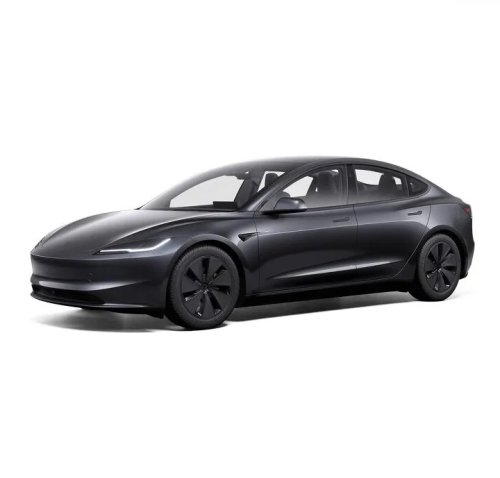







NTSB Says the Tesla That Killed a Katy Grandmother Wasn't Self-Driving. That's Not the Relief Tesla Wants It to BeTesla did not build the software that killed Martha Avila. That's the headline finding from the National Transportation Safety Board, and Tesla wants you to sit with it. The 76-year-old died in June after a Model 3 tore through the front wall of her Katy, Texas home doing better than 70 mph on a street posted for 30. Full Self-Driving was active moments earlier. Then it wasn't. The driver mashed the accelerator to the floor, and the software got out of the way, exactly as it was designed to.That last detail is the real story here, and it has almost nothing to do with artificial intelligence.According to the NTSB's preliminary findings, 44-year-old driver Michael Butler had engaged FSD (Supervised) before the crash, then manually overrode it by fully depressing the accelerator pedal. Data pulled from the car's event data recorder shows the Model 3 was traveling faster than 70 mph when it hit the house. Tesla's vice president of AI software, Ashok Elluswamy, said as much on social media a month before the NTSB confirmed it, posting that the driver had "manually overrode self-driving by pressing the accelerator all the way to 100%." Avila died at a nearby hospital. Her family says Butler told police he had Autopilot engaged before the crash.AdvertisementAdvertisementHere is the first thing worth sitting with: ten years ago, none of that would have been knowable this quickly, or this precisely.When Toyota faced its unintended-acceleration crisis in 2009 and 2010, it took NASA engineers on loan to the federal government nearly a year, and a review of roughly 280,000 lines of throttle-control firmware, to conclude that driver pedal error, not a software gremlin, explained the bulk of the incidents. The event data recorders in those cars weren't built to settle arguments. Tesla's cars are. Every modern EV is, in effect, a rolling flight recorder, uploading pedal position, steering angle, speed, and system state in real time. That's a genuine advance for crash investigation, and it's the reason regulators can now say "100 percent pedal, 70 mph, FSD disengaged" within weeks of a fatal crash instead of years. Remember that the next time an automaker tries to keep its telemetry proprietary during a safety investigation.But precise data about who was steering the last five seconds of a car's life is not the same as an answer to the more important question: what is that car allowed to do once a human takes over?The answer, for every Level 2 driver-assist system sold in America today, Tesla's included, is: almost anything. Floor the pedal on a residential street with FSD or Autopilot engaged, and the system doesn't intervene, negotiate, or cap your speed against the posted limit. It disengages instantly and hands full authority back to the driver, full stop. There's no safety floor underneath that handoff. A 30 mph zone and an interstate on-ramp get the identical response: nothing.AdvertisementAdvertisementThat is not a Tesla-specific failing. It's an industry-wide design choice, and it's worth asking why. The European Union has required Intelligent Speed Assistance on newly type-approved vehicles since July 2024, using GPS and sign-recognition data to warn drivers, and in some configurations gently resist the pedal, when they exceed posted limits. Drivers can still override it. But the system pushes back first. The United States has no equivalent mandate. NHTSA has spent the last several years leaning on automakers to expand automatic emergency braking, not to limit how fast a car will go when a human wants to go faster.Reasonable people can argue about how much authority software should have over an attentive adult's right foot. What's harder to argue is that most drivers have any idea this gap exists. Tesla markets FSD as a system sophisticated enough to read traffic lights and negotiate lane changes, then, in the same breath, says the driver must remain fully attentive at all times because the car isn't actually autonomous. Both statements can be true. But the marketing sells the capability, the fine print sells the disclaimer, and the gap between those two pitches is exactly where crashes like the one in Katy happen.The NTSB's preliminary finding is genuinely useful to Tesla, and not just in the way it looks. It resolves the narrow factual question of who was driving. It says nothing about the separate, ongoing question NHTSA is chasing in its expanding investigations into Tesla's driver-assist behavior: whether FSD reliably detects hazards in poor visibility, whether its collision-avoidance systems intervene aggressively enough on their own, and whether Tesla has adequately warned owners about the limits of a system it markets, in name, as "full" self-driving. NHTSA escalated a probe into 3.2 million FSD-equipped Teslas in March over exactly that visibility concern. That investigation didn't end in June. It's still open. This crash simply isn't part of it, because in this one case, the software had already stepped aside.Since 2016, NHTSA has opened nearly 50 special investigations into crashes suspected to involve Tesla's driver-assist systems, with roughly two dozen deaths attached to that count, including a 2023 case where a Tesla on Autopilot drove into a pond. Some of those findings have gone the other way, faulting the system's limitations rather than the driver. That inconsistency is the point. A "driver override" finding in one case doesn't retroactively clear the system in the others, and Tesla's press strategy of dropping exculpatory pedal data on social media within weeks of a crash only works because it happens to be true here. It won't always be.AdvertisementAdvertisementThere's a quieter consequence to all of this that has nothing to do with software: insurance math. A driver-caused, 70-mph crash into an occupied home is exactly the kind of loss that overwhelms a standard auto policy. Most states set minimum bodily-injury liability limits in the tens of thousands of dollars, and even a well-insured driver's standard policy often caps out well below what a wrongful-death claim against an estate, plus a rebuilt house, actually costs. When the NTSB attributes a crash entirely to driver input, it doesn't just settle a product-liability argument in Tesla's favor. It routes the entire financial burden toward the driver's personal coverage, umbrella policy, and personal assets, which is a much shallower pool of money than a jury verdict against a trillion-dollar automaker. Fault and payout are not the same conversation, and this case is about to make that difference very real for one Texas family.So what should stick with you here, once the statistics fade? Not that Tesla's software is innocent this time, though the data says it is. It's that "supervised" self-driving, as sold in America today, has no ceiling. A system that can read a stop sign in the rain but cannot refuse a driver's demand to triple the posted speed limit on a residential street isn't really supervising anything. It's just watching. Katy is a preview of what happens when a driver decides the watching should stop, and the software, dutifully, agrees.Join our Newsletter, follow our Instagram page, and connect with us on Facebook.