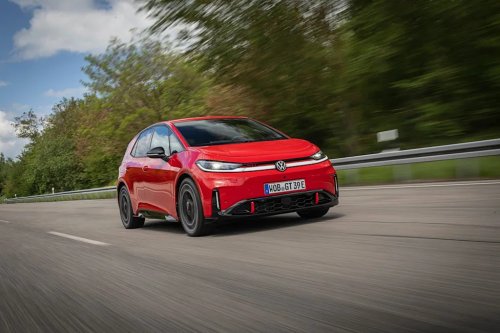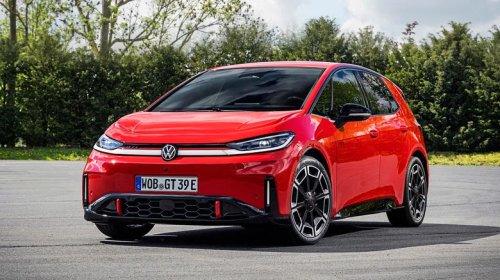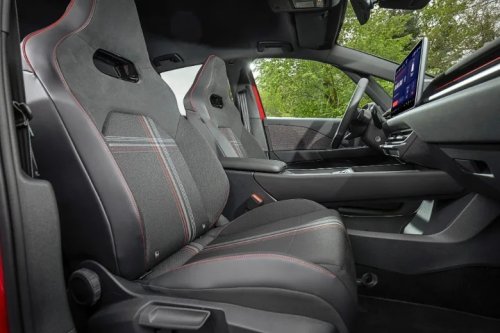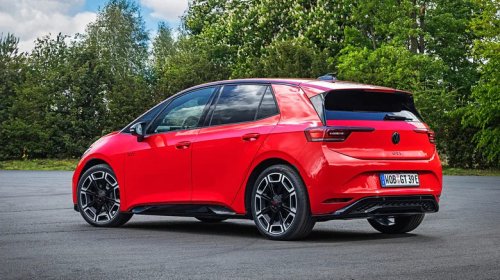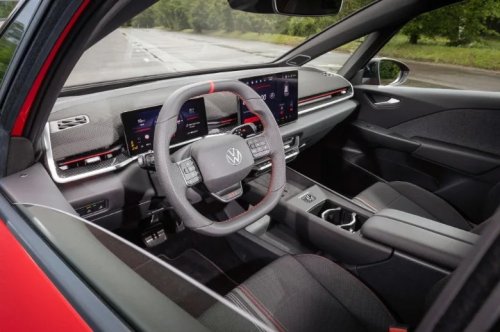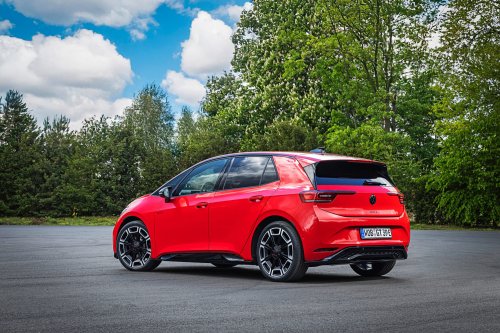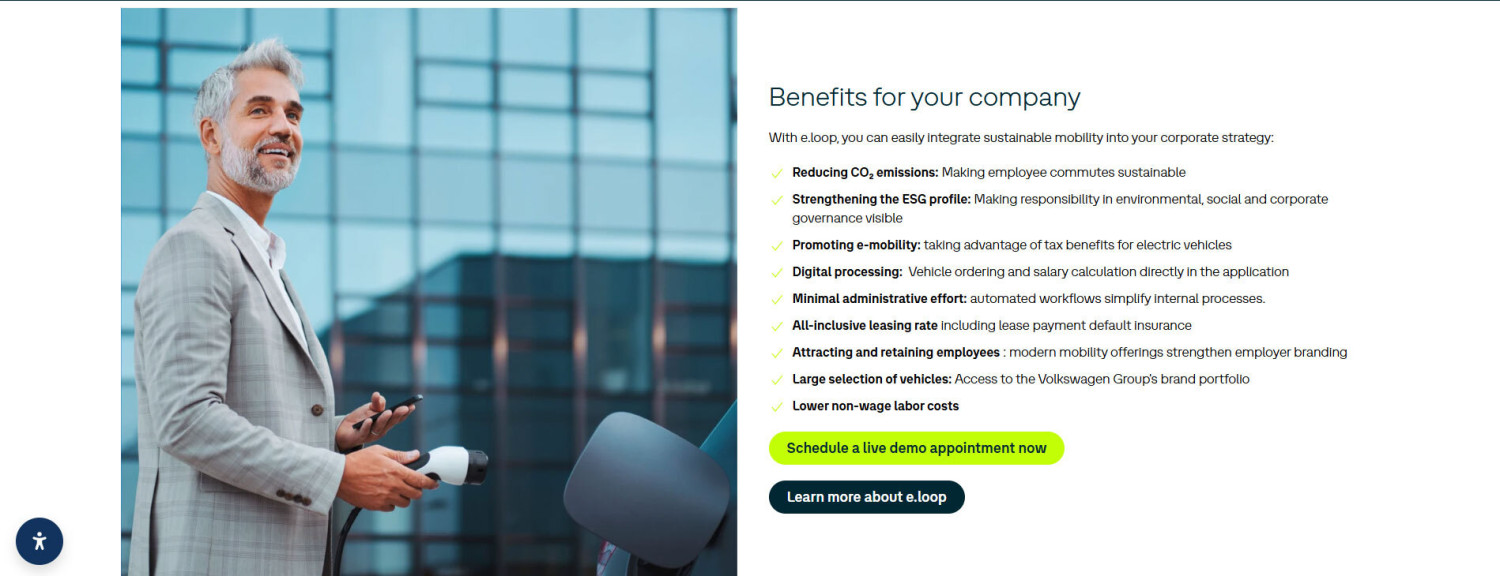
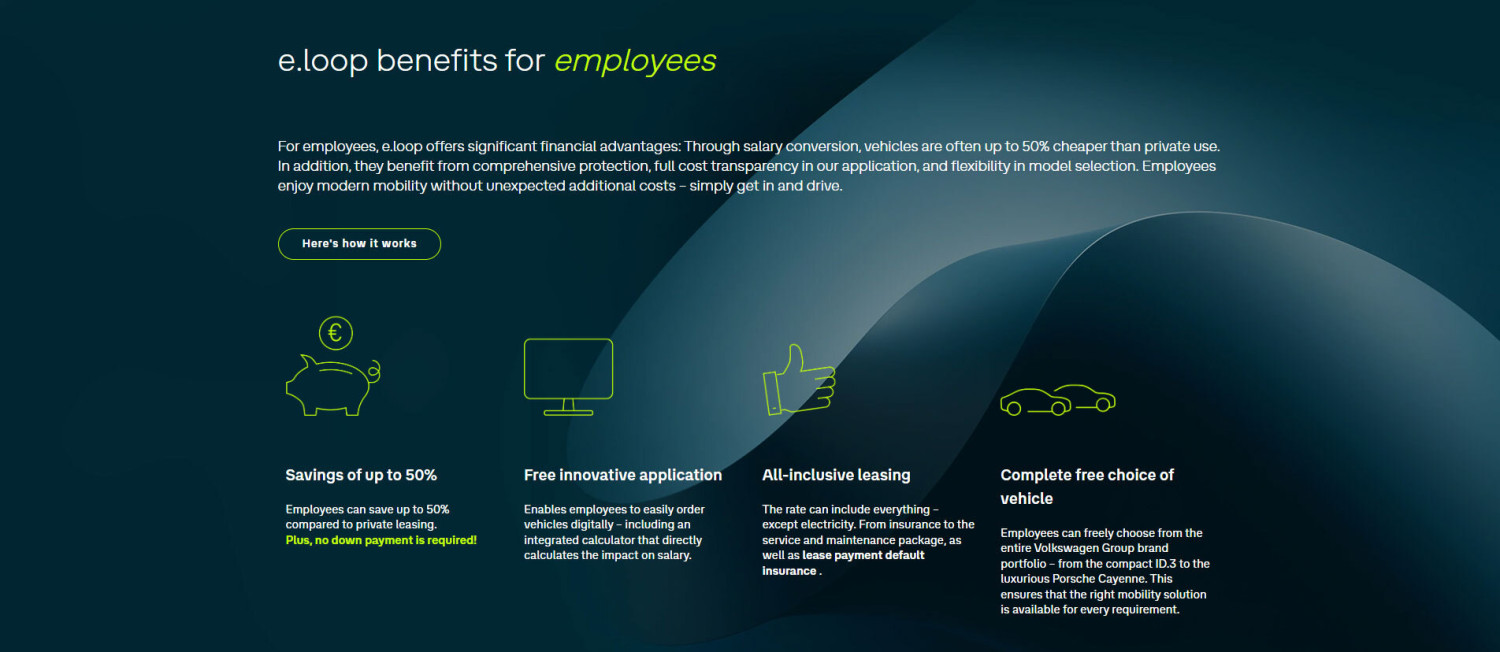



















The Volkswagen Group has launched an attractive new program in Germany. Known as e.loop, it enables employers to offer their employees cheap EVs. Drivers can save up to 50% compared to a traditional 24 or 36 month lease. Volkswagen Group Retail Deutschland (VGRD) has rolled out an “innovative salary conversion” program that enables shoppers to get discounts on electric vehicles. This isn’t pocket change as the company noted customers can save up to 50% compared to private leasing without a down payment. The program is known as e.loop and it effectively sees employers lease a new EV for their employees with money taken out of their salary. That sounds a little convoluted, but the automaker said the employer signs an agreement with VGRD and then employees can select their desired vehicle online. “The monthly payment is deducted directly from gross income as part of a salary sacrifice arrangement, automatically resulting in a benefit in payroll taxes.” More: VW’s New ID. Polo Starts Under $30K And Brings EVs To The Masses Volkswagen suggests this is as simple as a four or five step process, and much of it can be done online. They went on to note the program should be attractive to employers as it enables them to take advantage of tax benefits for electric vehicles, helps retain and attract workers, and improves their Environmental, Social, and Governance (ESG) profile. They added it requires minimal administrative effort and provides access to everything from the Volkswagen ID.3 to the Porsche Cayenne Electric. Employees get significant savings and all-inclusive ownership. This includes the vehicle, insurance, and maintenance. Volkswagen suggests the process is relatively straight forward and the hardest choice is selecting what EV you want. Automobilwoche says the program is similar to company bike initiatives and customers can choose between 24 or 36 month terms. The program already appears to be a hit as VGRD said interest is “very high” and officials believe the e.loop program could account for 5-10% of new cars sales in Germany by 2030. While the program sounds like a win-win for employers and employees, there appears to be some possible downsides. The biggest is that companies could get stuck with a car after an employee leaves the organization.