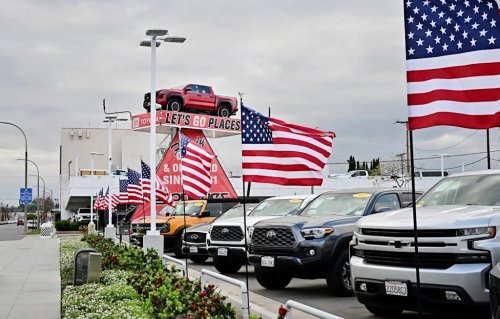
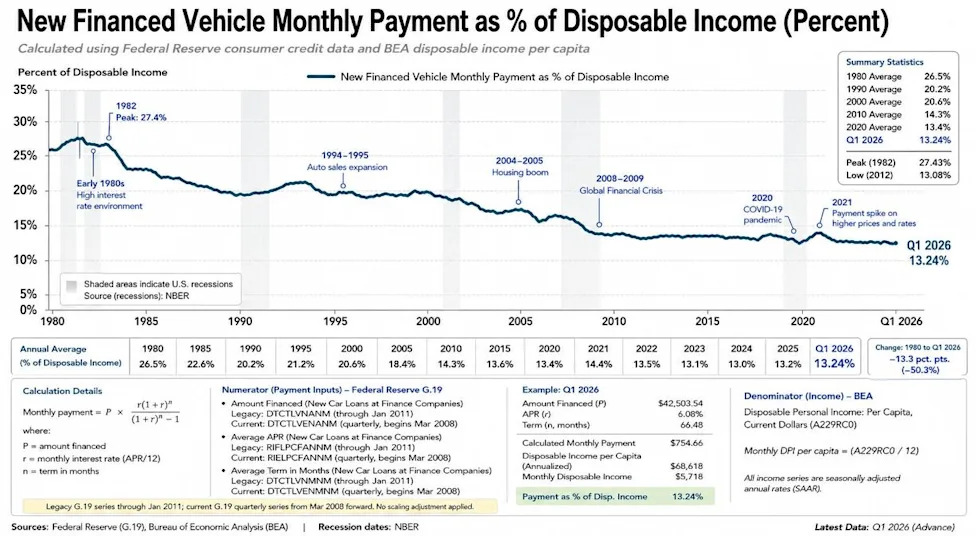
Source: AutoGuideSource: AutoGuideNorth America is facing an affordability crisis, and a large part of that involves automobiles and the prices associated with them. Though seen as a big, looming black cloud, there actually some upsides to this whole mess, or at least that's what can be taken from looking at the data in a certain way.new vehicles are getting easier to afford comparatively at leastOh his Substack, Glenn Mercer points out that while there's no disputing how expensive new cars are, the affordability crisis might be overstated. For one, high prices don't necessarily mean lower profits. Take the high-end manufacturer model, for example: Fewer vehicles sold isn't a bad thing, so long as the margins offset what would otherwise necessitate higher volume.AdvertisementAdvertisementAdditionally, Mercer points out that there isn't really any evidence that people buying used cars today (because of the high price of buying new) don't have a real correlation with them not becoming future new-car buyers. Those who are priced out now won't necessarily be so in the future.Likewise, since the new car market is primarily composed of those who aren't considered low-income, higher new car prices don't have a massive impact on those looking to purchase new. Those who qualify for prime or sub-prime loans aren't changing much.Source: Federal Reserve (G.19), Bureau of Economic Analysis (BEA)Source: Federal Reserve (G.19), Bureau of Economic Analysis (BEA)And yet, the biggest concern that Mercer notes as being widely discussed is that there's a debt bubble blooming under the rising prices and increasing loan terms. However, the data shows that the percentage of average disposable income that new-car monthly payments comprise has remained flat, or even declined over time. Remember, this is widespread data being analyzed, not that which is coming from an echo chamber.AdvertisementAdvertisementThat said, the lengthening terms and increasing trade-in values may also mean that buyers are simply reworking loan terms to their favor, rather than cars necessarily becoming more "relatively affordable." With buyers keeping vehicles longer than they ever have, the data also represents those who can truly afford buying new, while those low-income or deeply in debt would-be buyers just don't buy new cars in the first place.This is obviously a very complicated situation, not helped in any sense by flat wages and ever-increasing prices for most consumables. With everything so intertwined, Mercer's assessment that car payments aren't any less affordable is only one view at the cross-section, but it is an interesting way to see things.



















 +46 others