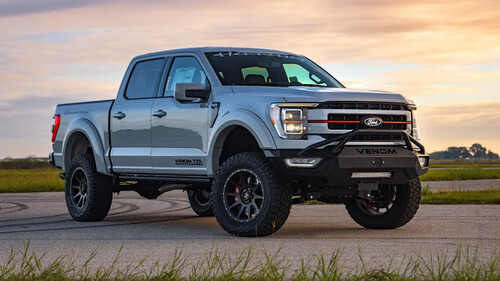
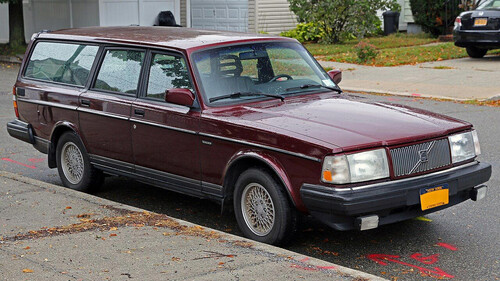
It may come as a shock, but the auto industry wants to extract every dollar it possibly can from you. That’s why the prices of new fully loaded vehicles keep creeping up, and the average new full-sized pickup truck like the Ford F-150 or the Chevrolet Silverado is an astonishing $66,700. And this is at a time when consumers are pinched when buying anything and gas is $4.50 a gallon.Want the powerful 6.2-liter V8 in your road commando Silverado? Well, get ready for a miserable 15 mpg in the city. Now drive that vehicle around town 10,000 miles with that gas price—the cost is $3,000. The same trip in my 33-mpg-in-the-city 2020 Honda Fit on $3 gas? $909. The result is an increasing truck fatigue, translating as the “peak truck” phenomenon, which may have already been passed. A Dave Cantin Group report last year recorded a 3 percent year-over-year decrease in truck-buying intent, and an accompanying 3 percent increase in intent to buy sedans again. And that survey, of course, was recorded long before the Strait of Hormuz got blockaded and prices soared. Karl Brauer, executive analyst at iSeeCars.com, told Autoweek, “It’s common for the auto industry to move in cycles, and after two decades of rising SUV and falling sedan sales it seems the momentum is finally shifting. SUVs have an undeniable advantage over sedans in terms of functionality, so they’ll remain the dominant vehicle in the consumer market. But in a world of turbulent fuel prices and increasing urban density, the sedan has a lot to offer folks who want to lower their transportation costs while being honest about how much vehicle they really need.”Ford once sold cars in the US, like this Fiesta. Not anymore.In the first quarter of 2026, sales of the Ford F-Series were down 16 percent year-over-year. The Silverado saw a more minor decline. Sky-high purchase prices are pushing the trend toward truck alternatives. According to April data from Cox Automotive, compact cars were selling for an average of $27,590, compared to $37,514 for the average compact SUV. “Consumers on car shopping sites are increasingly searching for a most unlikely vehicle: The good old sedan,” reports the Detroit Free Press. People aren’t yet buying huge numbers of sedans. Recent surveys still show that 43 percent of new buyers want an SUV or crossover, while 23 percent are focused on sedans. But non-truck searches are up sharply, in line with what’s happening at the dealerships. In April, compact car queries were up 12 percent, with the Toyota Camry (starting at $29,300) and Honda Accord (starting at $28,395 with a 1.5-liter turbo four) at the top of the search lists. Of course, these cars never actually went away. Toyota sold 78,225 Camry sales in March, an increase from 70,308 in March last year. Hybrid Camrys are outselling the company’s RAV4, Highlander and 4Runner—SUVs all—in 2026.2019 fiesta se sedan hot pepper red metallicThis is not good news for automakers, particularly American ones, who have largely abandoned cars. Ford’s only car is the Mustang in 2026, and Chevrolet’s list stops at the Corvette. Chrysler has no sedans. But there were 130 sedans on the U.S. market in 2016—now there are less than 50.Car executives should be keeping an eye on what young people are saying. They’re getting tired of looking at cookie-cutter compact SUVs, and truck interest among the younger folk is low. An Escalent survey last year of 1,000 teenagers aged 14 to 19 found more than half—51 percent—saying they saw themselves in a sedan in the future. Only 31 percent chose an EV, and 14 percent were into trucks. Again, that was last year before oil hit the wall. Automakers are beginning to realize they may be wrong-placed in the marketplace, but they’re still speculating instead of acting. Ford CEO Jim Farley recently told Automotive News, “The sedan market is very vibrant. It’s not that there isn’t a market there. It’s just [that] we couldn’t find a way to compete and be profitable. Well, we may find a way to do that.”General Motors CEO Mary Barra said she still sees the sedan market as “significant,” but that was back in 2018. Since then, GM hasn’t done much to protect its sedan flanks. Volvo EX60.’ expand='Volvo Cars President and CEO Håkan Samuelsson said at the introduction for the EX60 in New York that reliance on SUVs and trucks has probably “gone too far” and that the brand’s famous wagons might be coming back. “We are looking into it,” he said. “We may not have only SUVs five years from now.”Some programs are being greenlit. Buick is developing a new sedan to sit on the next-gen Cadillac CT5 platform (is this driven by Chinese demand?), and a new Camaro is coming. Chrysler may have a sedan on the way. Maybe speed the timetable up a bit? To be fair, the caution is motivated by uncertainty—an accord with Iran could happen, and gas prices could go back to pre-war levels. It’s happened before, and consumers went back to gas guzzlers. Nobody’s telling the automakers to abandon SUVs, but a well-rounded portfolio—rather than 100 percent investment in trucks and SUVs—might actually be prudent.