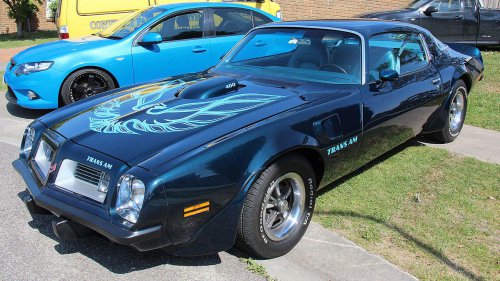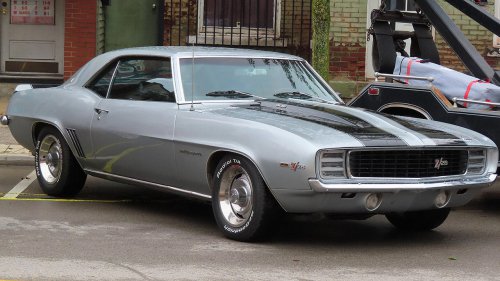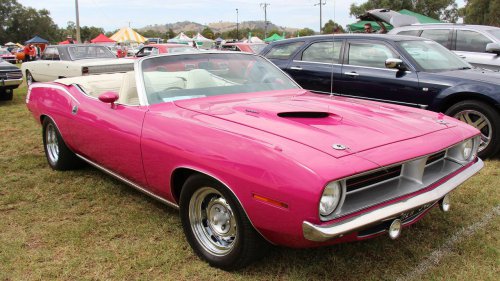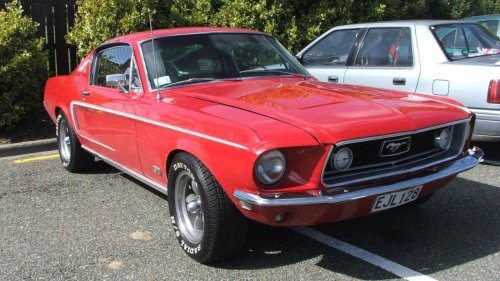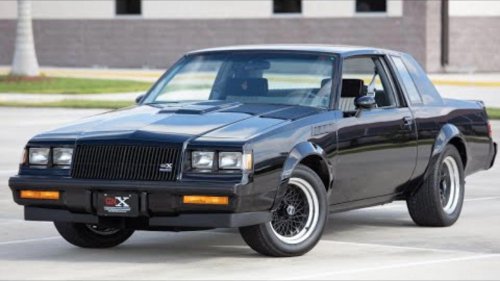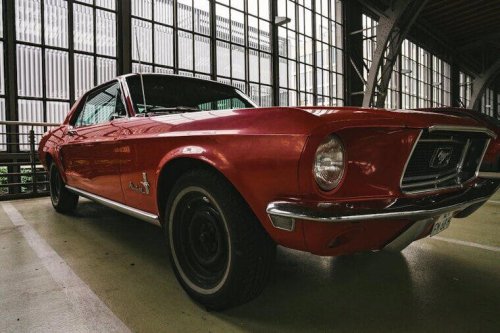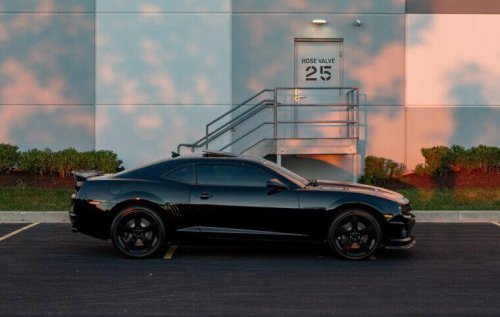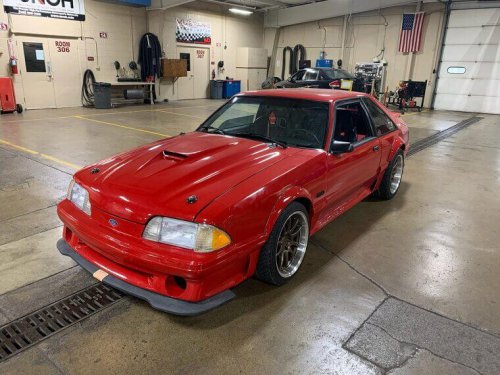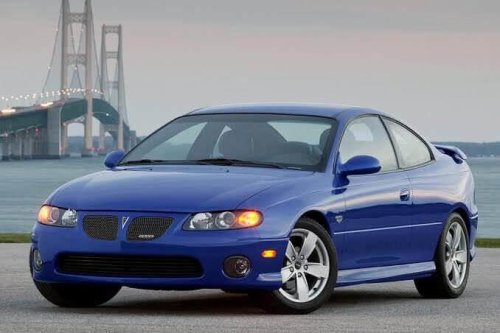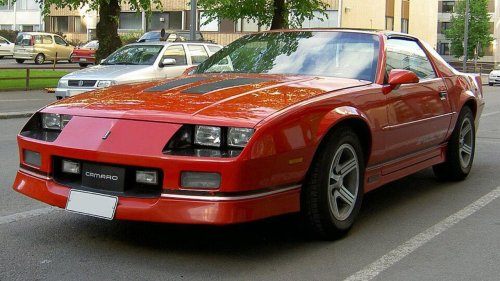
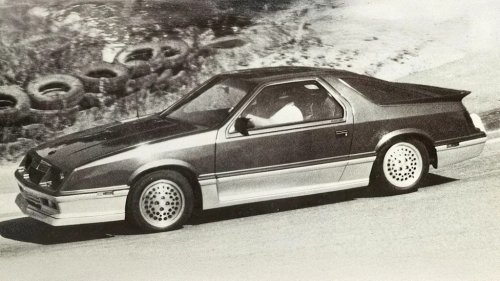
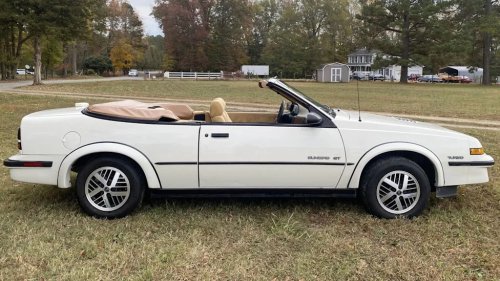
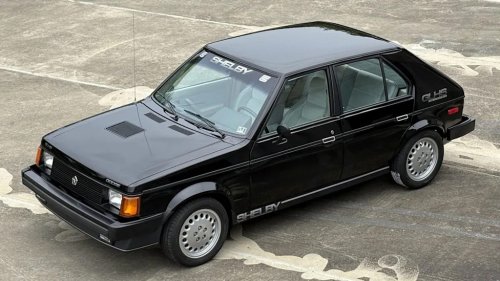
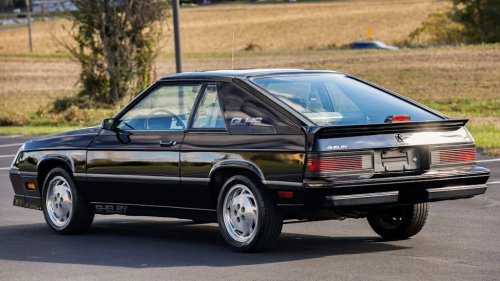
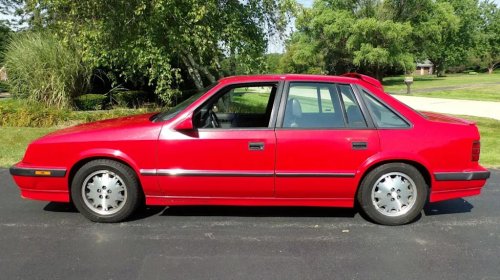
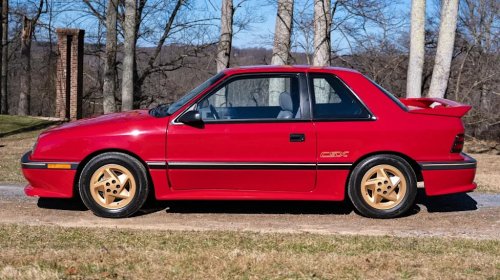
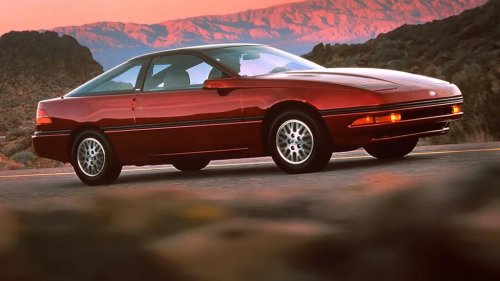
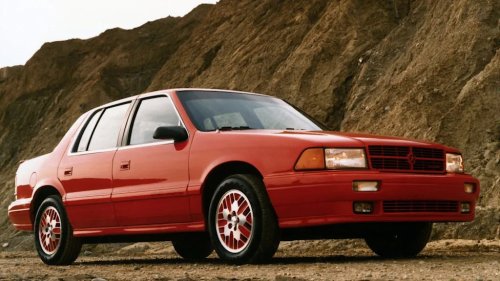


















8 Front-Drive Turbos Defined That 1980s Speedryan lugo - MotorTrendThe 1980s didn't offer a lot of variety in terms of rear-drive muscle, as the Ford Mustang and the Chevrolet Camaro/Pontiac Firebird twins were joined by the more expensive Buick Grand National as the only real performers around. Sure, there were other wannabes out there—GM's G-Body offered disappointing "looks quick" packages like the Chevrolet Monte Carlo SS, while Buick did its best to deliver turbo six-cylinder power across its T-Type lineup—but these weren't the affordable options most budget-conscious enthusiasts were looking for.Instead, the inexpensive speed spotlight fell on a smattering of econoboxes that took the original muscle formula of a small, cheap car with a big engine and adapted it to the '80s standard of small, cheap car with a turbocharged engine. This was the segment where the average person could spend their dollars on something that promised full-throttle fun without having to eat ramen, and more than a few automakers dove in head first, eager to scoop up muscle-seeking shoppers by turbocharging as many front-wheel-drive compacts as they could.Here are eight of our favorite examples of front-puller turbocharged muscle.1) Dodge Daytona Turbo ZPhoto credit: MotorTrend ArchivesIn the early 1980s, the American muscle scene was looking weak-kneed. Models like the Ford Mustang and the Chevrolet Camaro were struggling to crack 150 horsepower, even with V-8 options under the hood. This left the door wide open for cheap, four-cylinder fun to peel customers away from more established badges.AdvertisementAdvertisementThe 1984 Dodge Daytona Z was one of the first of these potent front-pullers, a spiffy two-door hatchback with long coupe lines that poured 142 horsepower to the ground (146 horsepower by 1985), thanks to the 7.5 pounds of boost being fed to its 2.2-liter engine. You'll be hearing a lot about that powerplant on this list of FWD turbo monsters, as it enjoyed a lengthy and varied career at the Pentastar, but the Daytona Z was one of the first models to truly push its potential.Matched with a five-speed manual gearbox, the turbo-four was enough to send the Dodge to 60 mph in 8.2 seconds, which passed for scintillating in an era starved for speed. Journalists raved about the Turbo Z's engine, calling it the "Chevrolet V-8 of the eighties, arguably the best motor made in America."Dodge continued to develop the turbo Daytona throughout the decade. By the time of its first redesign in 1987, the Turbo Z had evolved into the Shelby Z, featuring an intercooled Turbo II version of that same 2.2-liter mill now good for 174 horsepower. In 1992, the Daytona IROC R/T (and Spirit R/T sedan, see below) arrived with 224 horsepower on tap from the Turbo III edition of the four-cylinder and remained at the top of the heap until the Daytona was retired the following year.2) Pontiac SunbirdPhoto credit: Bring a TrailerThe Sunbird shed its 1970s rear-wheel-drive platform to adopt front drive when it was redesigned for 1982. Also known as the 2000 Sunbird, in its third year of production it featured its first turbocharged engine option, a 1.8-liter four-cylinder good for 150 horsepower. That might not sound like much, but it was more than the Camaro Z28's 5.0-liter V-8 was capable of just a few years prior, indicating just how much drivetrain engineers were learning about engine management systems in the early 1980s.AdvertisementAdvertisementAcceleration was respectable, cresting 60 mph from a standing start in just a few ticks over eight seconds. Initially offered in the S/E model, Pontiac kept the Sunbird's turbo engine available in the GT trim as the decade wore on, found in convertible, coupe, hatchback, and even sedan body styles. General Motors also spread the turbo fun to the Buick Skyhawk (a badge-engineered version of the Pontiac), as the T-Type trim level from 1984 to 1987.By 1987, the engine had grown to 2.0 liters and 165 horsepower, pushing 0–60 times down into the low-seven-second range, but in 1991, a V-6 replaced it on the order sheet, making the turbocharged Sunbird one of the rarest and least recognizable of the '80s front-wheel-drive toys.3) Dodge Omni GLH/GLH-SPhoto credit: Bring a TrailerDodge's Omni econo-hatch arrived at the end of the 1970s as an inexpensive fuel-saving commuter, and out of the gate there was very little for enthusiasts to get excited about, even though its frugal ways made it Motor Trend's 1978 Car of the Year. That all changed in 1984, when Dodge unveiled the GLH edition of the car.Tuned by Carroll Shelby (with GLH standing for "Goes Like Hell"), the Omni underwent a similar evolution as the Daytona—only this time, it was in the form of a four-door hatchback that for the most part looked about as unassuming as any other grocery getter in the parking lot. The first model year skipped out on forced induction, but by 1985 the GLH-T option added the 146-hp version of Chrysler's 2.2-liter turbocharged four-cylinder engine.AdvertisementAdvertisementThe stakes were raised in 1986 with the GLH-S ("Goes Like Hell S'More"), which appeared as a 500-example limited edition. It bowed a version of the Turbo II engine found in the Daytona Shelby Z the following year, albeit without any of the internal hardening, with output climbing to 175 horsepower and 175 lb-ft of torque. Not only was it quick for its time with a sub-15-second quarter mile, but HOT ROD magazine got together with Shelby and ran the Omni GLH-S on a road course against a 1965 Shelby GT350 Mustang, gapping the old car easily thanks to the lightweight, big-tired Omni's cornering prowess.4) Shelby Charger GLH-SPhoto credit: Bring a TrailerThere's an interesting front-wheel-drive turbo postscript to the Omni story. Dodge spun off a coupelike hatchback from the Omni's L-body platform, slapping Dodge Charger and Plymouth Turismo badges on it. It gained the Turbo I 2.2-liter motor in 1985 as the Shelby Charger/Turismo Duster, and in 1987 the Dodge kept the GLH-S badge alive for one more year, borrowing its drivetrain from the 1986 Omni.Thanks to Shelby's aftermarket accessories catalog, it was even possible to crank boost up to 14 psi using a Stage II ECU upgrade, which resulted in a mighty 200 horsepower and 230 lb-ft of torque. Dodge sold twice as many two-door Shelby Charger GLH-S as it did Omni GLH-S four-doors.5) Dodge/Shelby LancerPhoto credit: Bring a TrailerBy now, you're probably realizing Chrysler was very much into mixing and matching its 1980s-era front-wheel-drive compact platforms, stretching and dicing them to suit whatever additional models they could cram into showrooms. These cars were cheap to build and easy to sell, and as a result there were a surprising number of turbocharged front-wheel-drive editions aimed at fun-seeking shoppers.AdvertisementAdvertisementThe company's partnership with Carroll Shelby played a significant role in all of these shenanigans, too. The 1987 Shelby Lancer, for example, was a small-volume four-door sedan initially modified by Shelby Automobiles in California, that featured a 175-horsepower, 2.2-liter Turbo II four-cylinder engine, giving it a 0–60-mph time of just over seven seconds.When Chrysler saw how popular these models were among enthusiasts, it moved production from Shelby's shop to its in-house factory, renaming them the Dodge Lancer Shelby in the process (and offering a 146-horsepower Turbo I automatic option). Built from 1988 to 1989, these cars carried over the same high-performance suspension components that made them much better to drive than the standard Lancer, which was very much an econobox.6) Shelby CSX/T/VNTPhoto credit: Bring a TrailerAre you ready for perhaps the most specific implementation of the 2.2-liter turbocharged engine to ever wear the Shelby name? Meet the Shelby CSX, a notchback coupe based on the Dodge Shadow (but resolutely eschewing any Chrysler-related branding).The CSX, or Carroll Shelby eXperimental, arrived in 1987 and featured a 175-hp, 2.2-liter Turbo II four-cylinder engine. Shelby lifted bits and bobs from the Daytona parts bin to help improve the car's handling, and its small size and light weight made it a fun alternative to naturally aspirated import coupes of its time.AdvertisementAdvertisementThere were even fewer original CSX models built than there were Shelby Lancers, but that didn't stop the shop from producing a few more variations on the theme. The cheaper CSX-T stepped down to 146 horses via its Turbo I engine and sold considerably more examples as a result, but the real prize was the CSX-VNT, which appeared in 1989.Equipped with a Turbo IV engine featuring a "variable nozzle turbo" that was designed to reduce lag, it offered the same 175 ponies (but without the intercooler) as the first-year CSX but increased torque to 205 lb-ft, giving it a top speed above 150 mph and, with the right driver, a sub-seven-second 0–60 time. Just 500 examples of the CSX-VNT were sold.7) Ford Probe GT/Mazda MX-6 GTPhoto credit: FordFord came late to the front-drive turbo muscle game, having first experimented with forced induction in the Mustang when the Fox platform arrived in 1979. The Probe was originally intended to replace Ford's pony car for the 1989 model year, but outcry from its legions of fans pushed the hatchback onto a parallel track.The Probe's turbocharged four-cylinder motor was a 2.2-liter design lifted from corporate partner Mazda and rated at 145 horsepower and a very healthy 190 lb-ft of torque. This gave the GT trim level a 0–60 time of 6.7 seconds, with its somewhat larger size keeping its quarter mile above 15 seconds.AdvertisementAdvertisementMany of the Ford Probe's chassis and mechanical details were shared with the Mazda MX-6 coupe, although the wedge-shaped styling of the American-badged model was quite different from that of its Japanese sibling. This meant you could benefit from roughly the same performance in a different visual package as long as you accepted full-throttle acceleration that was a smidgen slower.Starting in 1990, Ford eventually offered a V-6 edition of the Probe that was less powerful than the turbocharged GT. By the time the car was redesigned for 1993, the turbo was off the table, replaced by a different V-6 engine that topped it in horsepower but still couldn't touch the four-cylinder in terms of torque.8) Dodge Spirit R/TPhoto credit: DodgePerhaps the least likely front-wheel-drive turbo monster on our list is also the most impressive. It's also a bit of a cheat, because while the Dodge Spirit arrived in showrooms at the tail end of the 1980s, the model we're discussing didn't go on sale until the beginning of the 1990s. Since it's one of the final K-car-derived turbo monsters, however—and perhaps the most impressive—we're going to include it.At first glance, the Dodge Spirit R/T looks very much like every other long-forgotten four-door box sedan to have ridden on a derivative of Chrysler's K-car platform, but closer inspection reveals an air dam, side skirts, and striping that hint at the wonder sitting under its hood, blowing the cover for those in the know.AdvertisementAdvertisementWhat makes this rental fleet mainstay so special? Lurking between the front fenders is a version of Chrysler's 2.2-liter four-cylinder turbo that's seen its head breathed on by the engineering team at Lotus. That translated to 224 horsepower and 217 lb-ft of torque, as well as a top speed of 142 mph. Even better? If you managed to hook up its front tires, it rocketed to 60 mph in just 5.8 seconds, which made it the quickest sport sedan sold in North American in 1991 and 1992—its only two model years. It's one of the stealthiest sleeper performers of all time and represents the pinnacle of Chrysler's "turbocharge everything" philosophy.