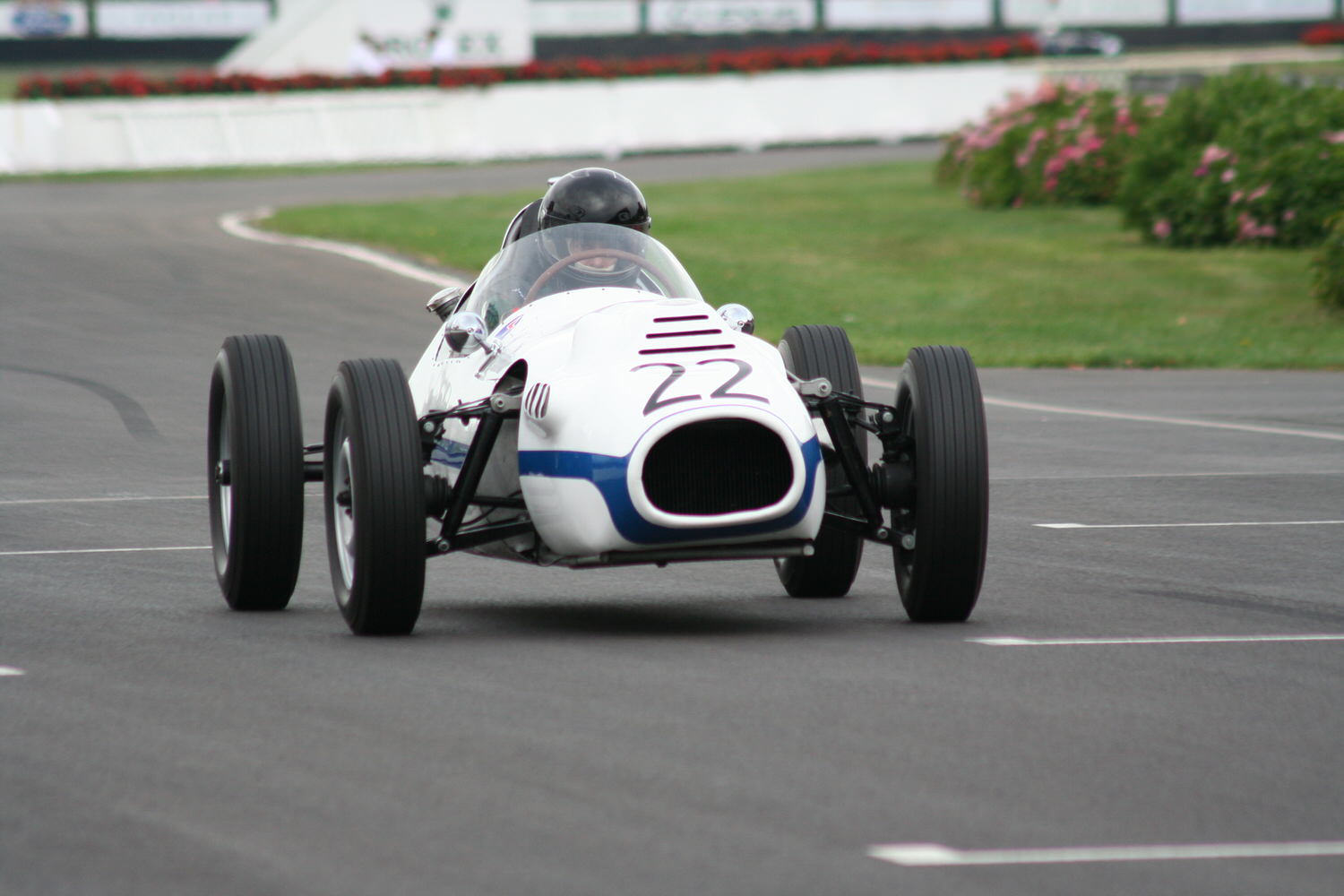
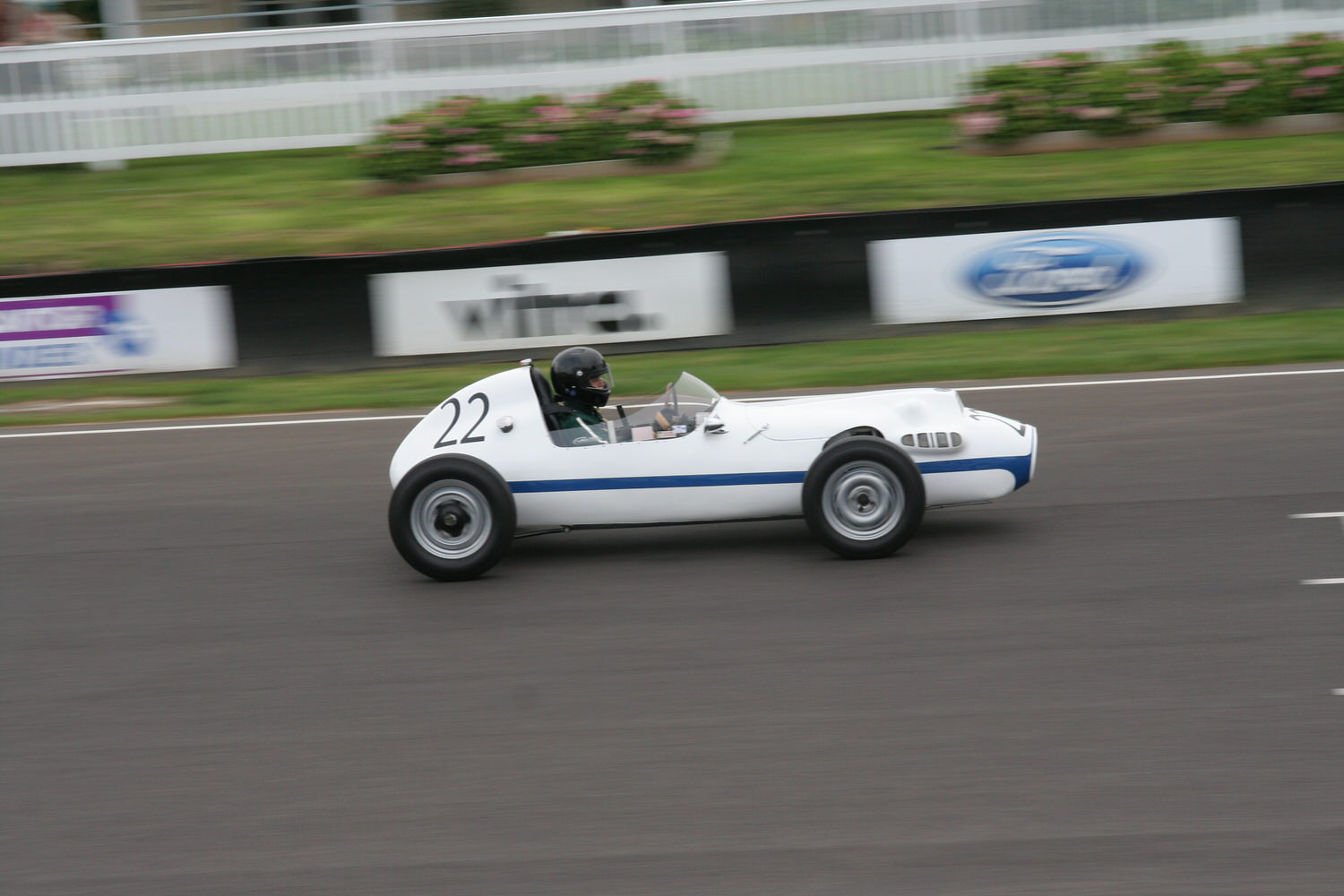
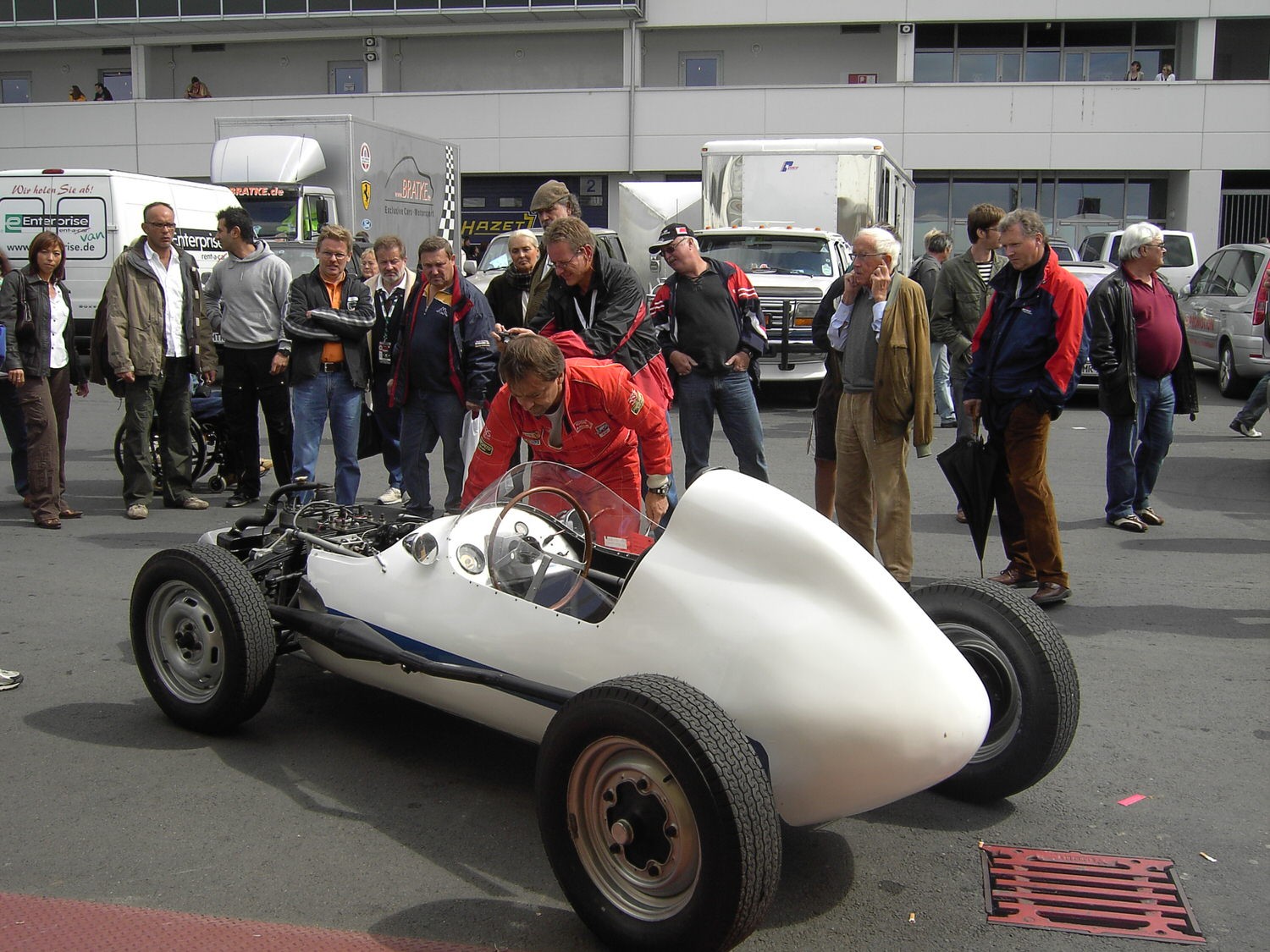
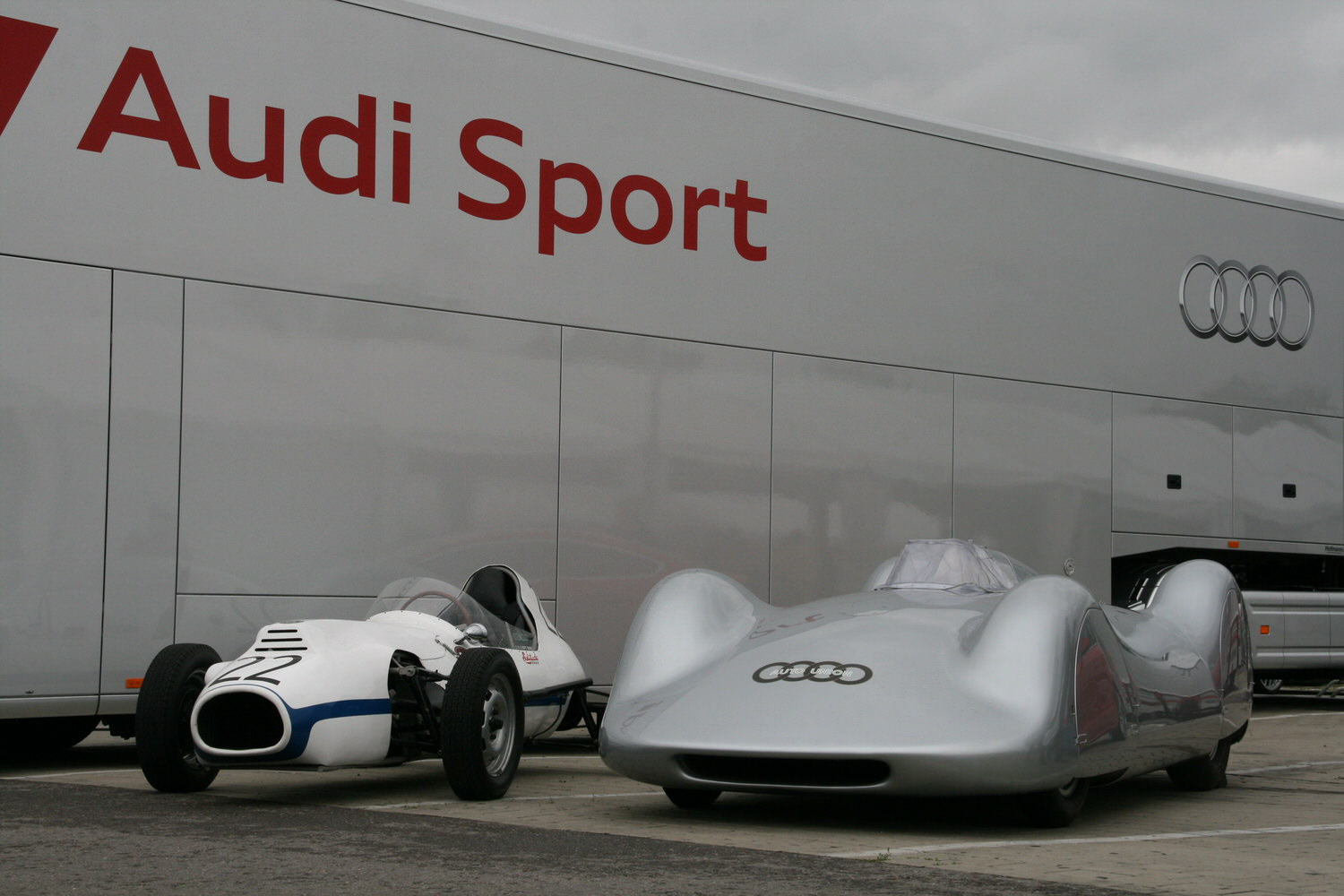
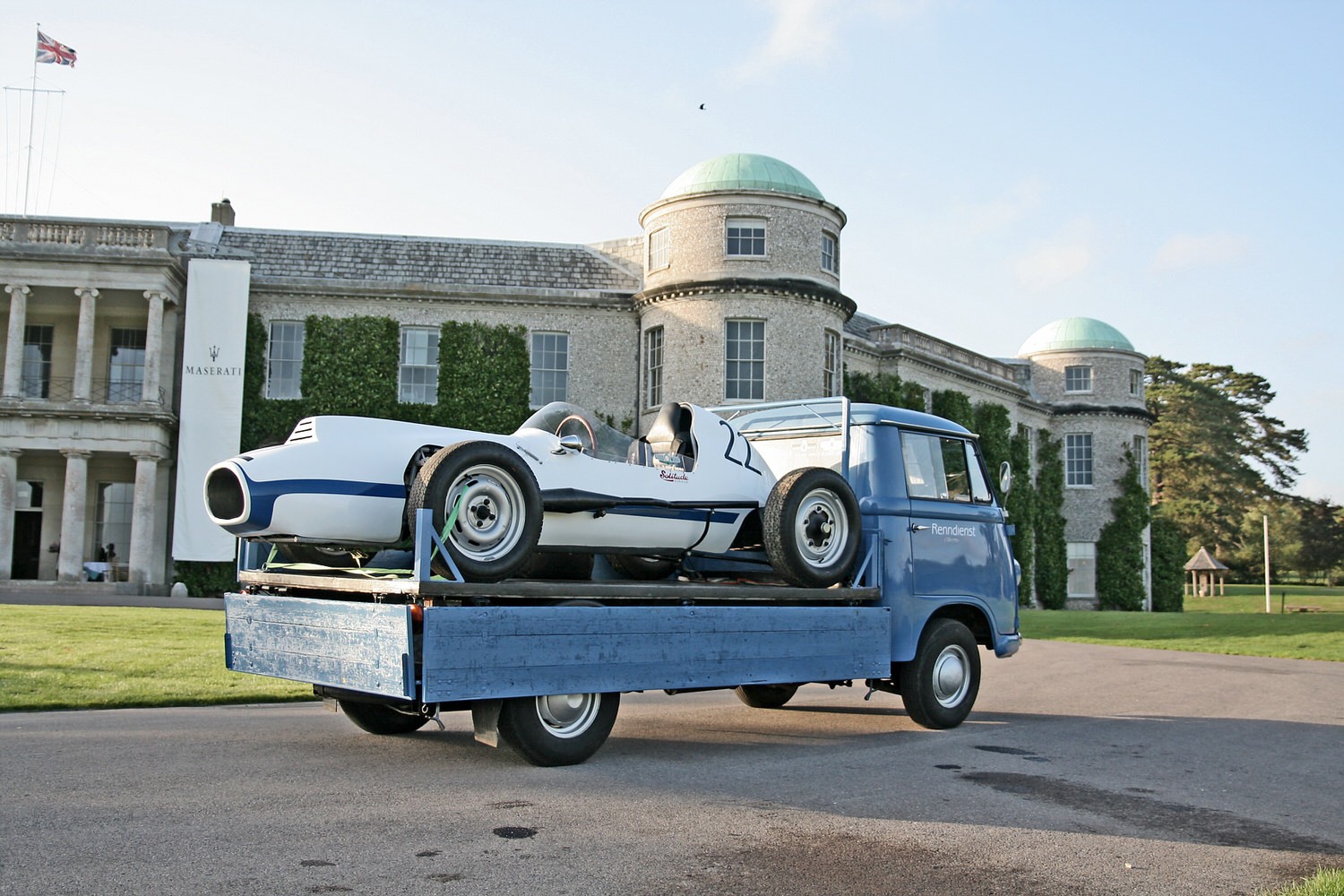
This Mitter-DKW Formula Junior raced in Monaco in 1960—and at Solitude. It was subsequently raced in South Africa as part of the racing team led by Le Mans winner Alan van der Merve. Starting in 2006, its last owner systematically brought the Formula Junior back to its historic venues—ideally with the key figures from that era. Among them were Kurt Ahrens, Hans August Stausberg, Eberhard Mahle, and Gerhard Mitter Jr. A highlight of more recent times was the invitation from Lord of March to the Goodwood Revival in 2006. Since then, the Monoposto has been—and remains to this day—a sought-after guest at every traditional motorsports event. An invitation has already been extended for the 2027 season to the major anniversary event “100 Years of the Sachsenring,” taking place May 7–9. Preamble Built in Leonberg near Stuttgart, the Formula Junior is a piece of motorsports history. The Monoposto represents a time when technically savvy enthusiasts could build race cars—and an era in which privateers could sometimes tune their cars better than a manufacturer. Gerhard Mitter was considered the guru of DKW engines. He understood the specific flow characteristics of three-cylinder two-stroke engines even better than his competitors, such as Wolf-Dieter Mantzel. He supplied engines, for example, to the Hartmann racing team in Berchtesgaden and Monteverdi (MBM) in Basel. And he even held negotiations with Lotus founder Colin Chapman. Gerhard Mitter won the Drivers’ Championship, the Manufacturers’ Championship, the Engine Championship, and the Teams’ Championship for the 1960 season—first with the car described here and later in the season with his Lotus-DKW! Added to these are the championships for the fastest laps as a driver, as a manufacturer, as an engine supplier, and as a team! The Mitter-DKW has been in its current owner’s possession for 20 years and has competed, among other events, at the Goodwood Revival. About Gerhard Mitter Born on August 30, 1935, in the Sudetenland, Gerhard Mitter was one of the most successful race car drivers in postwar Germany. In 1964, he became a Porsche factory driver and, shortly thereafter, followed in the footsteps of Edgar Barth—who had died in 1965—at the European Hill Climb Championship, with great success. In 1966, 1967, and 1968, Mitter was virtually unbeatable on the hill and brought the European Hill Climb Championship title back to Zuffenhausen all three years. After that, Mitter became an indispensable part of the Porsche driver lineup—and was regarded as a great hope for the Porsche 917, which was slowly getting ready to make its debut. His tragic death in 1969 brought all these plans to an abrupt end. At the tender age of 17, in May 1952, Mitter competed in his first road race on an NSU Rennfox that had been specially modified for racing. His greatest success on two wheels was winning the German Junior Championship in the 125cc class. As early as 1959, he switched to four wheels and immediately won the Austrian Formula Junior Cup in a race car he had designed and built himself. The History of the Mitter-DKW Following his success in the 1959 season with that one-off car, Gerhard Mitter planned to build 12 Formula Junior race cars for the 1960 season, as well as spare chassis. It is not clearly documented how many of the monoposti were completed. Gerhard Mitter Jr. mentions 10 cars. Three of these front-wheel-drive race cars still exist today. Among them is the car described here, with its unique racing history—Mitter’s first factory car of the 1960 season. After strong results in the early months of the season, Mitter traveled to the Formula Junior Grand Prix in Monaco on May 28, 1960. Fifty drivers competed in practice and for qualification for the race. Ultimately, 23 cars were able to start the race; Mitter (start number 56, photo on page 104 in the book *Les Grand Prix de Monaco Formule Junior 1959 et 1960* by Michel Delannoy) was not among them. Front-engine cars no longer stood a chance of securing top positions on the circuit. On a whim, he met Colin Chapman on May 29, 1960—and, with financial support from Hans August Stausberg, purchased a Lotus 18 chassis. To demonstrate the potential of his engines, he installed one of them in this Lotus chassis in 1960 (making its debut at Solitude on July 24, 1960) and went from one success to the next; as a result, Colin Chapman began to consider using Mitter engines in his cars. In the U.S., DKW American Inc. even entered a Mitter DKW in Formula Junior races for the prestigious Vanderbilt Cup in 1960 as a promotional effort; the event went down in history as the most significant Formula Junior race of all time. At the wheel was none other than Carroll Shelby, who, however, did not get along particularly well with the front-wheel-drive car and finished only in the middle of the pack. Vehicle Production Gerhard Mitter operated a gas station in Leonberg that also served as a DKW dealership. As photos show, the Monoposti were built in small-scale series production in a side room. The Vehicle Registration Certificate The ONS vehicle registration certificates (DIN A5) issued in the past are equivalent to the DMSB vehicle registration certificate and remain valid. The vehicle registration certificate describes the vehicle in several key aspects and lists the registered owner. Vehicle registration certificates are a science in and of themselves: It was common practice for the builder to issue all vehicle registration certificates, which is why he is listed as the first owner on all of them. Therefore, not all vehicles with this entry are necessarily factory-built cars. The decisive factor is whether the builder actually raced the vehicle. This information can be found on the following pages of the vehicle registration certificate under the heading “Entries Regarding Participation in Competitions.” However, only German events were recorded in the vehicle registration certificate. ONS stands for “Oberste Nationale Sportkommission für den Automobilsport in Deutschland GmbH” (Supreme National Sports Commission for Automobile Racing in Germany, Ltd.). Participation in races abroad—such as this Mitter-DKW’s appearances in Monaco and Reims, France—must be verified through other sources. The vehicle registration card for FIN 1960 0013, issued to Autohaus Mitter with the registration number SA 5001, 13/1960, is available as a set of copies. Originally, the car had the chassis number 1960 001. However, following a serious accident at Solitude, the vehicle was rebuilt using replacement frame 13 and sold to South Africa. There is a color photograph of the Solitude race taken by Erich Bode, which shows the blue stripe. Thus, number 13 is Bode’s Solitude car. Gerhard Mitter confirmed this lineage to Tobias Aichele in a letter in 2007. The livery is also visible in all black-and-white photos, except for the first race in Pferdsfeld. The vehicle registration certificate had not yet been issued for the first race in Pferdsfeld. Although Mitter had entered the races at Hockenheim and the Norisring (there are entries in the program booklets), he was not present at all. The Hockenheimring race took place at the same time as the Formula Junior Grand Prix in Monaco, and the race at the Norisring overlapped with the one in Reims. The Races in Detail 1960 Pferdsfeld Airfield Race – Driver: Gerhard Mitter – DNF Trier Airfield Race – Driver: Gerhard Mitter – 2nd place Wallberg Race – Driver: Gerhard Mitter – 1st place Formula Junior Grand Prix of Monaco – Driver: Gerhard Mitter – DNQ Roßfeld Alpine Hill Climb – Driver: Gerhard Mitter – 1st place Grand Prix de France, Reims – Driver: Hans-August Staussberg – DNF 23rd International Eifel Race – Driver: Erich Bode – DNF Solitude Grand Prix – Driver: Erich Bode – DNF 1961–1965 Races in South Africa – Driver: Sarel van der Merve (father of Le Mans winner Alan) 1966–1998 Owned by an Indian family and disappeared from public view 1999 Owner: Peter du Toit 2004 Porto – Driver: Brian Tylor 2005 Brands Hatch – Driver: Brian Tylor 2006 AvD Oldtimer Grand Prix – Driver: Tobias Aichele Goodwood Revival – Driver: Tobias Aichele Boxenstop Museum, Tübingen – Gerhard Mitter Special Exhibition – Exhibit 2007 AvD Classic Car Grand Prix – Driver: Tobias Aichele Schloss Dyck Classic Days – Driver: Hans-August Staussberg Schwetzingen Classic Car Gala – Exhibit 2008 Central Garage, Bad Homburg – “50 Years of Two-Stroke Engines with DKW” – Exhibit 2009 100 Years of Audi, Donauring – Driver: Tobias Aichele 2010 Boxenstop Museum Tübingen – Book presentation “Racing Legend Gerhard Mitter” – Exhibit 2013 Alpen Bergpreis Roßfeld at the invitation of Audi Tradition – Driver: Tobias Aichele Racing Drivers’ Afternoon at the Gerlingen City Museum on November 28 – Exhibition Exhibit 2017 90th Anniversary of the Sachsenring – Driver: Tobias Aichele Solitude Revival – Driver: Gerhard Mitter 2019 Solitude Revival – “50th Anniversary Commemoration of Gerhard Mitter” – Driver: Gerhard Mitter Jr. Schloss Dyck Classic Day – “50th Anniversary of Gerhard Mitter” – Exhibit 2021 Stadtpalais Stuttgart, The Legend of the Solitude Race – Exhibit 2022 Solitude Revival – Exhibit 2023 120 Years of the Legend of the Solitude Race – Exhibit 2025 Retro Classics Stuttgart – “90th Anniversary of Gerhard Mitter” – Exhibition Exhibit 2027 “100 Years of the Sachsenring” – The invitation has already been extended Technical Specifications Model: Mitter DKW Formula Junior Type: Monoposto Engine Type: DKW 3-cylinder (AU 1000) 1100cc Chassis: 1960 0013 Engine number: 16920 Vehicle registration certificate: No. SA 5001, 13/1960 Other: The vehicle has been in its current owner’s possession for 20 years. Condition description The Mitter DKW is back in working order after a few minor service jobs. Gerhard Mitter Jr. rebuilt the engine in 2006. It has been running smoothly ever since. The package includes very detailed documentation documenting all the races it has competed in, such as original race programs, starter and results lists, photos, trophies, and prizes, a copy of the original ONS pass, as well as all documents and entry forms from more recent times, such as those from Goodwood. A bound photo album contains numerous notes and memories written by eyewitnesses. The Option – Tempo Matador Race Transporter The first Tempo Matadors hit the market in 1949, powered by 25 PS Volkswagen industrial engines. However, Tempo had failed to secure a long-term supply contract, which allowed VW General Director Nordhoff to halt deliveries to the competing company Vidal & Sohn. In 1963, a Matador developed entirely from scratch replaced the previous Wiking–Matador model series. The Matador I had evolved into the Matador E, a standard model covering the entire payload range from just under 1 metric ton to 1.6 metric tons. Another new feature was the front-steering cab with more generous all-around glazing. As an engine alternative to the familiar Austin gasoline engine, a four-cylinder Hanomag diesel engine with 50 PS, designed by Borgward, was added; a few of these had already been installed in the predecessor model, the Matador I. The Matador E offered here is equipped with an Austin A60 engine and was delivered in 1964 as an open panel van. The vehicle is unrestored and still has its original paint. It has been in its current owner’s possession for 21 years. All documentation, including the service booklet, is available. Technical Specifications Model: Tempo Matador E “Renntransporter” Type: open panel van Engine type: Austin A60 1600 ccm Chassis: 6103758 Engine number: 16EV28699 Mileage: under 50,000 kilometers The vehicle has been in its current owner’s possession for 22 years. This rare racing car is for sale – please contact kay@collectorscarworld.com for more details. Photos by Tobias Aichele

 Liked by Audrey Clark, Benjamin Johnson




















 Liked by Audrey Clark, Benjamin Johnson