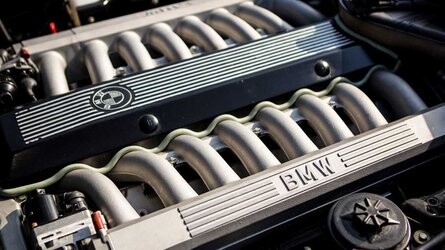
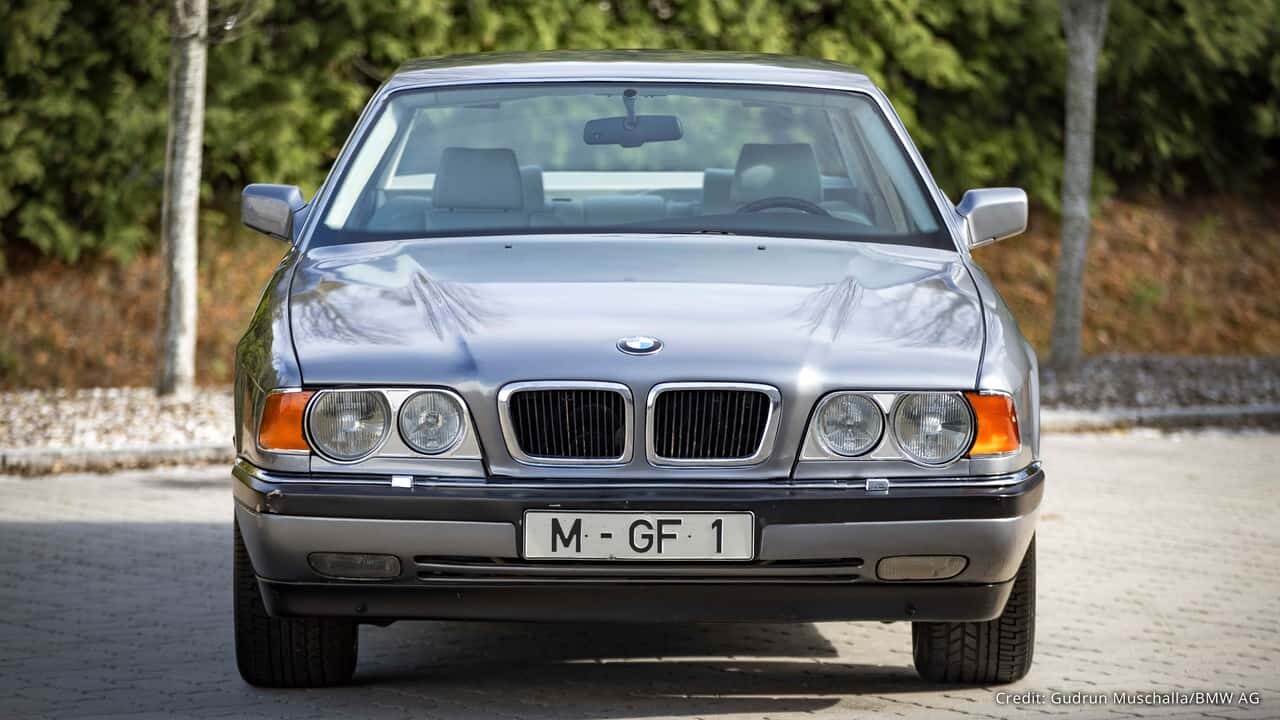
The BMW 2002 tii put a fuel-injected two-liter engine into a small two-door sedan in 1971, and the compact sports sedan has followed that recipe ever since. Germany’s carmakers did this again and again. They built cars that set a pattern the rest of the industry copied for decades. Not every old German car aged well, of course. Some were simply good products of their time, then faded once newer models arrived. Others introduced an idea so useful that you can trace it straight to the cars in today’s showrooms, from hot hatches to all-wheel-drive performance sedans. These are our picks: nine German cars we think matter as much now as they did when they were new. The dates, engines and figures come from the makers’ records and reference sources, while the verdicts are our own opinion. Each one earns its place for a different reason. 1. 1973 BMW 2002 tii The 02 Series started at the Geneva Motor Show in March 1966. BMW took its New Class sedan, shortened it and removed two doors, creating the 1600-2. That compact, light shell turned out to be the perfect home for bigger engines, and BMW kept fitting them. The BMW 2002 tii arrived in 1971 as the successor to the 2002 ti. It used a fuel-injected two-liter engine from the larger 2000 tii, rated at 130 PS, and it could reach 185 km/h. Over five years, BMW built 38,703 of the tii sedans. Then, in 1975, the E21 3 Series took over the role. Why does it matter now? In our view, the BMW 2002 tii is the direct ancestor of every compact sport sedan you can buy today. It combined a small body, a strong engine and four real seats, and that template survives in BMW’s own lineup five decades later. If you want one, check the fuel-injection system closely, because sorting a neglected one is specialist work. Also, look hard at the floors and the jacking points. A clean, original 2002 tii costs real money these days, so a careful inspection pays for itself many times over. 2. 1982 Volkswagen Golf GTI Mk1 Giorgetto Giugiaro’s Italdesign styled the first Golf, which launched in May 1974. Giugiaro later called it the most important design of his career. However, the Golf was a sensible family hatchback, and few people expected it to become a performance icon. Then Volkswagen showed the GTI at the Frankfurt Motor Show in September 1975. It reached showrooms a year later with a 1.6-liter fuel-injected engine rated at 110 PS. Later, the engine grew to 1,781 cc. In the end, Volkswagen built about 462,000 first-generation GTIs. Americans got their own version, the Rabbit GTI, for the 1983 model year, assembled at the Westmoreland plant in Pennsylvania. Our take: the first GTI wrote the rulebook for the hot hatch. It offered light weight, a fuel-injected engine, sharp handling and a practical body, all at a price ordinary buyers could afford. Almost every small performance car since has followed that formula. As a result, the Mk1 GTI belongs on any list of the most influential cars ever built. If you want one, budget for rust repair. Many GTIs were modified over the years, so an unmodified car deserves a premium. 3. Audi Quattro The idea came from a snowy test drive. In the winter of 1976/77, Audi engineers tested cars in Scandinavia, and one of them was the VW Iltis, a military off-roader developed at Audi. On snow, the Iltis showed just how much grip all-wheel drive could give a fast road car. Audi presented the result at the Geneva Motor Show on March 3, 1980. According to Audi’s own quattro history, the five-cylinder turbo made 200 PS, and the car cost 49,900 marks at launch, the same as a Porsche 911 SC. Audi originally planned to build 400. Instead, demand was so strong that it built 11,452 between 1980 and 1991, almost 30 times the original plan. In 1984, quattro drivers also won both World Rally Championship titles, with Stig Blomqvist taking the drivers’ crown. In our view, no car on this list is more relevant today. All-wheel drive is now standard on performance sedans, hot hatches and even supercars, and the Quattro proved the case first. If you want one, budget for turbo and five-cylinder expertise. Also, insist on a full service history before you buy. 4. Porsche 924 The Porsche 924 began life as Project 425, a joint effort between Volkswagen and Porsche. Volkswagen later scrapped the plan. So Porsche bought the design back and sold it under its own name from 1976. That rescue gave the company an entry-level sports car at exactly the right moment. The 924 used a two-liter Volkswagen four-cylinder, rated at 125 PS in European form. A turbo version later made 170 PS. More important, though, was the layout. Porsche mounted the engine up front and placed the gearbox at the rear in a transaxle, giving the car a 48/52 front-to-rear weight split. VW workers built it at the former NSU factory in Neckarsulm under Porsche’s supervision. Our take: purists mocked the 924 for its van-derived engine, but the car kept Porsche healthy. Porsche built just over 150,000 of them before the 944 took over in 1988. Its balanced transaxle layout also lived on in the 944. Today, the 924 remains one of the most affordable ways into a classic Porsche. If you want one, check the transaxle and the cam belt history first. 5. BMW M5 E28 BMW’s Motorsport division started building the first M5 in October 1984. The recipe was simple and bold. Take the regular E28 5 Series sedan, then install a modified version of the six-cylinder engine from the mid-engine M1 supercar. According to BMW Group Classic, that 3,453 cc six used four valves per cylinder and made 286 hp at 6,500 rpm. It pushed the M5 to a top speed of 245 km/h and from 0 to 100 km/h in 6.1 seconds. The M5 also shared its brakes and five-speed manual with the M635 CSi coupe. In Germany, it cost DM 80,750. Why is it relevant? In our view, the E28 M5 created the super sedan as we know it. It looked like an executive car from the curb, yet it could run with sports cars on the autobahn. Every fast four-door from Munich, Stuttgart and Ingolstadt since owes it a debt, because the M5 proved buyers would pay a premium for that kind of split personality. If you want one, find a car with a documented engine service history, because parts for that motorsport six cost serious money. Production ended in June 1988. 6. Volkswagen Type 2 T2 The second-generation Volkswagen Type 2 debuted in late 1967. Its big change was obvious from the front. Volkswagen replaced the split windshield of the first van with one large curved pane, which earned the T2 its “Bay Window” nickname. The new van was also about 22.5 cm longer and considerably heavier than the first. Early models are known as T2a, and the updated T2b followed from 1971. Volkswagen built the T2 in West Germany until 1979. Over that time, the air-cooled engine grew from 1.6 liters at launch to the 1.7-liter Type 4 “pancake” unit as an option in 1972, then to 1.8 and finally 2.0 liters. Meanwhile, Westfalia turned thousands of them into campers with pop-up roofs. Remarkably, Brazil kept building the T2 until December 31, 2013, finishing with 600 “Last Edition” vans. Our take: the T2 is the original van-life vehicle. In fact, its influence shows up in every modern camper conversion and in Volkswagen’s own retro-styled electric van. If you want one, buy the solid body first. Air-cooled engines are easy to rebuild, but rusty floors and wheel arches are not. 7. Mercedes-Benz 350 SL R107 Mercedes began volume production of the R107 SL in April 1971, and the 350 SL came first. European cars used a 3.5-liter M116 V8 rated at 200 PS. However, American buyers got something different. North American “350 SL” models carried the badge but actually used a 4.5-liter V8. Then the R107 simply kept going. Mercedes built it from 1971 to 1989 and sold 237,287 of them. That makes the R107 family the second-longest single series Mercedes ever produced, behind only the G-Class. Along the way, U.S. rules from 1974 added the longer 5 mph bumpers that mark American-market cars. The SL also had a fixed-roof sibling, the C107 SLC coupe, built from 1971 to 1981. In our view, the R107 is relevant because it defined the modern luxury roadster. It paired a removable hardtop, a V8 and real comfort with genuine engineering quality. As a result, its basic idea survives in every grand touring convertible today. If you want one, the European 350 SL is the purer car. Either way, check for rust under the trim and around the windshield frame. 8. 1989 Mercedes-Benz 280 GE W460 The G-Class started as a partnership. In 1972, Daimler-Benz and Steyr-Daimler-Puch of Austria began work on a vehicle that could handle the toughest conditions for commercial, government and private buyers. The result, the 460-series G-Model, debuted in 1979. According to the development milestones from Mercedes-Benz G GmbH, workers built the W460 completely by hand at the Graz plant. It used a solid ladder-type frame and coil-sprung rigid axles, and it came in two wheelbases and five body styles. A long-wheelbase 280 GE also won the 1983 Paris–Dakar Rally. By 1985, two differential locks were standard across the range. Then, in 1990, the W460 gave way to the W461. Our take: this 1989 280 GE comes from the end of the original run, and few vehicles of any kind have stayed so relevant. The G-Class remains in production today, wearing almost the same shape. In 1992, the German army even ordered 12,500 “Wolf” versions, proof that the original design kept its military appeal. If you want one, remember that a tough body needs rust checks too. Look under the doors and at the frame. 9. 1973 Audi 80 LS The Audi 80 debuted in Europe in 1972, and it looked like a modest family sedan. However, it carried a new family of overhead-cam four-cylinder engines. The LS used the 1.5-liter version, rated at 75 PS. In addition, a sportier 80 GT followed in 1973 with a 1.6-liter engine and 100 PS. The car’s real influence came from what Volkswagen did with it. The first-generation Passat was essentially a badge-engineered clone of the Audi 80. Meanwhile, North America and Australia got the same car from 1973 as the Audi Fox, in two-door or four-door form. Audi’s chief engineer at the time, Ludwig Kraus, had been critical of the older Audi range, and the 80 marked a fresh start. In our view, the B1 Audi 80 is the most underrated car here. Its engine family and platform shaped the Volkswagen Group’s mainstream cars for years. Most were used up as everyday transport, so an original car is a real find. If you want one, buy the most complete car you can locate. Trim and body parts are the hardest pieces to replace, while the EA827 engine family went on to power many later Volkswagen Group cars.