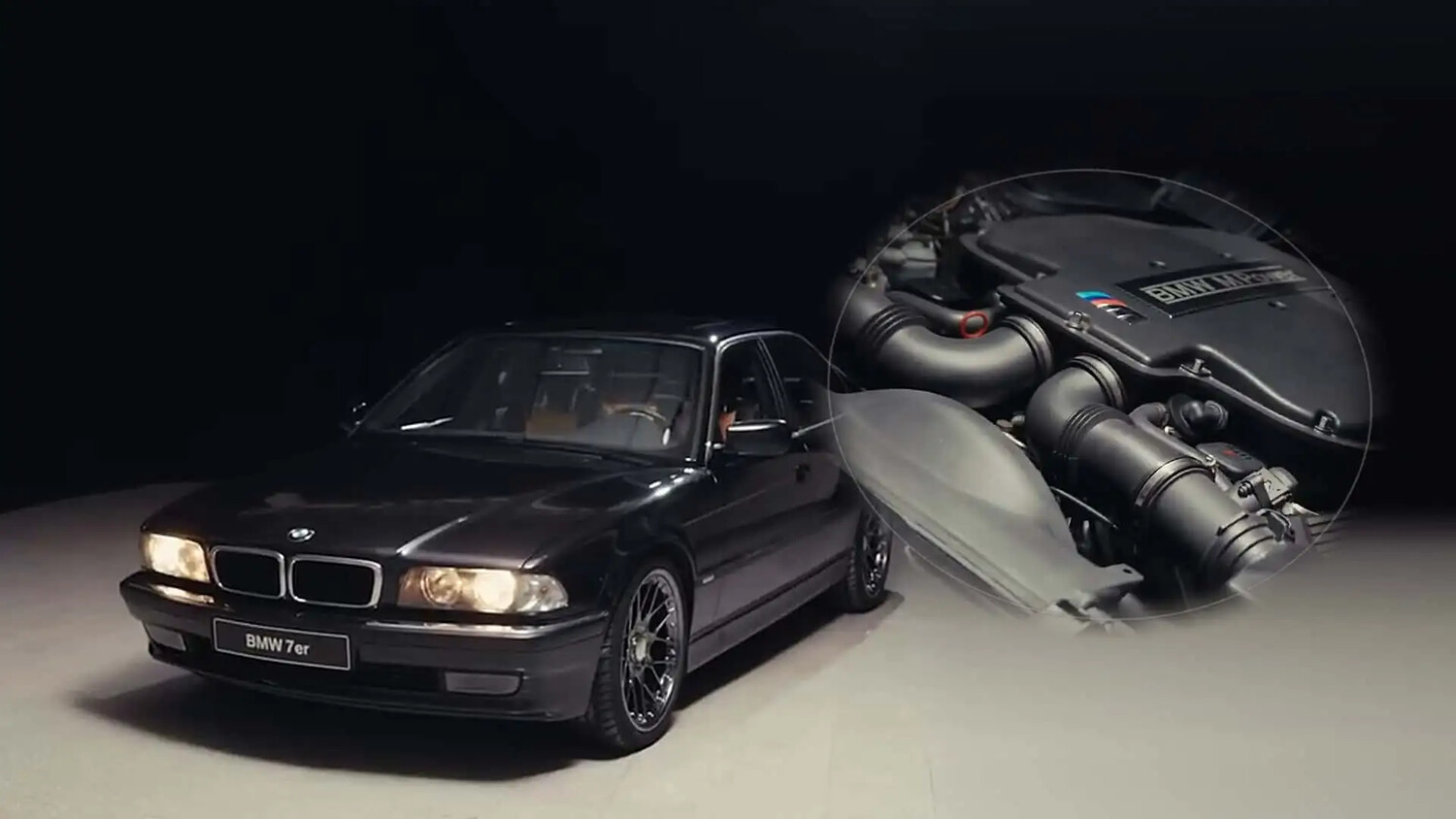
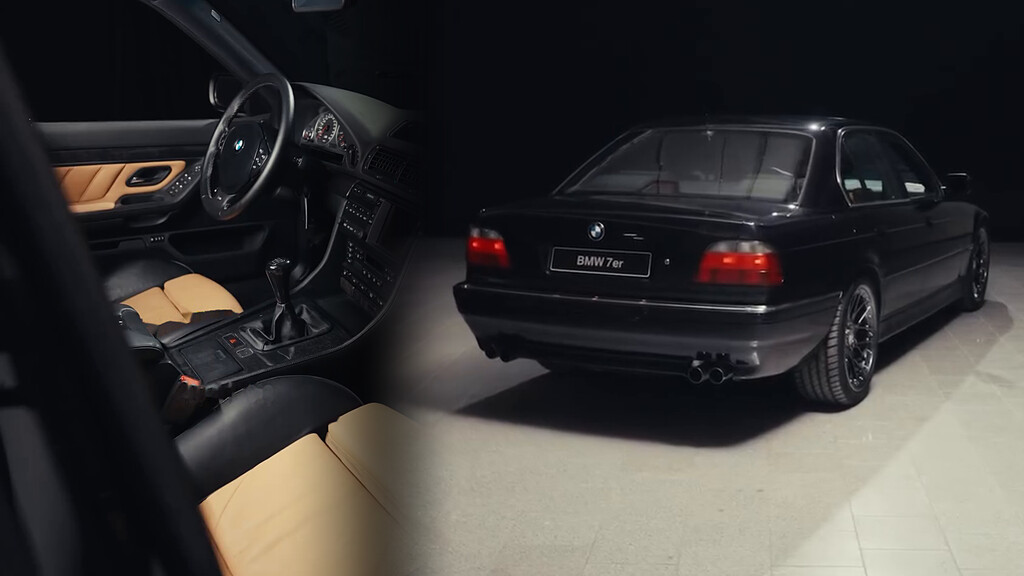
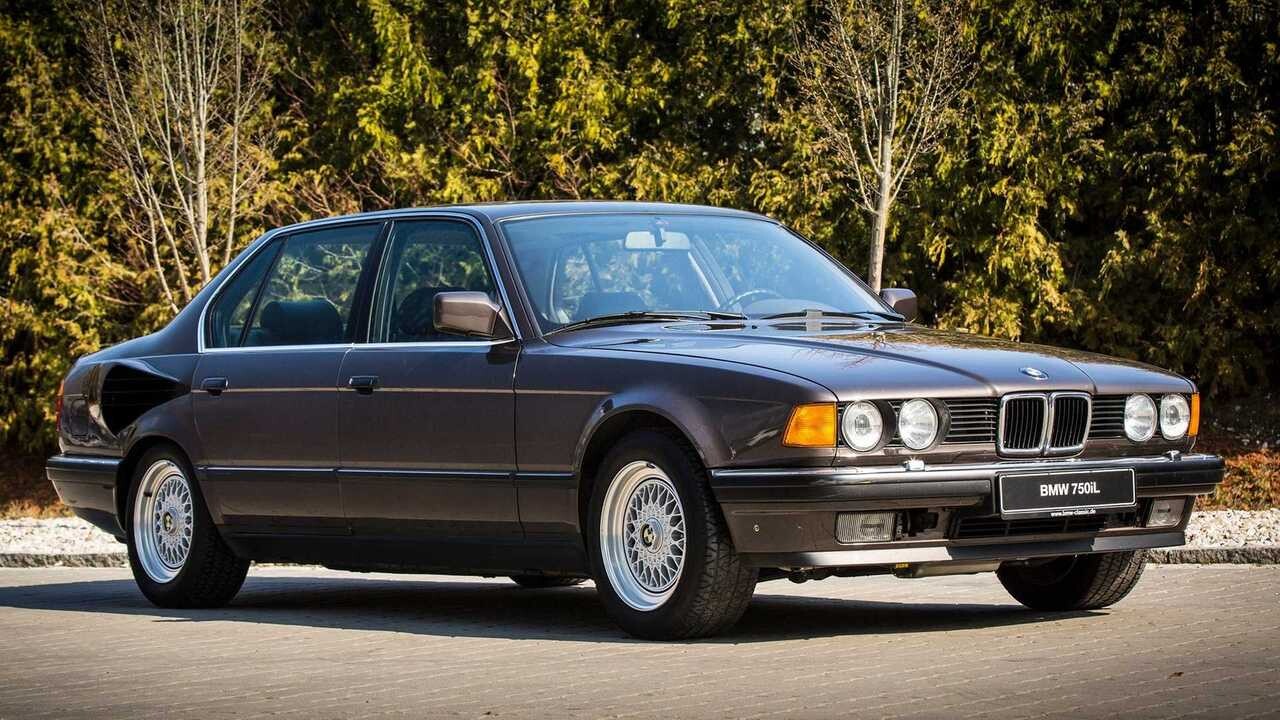
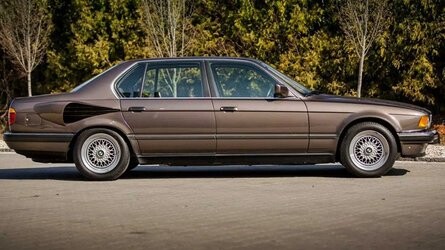
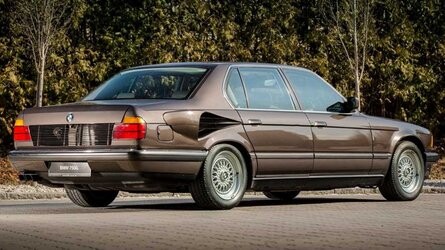
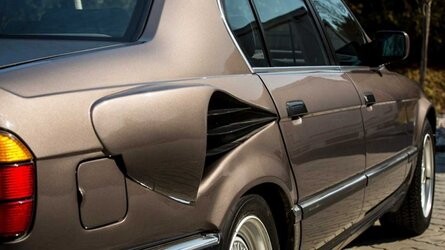
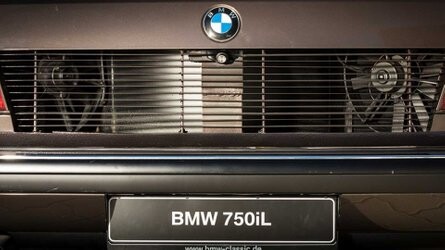
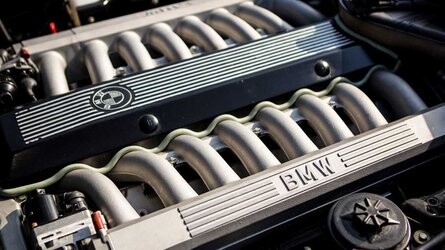
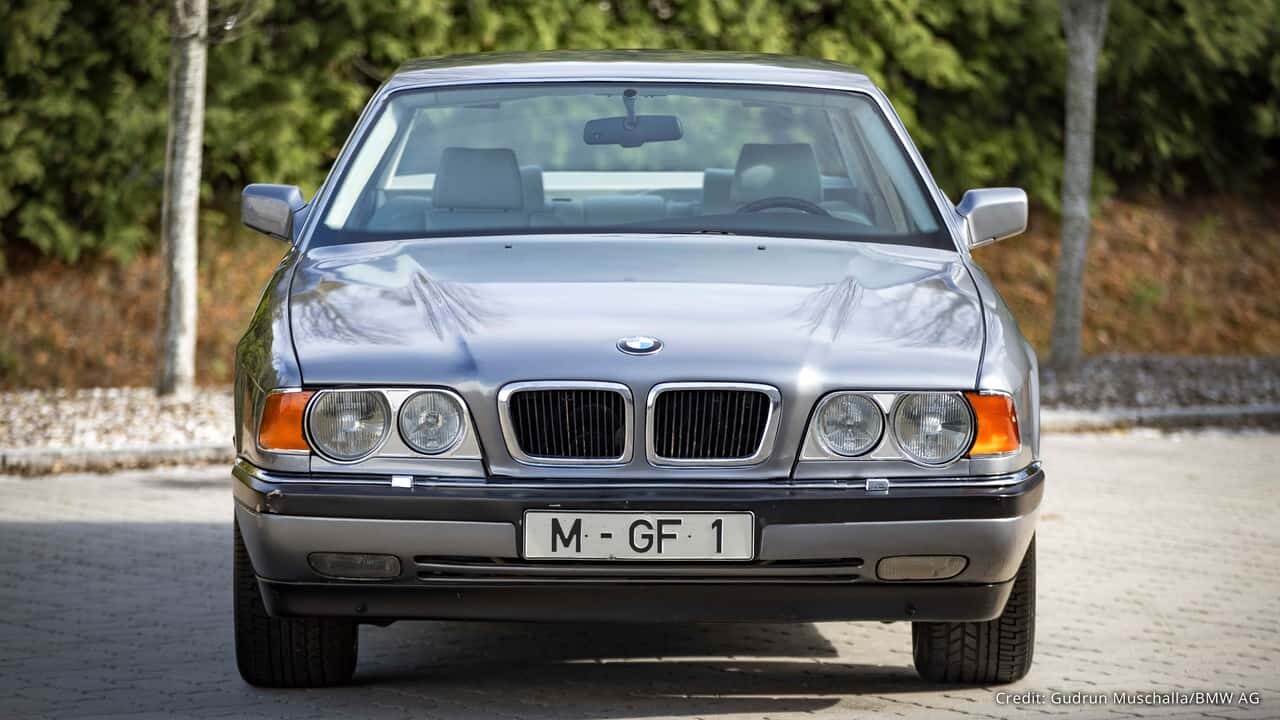
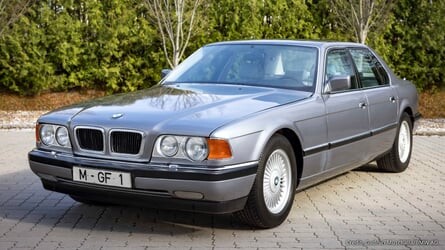
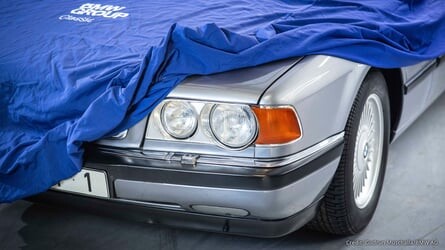
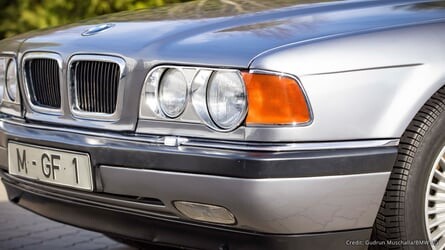
BMW has been selling a not-quite-M 7 Series for years, but a full-fat M7 has never happened. Or has it? Although it didn't progress beyond the prototype stage, this E38-generation luxury sedan was internally known as the M7. It remained a closely guarded secret for nearly three decades. Now, BMW Classic is finally showing us what its flagship M sedan could have been. A video posted on social media shines a spotlight on this unusual 7 Series, confirming what enthusiasts have been wondering about for years. The car started life as a 740i but received a substantial mechanical makeover, borrowing the naturally aspirated V8 and six-speed manual transmission from the E39 M5. Under the hood sits the S62, a 4.9-liter naturally aspirated V8 producing 394 horsepower at 6,600 rpm. Power goes to the rear wheels through a six-speed manual gearbox. That's right, BMW's secret M7 had three pedals, something that would be unthinkable in today's flagship. An M7 That Kept A Low Profile BMW lists a top speed of 155 mph (250 km/h), matching the electronically limited E39 M5. The prototype weighs 4,134 pounds (1,875 kilograms), so it certainly isn't lightweight. Then again, this is a full-size luxobarge. Nevertheless, having the M5's V8 and manual transmission in a considerably larger sedan sounds like a recipe for an entertaining drive. The outside is arguably the most interesting part because BMW didn't go overboard with the modifications. At first glance, this looks like an ordinary E38 7 Series. There are no aggressively sculpted bumpers, oversized air intakes, or prominent M badges announcing what's hiding underneath. Look closer, though, and there are a few clues. The prototype rides on dark cross-spoke BBS wheels and has a quad-exhaust setup, with two outlets on each side of the rear bumper. Otherwise, the car retains the understated appearance that made the E38 one of the most beautiful sedans ever. The interior follows a similar philosophy. Black and beige leather gives the cabin a two-tone appearance, while an M steering wheel provides another hint that this isn't your average 7 Series. The six-speed manual shifter is another obvious giveaway once you step inside. There's also a wonderful late-1990s detail in the back: a telephone handset mounted in the rear center console. BMW M7 prototype Photo by: BMW Why BMW Never Built A Production M7 BMW hasn't explained why the E38 M7 remained a one-off prototype, so we can only speculate. One possibility is that the business case wasn't compelling enough. The 750i already occupied the top spot in the regular 7 Series lineup with its mighty V12 engine. At the same time, the E39 M5 offered essentially the same V8-powered performance in a smaller, lighter, and presumably less expensive package. Still, it's fascinating that BMW went so far as to build a prototype and internally call it the M7. Private enthusiasts have subsequently created their own E38s with E39 M5 engines and manual gearboxes, but this factory-built example gives the idea an entirely different level of credibility. 1988 BMW 750iL V16 Goldfish Not The Most Bonkers 7 Series Prototype If you know your BMWs, you know this one-off E38 M7 wasn't even the wildest 7 Series experiment. That honor arguably belongs to the V16-powered Goldfish, an outrageous late-1980s project that took the idea of a range-topper to a whole new level. In 1988, engineers squeezed a massive 6.7-liter V16 into an E32 7 Series, developing 402 horsepower. The engine was derived from the M70 V12, but adding four more cylinders created a serious packaging problem. There wasn't enough room under the hood for the cooling system, so engineers moved the radiators to the rear, creating those unmistakable oversized cooling ducts behind the rear doors. 1990 BMW 750iL V16 Goldfish What do you think? BMW wasn't done experimenting. A second V16 prototype followed in 1990, this time with a 6.7-liter engine producing 348 hp and paired with a five-speed automatic transmission. Known internally as the 750iL V16 Goldfish, the later prototype had a more conventional-looking body without the enormous rear cooling scoops. Stretching to 214.5 inches (5,448 mm) in length, it was even bigger than today's 7 Series. Sadly, neither project reached production. BMW eventually abandoned the idea of building a flagship above the 7 Series. Still, between the secret E38 M7 and these sixteen-cylinder monsters, BMW's engineers clearly had some wonderfully ambitious ideas before emissions regulations took over.

 Liked by Morgan Young, Madeleine Bouchard

















 Liked by Morgan Young, Madeleine Bouchard