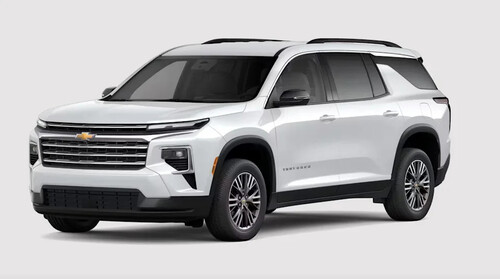
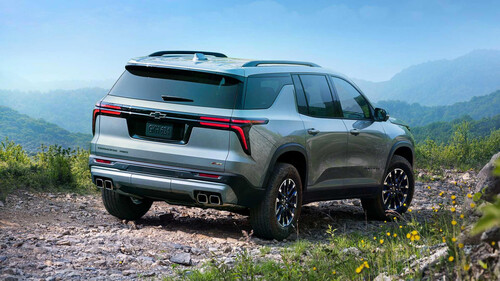
At first blush, you’d swear the badly rusted, crumpled bumper shown up close in a viral TikTok clip came off a scrapyard special, and definitely not off a vehicle made within the past decade. But we learn fairly quickly that the video is somehow showing us a 2020 Chevrolet Traverse that’s overdue for some replacement hardware. The clip from Pennsylvania auto vet Tools 4 U (@tools.4.u0) pins the blame on salt and other anti-icing methods used in "rust belt" cities to keep roads safe and clear of ice during freezing winters. The trade-off, however, is rust and corrosion on vehicles’ underbodies and other areas near the ground. "It's so bad that when it got hit in the rear, it just folded because there's no structural integrity left because it's rotted through," the unidentified narrator observes in the clip that’s been viewed more than 1,000 times. "I live in Pennsylvania, so we do see some decent salt and garbage that they're spraying on the roads, but this is insane." Rust Causes Safety Hazard Up close, the damage goes well beyond surface rust. The bumper reinforcement bar, which is normally a solid ribbed piece of stamped steel designed to absorb impact, is visibly coming apart in layers. In multiple spots, corrosion has eaten clean through the metal, leaving jagged holes and thin edges that look more like torn sheet metal than a structural component. Along the seams, the steel appears to be separating with flaking rust pushing outward and exposing darker, weakened material underneath. It's the kind of deterioration you'd expect to find on a vehicle that's spent decades exposed to the elements, not one that rolled off the line in close proximity to the COVID-19 pandemic. The extraordinary visual is part of what drove the reaction in the comments section, where viewers are split on whether this is really all that shocking or kind of inevitable. "Rust belt issues," one commenter wrote, pointing to the heavy use of road salt across states like Pennsylvania, Ohio, and Michigan. Another viewer put it more bluntly: "You live in the worst place for cars." Others weren't so convinced that the environment alone explains what's being shown in the video. One viewer suggested the damage may have started with a prior impact, arguing the metal looks "bent then rusted," with missing paint exposing bare steel that would corrode more quickly. The creator behind the video pushed back slightly but didn't dismiss the severity of the damage, noting that "the rust definitely weakened this reinforcement bar." That's an important distinction. Bumper reinforcements are designed to crumble in a controlled way during a collision, absorbing energy before it reaches the passenger compartment. But what the mechanic is pointing to here isn't control deformation; it's metal that appears to have already lost much of its strength before the impact even happened. In his view, the failure didn't start with the crash and may already have been well underway due to rust and other deterioration. Damage Came Quickly Some of the reaction is likely due to the damage being so visible and impossible to ignore. In many cases, this kind of rust damage is contained on the underside of vehicles, where it's obscured and can encroach undetected. The reinforcement bar sits hidden behind plastic trim and body panels, out of sight unless the vehicle is being repaired or taken apart. By the time corrosion reaches the point seen in the video, where sections have thinned, split, or disappeared entirely, it's clear this is not a problem that has developed overnight. Rather, it's the result of repeated exposure along with small failures in protective coatings, plus time working against materials that are rarely inspected up close. That cocktail of problems helps explain why there is such a strong reaction from the body shop staffer and viewers alike. For drivers in colder regions, corrosion is part of the ownership experience and must be managed rather than eliminated entirely. Still, there are built-in expectations that key structural components are manufactured to last longer than a few winters, even under harsh conditions. What we see on the Traverse in the video sits in the uncomfortable gray area, which, in this case, is actually a shade of scarlet or orange. What's toughest to square is seeing such pronounced deterioration in a body component that is designed specifically to play a role in crash protection. Not that this kind of damage would be easy to accept in any circumstance, but since structural integrity is the sole benefit of a bumper, the fact that it could become so severely compromised this quickly causes plenty of alarm and concern. Whether this case gets chalked up to environment, prior damage, or some combination of the two, it highlights a broader issue that doesn't often surface until something goes wrong. The video starkly presents the difference between cosmetic aging and the kind of material breakdown that significantly changes how a vehicle performs when it matters most. Motor1 reached out to the creator via direct message and commented on the clip. We’ll update this if they respond. We want your opinion! What would you like to see on Motor1.com? Take our 3 minute survey. - The Motor1.com Team