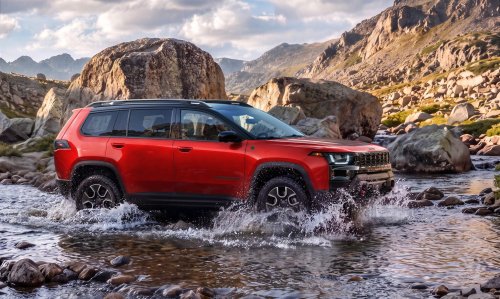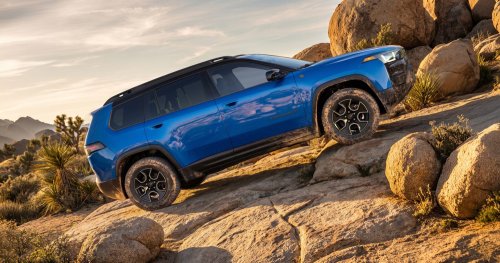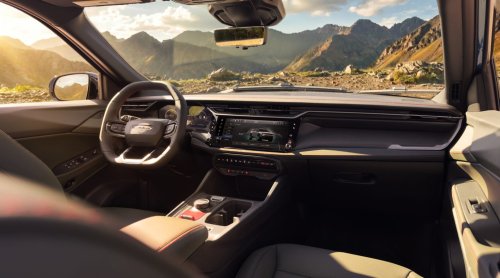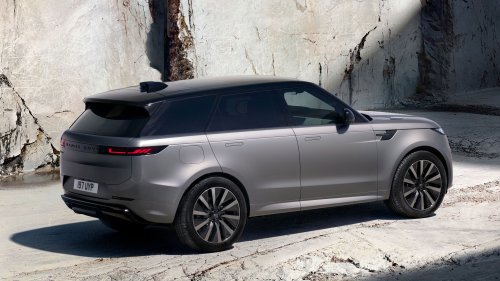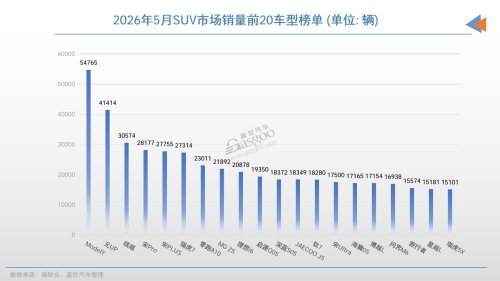
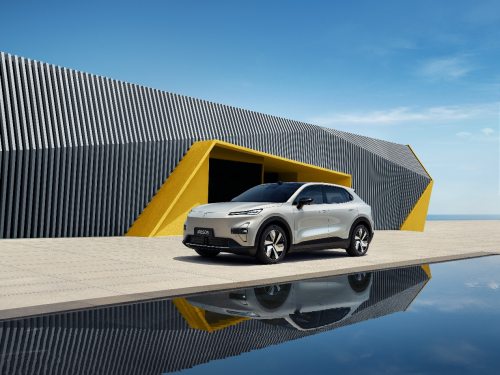
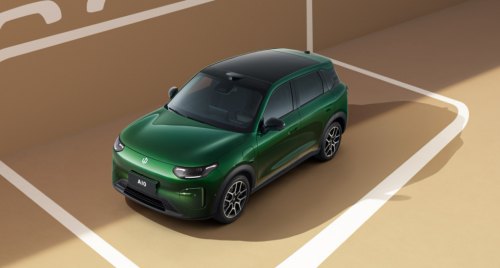
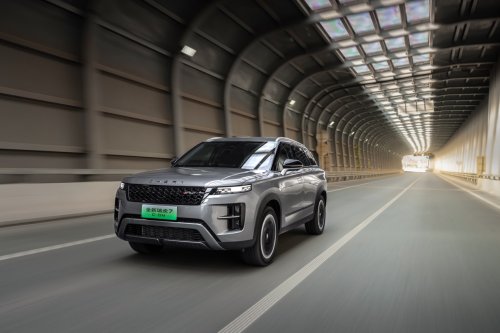
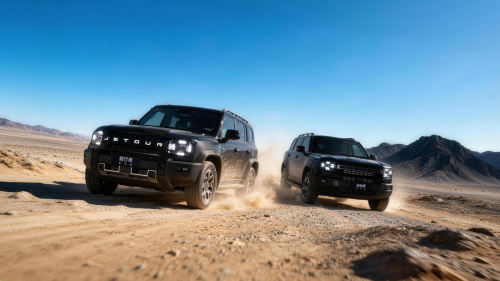
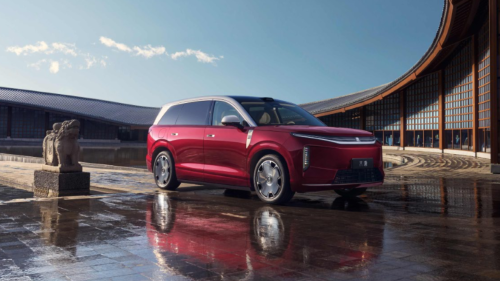



















Gasgoo Munich-The May sales rankings for China's SUV market read like a panoramic view of an industry in upheaval, charting a shifting balance of power.Fluctuations in SUV sales—the country's largest and most fiercely contested segment—are never merely a numbers game. They reflect the interplay of technology roadmaps, brand dynamics, and shifting consumer sentiment. Recent results make the industry's transformation undeniable: a massive tilt from internal combustion to electrification, a complete transfer of dominance from joint ventures to domestic brands, and a broadening of market focus across all price tiers. These three trends converge on a single, irreversible conclusion: the Chinese auto industry is undergoing its most profound power shift yet.With domestic brands claiming 19 of the top 20 spots and new energy models accounting for over 60% of sales, the numbers confirm a decisive shift in who defines the SUV market. Chinese automakers have built systemic advantages—spanning battery cost control, smart cabin experiences, and the accessibility of advanced driver-assistance systems—that joint ventures and foreign brands will struggle to replicate anytime soon.Once able to dictate market tempo through brand prestige and carefully timed product rollouts, joint ventures are now retreating on all fronts, squeezed by a relentless price war and a fierce battle for technological supremacy.Yet, the pace of electrification varies by segment. The A-SUV market has become a red ocean, the C-level premium sector is rising rapidly, while the A0 segment remains locked in a tug-of-war between new energy and internal combustion. This divergence mirrors the distinct needs and value propositions of different consumer groups.Widespread Penetration of New Energy SUVsNew energy models claimed 12 spots on the May SUV sales top 20 list.The Model Y reclaimed the top spot with 54,765 wholesale sales, standing as the only non-domestic brand in the top 20. Its sales dwarf other pure electric contenders, underscoring a simple reality: the B-segment EV market remains firmly in the grip of the first mover, with consumers placing high trust in its brand recognition and product maturity.BYD's Yuan UP followed in second place with 41,414 units. Offering both pure electric and plug-in hybrid powertrains, its compact dimensions and accessible price point have made it a favorite for urban commuting—proof that demand for small new energy SUVs remains robust.Competition is particularly fierce in the A-segment new energy SUV sector. The Song Pro took fourth place with 28,177 units; its plug-in hybrid powertrain offers efficiency without range anxiety, making it a top choice for families. The Song PLUS followed closely with 27,755 units. With both pure electric and plug-in hybrid options, it joins the Song Pro in a two-pronged strategy to dominate the A-segment.The NEVO Q05 found its footing in the domestic A-SUV market with 19,350 sales, signaling that Changan's heavy investment in hybrid technology is finally translating into volume. Meanwhile, the Deepal S05 moved 18,372 units. Offering both pure electric and range-extended options, it further broadens Changan's portfolio in the A-segment new energy market.Image Source: Deepal AutoThe Seal 05 also broke into the rankings with 17,165 monthly sales. Its parallel strategy of offering both pure electric and plug-in hybrid variants mirrors the Song family, demonstrating that BYD's dense formation in the A-segment has created a nearly insurmountable moat.In the A0-segment new energy niche, Leapmotor's A10 delivered a stunning performance. The small EV ranked seventh with 23,011 sales. The A10's meteoric rise proves that in the mass-market, low-price bracket, domestic EVs are rapidly cannibalizing traditional small combustion cars—thanks to ultra-low operating costs and specifications that punch above their weight.Image Source: LeapmotorThe C-segment new energy SUV market in May was led by the Li Auto i6, Fangchengbao Titanium 7, and AITO M6. The i6 secured the top spot, bolstered by strong word-of-mouth among families and continuous improvements in range and charging. The Titanium 7, offering both plug-in hybrid and pure electric options, attracted buyers demanding greater range. Meanwhile, the AITO M6—backed by Huawei's technology—quickly carved out a slice of the premium market despite being a later entrant.In the B-segment new energy market, the Model Y remains the undisputed leader, but the Song Ultra has introduced a new variable. With 17,500 sales in May, it landed in fourteenth place. While a significant gap remains between it and the segment leader, the Song Ultra represents a domestic push upmarket, and its market potential cannot be ignored.The Retreat of the Combustion SUVCompared to the booming new energy sector, combustion SUVs are in retreat. They claimed just eight spots in the monthly top 20, with most clustered in the lower ranks.The top-selling combustion SUV was the Binrui, which took third place with 30,574 units. Positioned in the A0-segment, its ability to maintain high volume despite the electric onslaught is due in part to Geely's deep roots in the small SUV market. It also suggests that some consumers still prefer combustion power—particularly those who prioritize power response and driving dynamics.The Tiggo 7 followed in sixth place with 27,314 units, making it the highest-ranked combustion SUV after the Binrui. Leveraging Chery's traditional strengths in engine technology and affordable pricing, the A-segment SUV retains a solid customer base in Tier-2 and Tier-3 cities. Notably, the new energy version is also performing well; the Tiggo 7 PHEV delivered nearly 10,000 units in May (figures for the PHEV are excluded from the combustion listing, as per standard industry practice). Joining the Tiggo 7 on the charts are the JAECOO J5 and Tiggo 5X. Together, these three combustion models contributed over 60,000 monthly sales, proving that for Chery, internal combustion remains a force to be reckoned with—particularly in export-oriented lineups like the JAECOO J5, where it still drives significant volume.Image Source: Chery AutomobileThe MG ZS took eighth place with 21,892 units, serving as another pillar of the A0-segment combustion SUV market. Historically focused on youthful design, the ZS has performed well both at home and abroad, thanks to its stylish looks and strong value proposition.The Boyue L landed in sixteenth place with 17,154 units, ranking fifth among combustion models. As a core product for Geely in the A-segment, it has held its ground thanks to solid chassis tuning and continuously updated intelligent features. The Xingyue L followed in nineteenth place with 15,181 units, providing Geely with a backup in the A-segment combustion market.The Jetour Traveler secured eighteenth place with 15,574 units. Its boxy silhouette and rugged styling hold a unique appeal in the niche off-road market, allowing it to maintain steady output even as the electric tide rises.Image Source: Jetour AutoThe Tiggo 5X rounded out the list with 15,101 units. While its volume was the lowest, its presence alone confirms that A0-segment combustion cars still command a loyal following.The Absolute Dominance of Domestic BrandsThe performance of domestic brands in May was nothing short of phenomenal. With the exception of the Tesla Model Y, the top 20 consisted entirely of Chinese models—a testament to their comprehensive progress in product definition, technological iteration, and cost control.In the new energy race, domestic brands have leveraged their first-mover advantage and supply chain integration to build a generational lead over joint ventures and foreign automakers. Even in the combustion sector, they maintain an edge in specific niches, driven by value for money and localized adaptation.BYD was undoubtedly the biggest winner, with six models making the cut: the Yuan UP, Song Pro, Song PLUS, Titanium 7, Song Ultra, and Seal 05. This achieves full coverage across low, mid, and high tiers. Notably, another heavyweight has recently hit the market: the BYD Tang. Having garnered over 150,000 orders during pre-sale, its market performance is one to watch.Image Source: BYDThe Geely group saw three models make the list: the Binrui, Boyue L, and Xingyue L—all combustion vehicles. While Geely's pivot to electrification has been less aggressive than BYD's, it has reaped significant rewards over the past two years, with rising popularity for new energy offerings from brands like Zeekr and Geometry. Moreover, Geely's deep roots in the combustion market mean many of its products remain highly competitive in their segments. For now, maintaining a dual-track strategy of combustion and new energy is a logical move.The Chery group also placed three models: the Tiggo 7, JAECOO J5, and Tiggo 5X. Like Geely, all are combustion vehicles, reflecting a similar strategic choice—though Chery's advantage in exports is far more pronounced.The Changan group had two new energy finalists: the NEVO Q05 and Deepal S05, both in the A-segment. Changan's new energy layout is highly focused; with the Deepal and NEVO brands working in tandem, it aims to boost its share in this segment. Looking ahead, Changan's challenge remains elevating Avatr's performance in the mid-to-high-end market to accelerate its push upmarket.Among the new forces, Leapmotor, Li Auto, and AITO all secured spots on the monthly bestseller list. Leapmotor's A10 broke through in the A0 EV segment, Li Auto's i6 held steady in the C-segment, and the AITO M6 rose rapidly on the back of Huawei's ecosystem. While these startups field fewer models than traditional automakers, their sales per vehicle are competitive. Both the Leapmotor A10 and Li Auto i6 topped 20,000 monthly sales, demonstrating strong product momentum.Across all segments, domestic brands dominate, though their tactics vary. In the A0-SUV market, they employ a dual strategy of new energy and combustion to achieve full coverage. In the A-segment, new energy leads the charge while combustion models hold the defensive line, creating a multi-layered offensive. In the B and C segments, however, domestic brands rely entirely on new energy vehicles, using premium products to break through the price ceiling.This "tailored" segment strategy reflects the domestic brands' precise grasp of market demand and suggests that future SUV competition will become increasingly refined and differentiated.Summary: The May SUV top 20 serves as a declaration that a new order has taken hold in the Chinese auto market. With 19 spots claimed by domestic brands, the landscape once dominated by joint ventures has been completely rewritten. New energy models now command over 60% of the market, establishing themselves as the absolute mainstream.From A0 to C-segments, new energy vehicles have demonstrated formidable competitiveness across the board. In the B and C segments particularly, electrification has nearly completed its total replacement of combustion vehicles.Looking ahead, as new energy technology matures and charging infrastructure improves, the space for combustion vehicles will likely continue to shrink, while the lead of domestic brands in electrification is set to widen. For all players, this list is both a scorecard and a warningrecord: amidst the waves of electrification and intelligence, only continuous innovation and precise positioning will ensure survival in this market transformation.