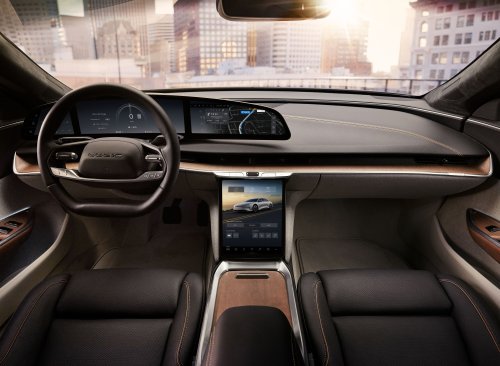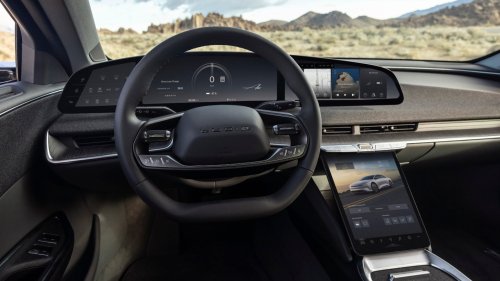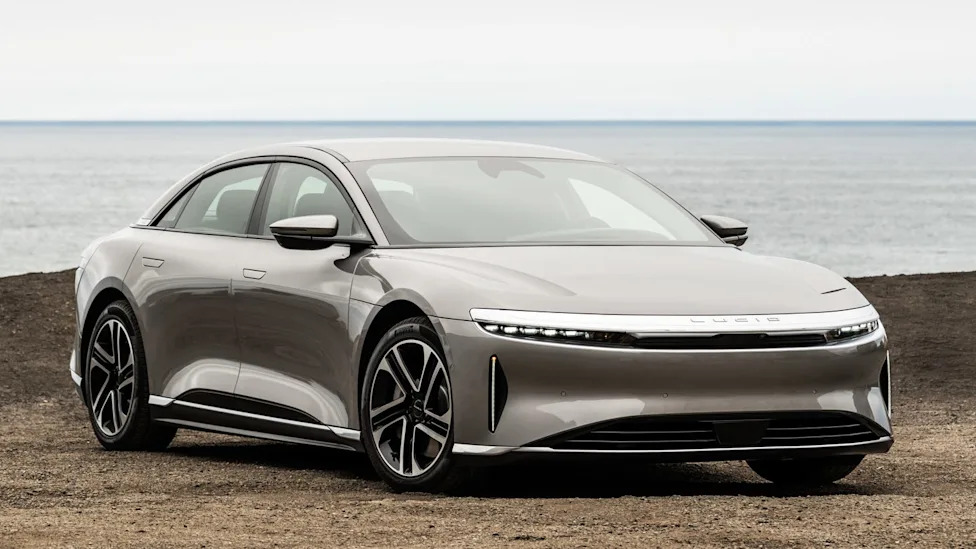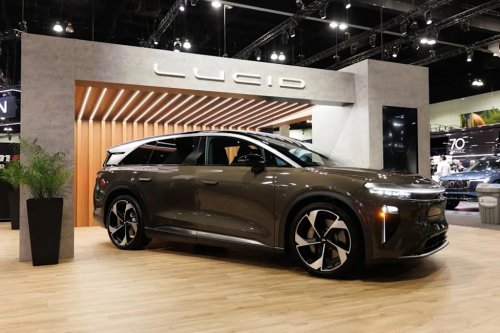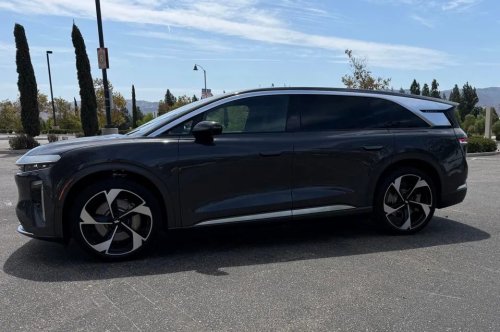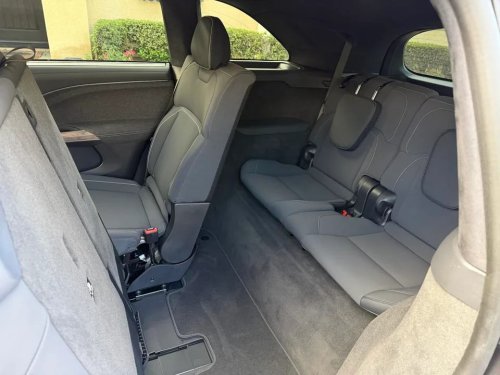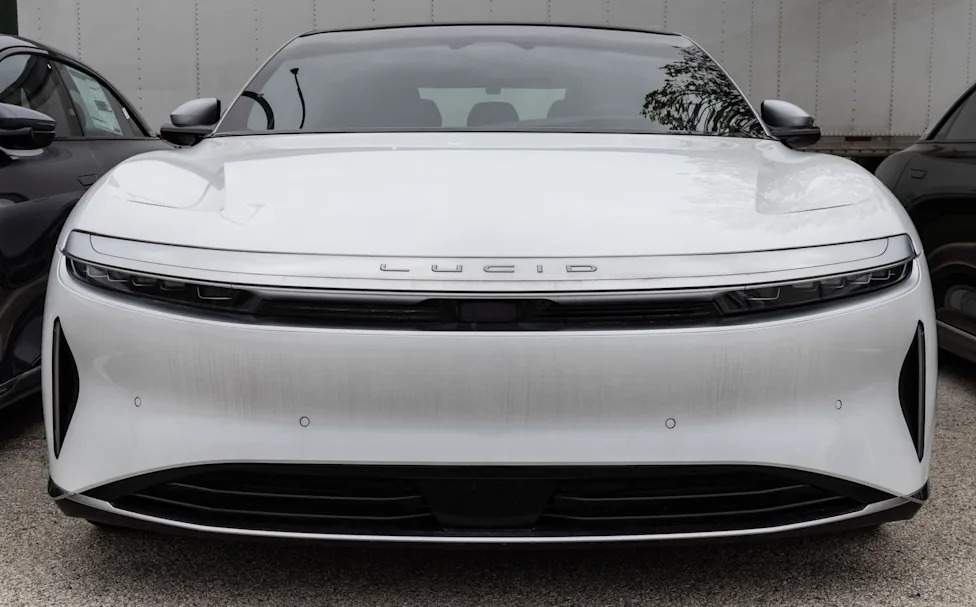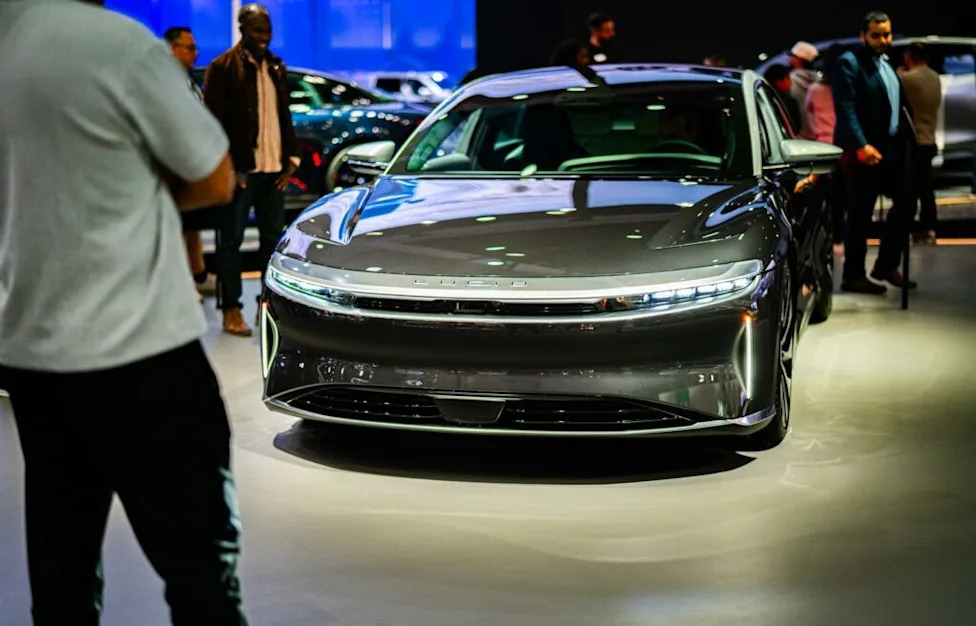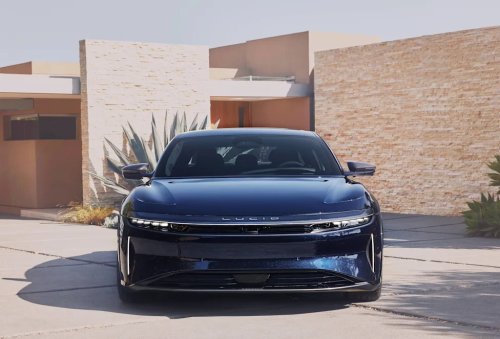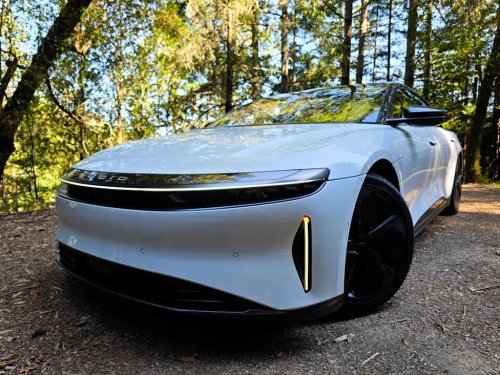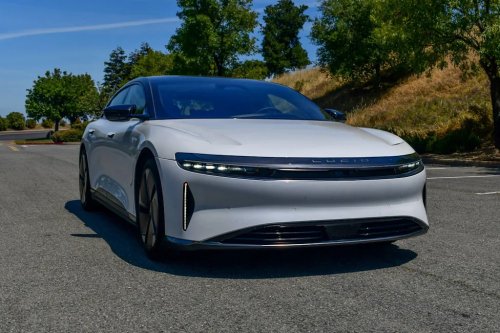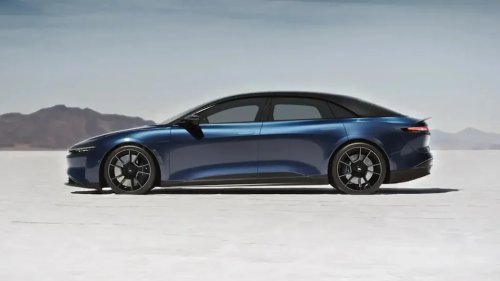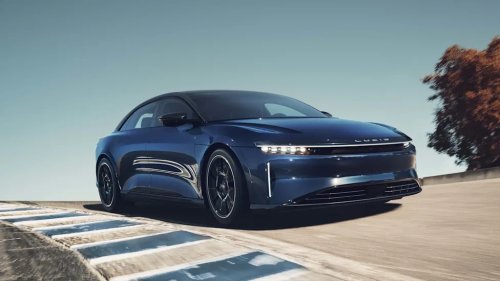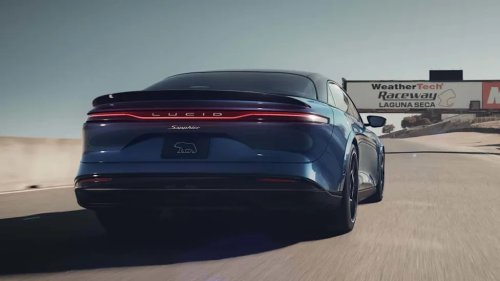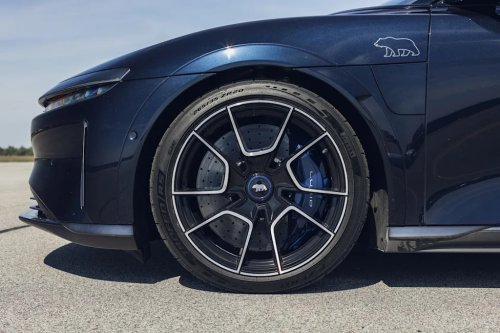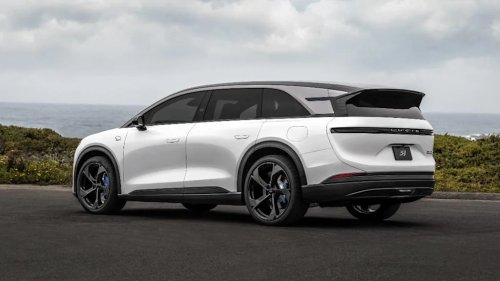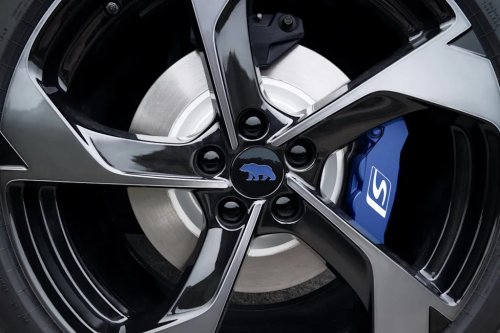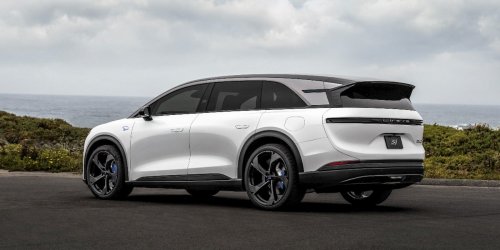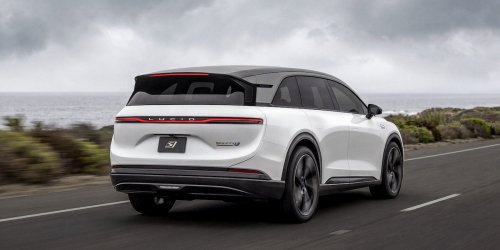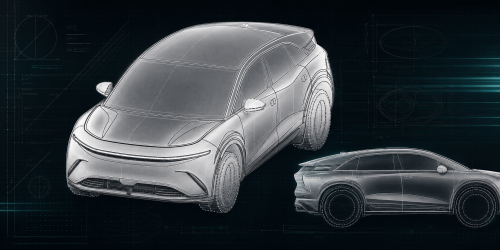



















Lucid has registered the design of its upcoming Cosmos with the European Union Intellectual Property Office, giving us the clearest look yet at the sub-$50,000 crossover the automaker is betting its future on. The filing, published last week, shows the production design of Lucid’s first mass-market EV from every angle, inside and out, months before its expected reveal this summer. A real look, not a render The drawings come from EU Registered Community Design No. 015142895, filed under Atieva Inc., Lucid’s legal corporate name, on May 22 and published on June 15. The filing covers 100 individual views and never uses the word “Cosmos,” but the vehicle matches the crossover Lucid showed behind closed doors at its Investor Day in March, where it revealed the Cosmos and Earth as the first two products on its new midsize platform. Lucid Cosmos front three-quarter view from its EU design registration (EUIPO RCD No. 015142895, filed by Atieva Inc.). Source: EUIPO The timing lines up with our own reporting. We spotted a camouflaged Cosmos testing next to a Tesla Model Y near Lucid’s facilities in May. These EUIPO drawings are the production sheetmetal underneath that camo. Advertisement - scroll for more content The Cosmos looks like a shrunken Lucid Gravity. It shares the larger SUV’s full-width front light bar and cab-forward proportions, but adds an oversized Lucid emblem on the nose, bigger than anything on the Air or Gravity. Rear detail: an oversized Lucid emblem. Source: EUIPO The side profile is softer and more flowing than the Gravity’s, with a sharply raked roofline that flows into a dovetailed rear section and a spoiler that cuts across the rear glass. “LUCID” is spelled out in large letters across the tailgate, above a bold bumper and diffuser. The Cosmos in profile, showing its raked roofline and dovetailed rear. Source: EUIPO Multiple trims, including a performance version The filing appears to show more than one version of the car. Some front-end drawings have a more aggressive lower fascia that juts forward with a larger opening, and at least one rear treatment adds large, almost triangular corner vents reminiscent of rally-bred trims from other automakers. The rear, with the “LUCID” wordmark across the tailgate and triangular corner vents. Source: EUIPO That tracks with what Lucid has already said. The company is positioning a performance variant at the top of the range, and it claims the quickest Cosmos will do 0-60 mph in 3.5 seconds. Inside, the Cosmos breaks from Lucid’s current design language. Instead of the curved, multi-screen layouts in the Air and Gravity, the dashboard is dominated by a single large display spanning the cabin. The center console shows a pair of dials with storage beneath them, plus rear climate vents and a small cubby. Lucid has said the simplified screen layout is tied to its autonomy ambitions, since midsize-platform vehicles will also serve as robotaxis under its Uber partnership. Interior design: a single screen spanning the dashboard, with dual dials on the console. Source: EUIPO The specs that matter The design is the new part, but the numbers behind it are what make the Cosmos interesting. Lucid is targeting a starting price below $50,000, with the range stretching into the $70,000s for loaded trims. On its new “Atlas” drive unit, which Lucid says is 23% lighter and uses 30% fewer parts than its current motors, the Cosmos is built around a 69 kWh battery pack delivering a targeted 300 miles of range at up to 4.5 miles per kWh. That efficiency comes partly from a claimed 0.22 drag coefficient, which would make the Cosmos slipperier than the Gravity. Its 800-volt architecture is rated to add 200 miles of range in 14 minutes of charging and supports bidirectional vehicle-to-home and vehicle-to-grid functions. Those figures stack up well against the Tesla Model Y and the Rivian R2, the two vehicles the Cosmos most needs to beat. The Cosmos is the first of three sub-$50,000 models on the platform, alongside the more adventure-focused Earth SUV and a third, still-unrevealed vehicle, plus the Lunar two-seat robotaxi concept. Electrek’s Take This is as close to an official reveal as you can get without Lucid actually pulling the sheet off. Design registrations are primary-source documents, not spy shots or renders, so what’s in these EUIPO drawings is the car Lucid intends to build. And the Cosmos has to work. Lucid remains a money-losing startup, and we recently covered how its 25,000-unit production goal slipped into limbo after a bloated Q1 inventory. The Air and Gravity earned the brand engineering credibility, but neither sells in the volume Lucid needs to reach profitability. The Cosmos is the volume play, the Model 3/Model Y moment the company is hoping to engineer for itself. The hardware story is genuinely strong. If Lucid delivers 300 miles from a 69 kWh pack at this price, it will have the most efficient vehicle in the segment by a meaningful margin, and that efficiency is good base to achieve your cost goals. The catch is execution. Initial Cosmos production starts in Saudi Arabia late this year, with Arizona output following six to 12 months later, and Lucid’s history of ambitious timelines and slow ramps is well documented. The design is done and registered. Now the only question that matters is whether Lucid can actually build it at the price and volume it promised. If you’re shopping for an efficient EV like the Cosmos, pairing it with home solar is one of the smartest ways to lock in low charging costs for years. With electricity rates climbing nearly 10% last year, home solar protects you against future rate increases. And with lease and PPA options, you can go solar with zero upfront cost and start saving immediately. If you want to find the best deal, check out EnergySage. It’s a free service with hundreds of pre-vetted installers competing for your business, so you save 20 to 30% compared to going it alone. No sales calls until you pick an installer. Get your free quotes here. Stay up to date with the latest content by subscribing to Electrek on Google News. You’re reading Electrek— experts who break news about Tesla, electric vehicles, and green energy, day after day. Be sure to check out our homepage for all the latest news, and follow Electrek on Twitter, Facebook, and LinkedIn to stay in the loop. Don’t know where to start? Check out our YouTube channel for the latest reviews.