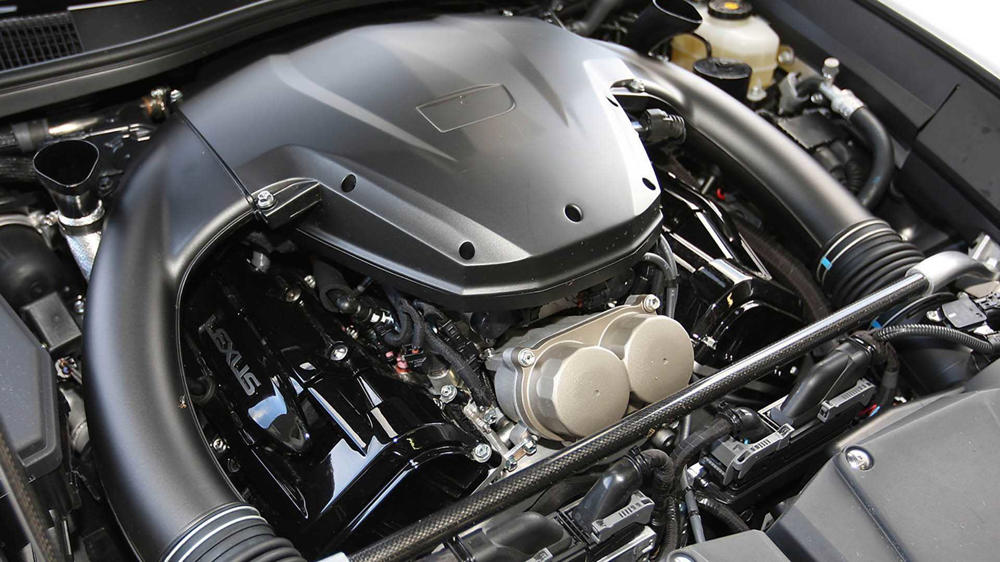
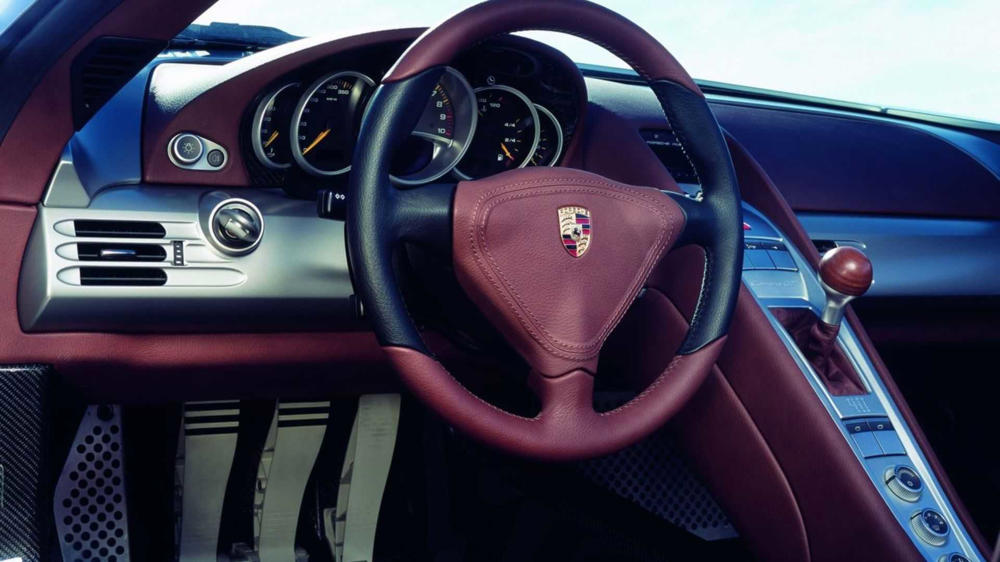
When Toyota embarks on a serious project, it leaves no stone unturned in making sure the undertaking hits every single target outlined for it, with precisely zero room for compromise. That's why the Lexus LFA supercar spent a full decade in development hell before it finally entered production in 2010. The result was one of the most revered supercars of the era, largely because of the razor-sharp tolerances used in its design and production. The car's V10 engine is arguably the best example of this. The unit was so silky smooth that it kickstarted a rumor that it needed a digital tachometer as opposed to a traditional analog one. As with most great myths, though, this one was grounded in fiction. The LFA Was Reportedly Unable To Use An Analog Tach Thanks To Its V10 The story goes that the Lexus LFA used a digital tachometer rather than a traditional analog setup, since the latter couldn't keep up with how quickly the vehicle's naturally aspirated V10 could rev. Due to the engine using ultra-light internals, such as titanium connecting rods and valves, as well as forged aluminum pistons, reciprocating mass was significantly lower. Other enhancements, like low-tension piston rings and finely tuned individual throttle bodies, helped ensure the engine had very low inertia, making it incredibly responsive. The result was a unit that could rev through its entire 9,000 rpm rev range in just 0.6 seconds, which helped make the driver feel better connected to the throttle pedal due to the lack of hesitation. The myth regarding the mechanical tachometer was that the mechanical motor and needle combination suffered from too much inertia to be able to keep up with this level of engine acceleration. Due to this, Lexus had to use a digital alternative to precisely record the engine revs. While there are merits to the story, it's not the whole truth. Other Supercars Have Shown A Mechanical Tach Can Still Function While it's true that mechanical tachometers can suffer from a greater amount of inertia versus a digital alternative, which gets instantaneous information through ultra-precise sensors connected directly to the engine, this can be mostly overcome by using faster servo-driven motors. Such motors can make up for the extra inertia by forcing the needle to move quicker, while a separate upgraded microcontroller could be included to ensure it remains perfectly precise. We know this solution is viable, since other supercars from the period, like the Ferrari 458 Italia and the bonkers Porsche Carrera GT, used analog tachs with their rapid-revving powerplants. Both cars could rev from zero to their respective 9,000 rpm and 8,400 rpm redlines in comfortably under a second, but while still relying on a mechanical tach. The instantaneous digital tach found in the LFA is more effective at showing the exact rpm level in real time with such a low-inertia engine, but the myth that using a mechanical one was deemed impossible is wide of the mark. An old-school solution was also possible. Many classic race cars used chronometric tachometers, where the needle moved immediately to the current rpm rather than sweeping an arc. Arguably, the result wasn't as aesthetically pleasing, but it was how engineers got around the same problem before computerization. A Digital Tach Provided More Versatility Indeed, the primary reason why Toyota opted for a digital tach was the greater number of decoration and options that it brought to the table. Toyota's vision for the LFA was that, alongside providing breathtaking performance, everything about the car would help elevate the emotional response inflicted on its occupants, which would push the driving experience to another level. Using a digital tach allowed for including a range of colors on the display, with green signifying the ideal shift point, and red showing that you had reached the 9,000 rpm redline. The tach's background could also change depending on the chosen driving mode. There was a black background during normal driving and white for Sport mode. Beyond that, a ghost needle appears at your previous shift point, giving you instant feedback on your shifting habits. All of this fed back into the LFA's theme of immersion and precision, as well as the feeling that the car had moved the bar of progression that much higher. Backing this up was a novel split tach setup, which consists of a mechanical ring that slides to the right to open up a separate digital sub-menu. Through this, you could access various settings like the brightness of the display, the in-built lap timer, as well as the status of various systems found throughout the vehicle. When you were done with the menu, it could slide back to the left to enlarge the primary tach element once more. None of these design cues would have been possible if Lexus had stuck with a mechanical tach. Since the vehicle was designed to show how forward-thinking Toyota's design and engineering skills were, that wouldn't have been sufficient. The LFA's Digital Tach Is An Example Of Futuristic Design, Rather Than Mechanical Necessity While the original myth of a mechanical tach simply being unable to keep up with the sheer speed of the LFA's amazing V10 powerplant is undoubtedly cooler, it's unfair to paint it as the genuine reason that the digital version was brought along instead. It may be a little more responsive than a mechanical version. The digital setup let Toyota add extra functionality that wouldn't have been possible otherwise, while also further reinforcing the vehicle's emotional theme. The added splash of color from the digital tach helps engage the brain, since 80% of its sensory impressions come from visual cues, according to Psychology Today. Beyond that, the whole setup simply made the car feel advanced for its time. Toyota wanted to build a road-going Formula 1 car with the LFA, and the advanced tech helped make the driver's display more closely resemble the digital configuration found on F1 cars of the time. While it had quit by the time the LFA went into production in 2010, Toyota campaigned a factory F1 team during most of the LFA's development, so the LFA featuring some F1-inspired tech shouldn't come as a major surprise. The fact that practically every car on the market today, from multi-million-dollar supercars to budget SUVs like the Hyundai Venue, has a digital tach display shows Toyota's good intuition. Dash customizability is a necessity in 2026, and Toyota managed to realize it even before it was cool. Sources: Lexus, Psychology Today.

 Liked by Emily Roy, Zoë Harris







 Liked by Emily Roy, Zoë Harris