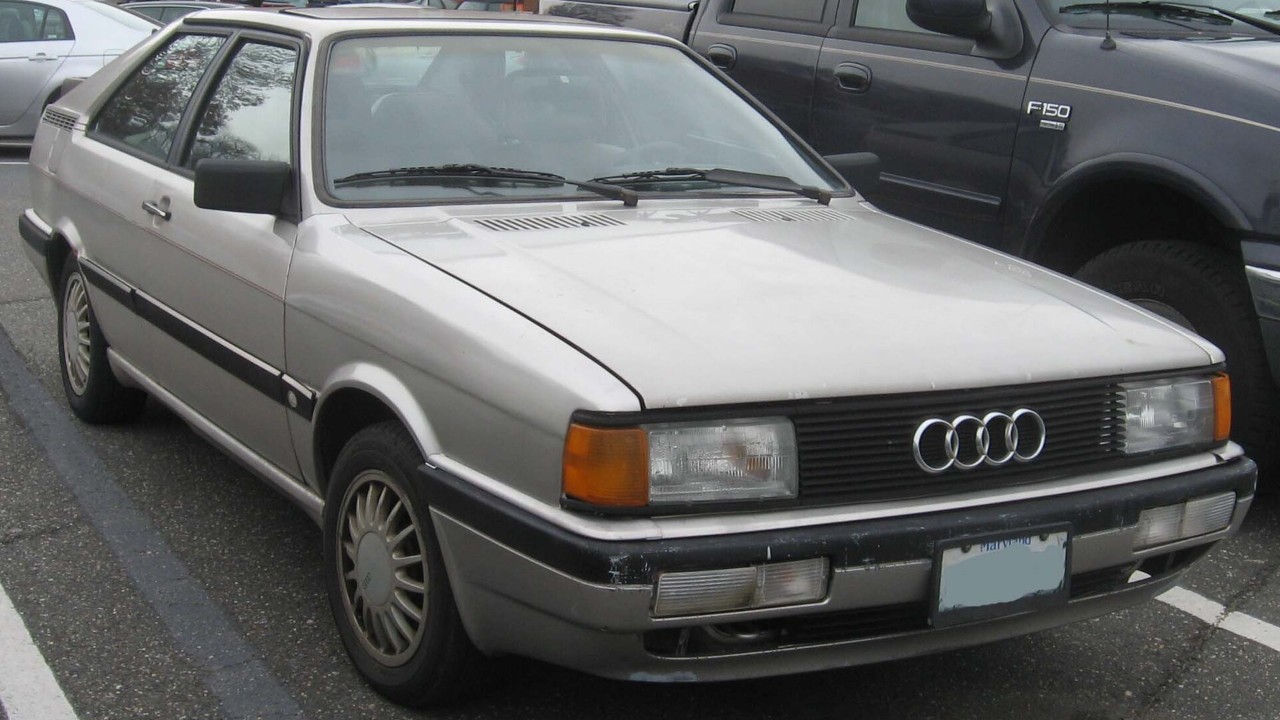
The Toyota Soarer offered a digital dash and a twin-cam six in 1981, and it never left Japan officially. Plenty of 1980s coupes were like that: clever, stylish and forgotten once the next model arrived. We have a soft spot for them. These are our picks for ten coupes from the decade that earn our respect every time one turns up. The verdicts are our take, and the specs come from the sources listed at the end. 1. 1985 Mitsubishi Cordia GSR The Cordia GSR Turbo reached Australia in early 1984 and set a new standard for cheap speed. Early cars’ Sirius-based 1.8-liter turbo four made 110 kW and 210 Nm of torque. On top of that, it cost $13,500 at launch. Wheels magazine ran it through the quarter-mile in 15.9 seconds. It also had flaws, including torque steer and rear drum brakes. Still, Shannons calls it the most significant small turbocharged car of the 1980s, and we admire it for that. 2. Toyota Soarer 2800GT The Toyota Soarer debuted as the EX-8 prototype in November 1980 and went on sale in late February 1981. The 2800GT used the 5M-GEU, a 2,759 cc twin-cam six. According to Ate Up With Motor, it was Toyota’s first twin-cam six since the 2000GT. In addition, it offered a digital speedometer, an LED tachometer and a trip computer. That tech helped it win Car Graphic’s Car of the Year for 1981-1982. Toyota typically sold 30,000 to 36,000 Soarers a year in Japan. 3. Renault Fuego The Fuego looked like nothing else from Renault, and we admire the nerve. Renault unveiled it at Geneva in March 1980 to replace the 15 and 17. Later, the Fuego Turbo went on sale in the United States in 1982. Its 1,565 cc four made 132 hp, for example. Renault even says its turbo diesel version was the fastest diesel-engined car in the world when it arrived in 1983. In all, Renault built 265,367 Fuegos in France and Argentina, with Argentine production running until 1992. 4. Opel Manta B2 GSi The Manta B ran from 1975 to 1988 and kept rear-wheel drive to the end. For 1979, Opel fitted a new 2.0-liter engine with Bosch L fuel injection, rated at 110 bhp. After 1984, the GSi was the only Manta with the big engine. Then the GSi Exclusive filled the last two years of production. We admire how Opel kept a simple, honest coupe alive that long. Its replacement, the Vauxhall Calibra, switched to front-wheel drive. 5. Nissan Leopard XJ-II The second-generation Leopard arrived in early 1986 as a coupe only, built on Skyline and Laurel underpinnings. Curbside Classic sees “a pretty distinct hint of BMW 6-Series” in its profile, and we agree. Meanwhile, Nissan placed Leopards in a popular detective TV show. Sales, however, stayed sluggish next to the rival Toyota Soarer. The Soarer Z20 sold more than 140,000 units in Japan from 1986 to 1991. That underdog record is exactly why we admire the Leopard. 6. 1987 Chevrolet Monte Carlo SS Aerocoupe Chevrolet built the Aerocoupe for one reason: to beat Ford’s Thunderbird on NASCAR superspeedways. Its rear glass sat at a steep 25-degree angle, with a shorter trunk lid behind it. After just 200 cars in 1986, Chevrolet built 6,052 for 1987. Meanwhile, power came from a 305 cubic-inch High Output V8 rated at 180 bhp. Our story on the Aerocoupe’s NASCAR rear window covers the 1986 cars. On track, Dale Earnhardt won eleven races and the 1987 title. 7. Mazda 626 coupe (GC) The GC-series 626 coupe is the definition of an honest 1980s two-door. Its crisp, upright lines and big glass area feel airy next to today’s slit-window coupes. It looks tidy, sensible and calmly confident, which is rarer than it sounds. In fact, that understated style is what wins us over. Yet few people stop to look at one, which is a shame. We think it deserves more credit than it gets. 8. Audi Coupe GT The Coupe GT wore the rally Quattro’s look, but US buyers almost never got the all-wheel drive. Instead, its five-cylinder engine drove the front wheels. The US Coupe GT line began in 1984, and the final 2.3-liter versions made up to 130 hp. Grassroots Motorsports calls it a mature, upscale European sports coupe rather than a scrappy runabout. That describes it well, because it never tried to be a rally car. In fact, the five-cylinder sound alone earns our admiration. The magazine says the best-kept cars sell for about $6,000. 9. 1985 Chrysler Laser XE The Laser XE was Chrysler’s futuristic answer to the Japanese coupes. It talked to its driver and used an all-digital dash. The XE was the upscale version of the Laser and Dodge Daytona pair, built on a K-car-derived platform. Road & Track tested a turbo XE with 142 hp and ran 0-60 mph in 8.6 seconds. Our feature on how the 1985 Chrysler Laser tried to redefine American sport coupes goes deeper. Chrysler dropped the Laser after 1986. 10. Toyota Corolla GT-S AE86 The AE86 GT-S proves a small coupe can become a big deal. Only the two-door coupes and three-door liftbacks kept rear-wheel drive, while the sedans moved to front-drive. On top of that, the GT-S got the 4A-GE, a high-revving, fuel-injected twin-cam four. Fans call the car Hachiroku, and drifters adopted it early. We admire it because it rewards a good driver more than a big budget. According to Petrolicious, the 4A-GE revved to 7,600 rpm.

 Liked by Ethan King, Camille Tremblay
 Liked by Ethan King, Camille Tremblay