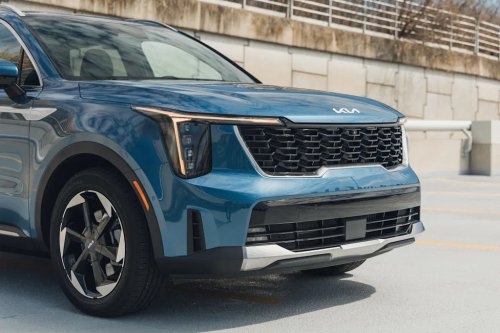
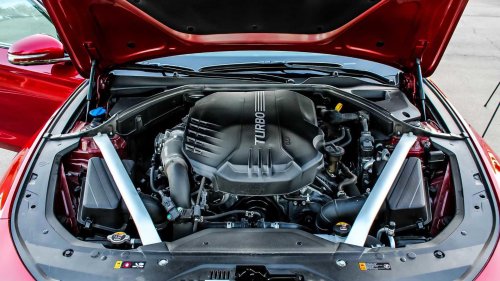

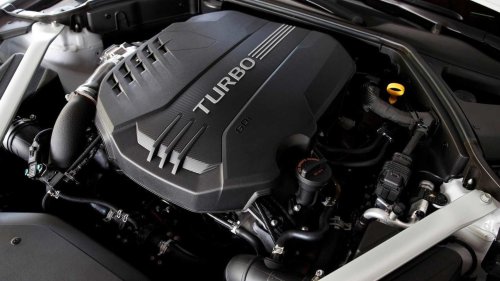




















Sometimes a major engine problem can create a stigma that follows an OEM around like a dark cloud. Even if the issue was specific to one family of engines, it can often color perceptions across the company’s entire range. This specific challenge could cause well-meaning buyers to pause when considering a used Kia Stinger GT.The Stinger may look suspiciously tempting in many respects, with its rear-wheel-drive proportions and practical liftback body. But still, many buyers will have those Hyundai and Kia engine issues at the back of their minds and proceed with caution. The key for them is to separate the baggage carried over from other Hyundai/Kia powerplants and look more specifically at the vehicle in question and its own type of engine. One Engine Reputation Can Poison A Whole Used Car Search KiaAn anxious buyer looking at that used Kia Stinger GT may not realize that it features an entirely different engine to others in the Hyundai/Genesis/Kia range. In this case, it has a 3.3-liter Lambda II V6, which is of the same family found in the Genesis G70 and Kia Cadenza. In a 2018 Stinger GT, it produces 365 horsepower and 376 pound feet of torque, comes with an eight-speed automatic transmission, and has either rear or all-wheel drive.It can get to 60 mph in 4.6 seconds, and Kia also claims an electronically limited top speed for the V6 Stinger of 167 mph. When you look at all those figures together, these are not economy-car readings, and this places the Stinger in the orbit of serious sports sedans.Yet that buyer may remember the long shadow of engine failures that both Kia and Hyundai had to deal with, including fire risk recalls and many engine investigations. That hesitant buyer may not realize that most of the serious engine-reputation problems surrounded the Theta II engines rather than these Lambda II V6s. The individual companies chose this V6 family for a specific set of cars designed for a different purpose, and it pays to look at what designers asked the engine to do and understand the company's methodology. The Lambda II V6 Sits In Kia's Most Ambitious Cars Carbuzz / Valnet Both Kia and Genesis use the 3.3L Lambda II engine as part of a concerted effort to change buyer perceptions. For example, with the Stinger GT, Kia needed a very purposeful engine to power this rear-drive performance liftback with its serious grand-touring ability. In a review, CarBuzz called the Stinger a stunningly pretty luxury sports sedan and said there was no doubt that Kia had done a good job under the hood.And to find the correct level of performance, Kia needed an engine that could provide relaxed highway torque, quick overtaking, and the type of refinement buyers might be looking for as they shopped.Genesis took the same approach, but its G70 offering was smaller, sharper, and in the realm of the compact luxury sports sedan. CarBuzz drove this car as well and while noting that the 3.3T option was far more expensive than some German rivals, its performance more than made up for it.Kia also put the 3.3L into its Cadenza, where the GDI V6 produced 290 hp and 253 ft-lb of torque, driving the front wheels through an eight-speed automatic. This was more of a luxury sedan and something entirely different to the Stinger, but the company nevertheless used the Lambda II for smoothness and good torque delivery. So, both Kia and Genesis chose the Lambda II specifically because of its tough demeanor and the fact that it could be either a performance engine or a refined cruiser option, as necessary. The Lambda Record Helps Allay The Fear Kia While the Lambda II may have been far more successful than the ill-fated Theta, it still wasn't perfect. However, its specific failures certainly shouldn't match the fear that many buyers feel about Hyundai-Kia products. One of the biggest challenges for the twin-turbo Lambda II was the turbocharger oil feed pipe recall. This affected certain 2018-23 Stinger models and 2019-2020 K900 models that had the Lambda II 3.3L T-GDI engine. The left-hand turbo oil feed pipe and hose assembly could deteriorate over time and, in certain situations, carry the risk of an engine compartment fire.Meanwhile, Genesis had a related recall for certain 2019-2022 G70 models that had the 3.3L turbo engine. According to that documentation, the left-hand turbo oil supply pipe could crack if it were subject to high ambient temperatures for a long time. This could theoretically allow oil to leak onto the exhaust manifold, creating another risk of fire.In 2023, another consumer alert covered more than 3.3 million Hyundai and Kia vehicles, and this included some Kia Cadenzas. The issue here was nothing to do with engines specifically but more about brake fluid leakage, which could cause an electrical short in a hydraulic electronic control unit.All of those incidents are certainly quite serious, but they were nevertheless very specific and gated. And there's certainly no evidence that the Lambda II had any broad bottom-end engine failures. The Common Issues Are Manageable And Not Mythical Genesis When you look at everything in the cold light of day, the Lambda II's common trouble areas are less dramatic and seem more like the maintenance profile of a modern direct-injected V6. And while direct injection can be very efficient, it can also contribute to intake valve carbon buildup as the fuel is no longer washing over the back of the valves in the way that it does with port-injected engines. Over time, buyers and owners may notice rough running, misfires, and reduced performance with deposit accumulation.Twin-turbo Stingers and G70s may be a little more complex. The turbochargers fitted to these vehicles can increase heat and system sensitivity, and they can be tough to work on as well. If a previous owner has neglected to follow the 3.3T's oil change intervals or made some bad modifications, this can represent a very different proposition compared to a well-maintained standard car where the owner has taken care of any recalls. The Smart Buy Is The Car That Checks The Right Boxes Genesis People who are looking at a used Stinger GT or Genesis G70 3.3T should look beyond any broader engine tales and carry out a purposeful inspection instead. To begin with, they should look at any recall documentation to make sure everything is complete, and they can verify the turbo oil feed pipe recall through the vehicle's VIN. They should then look closely at the car's maintenance and service history.A complete service record and regular oil changes are important for any modern engine, but they certainly matter here with those twin-turbo direct-injected V6 units creating high under-hood temperatures.After verifying the paperwork, a prospective owner should carry out a comprehensive road test. They should ensure the engine starts cleanly and idles properly and ensure that it can pull hard without any hesitation. They should watch for any misfires, signs of smoke, coolant loss, or unexplained oil consumption and investigate all these issues before purchasing rather than getting carried away with enthusiasm for a car.The Cadenza may be a simpler vehicle, but it still requires a calm and methodical approach. Buyers should verify open recalls and look for oil or coolant leaks before confirming smooth transmission behavior. They should also prioritize examples that have regular service histories on hand.The 3.3L Lambda II V6 is certainly not bulletproof, and the twin-turbo oil feed recall is something to note. But there’s no reason to turn down the prospect of a Stinger GT, G70 3.3T, or Cadenza simply because there are older engine stories linked to the brand itself. Instead, buyers should note how versatile the Lambda II V6 actually is and how it has been able to power those very different cars effectively.Kia It's still important to carry out those pre-purchase checks, demand maintenance records, and inspect the car properly. But buyers shouldn't dismiss the Lambda II out of hand, just because some other Genesis or Kia engines created nasty headlines. And if they trust the Lambda II on its own merits, they may actually find that this V6 is quite an attractive proposition.