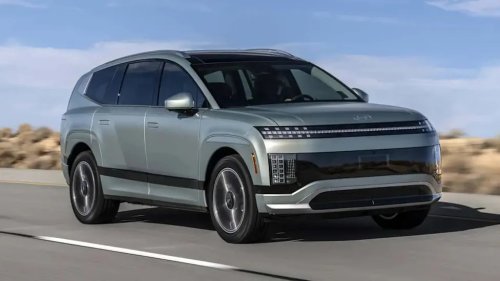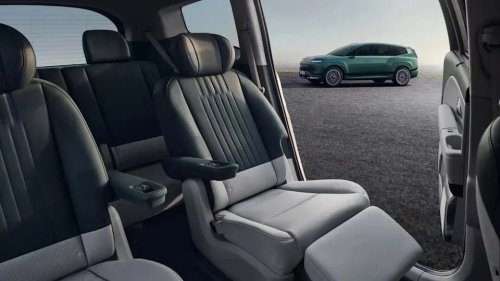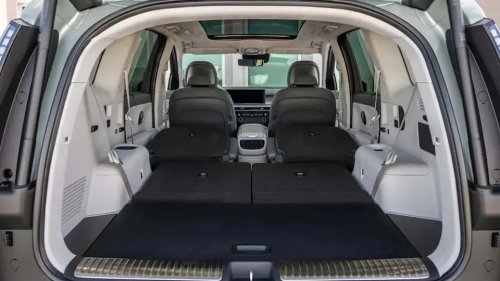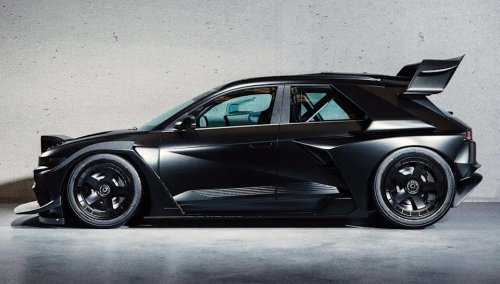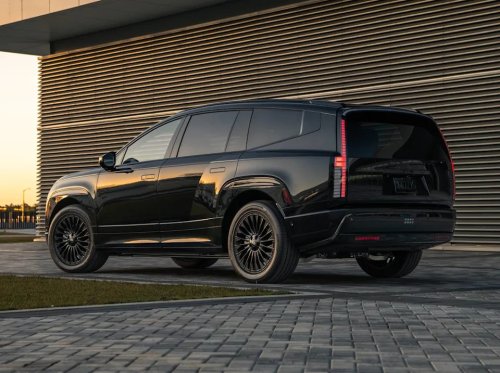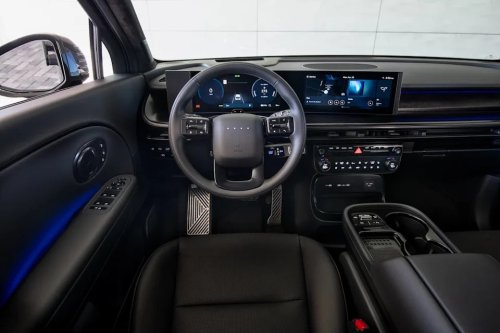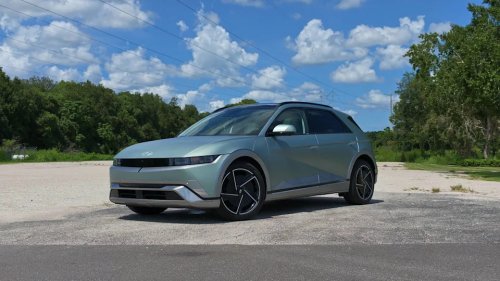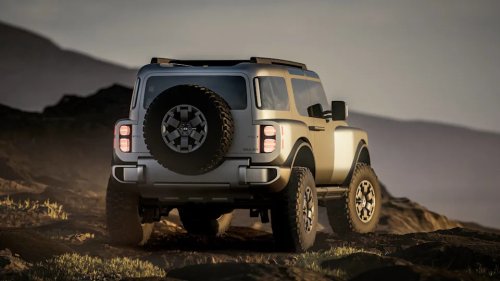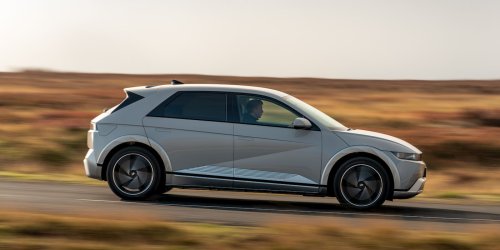
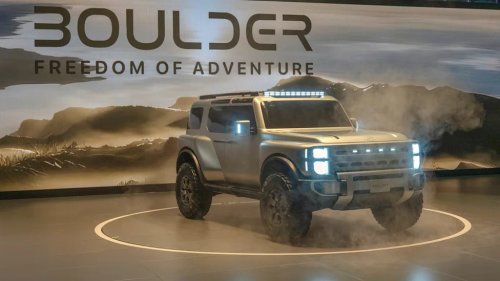



















Hyundai's U.S. Metaplant Reshapes Auto JobsMotorTrend (MotorTrend)Little old Hyundai Motors has transformed itself into kind of a big deal. With the humblest roots of any modern carmaker in memory—I’m old enough to remember the OG Excel’s only selling point was its $4,995 price—Hyundai managed to move 901,686 units in the U.S. in 2025. True, only 772,712 of those were retail sales, but a unit moved is a unit moved. To contextualize this a bit, Nissan sold 926,153 vehicles, Honda sold 1,430,577, and big dog Toyota moved 2,518,017 cars, trucks and SUVs in 2025.Moreover, last year was not only Hyundai’s fifth straight year of growth, but Q1 of 2026 represents an all-time sales record for the brand. Q1 also marked 40 years since the South Korean steel giant sold its first car in the U.S., doing so in February of 1986. The most eyebrow-raising part is that, thanks to the war in Iran spiking gas prices, Hyundai saw a nearly 40 percent increases in EV sales from February to March of 2026.Hyundai’s U.S. Push Is Getting SeriousMore than 80 percent of the Hyundais sold in the U.S. are built in the U.S., leading Hyundai CEO José Muñoz (our 2025 MotorTrend Person of the Year) to half-joke that his three biggest concerns are U, S, and A. Hyundai is about to embark on a new product offensive, promising 36 new models by 2030. We know this includes a new body-on-frame midsize truck to compete with the Colorado/Ranger/Tacoma, and the brand just showed a rather production-intent-looking Bronco/Wrangler competitor at the New York Auto Show called the Boulder. This is unrelated to the more conceptual but not so far-fetched Crater off-roader Hyundai bowed at last November’s L.A. Auto Show.Hyundai - MotorTrend (Hyundai - MotorTrend)Call it a hunch, but the Boulder will be gas, hybrid, PHEV, and/or EREV, whereas the Crater looks like a tributary flowing off the Ioniq 5 platform. Please note that more than 30 percent of Hyundai’s U.S. sales in 2025 were EVs, which leaves the company only behind Tesla and General Motors as an EV supplier, and ahead of Ford, Rivian, and everyone else. We’ll presume at least 80 percent of these 36 new models will be built here in the States, which is why Hyundai flew us out to Ellabell, Georgia, just outside of Savannah, to take a closer look at its massive Metaplant and surrounding facilities.A $12 Billion Bet Deep in GeorgiaThe full name of the sprawling complex is Hyundai Motors Group Metaplant America, or HMGMA for short. When we say sprawling, we mean six times larger than Disneyland. And that’s Disneyland plus California Adventure and Downtown Disney. We were shown the location of a future nature preserve that will have a walking path for employees to enjoy, and a very cool-looking water tower covered in a livery designed by local art students.MotorTrend - MotorTrend (MotorTrend - MotorTrend)HMGMA represents the single largest investment by any company in the history of Georgia. In May 2022, Hyundai pledged a $7.6B expenditure. This quickly grew to $12.6B, and in October 2024 the first Ioniq 5 rolled off the production line. That car, covered in the signatures of the Meta Pros (HMGMA-speak for factory workers) who built it, now sits in one of the several lobbies on campus that we visited. Thanks to another $2.7B spent in September of 2025, the Metaplant now has the capacity to build 500,000 BEVs and EREVs per year.AdvertisementAdvertisementTo back up this investment, Hyundai pointed out that 33.8 percent of its U.S. sales are EVs, 42 percent of Americans feel frustration or dread because of gas prices, 30 percent of us see $4.50 per gallon as a tipping point to EV adoption, and 36 percent have researched electric vehicles.Scaling Up to Half a Million EVsWe couldn’t get a straight answer from anyone about how many vehicles are presently being built at HMGMA, but if we add the number of Ioniq 5s sold in the U.S. to the number of Ioniq 9s—the only two vehicles being manufactured at the Metaplant right now—we get just more than 50,000 units. Sure, there’s Canada and a few other markets to lump in there, but the answer is south of 100K units at the moment.This tracks with what a Meta Pro told us about the factory gearing up for an eventual second and then third shift in order to go full 24-hour production like at the Mobile, Alabama, factory. Doing so would raise the theoretical output to 300,000 vehicles with the existing setup. No one from Hyundai would say, but we’ll wager the body-on-frame vehicle will be built at the Metaplant, with hybrid engines being trucked in from Alabama where they’re built. This second line is how HMGMA will get to 500,000 units a year.DWilson_PR - MotorTrend (DWilson_PR - MotorTrend)Some more facts and stats about the HMGMA: It accounts for 8,500 jobs on site and another 6,950 jobs elsewhere in Georgia. If you’ve read this far, we should make a distinction between the entire campus (HMGMA) and the actual Hyundai manufacturing facility (Metaplant). There are several Tier 1 suppliers onsite at HMGMA, cutely named things like Clovis (they build the front and rear subframes), Glovis (transportation), Mobis (ADAS systems, etc.), and most notoriously the HLBMA battery production facility (a joint venture between Hyundai and LG) that was raided by ICE in September 2025, resulting in the incarceration of more than 300 South Korean nationals. Despite that last bit, HMGMA is almost totally good news for the state. The MetaPlant itself employees 1,623 Meta Pros, with 85 percent of them coming from Georgia, and 65 percent residing in the greater Savannah area. The average Meta Pro salary is $58,105, which is 25 percent higher than the average wage in the county. It also happens to be the average salary ($28 per hour) of a Big 3 UAW worker. Let’s not forget about the 1,878 solar panels that provide almost 10 percent of the facility’s power needs.Inside the Factory Where Robots Take OverThe Metaplant itself is incredible. Full disclosure: This author would very happily take a folding chair and sit all day watching cars being built. We began our tour of the Metaplant in the stamping facility, and we didn’t need to use ear protection. That’s incredible. I visited Ford’s massive Woodhaven, Michigan, stamping plant, and it was deafening. Admittedly, this was about two decades back, but still. If you’ve never had the pleasure, massive, cartoon-scale machines stamp lengths of cold-rolled steel into body panels. Ca-ching! Ca-ching! All day and night. The difference at the Metaplant is that the gigantic stamping presses are behind see-through walls, built specifically to muffle the noise. As we golf-carted past, half a dozen Meta Pros were standing in front of one giant press, quietly conversing.DWilson_PR - MotorTrend (DWilson_PR - MotorTrend)From there, the newly created panels are transported via robot into one of the most automated manufacturing facilities I’ve ever seen. We’re still not 100 percent sure why Hyundai purchased (probably) evil robot maker Boston Dynamics, but the Metaplant gets us to 75 percent of an explanation. Robots are everywhere, doing almost everything. We’re not talking about the humanoid Atlas that will (probably) beat Telsa’s Optimus to production, but rather wheeled, flat robots that move cars from station to station. As well as what looked like thousands of yellow robo-arms that spot-weld and install things deemed too strenuous for humans. They even use two of those absolutely frightening yellow Spot “dogs” to inspect cars as they are finished with the production line. Spot’s face has a camera mounted on it (along with other sensors), and it literally sticks its snout into cars’ footwells to have a look. Yup, robot dogs are inspecting Korean electric cars built in the Deep South. Wild times, indeed.