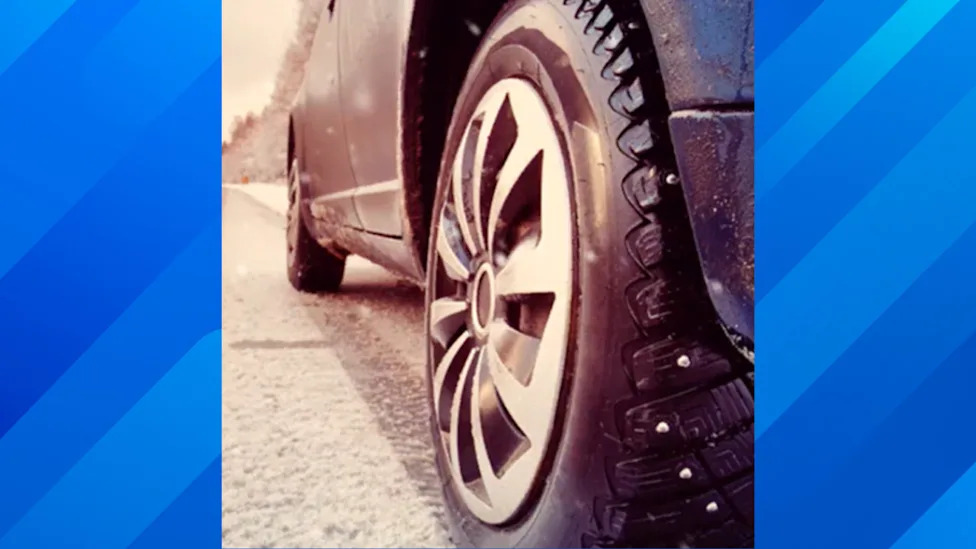
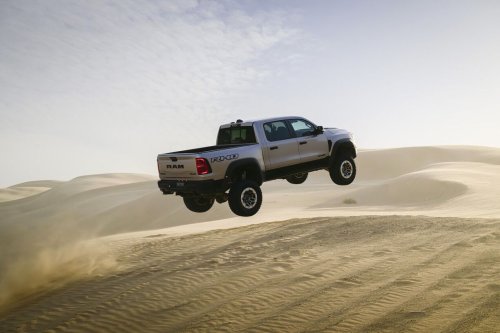
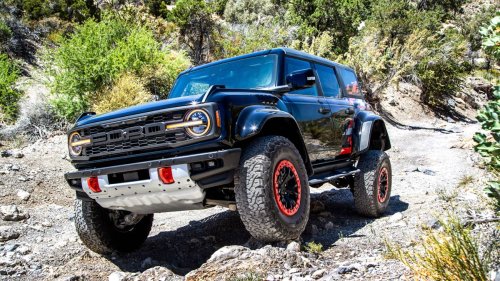
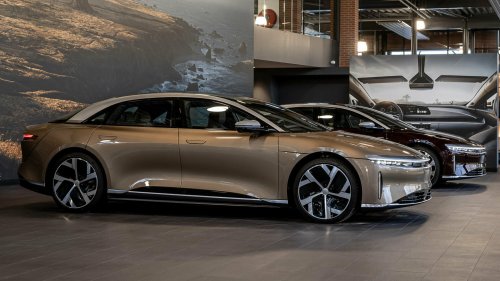
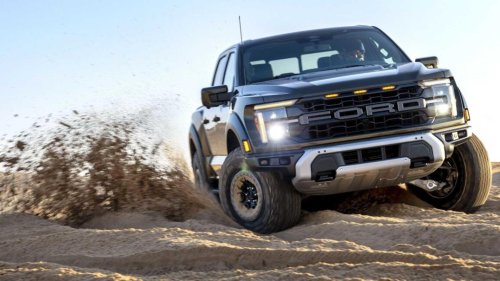
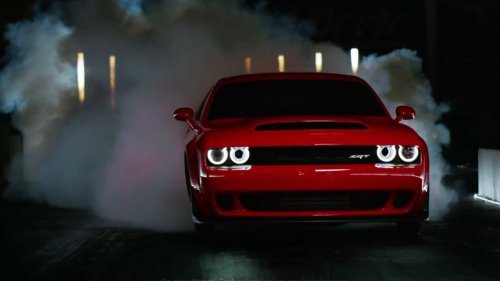
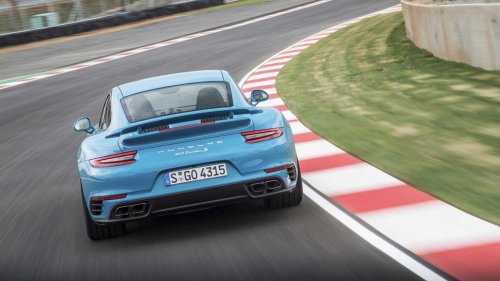
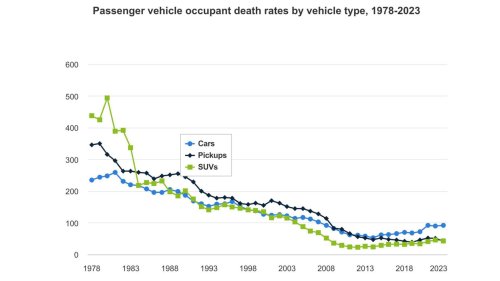
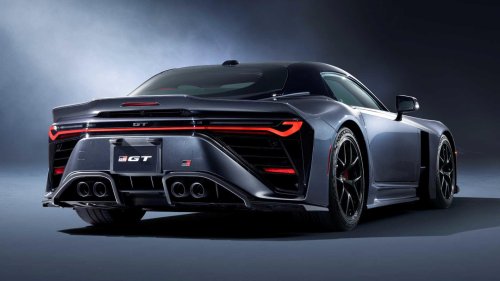
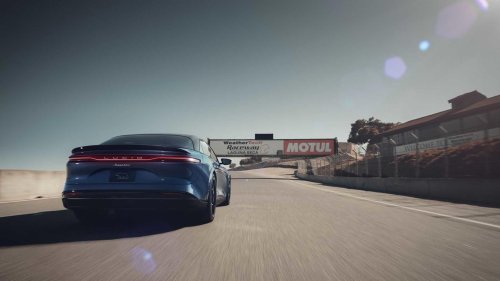
If speed kills on American roadways, then the only thing worse is glorifying speed by way of advertising on TV, in magazines, and on the internet. At least, that's what the Insurance Institute for Highway Safety (IIHS) says in a new study on the subject.Are people encouraged to speed because, as car enthusiasts, they've been fed a steady stream of smoky burnouts, sideways antics, and hard-charging, wide-open driving? Maybe people take chances running triple-digit speeds because automakers keep cranking horsepower. Some people want the fastest car on the block, and automakers always want to satisfy that demand.Ford Like it or not, these people buy cars – lots of them, in many cases – because cars are their passion. But the question posed by IIHS is an interesting one: Do these people speed for their own reasons, or are they encouraged to do so by outside influences? An Interesting Study... With Interesting Conclusions In their latest study, IIHS researchers scoured through nearly 3,000 automobile ads that appeared in 2018, 2020 and 2022 on television and social media. Nearly half, 43% to be exact, highlighted speed, maneuverability, traction, stopping, or power, all grouped by IIHS under the "performance" umbrella. Apparently, this is a bad influence on US drivers.IIHSNow, one could argue that stopping, maneuverability, and traction are aligned with safe driving. Ask anyone who's had to swerve to avoid a drunk driver, or brake hard to miss a child running into a street about the safety benefits of superior stopping, maneuverability, and traction. But the actual IIHS report shows that, of the five subcategories in the "perfomance" group, messaging about traction was by far the most prevalent, appearing in 27.5% of the ads studied from 2018 to 2022.The study portrays traction as a bad thing, as off-roaders in Ford Bronco Raptors climb a steep rock face or drift around a circle on a frozen pond for controlled winter testing. But a much larger group of shoppers – full-size truck and SUV owners – know that traction means surefootedness in adverse conditions and when towing. It's not about speeding.Meanwhile, speed as a stand-alone topic only showed up in 16.3% of the ads, trailing messages about family functionality (28.1%), comfort/convenience (24.3%), car as an escape (22.3%), and attractive styling (21.5%). If those five individual categories were not grouped under "performance," the clear top theme in these researched ads is available incentives or sale prices (a whopping 40.5%).PorscheSo, are Americans obsessed with speed, or with finding a car that fits into their budget? And does Porsche get credit for showing its 911 Turbo (above) on track, rather than public roads?Still, IIHS insists the focus on performance in advertising has grown over time, and that speed has been emphasized at least twice as much as safety, even when talking about the aforementioned maneuverability, stopping, and traction, which can definitely contribute to safety.“Showing a stunt driver zooming around a tight turn in the rain might seem harmless, but these ads reinforce our cultural obsession with speed.”–IIHS President David Harkey Tenuous Link Between Speed, Ads On the safety front, the study finds that advertising themes around car safety declined to only 2.9% in 2022, despite a flood of technologies making our cars safer, like radar-based automatic emergency braking, blind-spot warning, and back-up cameras. Airbags and seatbelts save lives and are worth the money, but let's admit, they're not sexy.IIHSNo one is suggesting that American roads are completely safe, and we've all seen idiotic behavior. But IIHS reports that since 1978, the overall rates of occupant deaths per million registered vehicles have declined across all passenger vehicle types (see chart above). "Declines in death rates have been largest for SUV occupants," IIHS says.But here's the mystifying part of the latest survey. IIHS points to other research connecting violent video games to increased aggression on the part of young people, but it even admits – in its own study – the connection between speeding and car advertising is tenuous."Although a clear link between vehicle advertising and driver behavior has not been established, research has shown that the content of electronic media can affect viewer behavior."–IIHSToyota Perhaps IIHS should take up their gripe with former Toyota CEO Akio Toyoda, who famously led the brand to new heights with the "No boring cars" credo for the product development team. Should he be openly criticized because he pushed for the 2027 Toyota GR GT road car with 641 horsepower from a hybrid twin-turbo V8, or the all-electric 2027 Lexus LFA supercar? Toyota's a practical company selling a ton of mainstream cars, trucks, crossovers, minivans, and SUVs. Can't a company have a little fun once in a while? What About Insanely Fast EVs? While we're talking about EVs, it seems that lost in this conversation is the arrival of modern, insanely fast electric vehicles (like the upcoming LFA) with immediate torque and the ability to outrun most internal-combustion vehicles in zero to 60 mph sprints.We're told electric vehicles are the sensible choice, but people buying a battery-electric Porsche Taycan GT or Tesla Model S Plaid or Lucid Air Sapphire (all capable of scrambling your brain by reaching 60 mph in under 2 seconds) are motivated by something other than saving the planet.LucidBut IIHS holds fast to its study, pointing to the 11,288 lives lost in speed-related crashes in the US in 2024, representing 29% of all road deaths. And mass media does a poor job of self-regulating car advertising that promotes risky behavior, IIHS contends.For example, IIHS says the advertising standards of ViacomCBS, ABC, and NBCUniversal are similarly ambiguous with regard to vehicle speed. Elsewhere, regulators control vehicle ads. In the UK, IIHS says, standards prohibit ads that encourage dangerous driving and restrict messages about power, acceleration, or handling unless the context clearly relates to safety. So, without stricter rules regarding ads portraying aggressive driving in the US, IIHS claims the death toll attributed to speeding will continue growing. “Advertising like this has helped normalize speeding, masking how dangerous it is,” says IIHS Research Scientist Amber Woods, lead author of the study. “Just think about how different attitudes are toward speeding versus impaired driving.” The Blame Game With all this said, does seeing a GR Corolla zipping down a back road, or a Ford Bronco climbing a sand dune in a 15-second commercial really push people to drive 15 mph over the speed limit? IIHS certainly has a take on that, but the study itself acknowledges there's no established link, and other IIHS data cast doubts that things are actually worse. At the end of the day, some Americans consider it their God-given right to take unnecessary risks behind the wheel, and the best way to deter that is for police to crack down on speeding.In the meantime, we know companies like Toyota, Volvo, Genesis, Subaru, Honda, Hyundai and others are among brands deserving credit for marketing safety features in their vehicles. But we certainly don't blame them for wanting a little excitement, too.



















 +36 others