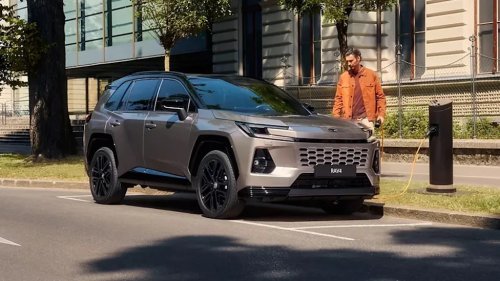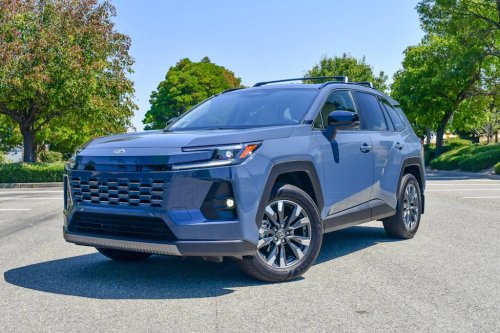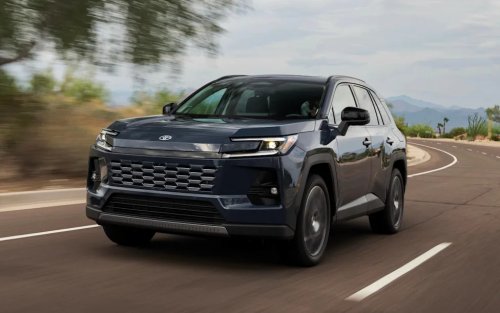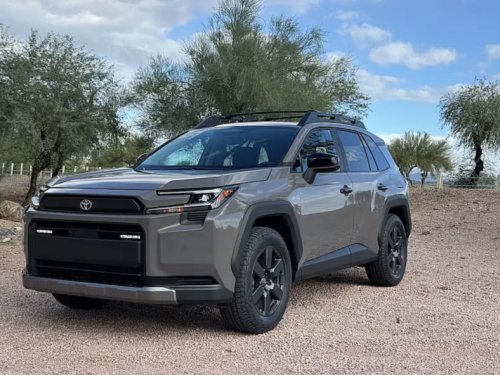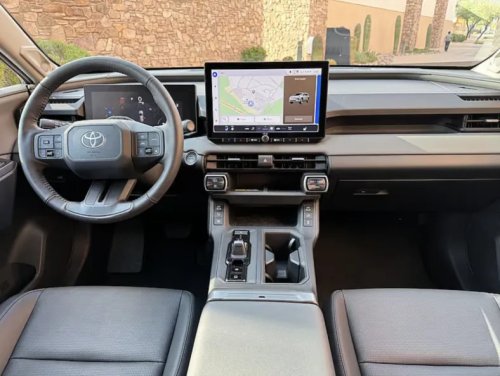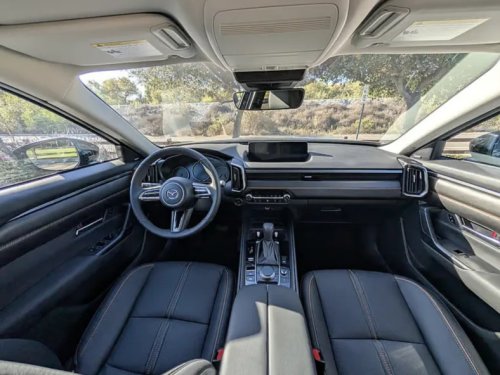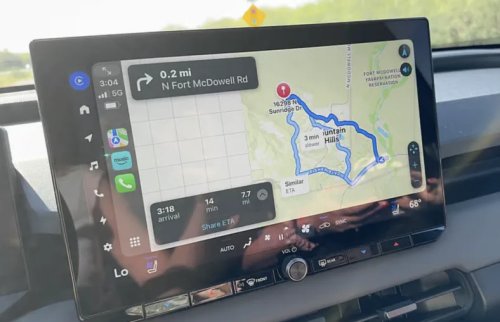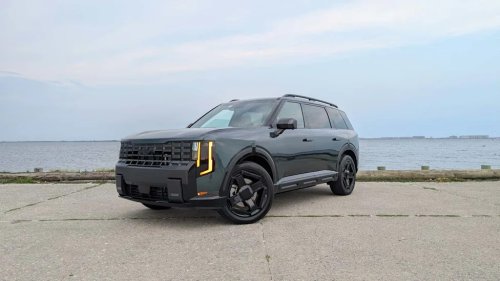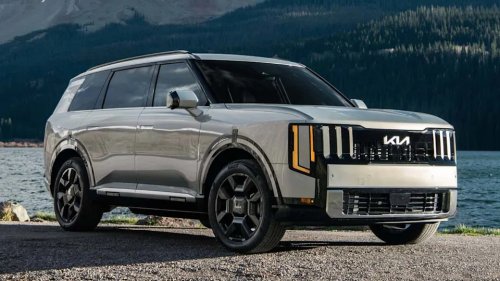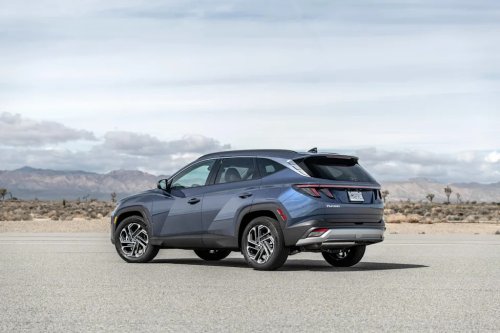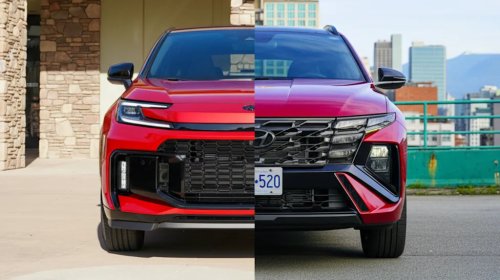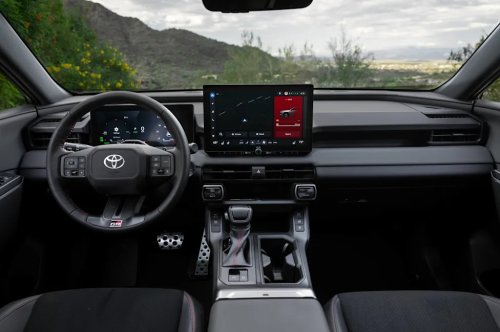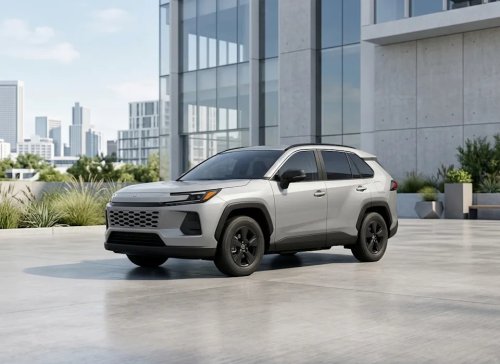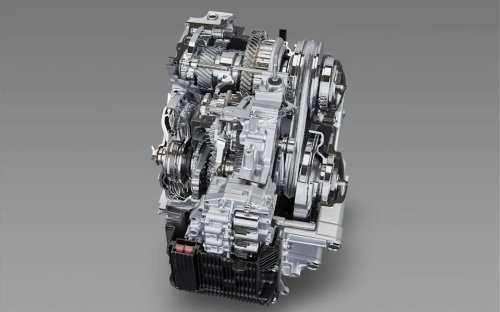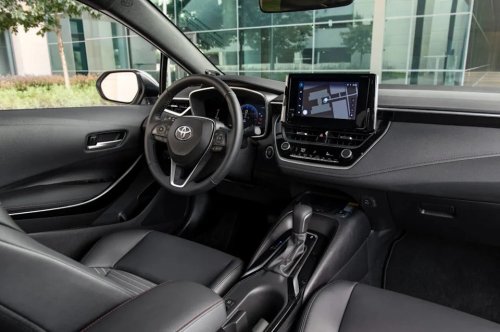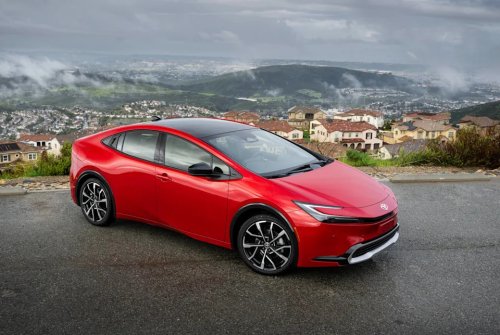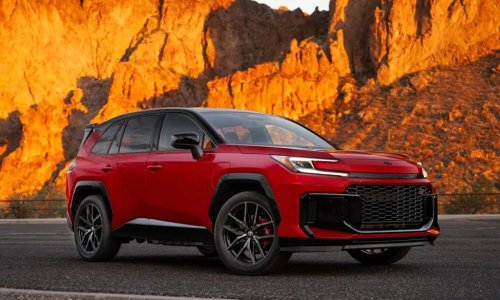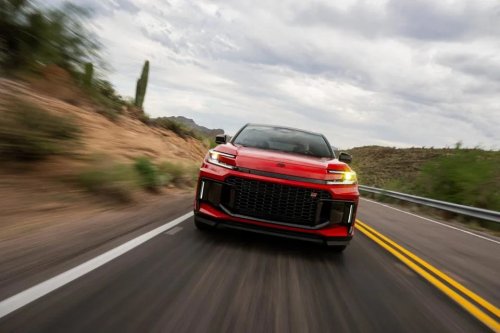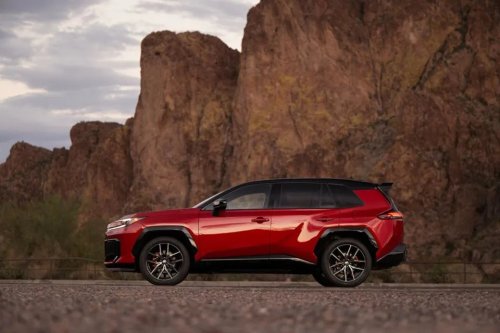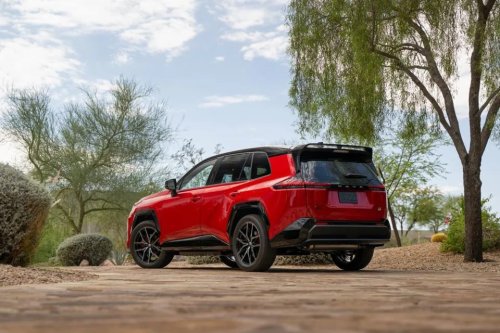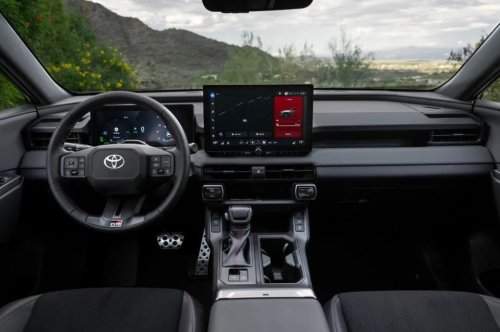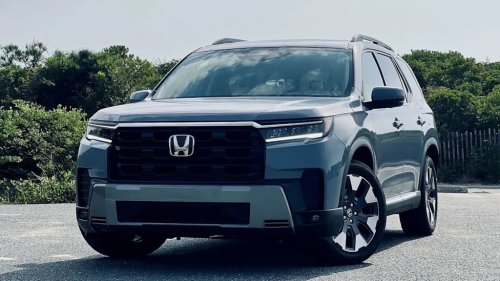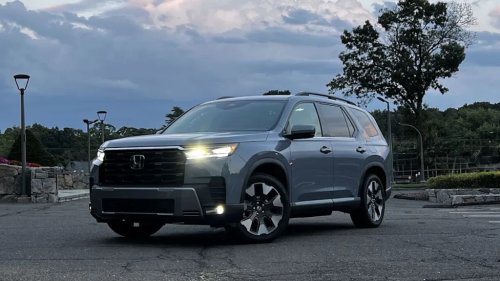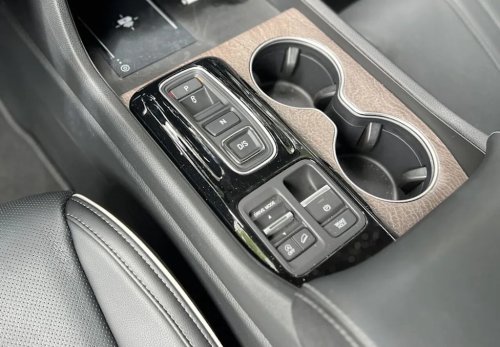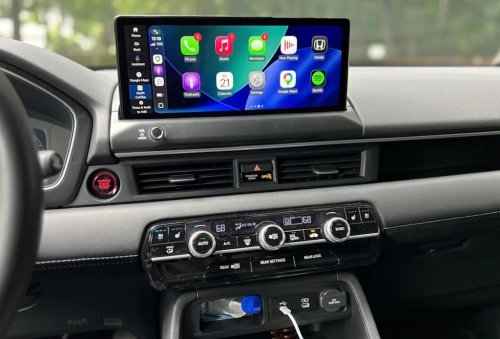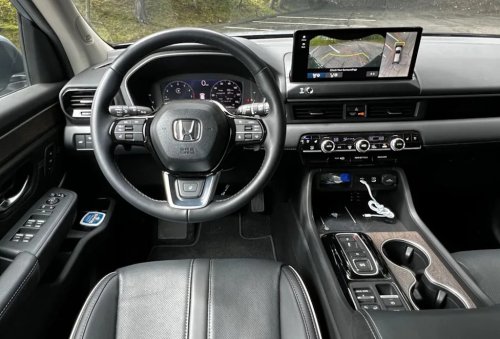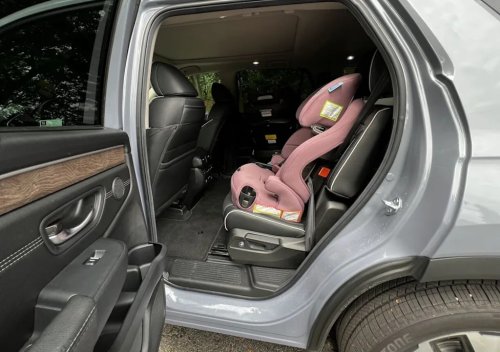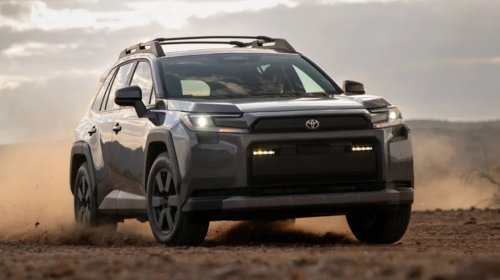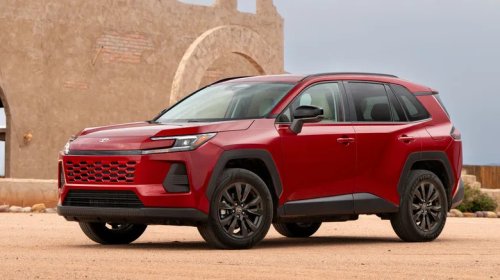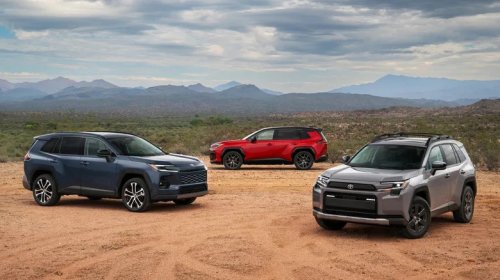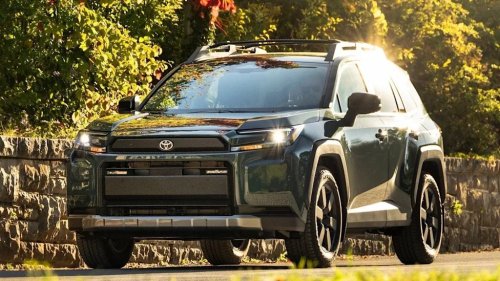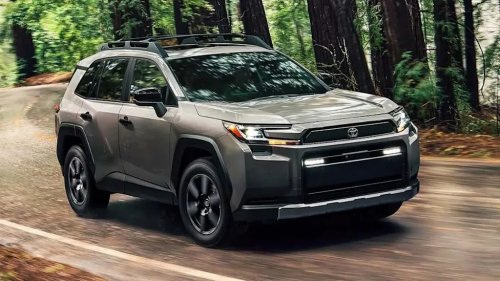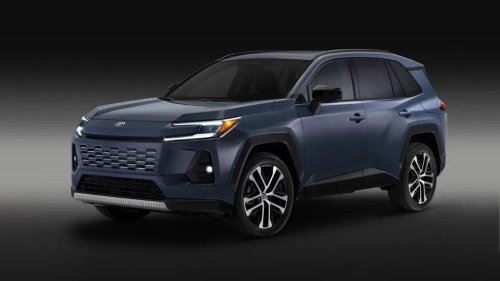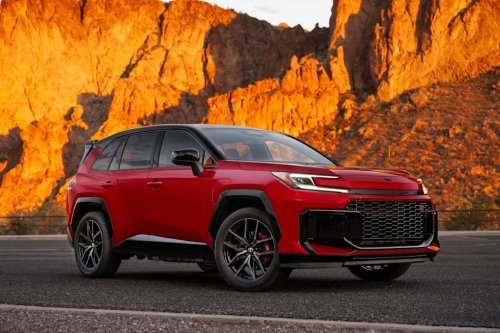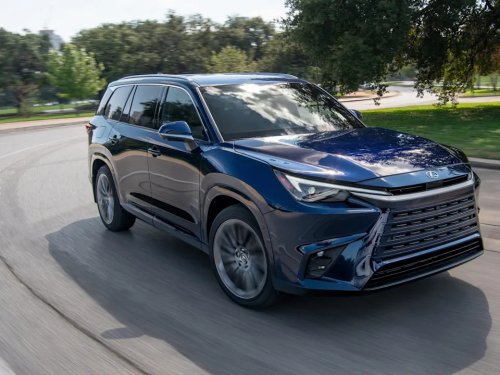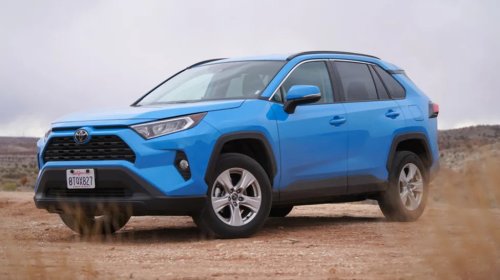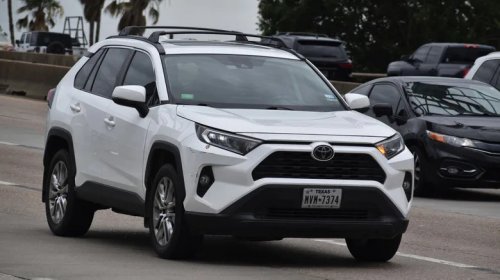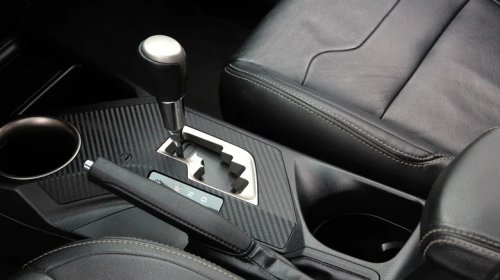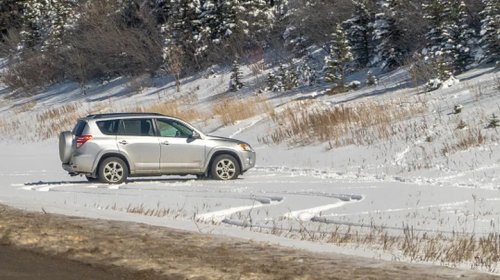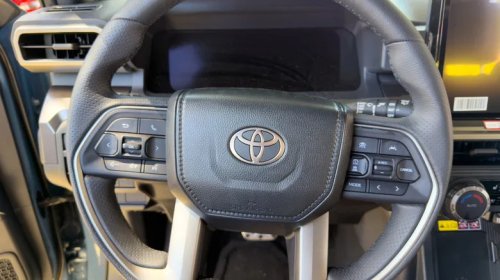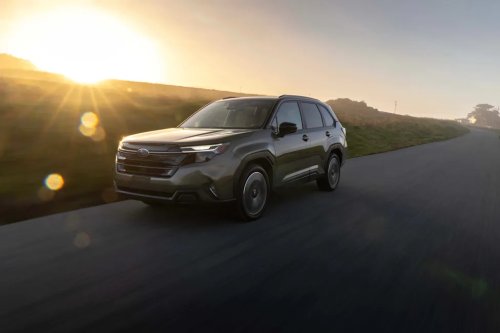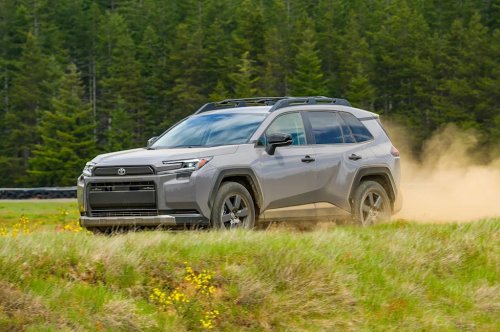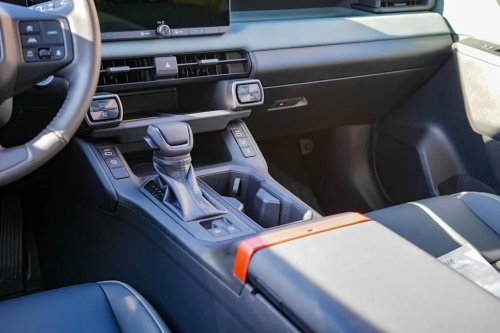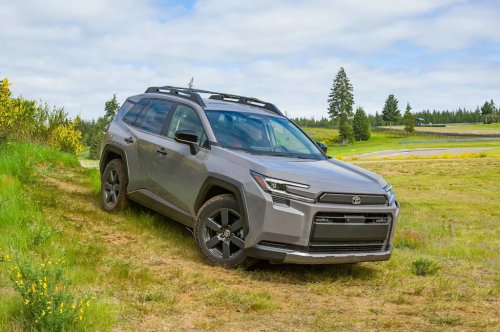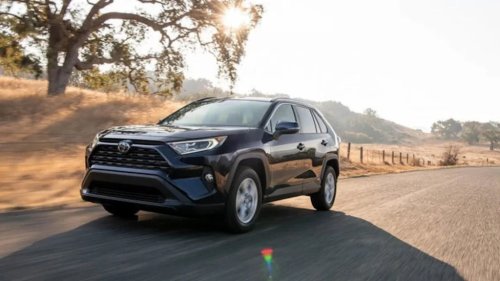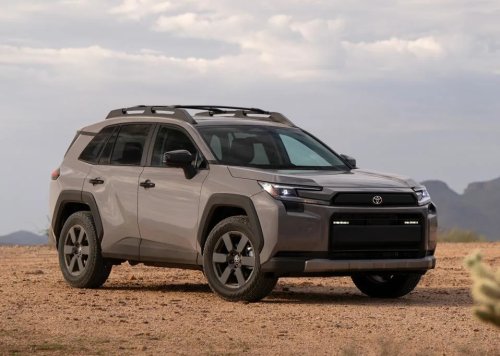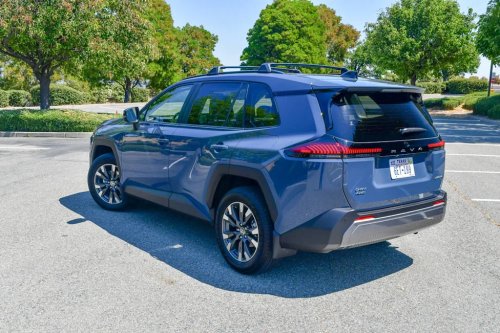
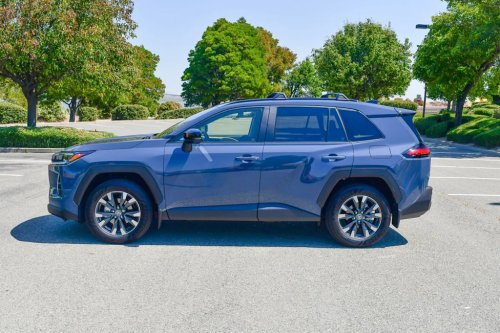
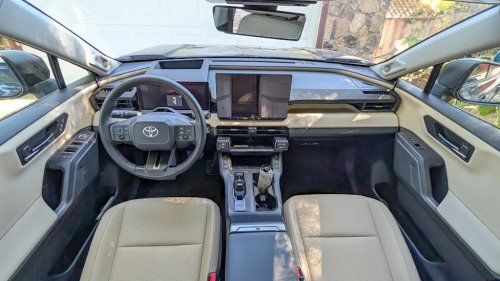
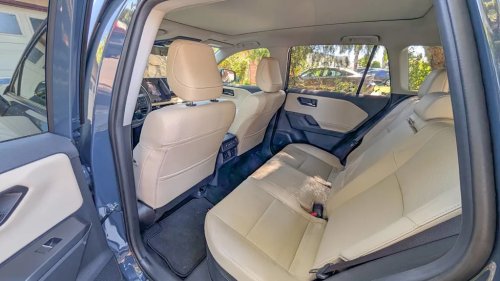
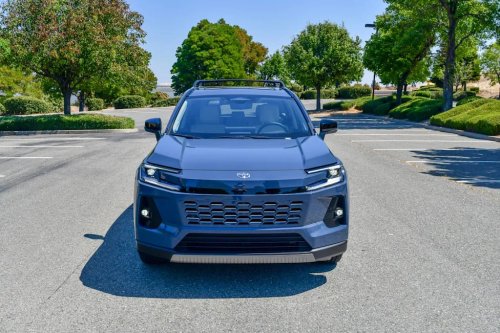
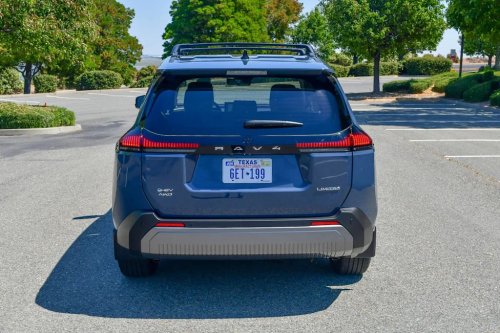



















Autoblog and Yahoo may earn commission from links in this article.The Toyota RAV4 should be the official car of California, especially in the San Francisco Bay Area. They're everywhere. If you scanned every major highway in the Golden State, I'd wager that 1 in every 4 cars is a Toyota RAV4 hybrid, either in the company's Supersonic Red or Heritage Blue. And who could blame them? With a base MSRP of $34,245 and a maximum price of $42,550, a 2025 Toyota RAV4 could get you up to 38 mpg with all-wheel drive (because the previous generation made AWD standard on all RAV4 hybrid trims), get decent cargo space, and still fit the family.Kristen BrownToyota switched up the already-successful RAV4 formula by doing a complete redesign (beforehand it hadn't been redesigned since 2019) of the interior and exterior, making all trims of the RAV4 a hybrid—bye-bye gas-only engine—offering front-wheel drive, and introducing a sporty GR trim, all without changing the price range too much. The base LE model starts at $31,900, and the Limited's MSRP reads $43,300. I got to review a 2026 Limited AWD model, and saw just how much the RAV4 has been improved, as both a mid-sized SUV and as a family car. Here's how it handled hauling my two toddler daughters around.AdvertisementAdvertisementRelated: Road Ethos Launches: The New Automotive Lifestyle Site You Should ReadThe new design is much better in personAt first, I felt a bit iffy about the RAV4's new design. It seemed so radically different from the previous design that it reminded me of how I felt about the 4Runner's new design. I warmed up to it, seeing pictures and videos of it from my colleagues. In person, it looks so much better. My father-in-law drives a 2025 Limited, and size-wise, it's on par with the last generation. In fact, if we compare dimensions, they're basically identical. Both model years have a wheelbase length of 105.9 inches; the new model is longer by just 0.1 inches, and both are 73 inches wide. But as far as height is concerned, the new model is about an inch shorter. That's it. Kristen BrownThe interior was completely overhauled, and I was anxious to experience it. When I'd reviewed the 2025 XSE in Oregon, I loved the driving dynamics and what it had to offer, but the interior felt so chintzy and cheap, even with the blue accent stitching and leather accents. My tester back then was just over $43,000, and it felt way too much for how brittle everything felt. The mileage was great, with an average of about 37 mpg, but it didn't feel like it was worth the price (at least to me, that's purely subjective). The new model's interior feels and looks so much better. Visibility is better, the color options are better, and the materials and layout are all substantially better. Speaking of the interior, they maintained the best, but changed the worstSomething I appreciated about the 2025 RAV4 was the rear legroom figure of 37.8 inches and ample trunk space of 37.5 cubic feet. Both felt incredibly roomy without being gargantuan. The previous generation had a sunroof, and the new RAV4 had a sunroof, and it was larger—almost spanning over the entire length of the car. It lets in a lot more light and truly amplifies the light grey accenting over the black base. It didn't feel like an afterthought at all. Paired with Toyota's new "hammerhead" exterior design, the 2026 RAV4 shaped up to be a very premium-feeling yet still affordable SUV. Kristen BrownUnlike the Camry I tested just before the RAV4, it didn't have many options and packages that upgraded the screens or added any convenience features. The new RAV4 comes with Toyota's largest multimedia screen, featuring the company's new Arene software. It's meant to feel, look, and operate like a smartphone, with customizable menus, cloud-free voice commands, and built-in dashcam capabilities. It has a faster processing architecture, so voice commands are processed faster, and OTA updates are now automatic. Kristen BrownIt felt like a giant leap ahead of the previous software, which I found to be laggy and confusing to navigate. I always had connectivity issues with Android Auto, too, but in the RAV4, everything was seamless, intuitive, and attractive. I can't wait to see it in other new cars.AdvertisementAdvertisementRelated: The 2026 Toyota RAV4 Hybrid Trim You Should Actually BuyThe car seats were easy to install, and Toyota Safety Sense 4.0 brings new family-specific featuresAs a parent, the real test of any compact SUV happens in the second row, and the 2026 Toyota RAV4 Limited AWD passed the test with flying colors (like the previous generation did). The LATCH anchors were right behind simple SofTex flaps—no digging around in the seat creases required. Thanks to the scooped-out front seatbacks on the Limited trim, throwing in a bulky rear-facing infant carrier or convertible seat won't force your front passenger to ride with their knees jammed into the glovebox. I also silently thanked Toyota's engineers for including easy-to-remove headrests, helping ensure a flush fit for a car seat against the seat back. Plus, the rear doors swing open nice and wide, and the ceiling is tall, which saves your back from that awkward torso-twist when you're wrestling a buckled-in toddler.Kristen BrownOnce everyone is loaded up, the real peace of mind comes from the debut of Toyota Safety Sense (TSS) 4.0. Toyota upgraded the software architecture this year, moving past generic highway lane-keeping to focus on the actual, unpredictable chaos of daily driving with kids. Here are the standout (and standard) upgrades acting as your extra set of eyes:Intersection Collision Avoidance: The front cameras and radar got a serious brain upgrade. Now, if someone runs a red light or cuts across your lane while you're turning left at a busy intersection, the car can step in and slam on the brakes to prevent a nasty T-bone.Proactive Driving Assist (PDA): This one works quietly in the background during neighborhood drives. It gives you gentle, automated braking into curves and subtle steering nudges if it spots a cyclist or pedestrian on the shoulder, creating a nice buffer zone before anything close to an emergency happens. It'll even help you back off or brake as the lead car's brake lights come on. A lot of people hate this feature because it "feels like the car is driving for you", but once I got used to it, I loved it.Safe Exit Alert: An absolute lifesaver if your kids are old enough to open their own doors and you forget about the child lock. The rear radar checks your blind spots when parked and will trigger a loud warning if a car or cyclist is flying up from behind, stopping your child from swinging the door wide open into traffic.Emergency Driving Stop System (EDSS): The ultimate safeguard against extreme parental sleep deprivation. If you're using adaptive cruise control and the car realizes you haven't made a steering or pedal input for a while, it will flash alerts, beep, and—if you don't respond—safely bring the vehicle to a stop in its lane and unlock the doors.The 2026 model is faster, handles better, and it's quieter than the last generation—another welcome upgradeFor the Limited AWD, the new RAV4 has a noticeable leap in power. The company's fifth-generation hybrid system produces 236 net combined horsepower (up from the 219 hp on the 2025 hybrid), which isn't a huge leap, but it certainly feels like one. It's not a sports car, but merging onto the highway with a loaded trunk or executing a quick passing maneuver feels noticeably more effortless. There's an extra layer of instant, low-speed electric torque that takes all the stress out of stop-and-go city driving. AdvertisementAdvertisementBut the real upgrade isn't just the power—it's the work Toyota put in to make it feel, and sound, more refined. The 2025 model frequently drew flak for a loud, buzzing engine drone when you buried your right foot, alongside a fair amount of tire roar creeping into the cabin from the rear wheels. Toyota clearly heard those complaints. The 2026 model introduces a massive overhaul in noise and vibration reduction, utilizing advanced acoustic balancing, re-engineered motor mounts, and extra damping material. The result? The transition between electric power and the gasoline engine is practically seamless now. The cabin stays quiet enough at 70 mph that you don't have to raise your voice to chat with the kids in the back seat. Kristen BrownFinally, the handling got a much-needed shot of confidence. The chassis feels more planted, and a retuned electronic power steering system gives you a clearer sense of control without feeling heavy. It handles local neighborhood corners and winding roads with less body roll than the 2025 model, keeping the ride smooth and settled so your passengers—and their snacks—don't get tossed around.Final thoughts: one of the better family SUVs I've tested got even betterIt seemed like I talked a lot of crap about the 2025 model. And while I didn't like it as much as I thought I would, it definitely deserved its place on the Top 5 Vehicle list published by pretty much every automotive outlet of importance. For the price, you get a lot. The mileage puts up a fight that many other AWD hybrids simply couldn't win. The same rings true for the 2026 model. But now, the new model is one I'd actually buy because every issue that I had with the last model was fixed. My kids loved it because it was roomy, open, and attractive. My husband loved the interior, the mileage, and the price—just like I did. Well played, Toyota. Well played.This story was originally published by Autoblog on Jul 4, 2026, where it first appeared in the Reviews section. Add Autoblog as a Preferred Source by clicking here.