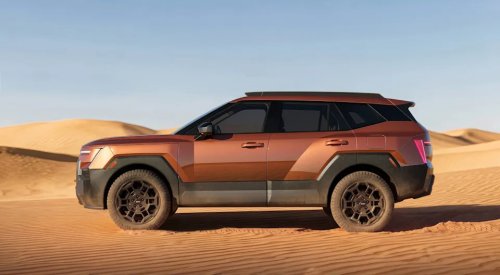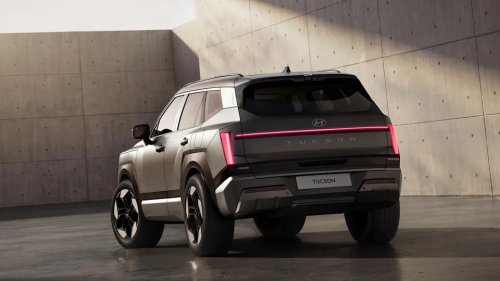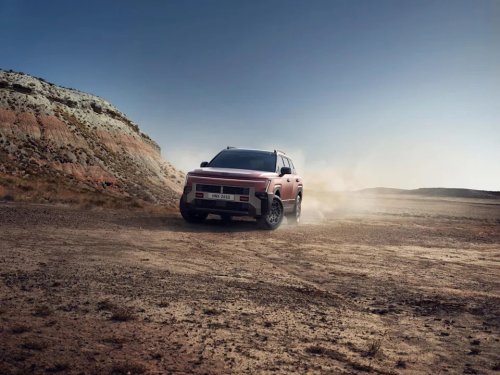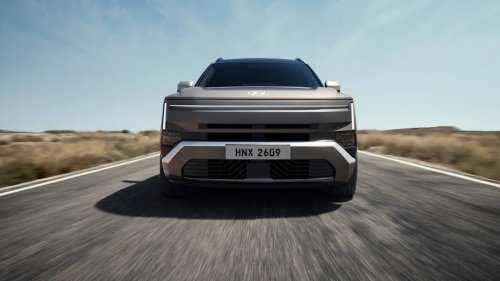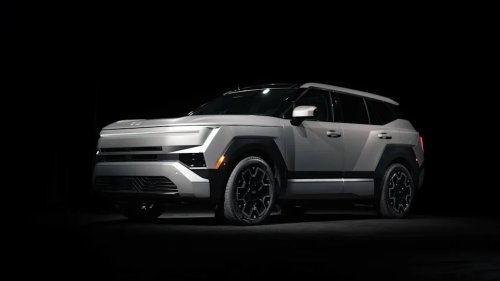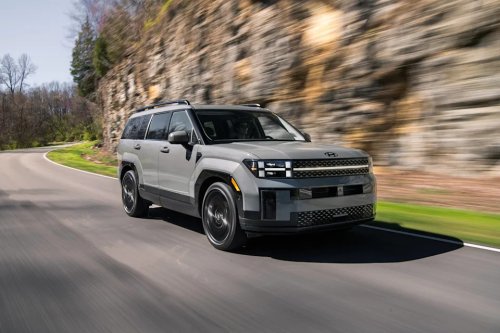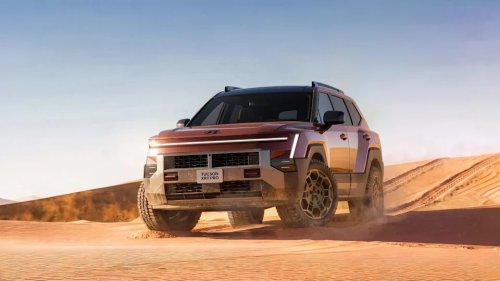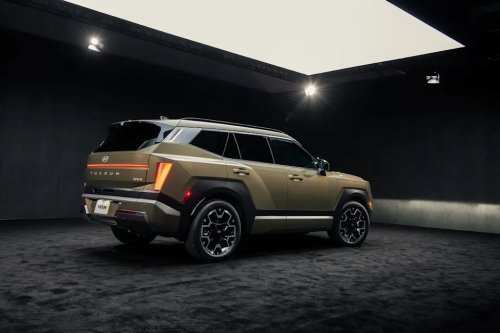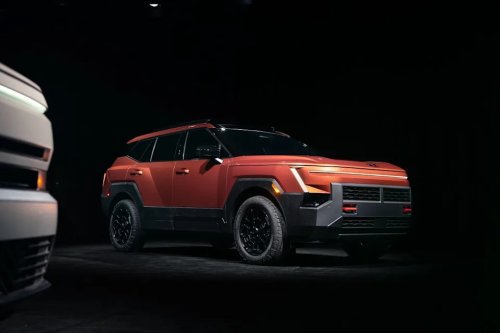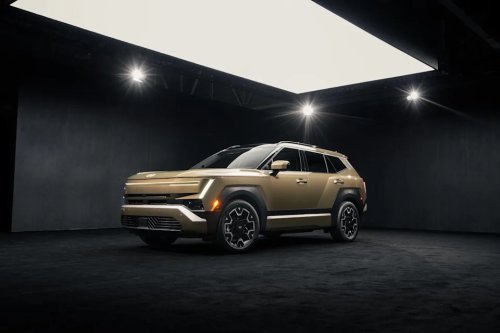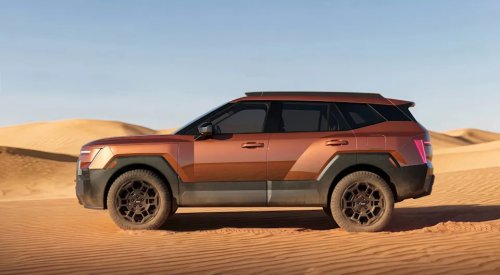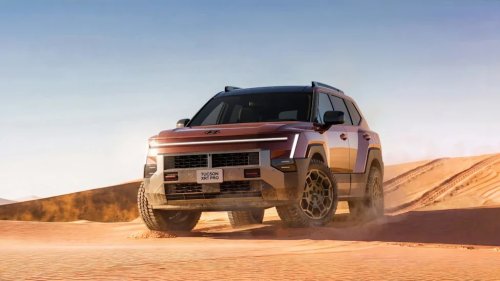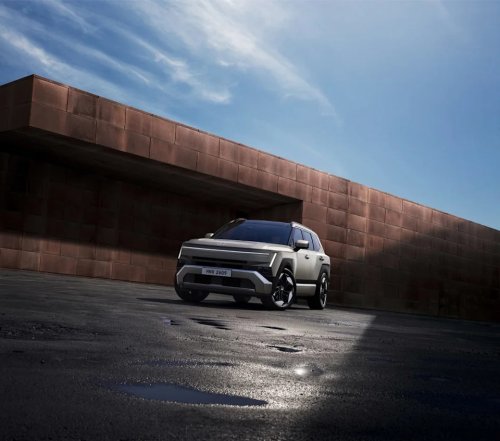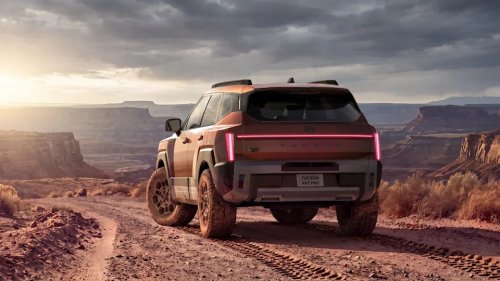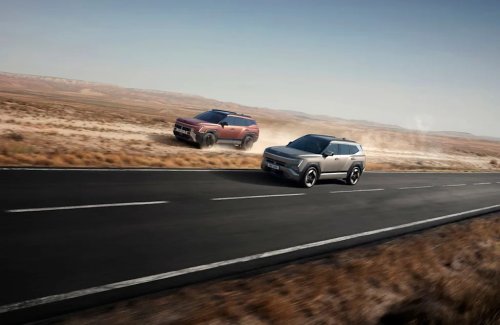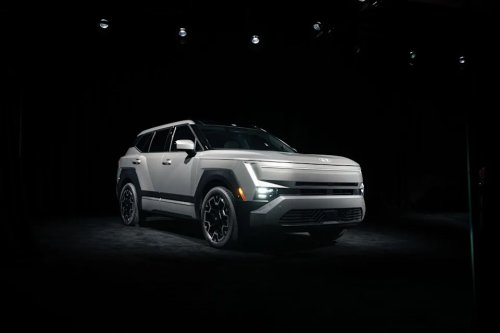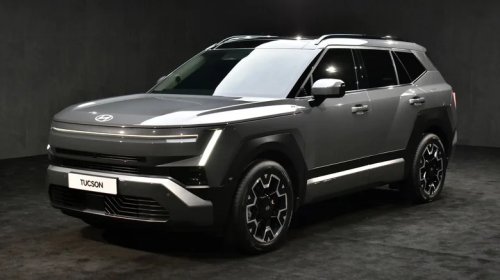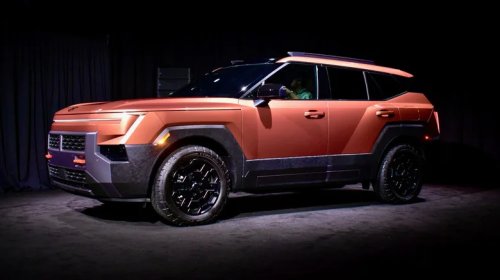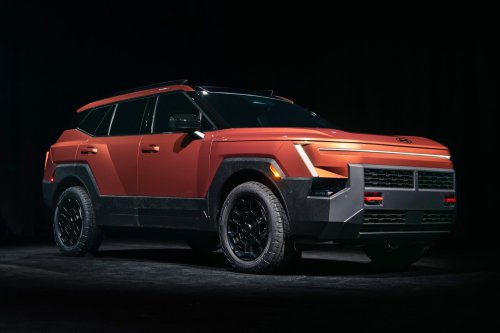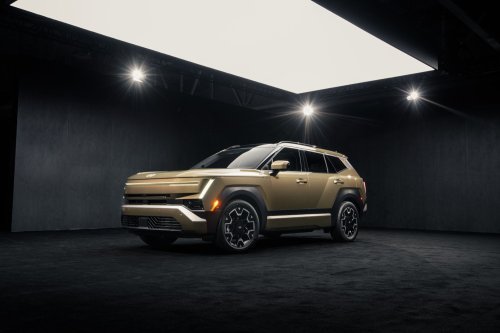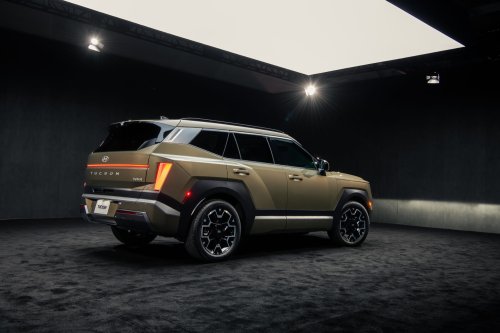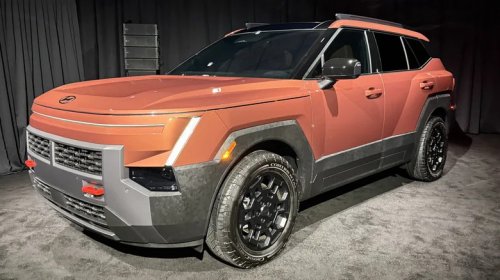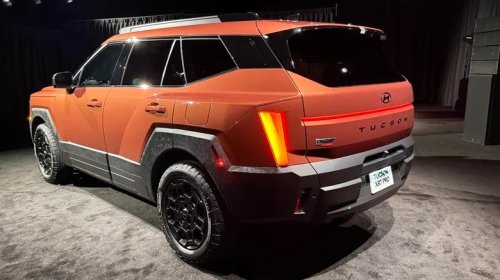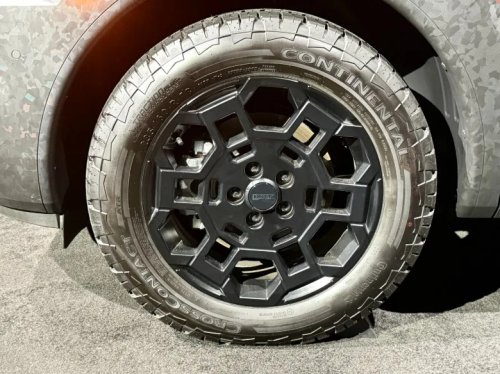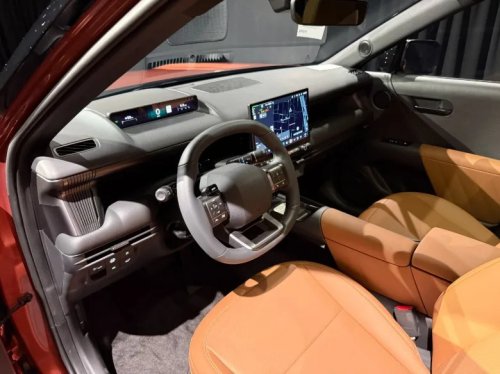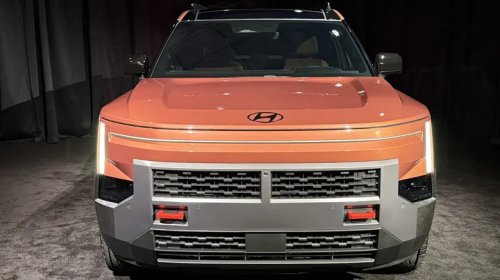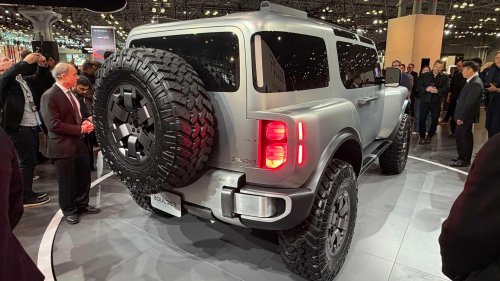
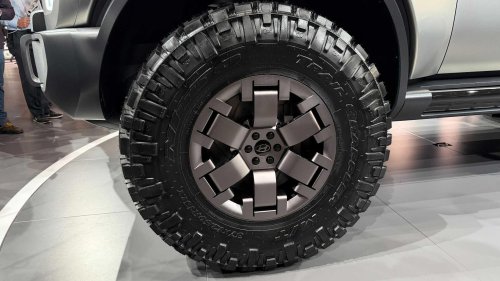
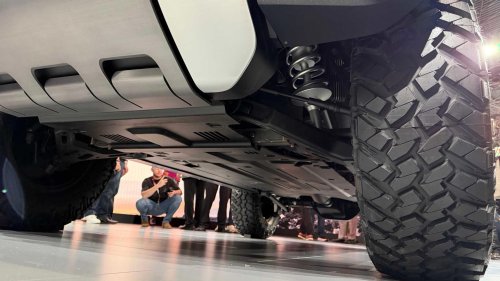
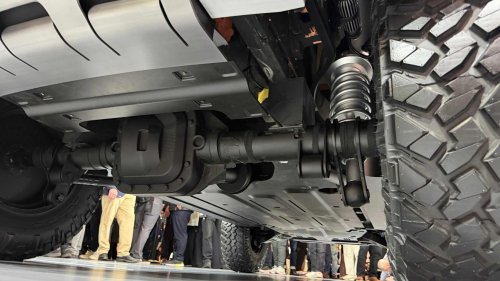



















Hyundai gave us our first look at what its future body-on-frame models will be like with its Boulder SUV concept. The message seems quite clear, too: They're going to be big, bold, and capable. That's what the boxy body says anyway.Brett Evans / CarBuzz / ValnetWhat remains a mystery is exactly what lies under the sheet metal. Hyundai didn't say a word about the chassis or any other mechanical aspects of the concept beyond confirming that it uses body-on-frame construction. Fortunately with a tall concept, it's easy to take a look underneath. So that's exactly what we did. And we saw some interesting things. Hyundai Does Seem Serious Brett Evans / CarBuzz / ValnetNow before we get into the details, we want to remind you that the Boulder is very much a concept, and many things can (and will) change with any production models derived from this concept. That definitely includes the midsize pickup that Hyundai again confirmed is in development. This is also very evident by the fact that what we saw under the Boulder does not look fully functional. For instance, there aren't brakes at the rear of the vehicle, and the shocks don't appear to actually work.Simultaneously, Hyundai could have put basically anything underneath this body, since it's primarily showing off styling. In fact, Hyundai could've just left the underside with practically no detail at all. Instead, we found some specific suspension designs that suggest real capability, not to mention insight into what buyers want in a burly off-roader.Brett Evans / CarBuzz / Valnet Starting at the front, the Boulder has independent suspension with lower control arms at least. We can't quite tell if the coilover shocks and springs are MacPherson struts, or if there's an upper control arm up in the wheel arch area. It looks like there may be a separate knuckle connecting the control arms, but it's hard to say for sure. We would still bet on a double-wishbone front suspension over MacPherson struts, though, as that's a more common setup in the midsize SUV and pickup segment.Brett Evans / CarBuzz / ValnetThe rear suspension is the real sign that Hyundai is serious about yanking customers away from Toyota, Jeep, or Ford. It features a solid rear axle, which is a favorite for off-roaders. When one end of the axle goes up over an obstacle, the other end is pushed back down onto the ground, helping to ensure both wheels are making good contact and providing traction. That axle is also suspended by coilover shocks and springs, along with trailing arms for locating the axle.Coil springs are handy for saving space, such as on a short SUV, though we could see Hyundai opting for leaf springs on a pickup. Hyundai also mocked up remote reservoirs for the shocks at each end, which are typically found on high-end off-road and racing vehicles. Everything sits on 37-inch Nitto Trail Grappler mud terrain tires. Tires of this size are a new benchmark of sorts for off-roaders, as they're standard equipment on the Ford Bronco Raptor. We May Be Waiting A While For Production Vehicles