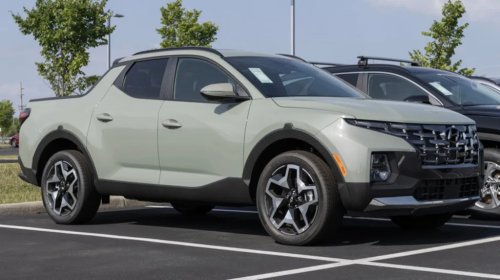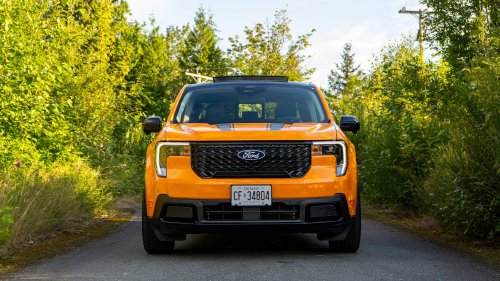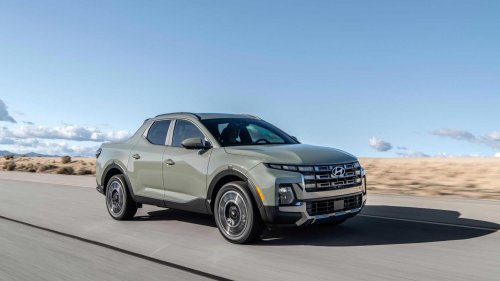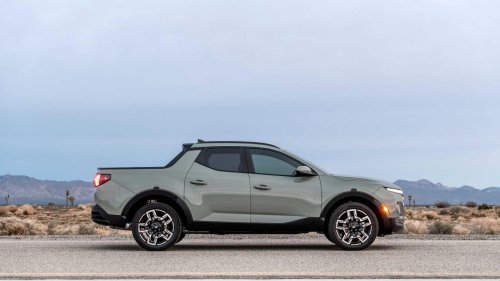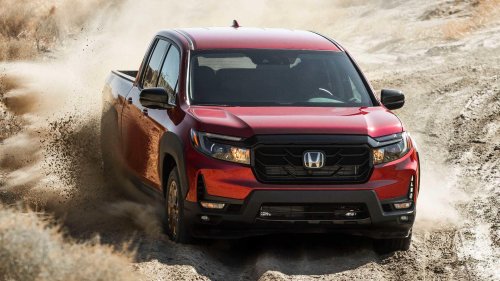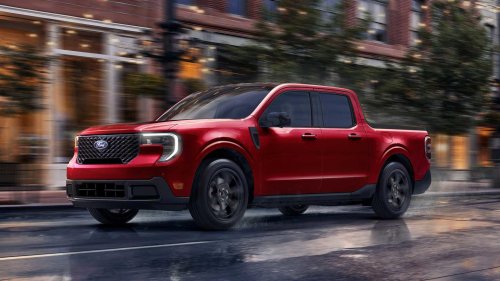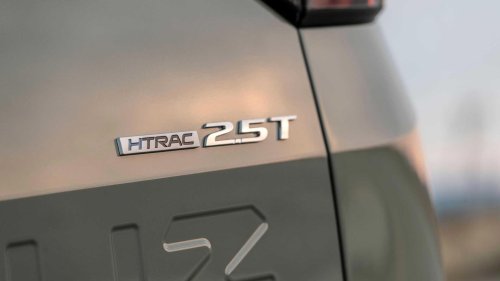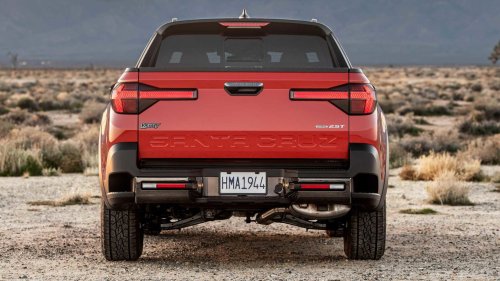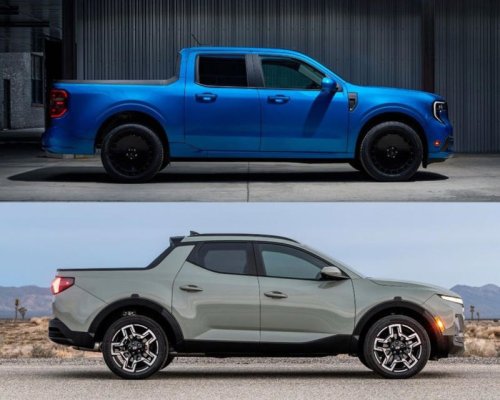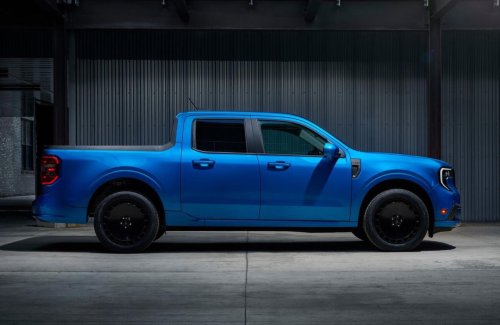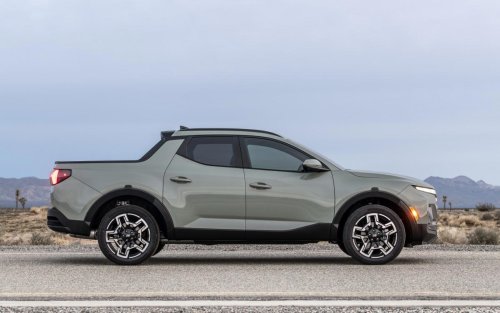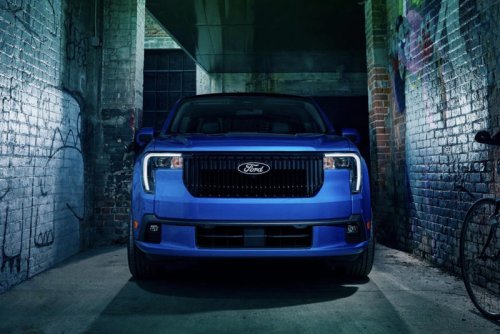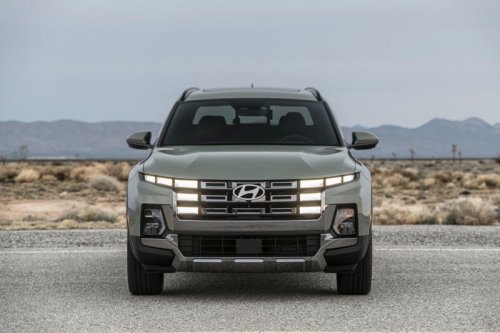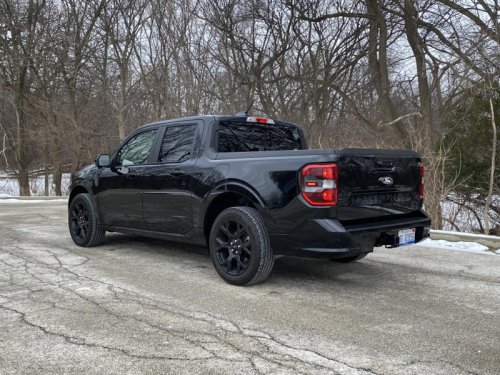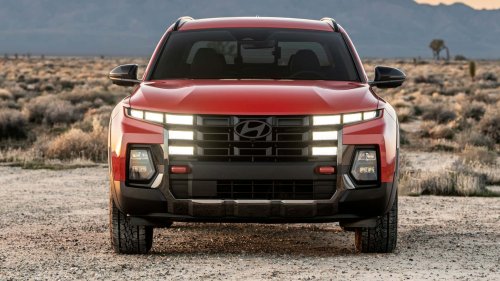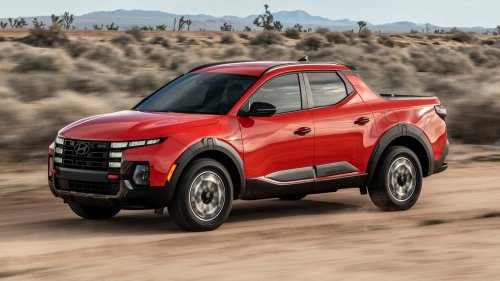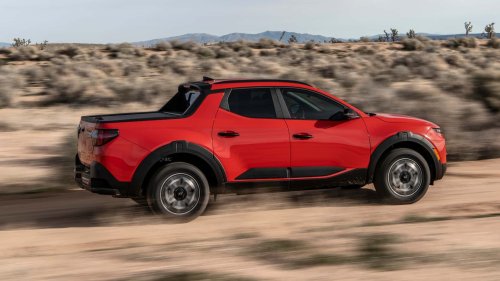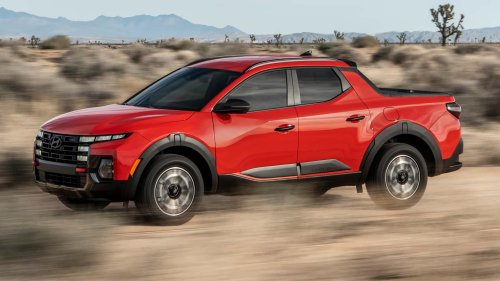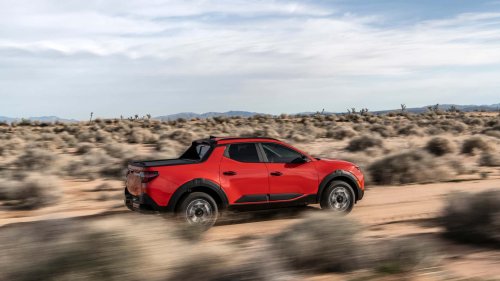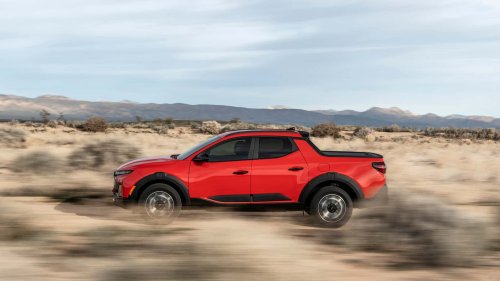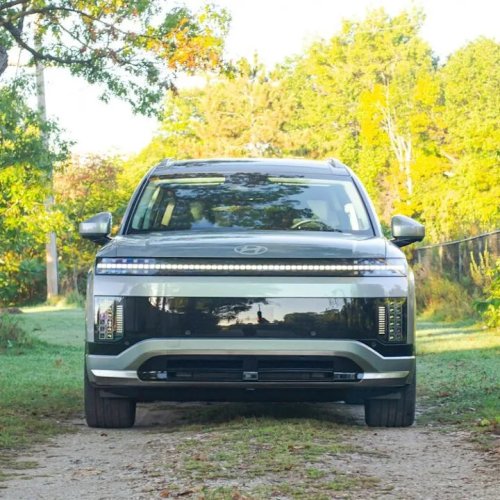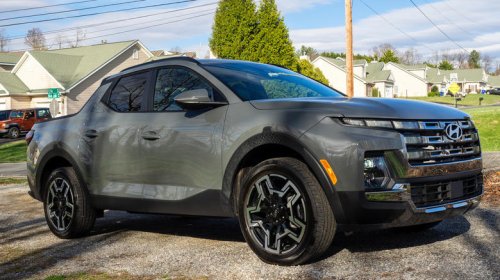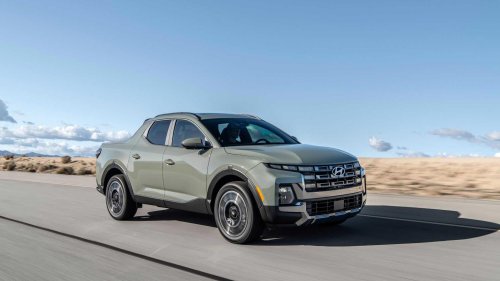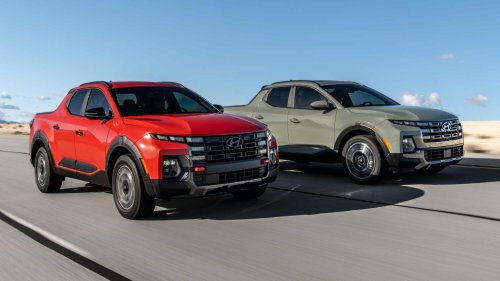
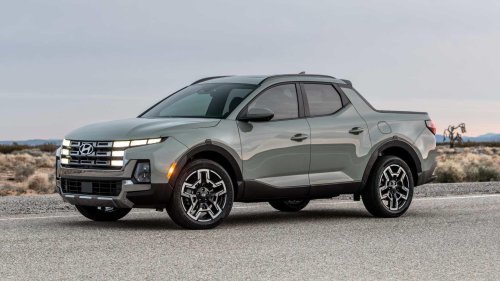
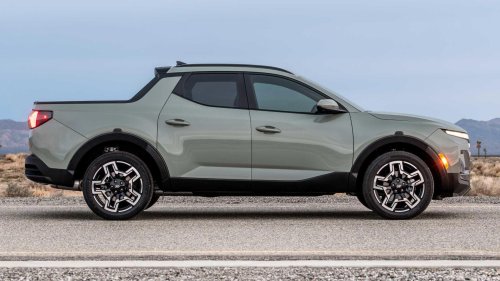
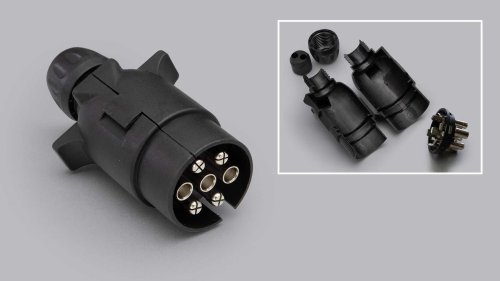
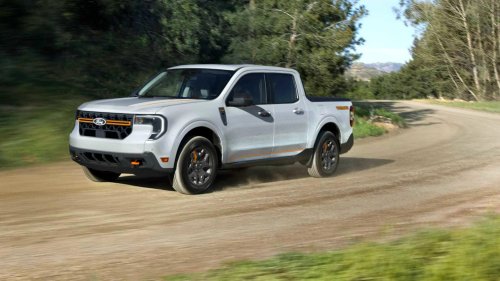
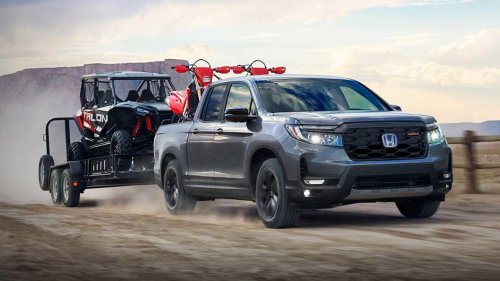


















Jump Links5 Trims For Different Requirements2.5L Inline-four: 3,500 lbs2.5L Inline-four T w/AWD: 5,000 lbs2026 Ford Maverick2026 Honda RidgelineThe automotive landscape is forever changing, and there is always some white space that needs addressing. That is something Hyundai did with its Santa Cruz - a direct response to a gap it identified in the market. When the small pickup arrived, it gave buyers the open-bed utility of a pickup without the cumbersome dimensions and often harsh ride of a traditional body-on-frame truck. Though the market response has been solid, capturing a dedicated segment of lifestyle buyers who need practicality over extreme payload limits, the truck has not been setting the sales charts ablaze. Regardless, the Hyundai Santa Cruz towing capacity remains a critical metric.Because the total Santa Cruz towing capacity is an important criterion for our exercise today, we need to look beyond the exterior styling and into the mechanical architecture. Buyers must evaluate whether Hyundai Santa Cruz towing metrics align with their lifestyle demands, and if there is a need for the optional Hyundai Santa Cruz tow package. To better understand the Santa Cruz truck towing capacity, we will explore its powertrain limits and structural engineering, as well as how it compares to two direct rivals.All data was sourced directly from Hyundai - and Ford and Honda for the competition section - and were correct at the time of publishing. The base MSRP (manufacturer's suggested retail price), where mentioned, excludes destination fees and other costs. Automakers reserve the right to update their pricing at their own discretion, and without notice. 2026 Santa Cruz Lineup 5 Trims For Different Requirements HyundaiThe 2026 Hyundai Santa Cruz lineup is divided into five trim levels. Each one serves a different function and the standard equipment on each caters to different consumer requirements. The available configurations include the SE, SEL, SEL Activity, XRT, and Limited models. The entry-level SE trim is the foundation and provides essential technology and comfort features for daily commuting. It features an eight-inch touchscreen display and standard wireless smartphone integration. Moving up, the SEL trim introduces additional convenience options like heated front seats and a roof rack, which can carry up to 220 lbs of cargo.The SEL Activity model expands on this utility by integrating a factory tonneau cover, a power sunroof, and a digital instrument cluster. This is the mid-tier option and treads the line between outright practicality and premium convenience. If you want a more aggressive aesthetic and off-road readiness, the XRT trim is the one to go for. It includes dark exterior trim components, unique alloy wheels, and all-terrain tires. Finally, the Limited trim is the flagship of the range. It provides a comprehensive luxury experience by incorporating ventilated leather seating, a premium Bose audio system, surround-view camera technology, and 20-inch wheels.2026 Hyundai Santa Cruz Lineup & Starting MSRP: SE: $29,750 SEL: $31,400 SEL Activity: $34,450 XRT: $41,350 Limited: $43,700 2026 Hyundai Santa Cruz Powertrains 2026 Hyundai Santa Cruz LimitedPower within the Hyundai Santa Cruz lineup is handled by two engine configurations. The standard block, equipped in the SE, SEL, and SEL Activity trims, is a naturally aspirated 2.5-liter four-cylinder engine. This base unit generates 191 horsepower and 181 lb-feet of torque and is mated to a conventional eight-speed automatic transmission. This setup prioritizes smooth drivability and fuel efficiency over aggressive power delivery, which turns the truck into a comfortable commuter. However, if you want more power, then the next engine option is probably what you need.The high-output powertrain, standard on the XRT and Limited trims, is a turbocharged 2.5L four-cylinder engine. This unit drastically elevates performance metrics, producing 281 hp and an impressive 311 lb-ft. Hyundai replaced the standard transmission with an eight-speed wet dual-clutch automatic transmission, which allows for faster gear changes and sharper throttle response. Furthermore, models equipped with the turbocharged engine come standard with the brand’s HTRAC all-wheel-drive (AWD) system. 2026 Hyundai Santa Cruz Towing Capacity Hyundai 2.5L Inline-four: 3,500 lbs When equipped with the base 2.5L naturally aspirated engine, the vehicle achieves a maximum tow rating of 3,500 lbs. This capacity applies to the SE, SEL, and the front-wheel-drive (FWD) configurations of the SEL Activity trim. While this figure represents the lower spectrum of the vehicle's overall potential, it is adequate for buyers with moderate hauling needs. It is important not to overstress the 2.5L engine. Pulling loads near the base engine’s maximum threshold will result in noticeable sluggishness during highway merging and uphill climbs, because the engine must work harder to generate momentum. The standard eight-speed automatic transmission will handle lighter loads competently, provided the driver avoids aggressive throttle inputs. 2.5L Inline-four T w/AWD: 5,000 lbs The turbocharged 2.5L engine paired with AWD unlocks the Santa Cruz’s best towing capacity. This configuration elevates the threshold to an impressive 5,000 lbs. Available as an option on the SEL Activity and standard on the XRT and Limited trims, this powertrain transforms the truck into a capable towing asset. The integration of AWD is mechanically important because it guarantees optimal power distribution to all four wheels. And, it ensures greater stability and traction when pulling heavy loads from slippery boat ramps or across loose gravel surfaces. Because the engine is turbocharged, it also provides the low-end pulling force required to confidently move weight from a standstill. Additionally, the wet dual-clutch transmission manages thermal loads more effectively during sustained hauling operations compared to standard gearboxes. Trailer Pre-wiring: The Difference Between Four And Seven Pins RespoA key component of safe and legal hauling is the electrical connection between the vehicle and the trailer, and the Santa Cruz is available with both a four- and seven-pin connector. The standard trailer pre-wiring configuration for base models features a four-pin connector, while higher trims or fully equipped variants utilize a more advanced seven-pin trailer connection. A four-pin connector is the fundamental electrical link. It supplies power to the trailer to run four essential functions: running lights, left turn signals, right turn signals, and brake lights. This basic setup is entirely adequate for lightweight utility trailers or small boat trailers that do not require their own independent braking systems. The wiring simply ensures that the trailer visually mimics the lighting actions of the tow vehicle and that the trailer, and the entire setup, is compliant with road safety regulations. As J.D. Power explains, you need to know your story when it comes to towing.Conversely, a seven-pin connector expands this electrical capacity by adding three critical circuits. In addition to the basic lighting functions, the seven-pin setup provides a 12-volt power wire to charge an onboard trailer battery, a circuit for reverse lights, and, most importantly, a connection for electric trailer brakes. On the latter, the seven-pin connection allows the truck's internal brake controller to actuate the trailer's electric brakes proportionally, thereby drastically reducing stopping distances and preventing dangerous trailer sway during sudden decelerations. Buyers purchasing a model with the high-output engine must ensure that it is equipped with a seven-pin connector, or budget for an aftermarket adapter and brake controller installation. Hyundai Santa Cruz Towing Capacity vs. Rivals 2026 Ford Maverick Ford The Ford Maverick is the Santa Cruz’s undisputed primary rival. If you’re after towing capabilities but do not want an oversized truck, the Maverick presents a slightly lower, yet functional, ceiling. Its maximum towing rating tops out at 4,000 lbs, which represents a 1,000-pound deficit to the Hyundai model's fully equipped limit. Achieving this 4,000-lb rating requires a Maverick equipped with the 2.0L EcoBoost engine, AWD, and the specific 4K Tow Package. The base hybrid powertrain may win you some miles at the pumps, but it is severely limited to 2,000 lbs of towing capacity (without the 4K Tow Package). Overall, from a strict utility standpoint regarding towing capacities, the Hyundai demonstrates a distinct mechanical advantage. Ford built an inexpensive work truck that happens to be compact, while Hyundai engineered a premium lifestyle vehicle that features an open bed. 2026 Honda Ridgeline HondaThe Honda Ridgeline is a step-up in physical dimensions while sharing a remarkably similar unibody design philosophy to the Santa Cruz. Like the Hyundai, the Ridgeline abandons the traditional body-on-frame architecture in favor of a crossover-derived platform, resulting in a significantly smoother ride quality than standard midsize trucks. Both vehicles prioritize passenger comfort and sophisticated on-road manners over extreme payload abuse. When analyzing pulling metrics, the Ridgeline has a baseline of 5,000 lbs across every single trim level. This consistency is enabled by a standard 3.5L V6 engine. Honda removes the choice of engine options and tow packages by making maximum capability standard equipment. In contrast, the Hyundai requires buyers to select the turbocharged powertrain to achieve identical hauling figures.