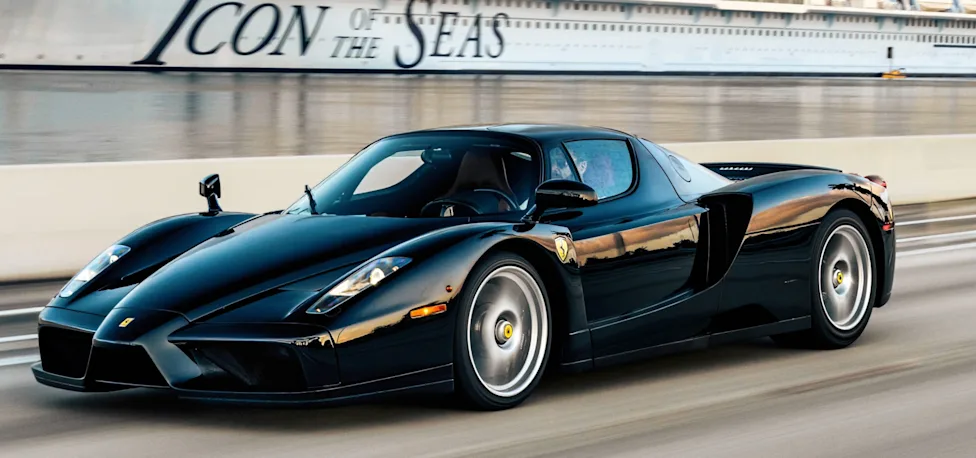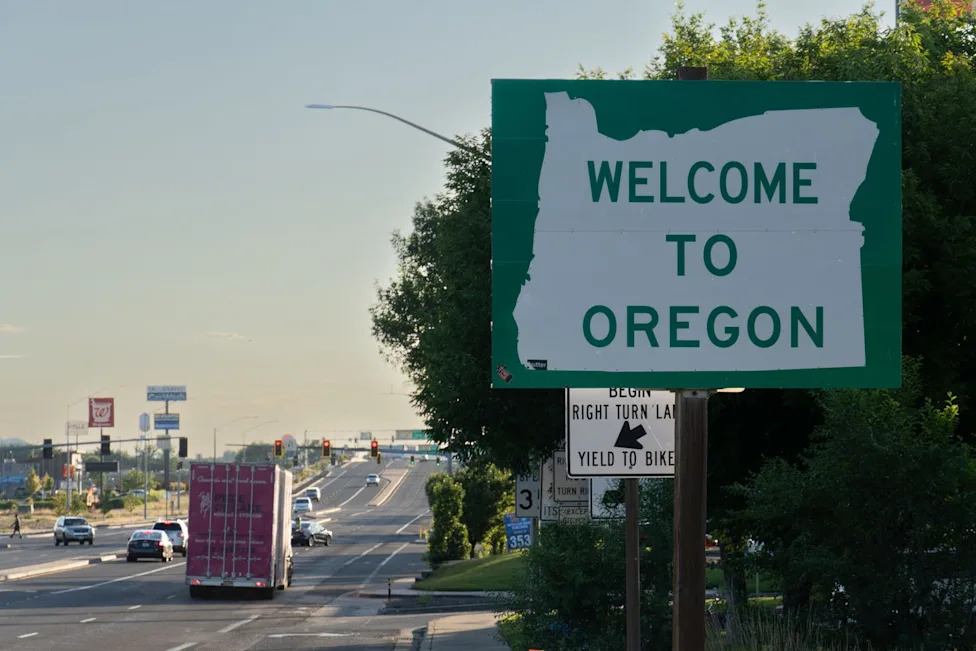
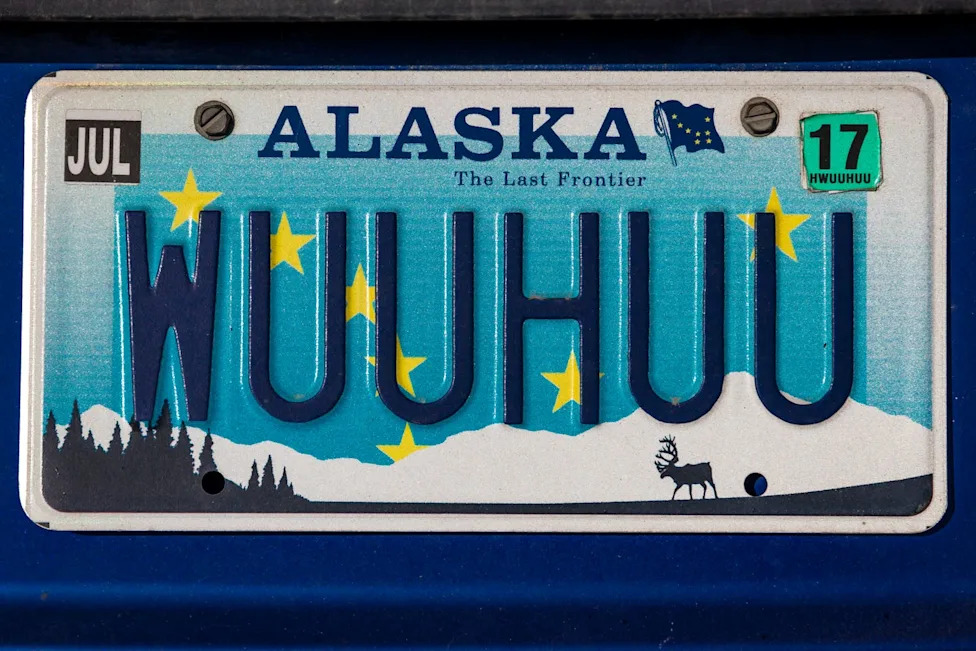



















What's Your State's Sales Tax on a Car Purchase?UCG - Getty Images (UCG - Getty Images)Taxes are calculated in hugely different ways from state to state.States that have no actual sales tax can actually sometimes charge more than others with theoretically higher rates.In many cases, there are also registration charges and other fees that aren't technically a sales tax, but still hit you in the wallet.A vehicle's MSRP might seem attractive, but the unfortunate truth is that it's often only the starting point. Not only are dealers going to charge you freight and delivery, but there are also often upcharges and documentation fees that get added on. The good news, at least, is that when it comes to paying sales tax, you know what your costs are going to be up front.AdvertisementAdvertisementOr at least you will if you read through our handy guide to new and used vehicle sales tax charges throughout the U.S. Here's a breakdown on just how much extra you need to budget for when planning out your next purchase.States Charging Zip. Zero. Zilch. (Asterisk.)Are you a resident of Alaska, Delaware, Montana, New Hampshire, or Oregon? Then good news, because none of these states charges statewide sales taxes on vehicle sales. Ever wonder why you see so many supercars wearing Montana plates driving around Los Angeles? It's a tax loophole, and one that lawmakers are trying to close.Joe Sohm/Visions of America - Getty Images (Joe Sohm/Visions of America - Getty Images)However, while there's no state sales tax in these locations, that doesn't mean you won't end up paying some tax on your purchase. In Alaska, for instance, municipalities have the ability to set and charge tax rates depending where you're purchasing from, and these can be as much as 7.5 percent. With the average price of a new vehicle currently hovering around $50,000, you may end up paying your local municipality a hefty chunk.In Oregon, dealers are taxed directly by the state twice, with the Corporate Activity Tax and the Vehicle Privilege Tax, and a dealer may try to pass these along to the consumer. They're not technically government taxes, but they are an added cost, albeit a very small one. The Vehicle Privilege Tax is only half-a-percent, or around $250 on a $50,000 vehicle. Still, that'd cover a tank of gas, so be aware when you're signing the paperwork.AdvertisementAdvertisementDelaware also barely makes the list as a no-sales-tax-state, as government regulations will charge you something called a Motor Vehicle Document Fee when you first register a car. The yearly registration charge is just $40, but there's a 5.25 percent charge on the selling price of a new car, and against the National Auto Dealers Association guide value of a used vehicle.Our truly tax-free state must be New Hampshire, then, official state of not even making you wear a helmet to ride a motorcycle. Again, not quite. New Hampshire won't charge you a sales tax, but it does charge an annual fee based on MSRP, one that goes down with the vehicle's age. For a new 2026 model year car, costing $50,000, that registration fee would be $900 when new, $750 the next, and so on. It's generally still cheaper than surrounding states with conventional sales taxes.Taxes by State, County, MunicipalityOf the states that do charge a sales tax, Alabama's is often touted as the lowest you can get, at just 2 percent. On our theoretical $50,000 vehicle, that's only $1000, cheaper than even New Hampshire's convoluted system. However, as always, there's a catch, as you need to pay both a county and municipality tax. Both these are usually low, but in some areas you'll pay slightly more in combined taxes than double the state rate.Likewise, Colorado has a very attractive state-wide sales tax of 2.9 percent, but the actual sales tax charged is cumulative based on county and city. In actuality, a resident of Boulder would pay over 8 percent in taxes on a new car, and this on top of hefty yearly registration fees for the first five years of a car's life.AdvertisementAdvertisementNorth Carolina actually has a flat tax at 3 percent on new cars, which the state refers to as the Highway Use Tax. It's much lower than the state's usual 4.75 percent sales tax. However North Carolina also charges property tax on vehicles at registration, and on an annual basis. This varies by region, but on a $50,000 vehicle, calculates out to roughly $400 for a car registered in a suburb of Charlotte, as an example.Hawaii, New Mexico, New York, South Dakota, and Wyoming all have sales taxes of 4 percent. Virginia, Missouri, and Oklahoma are all slightly higher, but at or under 4.5 percent. Again, as before, there are additional charges from county to county, with most Oahu residents actually paying 4.714 percent, as an example. That's a pretty small bump as compared to New York, where city and county taxes are as high as 4.75 percent before adding on the 4 percent state sales tax.Exemptions, Rebates, and CapsThere's a huge variability in cases where you don't have to pay the full sales tax on a vehicle purchase, but let's use Tennessee as an example. With a sales tax of 7 percent, it's tied for third-highest state sales tax in the U.S. along with Georgia, Indiana, and Rhode Island.However, local sales taxes are quite low, and restricted to a fraction of the purchase price, so the overall tax paid on a vehicle could be far less than someone in Colorado might pay. Further, Tennessee allows you to avoid paying local sales tax for:AdvertisementAdvertisementsales to armed forces memberssales and transfers between immediate family and spousessales to nonprofits for official usevehicles being given as giftsThe rules are pretty strict and, as mentioned, have plenty of differences depending on region. However, there is one other sales tax exemption that's much more universal, which is a break on the agreed price of your trade-in. In almost all cases, whether in states with a standard sales tax or with registration fees, the percentage paid is calculated on the difference between your trade-in value and the new vehicle. Thus, if we were trading in a $20,000 used car on a new $50,000 vehicle, the percentage would be charged on the $30,000 difference.With a sales tax rate of 5.5 percent, Maine is pretty middle of the road when it comes to taxation on vehicle sales, but is actually quite aggressive on breaks for EVs. For new car EV purchases, the state offers a $6000 rebate for moderate income earners (gross annual household income up to $100,000), or $3000 for a used vehicle. There are some eligibility requirements, but Maine and several other states do still support EV sales with tax rebates – it's not just California.While not giving you a break on the tax portion, some states do offer protection to customers when it comes to added fees. These fees aren't part of a sales tax per se, but they do represent money that's coming out of your pocket. Texas is a pretty straightforward example of a simplified tax system, with a 6.25 percent statewide tax that'll be the only real added cost to the MSRP. There are usually small county registration charges, and dealers are allowed to charge documentation fees. These last, however, are capped at just $150 by state law.Heavy TollsWhen it comes to taxes, there's no avoiding that California bears a heavy burden. That's certainly the case for sales taxes, where the state's 7.25 percent state tax is added to local sales taxes for totals that can be as much as high as 10.75 percent.Here's where online sales tax calculators can be a helpful too. Most states offer one that allows you to input your address and details about the type of vehicle you're buying, to churn out an upfront idea of what kind of costs you're going to face at the dealership.AdvertisementAdvertisementAssuming our average $50,000 vehicle was bought new at a dealership in Alameda, one of the spendiest locales for sales tax in California right now, the DMV's tax calculator returned a total cost of $6052 in fees and registration charges.The majority here was the $5125 sales tax, but don't forget to add up all the smaller numbers before you head out to negotiate on your next purchase. Forewarned is forearmed.Jeff Schear - Getty Images (Jeff Schear - Getty Images)Find the Sales Tax in Your State0% Sales TaxAlaska, Delaware, Montana, New Hampshire, Oregon2-3% Sales TaxAlabama, Colorado, North Carolina 4-4.5% Sales TaxHawaii, New Mexico, New York, South Dakota, Wyoming, Virginia, Missouri, Oklahoma5-5.75% Sales TaxIowa, Louisiana, Mississippi, North Dakota, South Carolina, Wisconsin, Maine, Nebraska, Arizona, Ohio 6-6.96% Sales TaxFlorida, Idaho, Kentucky, Maryland, Michigan, Pennsylvania, Vermont, West Virginia, Illinois, Massacheusetts, Texas, Connecticut, Arkansas, New Jersey, Washington, Nevada, Minnesota 7-7.5% Sales TaxGeorgia, Indiana, Rhode Island, Tennessee, California, KansasAdvertisementAdvertisement➡️ Skip the lot. Let Car and Driver help you find your next car.Shop New Cars Shop Used CarsYou Might Also LikeGift Guide: Best Ride-On Electric Cars for KidsFuture Cars Worth Waiting For: 2025–2029