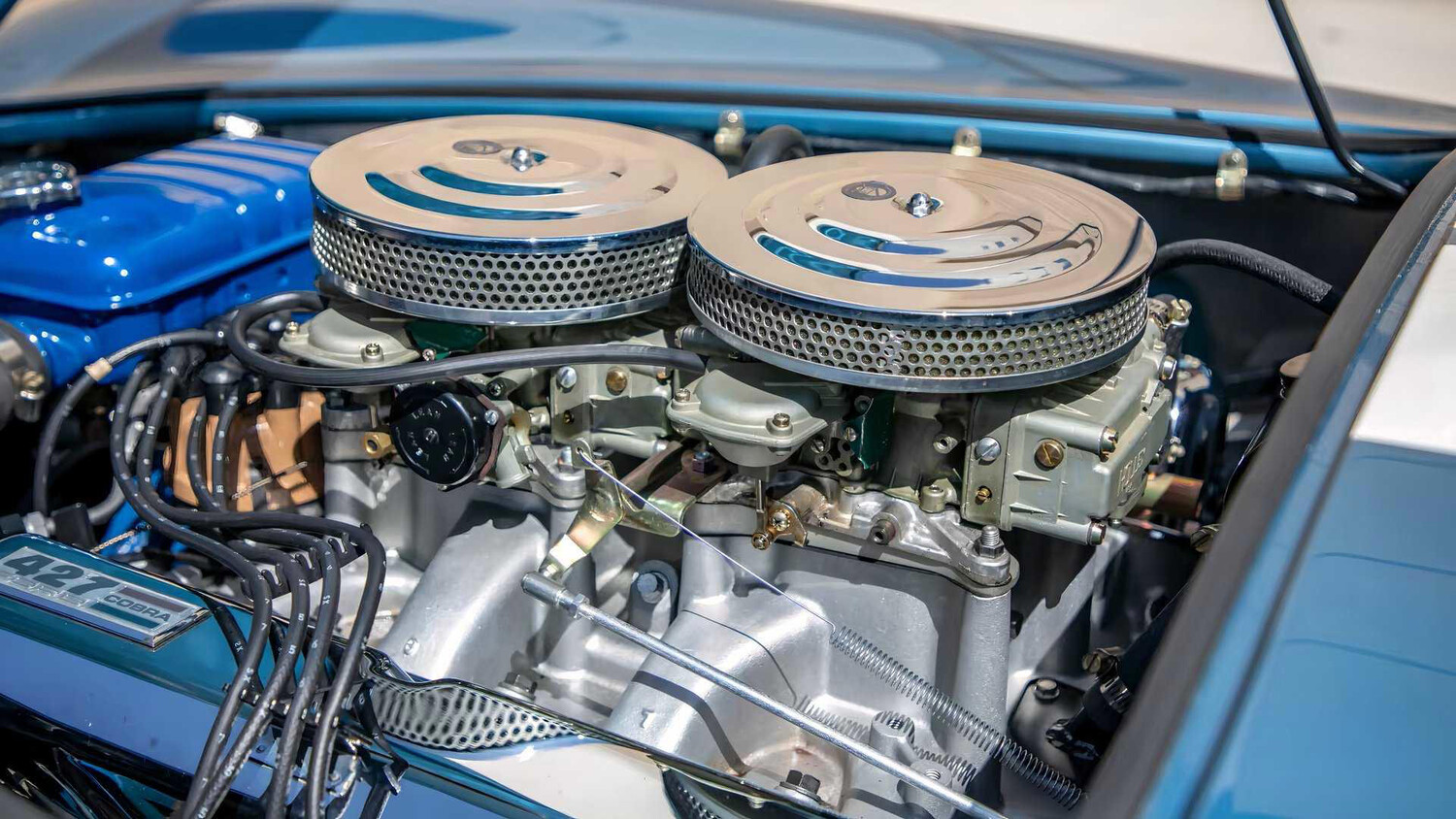
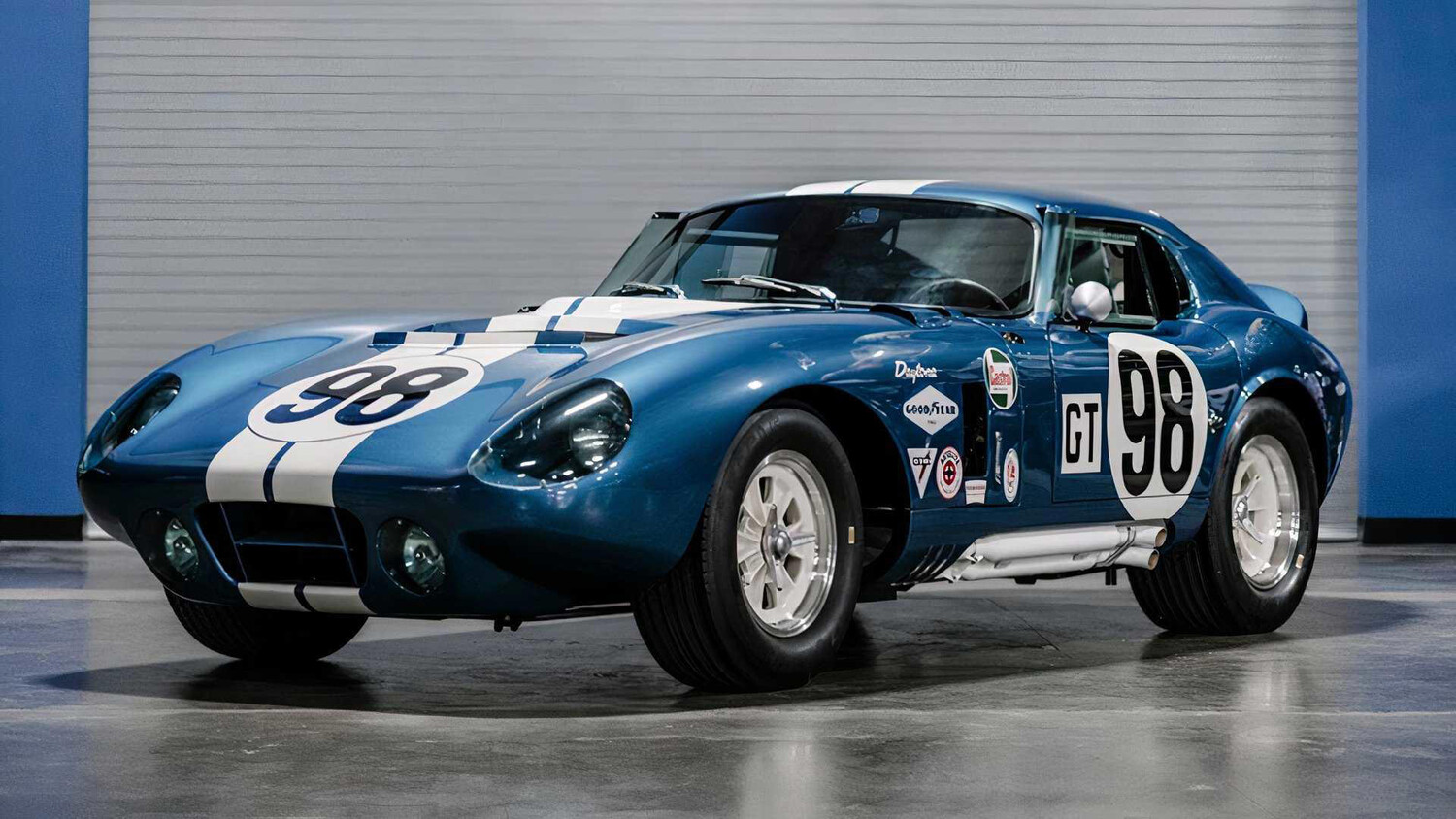
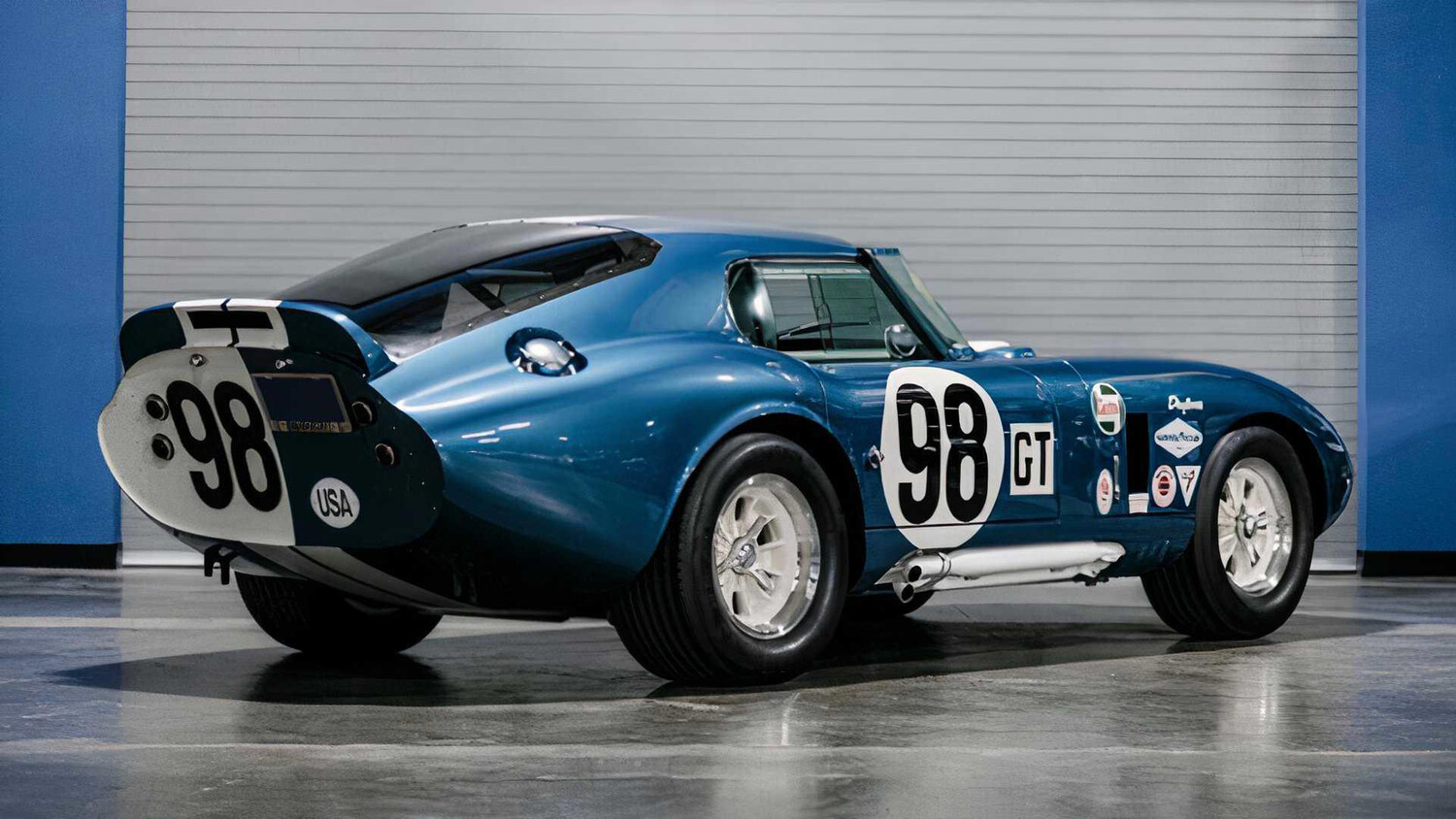
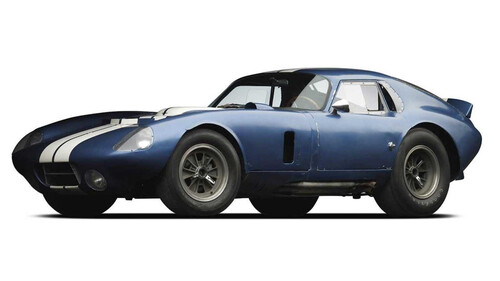
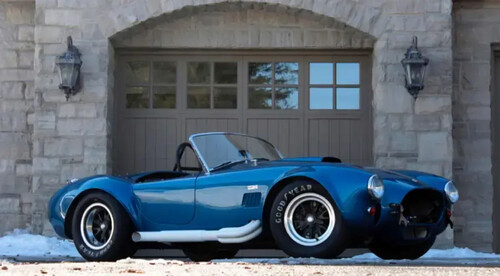
In the early 1960s, European sports cars ruled the performance world. Ferrari was the gold standard, elegant, exotic, and devastatingly quick. Enzo Ferrari's machines won races, turned heads, and carried a mystique that no American manufacturer had come close to matching. The prevailing wisdom was simple: if you wanted the best, you went to Europe. Carroll Shelby disagreed.Shelby was a former chicken farmer from Texas who had somehow become one of the most celebrated racing drivers of his generation, winning Le Mans in 1959 behind the wheel of an Aston Martin. He understood speed at a molecular level. He also understood something the Europeans hadn't fully reckoned with. American V8 engines were cheap, abundant, and extraordinarily powerful. The missing piece wasn't the engine; it was a car light enough and nimble enough to let that power do its worst. When Shelby found his answer in a small British roadster called the AC Ace, one of the most dangerous automobiles in history was born. What followed wasn't just a great sports car. It was a declaration of war. Stuffing A V8 Into A British Featherweight AC CarsThe idea sounds almost laughably simple in hindsight. Take a small, lightweight British sports car and drop a big American V8 into it. In practice, it was an act of automotive alchemy that required equal parts vision, nerve, and mechanical ingenuity. Shelby had been mulling the concept since the late 1950s, convinced that the formula—light body, massive power—was the fastest route to beating the Europeans at their own game. The problem was finding the right donor. The car needed to be genuinely light, structurally rigid enough to handle serious power, and small enough that the V8 wouldn't simply overwhelm its dynamics. Several candidates came and went. Then, in 1961, Shelby learned that AC Cars of Thames Ditton, England, was looking for a new engine supplier after Bristol stopped producing the unit that powered the AC Ace. The timing was perfect. Shelby reached out almost immediately, and the conversation that followed would change American automotive history.Shelby's pitch to AC was straightforward: he would supply American V8 engines, they would supply the chassis and body. The deal was struck with remarkable speed. AC shipped a chassis to Shelby's Venice, California workshop, where it arrived with an engine bay conspicuously empty, waiting, as if by design, for something loud and American to fill it. AC Cars Had the Bones, Shelby Just Needed To Find The Right Muscle MecumThe AC Ace was not a car anyone would have described as intimidating. It was a trim, pretty roadster with a tubular steel frame, an aluminum body, and a transverse leaf spring suspension at each end. It weighed just over 2,100 pounds. By the standards of the day, it was a sophisticated little machine—light, balanced, and genuinely enjoyable to drive. But with its relatively modest inline-six engine, it was hardly threatening. That was about to change in the most dramatic way imaginable.MecumWhat Shelby recognized in the Ace was something deeper than its specifications—it had the right bones. The chassis was robust enough to be adapted, the body was aerodynamically sound, and crucially, the car's weight distribution offered a foundation that could handle serious power without becoming a death trap. AC's engineers were experienced craftsmen, and the construction quality of the Ace was high enough to give Shelby something genuinely workable to build from.The modifications required to mate the American drivetrain to the British chassis were substantial. The engine bay had to be widened and reinforced. The transmission tunnel was reshaped. Rack-and-pinion steering replaced the original worm-and-sector setup. The front suspension was reworked for greater strength. But the essential character of the AC Ace—its lightness, its compactness, its taut proportions—was preserved. Shelby hadn't replaced the car. He had weaponized it. Ford's Small-Block V8 Turned A Polite Roadster Into A Weapon Superformance The first engine Shelby fitted to the AC chassis was Ford's 260 cubic inch (4.2-liter) small-block V8, producing around 260 horsepower in early tune. Dropped into a car weighing barely over a ton, the effect was immediate and savage. The Cobra—Shelby claimed the name came to him in a dream—could reach 60 mph in under five seconds at a time when that number was the exclusive territory of exotic European machinery costing three or four times as much.Ford's involvement was not accidental. Lee Iacocca, then head of Ford's car division, was actively looking for ways to inject performance credibility into the brand. Shelby and Iacocca shared an ambition—to beat Ferrari. Ford supplied engines at favorable terms, and the relationship deepened as the Cobra's potential became clear. When the 260 was replaced by Ford's 289 cubic inch (4.7-liter) V8, producing up to 271 horsepower in street trim and considerably more in racing specification, the Cobra became genuinely ferocious.MecumRoad testers of the era struggled to find the right words. The power delivery was instant and brutal. The steering was direct to the point of telepathy. The brakes, upgraded to discs at all four corners on later cars, were strong. And the noise—that volcanic American V8 bark echoing through an aluminum body with almost no sound insulation—was unlike anything the sports car world had heard before. The Cobra wasn't just fast. It was viscerally, almost aggressively fast, a car that made its intentions clear from the moment you touched the throttle. When the Cobra Bared Its Fangs: Taking the Fight to Ferrari RM Sotheby'sShelby's ambitions were never purely commercial. From the beginning, he wanted to race, and he wanted to beat Ferrari specifically. The opportunity to do so on the grandest stage arrived through Ford's broader assault on international motorsport, a campaign that would eventually produce the legendary GT40. But the Cobra was Shelby's own weapon, and he wielded it with everything he had.In SCCA (Sports Car Club of America) competition, the Cobra immediately dominated. It won the United States Road Racing Championship manufacturers' title in 1963 and defended it in 1964, beating a field that included Corvettes, Ferraris, and Maseratis. The car was lighter than most of its rivals, and in racing specification, the 289 V8 produced enough power to exploit that weight advantage on virtually any circuit.RM Sotheby's The ultimate expression of Shelby's Ferrari obsession was the Cobra Daytona Coupe, a closed-body version developed with aerodynamicist Pete Brock. The open Cobra roadster was limited by aerodynamic drag at high speed; the Daytona Coupe solved that problem with a slippery fastback body that allowed the car to compete at Le Mans and Sebring. In 1965, Shelby American won the FIA World Sportscar Championship GT class, the first and, to this day, only time an American manufacturer has claimed that title. Ferrari had been beaten, on European soil, by a Texan with a Ford V8 and a point to prove. Enzo Ferrari reportedly referred to Shelby as "that damned cowboy." It was, depending on your perspective, either an insult or the highest compliment in motorsport. Why the Shelby Cobra Still Defines American Performance Defiance Mecum More than sixty years after that first AC chassis arrived in Venice, California, the Shelby Cobra remains one of the most potent symbols in automotive history. It has been replicated more often than virtually any other sports car; hundreds of kit car manufacturers have built Cobra-inspired machines, a testament to the enduring appeal of the original formula. Genuine, verified Shelby Cobras command extraordinary prices at auction, with well-documented 289 examples regularly fetching north of $1 million, and the rare Daytona Coupes considerably more.What keeps the Cobra culturally alive is not nostalgia alone. It is the idea behind the car—the stubborn, slightly reckless belief that you could outthink and outmuscle the establishment with nothing more than the right combination of components and the nerve to put them together. Shelby didn't have Ferrari's history, or Porsche's engineering resources, or Jaguar's factory backing. He had a lightweight British chassis, a Ford V8, and an absolute refusal to accept that Europe held a monopoly on performance.Mecum The Cobra was a car built on defiance. Every element of it—the exposed aluminum body, the thunderous engine note, the absence of unnecessary refinement—communicated the same message: this machine exists to go fast, and nothing else matters. In an era when European elegance and American brute force were considered mutually exclusive in sports car culture, Shelby proved that the two could coexist. More than coexist, they could win.Carroll Shelby died in 2012, but the car he built in a small California workshop in 1962 refuses to be forgotten. It sits at the intersection of British craftsmanship and American muscle, racing ambition and road-going savagery, one man's ego and one of history's great automotive partnerships.Sources: Shelby U.S., AC Cars & HotCars