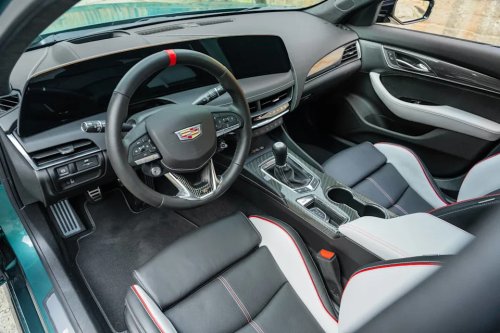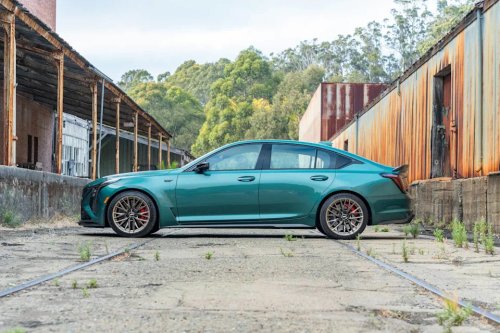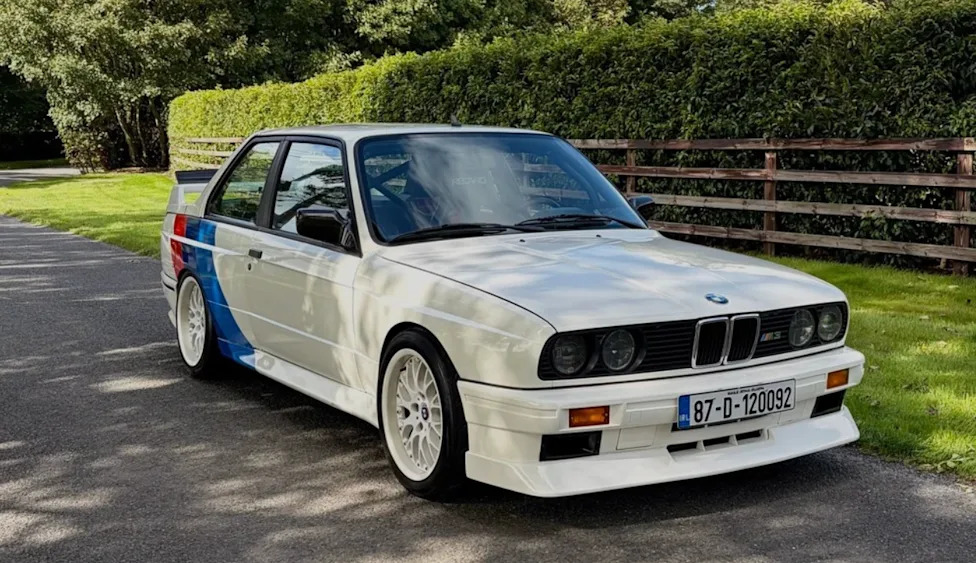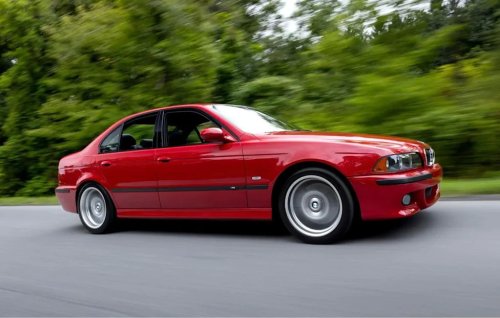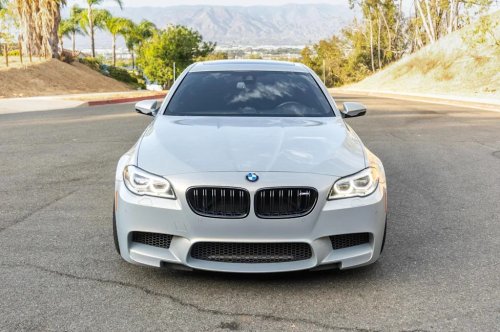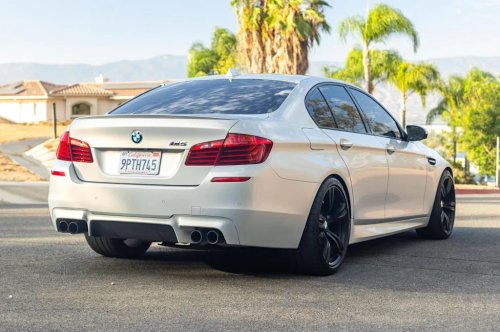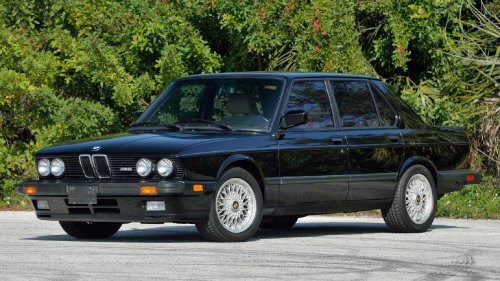
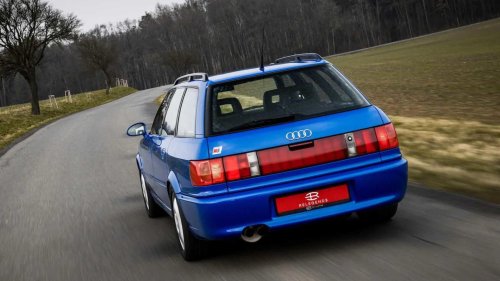
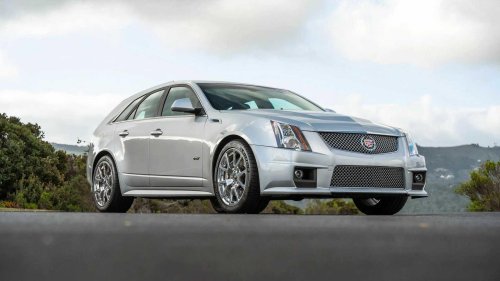
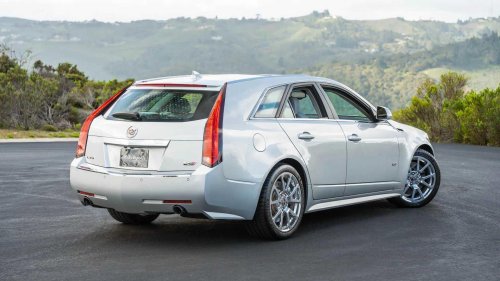
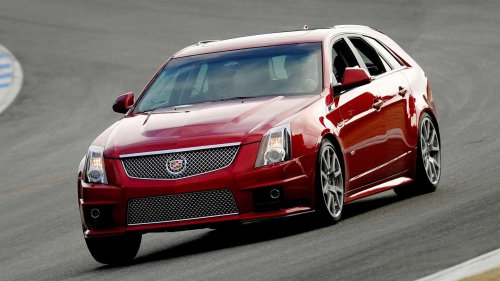
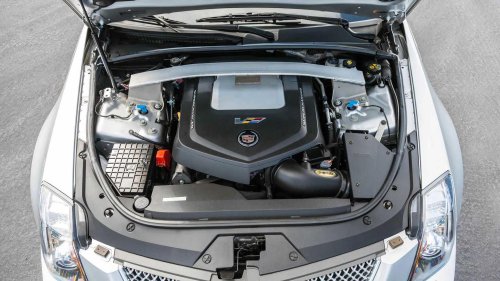
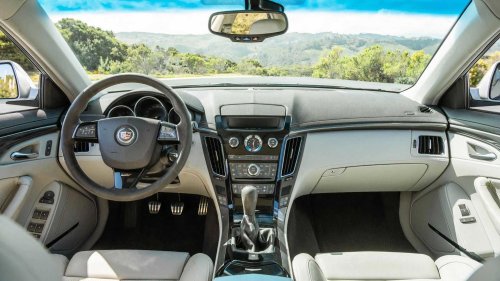


















Super sedans and sleepers were taking off in the late '90s and 2000s. While tuning and Japanese car culture were becoming increasingly loud, aesthetically and thanks to HKS blow off valves, there was a new way of thinking that was the antithesis of The Fast and the Furious. These four-doors packed supercar-spec motors under inconspicuous bodywork — perfect for someone who wanted to drive fast without attracting too much attention. The Germans had this segment wrapped up, with some of the best sports sleeper cars on the planet. But one unlikely American carmaker decided to change its image and enter this competitive market — with devastating results. The '90s and Early 2000s Were Super Sedan Heaven Mecum AuctionsIf you want to look at one of the earliest sleepers, you need to go right back to the 1940s. The Oldsmobile Rocket 88 had a 135 horsepower V8 packed into a pretty but not particularly sporty body. In many ways, the Rocket 88 could be seen as an early muscle car too. But while America had various interesting sleeper-like wagons and four-doors, it wasn't until the '80s that we really saw the recognizable formula for a modern super sedan. BMW unveiled the E28 M5 in the '80s, offering a car that looked similar to any other 5-Series, yet packed a 3.5-liter M88/3 straight six under the hood. This 286-horsepower motor was a modified version of the race-derived M88/1 powerplant found in the BMW M1, no less. Quickly, the likes of AMG started putting powerful V8s into sedans, and the contemporary sleeper was born. Wagons Were Getting Faster Too Bring a TrailerIt wasn't just people with a family who benefited from weapons-grade four-door cars, it was people with Labradors too. The trend for sleepers extended to wagons, with some of the wildest models being offered with space for a few suitcases and/or a dog. Step forward the Audi RS2, a car that kind of remixed a Porsche 911 Turbo with an aging Audi 80 Avant body, to make a wagon that was quicker than a McLaren F1 to 30 mph. There was also the game-changing Volvo T5-R, which was also available in wagon form, and hid a 240-horsepower engine and Porsche tuning under its boxy bodywork. These focused load-luggers were fast, cool, and Euro to the core — could America, the home of the muscle car and land yachts, really expect to stride in and compete? It turns out the answer was: yes. Cadillac Was Looking To Change Its Image In The 2000s Bring A Trailer In the '90s, Cadillac needed an image change. The company was still soldiering on with the old-school Caddy-style DeVille (1990–1999), a huge land yacht that now had front-wheel drive, but it was also finding a new market with the celeb-favorite Escalade, which launched in 1999 as the company's first SUV. GM Vice-Chairman Bob Lutz appeared to be toying with taking the brand further upmarket, with a plan to produce around 350 road going versions of the huge Sixteen concept annually at a price of USD$300,000. This idea was shelved, and Lutz had a better (if not more ambitious) plan to align Caddy with the best German giants like BMW and Mercedes, as well as produce a product to take on the M Division and AMG. It was audacious, but Caddy managed to pull it off. The CTS-V Gatecrashed the Fast Executive Party Bring A Trailer The first CTS-V arrived in 2004 and changed Caddy's image almost overnight. Developed by General Motors' special vehicle performance team, it came fitted with a manual gearbox and an LS6 5.7-liter V8 rated at 400 horsepower, plus the ability to reach 60 mph in roughly 4.6 seconds. But this wasn't just some straight-line missile, Cadillac had gone to the trouble of taking the car to the Nürburgring to hone the handling too. The CTS-V switched to an LS2 6.0-liter V8 in 2006, too.The second-gen CTS-V of 2009 was treated to an all-new supercharged 6.2-liter LSA V8 unit rated at 556 hp. The 'Ring testing was dutifully carried out (the car dipped under eight mins) and Magnetic Ride Control adaptive damping suspension ensured that the Caddy stayed planted. This time, a six-speed automatic was an option on top of the standard six-speed manual. But most of the German competitors also offered a wagon version of their hot sedans — maybe the CTS-V needed to branch out? Caddy Was Persuaded To Build A Wagon Version Cadillac 2011 Cadillac CTS-V Wagon Specs Source: Manufacturer/ Independent testsDuring a web-chat held on GM’s FastLane blog in 2009, Lutz was answering questions about the company’s future plans and forthcoming models. Lutz said that the company only planned to build V cars in sedan and coupe form at that moment, but conceded that a wagon version could be on the cards if fans demanded it. "As of now, the V package is planned only for the sedan and coupe," Lutz reportedly replied. "However, should sufficient demand materialize, there is no reason why we couldn't do a V-series wagon, and I would be standing in line for one, just ahead of you."Demand must have been there because, in 2010, the CTS-V Wagon went on sale for the 2011 year. This sports wagon is powered by an LSA supercharged 6.2-liter V8. Matched to this powerful mill was plenty of practicality, with 25 cubic feet of cargo space with the rear seats up, and 58 cubic feet when folded down. The Caddy CTS-V Could Outrun The German Icons Bring A TrailerThe CTS-V wagon also came fitted with a standard six-speed manual, as well as Brembo brakes, Magnetic Ride Control, and 19-inch forged-aluminum wheels with Michelin Pilot Sport PS2 tires. The Swiss Army Knife Caddy accelerates from 60 mph in 4.3 seconds and hits a top speed of 191 mph. The standing quarter mile is dispatched in a tidy 12.6 seconds, too. The outgoing E60 BMW M5 came fitted with a 500-hp, 5.0-liter V10 but could only manage 60 mph in 4.1 seconds, with the top speed limited to 190 mph. Even a 2010 Audi RS6, with a twin-turbo V10 under the hood, couldn't keep up with the CTS-V, with a time to 60 mph in 4.6 seconds. The CTS-V Is A Rare Collectors Item In 2026 Bring A Trailer The Cadillac CTS-V Wagon is a rare and sought-after load-lugger these days. Just 514 manual CTS-V Wagons were built before production ended in 2014, says Classic.com, and 1,253 automatic versions. Interestingly, the manual CTS-V wagon has an average price of $63,241, says Classic.com, which is almost exactly the same as the $64,290 price new in 2011. Automatic versions are cheaper if you don't want a stick, with an average price of $50,957. A C6 RS6, with its Lamborghini derived engine, will cost around half the price of the CTS-V for a similar year, which is quite surprising. The CTS-V was an unlikely contender for the super wagon crown, and its significance is worth its weight in gold today.Sources: Classic.com