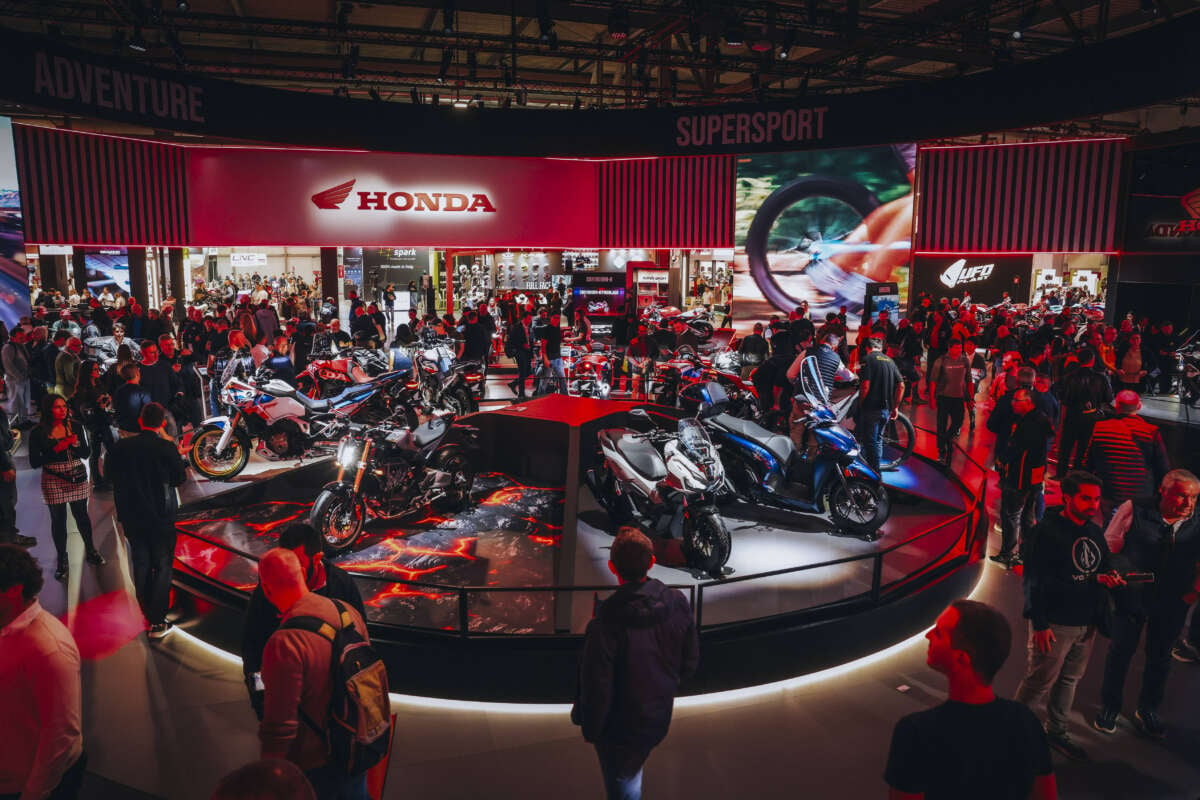
Honda’s motorcycle business recorded its highest-ever first-half sales, with 11.9 million units sold worldwide in the six months ended September 30, 2026, representing a 10.6% increase year-on-year. The figure compares with 10.76 million units recorded during the corresponding period in 2025, according to Honda’s latest financial results. Growth was driven primarily by stronger demand in Asia and other markets, including Brazil, with Asia remaining Honda’s largest motorcycle sales region. Honda recorded 10.1 million units in group sales across Asia, up 11.5% from 9.07 million units a year earlier. Sales in other regions increased 11.7% to 1.21 million units, while North American sales grew 6.2% to 290,000 units. Europe was the only major region to record a decline, with sales falling 4.4% to 215,000 units while Japan recorded a sharper 32.1% drop to 76,000 units. The motorcycle business also delivered stronger financial performance, with revenue rising 18.3% to 2.27 trillion yen (RM61 billion), while operating profit increased 19.2% to 439 billion yen (RM11.8 billion). Its operating margin stood at 19.3%. The sales figures cover Honda’s group motorcycle business, including completed motorcycles, all-terrain vehicles (ATVs) and side-by-side vehicles sold by Honda, its subsidiaries and associated companies. For comparison, consolidated sales, which cover Honda and its consolidated subsidiaries, amounted to 7.76 million units, up 9.2% from 7.11 million units in the same period last year. The strong performance reinforces the importance of the motorcycle business to Honda’s global operations, particularly in Asian markets where demand for affordable personal transportation remains significant. In Malaysia, Honda motorcycles are distributed by Boon Siew Honda, which operates a local manufacturing facility in Batu Kawan, Penang. Its local model range spans kapchai motorcycles and scooters to larger-capacity machines sold under the Honda Big Wing network. Honda also plans to expand production capacity at its Manaus factory in Brazil from the current 1.6 million motorcycles annually to 2.3 million units by 2029, responding to growing domestic and export demand.

 Liked by Lucas Wright, Emma Campbell





 Liked by Lucas Wright, Emma Campbell