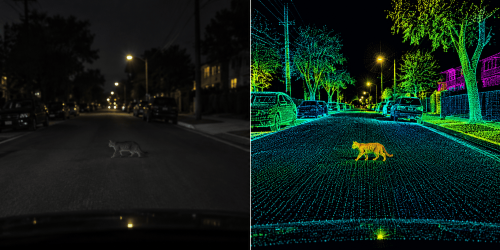
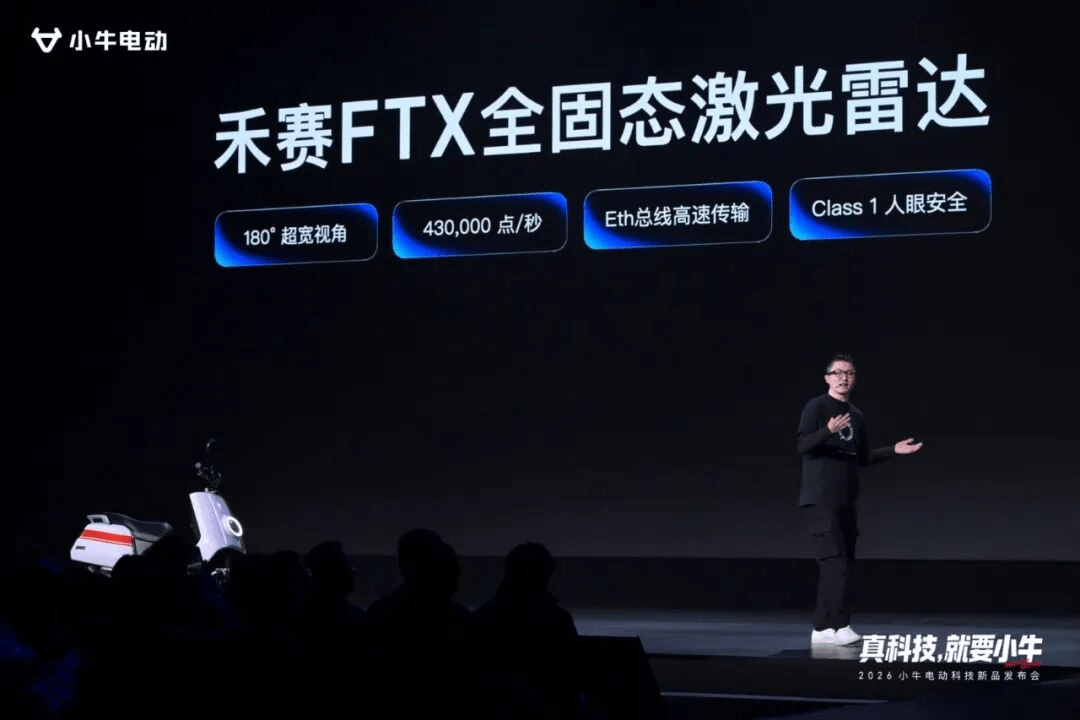
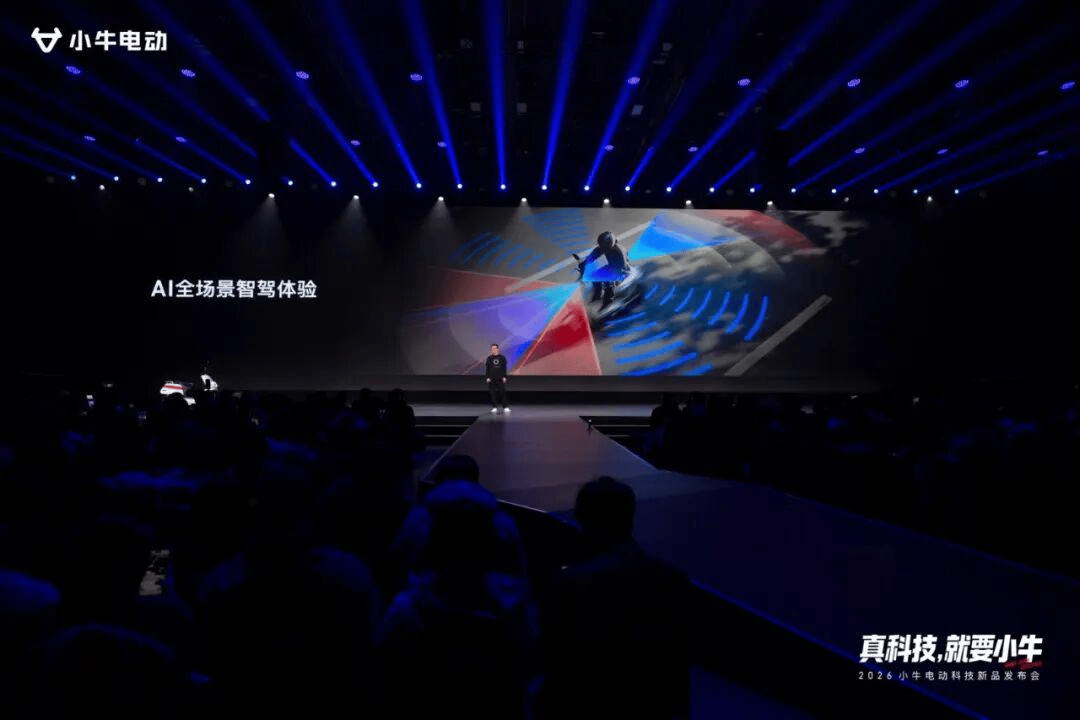
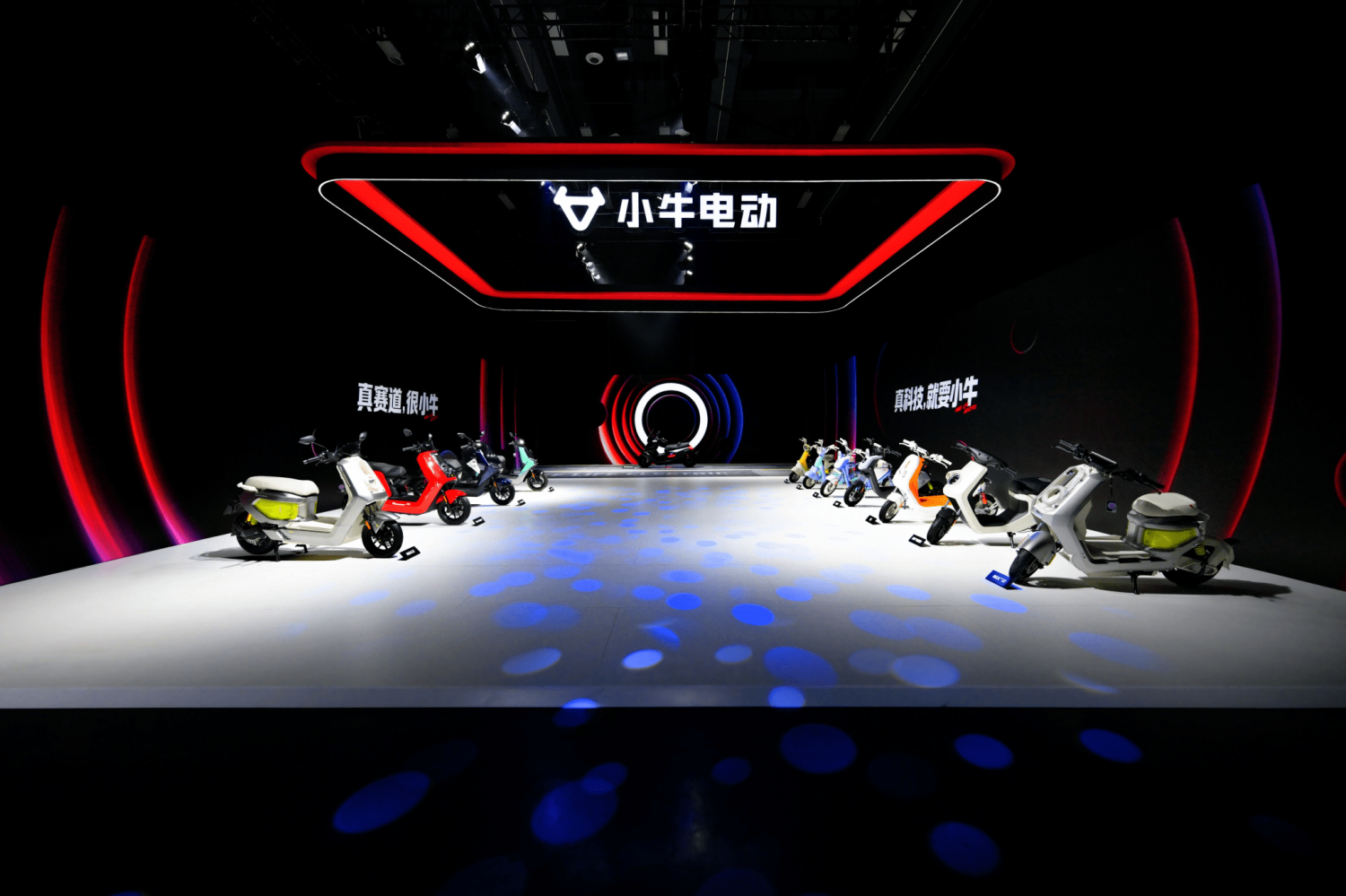
The partnership marks the first large-scale integration of lidar into the electric two-wheeler sector. Hesai Technology and Niu Technologies (a Chinese smart electric two-wheeler brand) announced a deep partnership, with Hesai’s solid-state blind-spot lidar FTX officially being selected for Niu’s new two-wheeler models. Under the agreement, the two parties will jointly integrate core technologies and industry resources to accelerate the large-scale deployment of lidar in electric two-wheeler scenarios. Hesai’s FTX lidar will be the first to be installed on the NXT2 and NX2 models. The collaboration coincides with Niu Technologies’ 2026 New Product Launch event. At the event, Niu unveiled the world’s first AI-powered operating system for two-wheelers, NIU AIOS, along with two globally debut AI-enabled electric two-wheelers: the NXT2 (compliant with China’s new national standard for e-bikes) and the high-performance electric motorcycle NX2. According to the partnership plan, Hesai’s FTX lidar will first be installed on these two models, marking the entry of China’s two-wheeler mobility into the AI era. Niu Technologies’ 2026 New Product Launch event The core product of this partnership is Hesai’s second-generation solid-state blind-spot lidar, the FTX. According to official data, the FTX features an ultra-wide field of view of up to 180°×140°, enabling comprehensive perception of the surrounding environment. Its resolution has more than doubled compared to the previous generation, while its weight has been reduced by 66%. In terms of perception, it can accurately identify pedestrians, vehicles, and complex road conditions. Optimized for two-wheeler scenarios, it can detect low-lying obstacles and work in tandem with long-range main lidar to enhance environmental awareness. In Niu’s omnidirectional perception system, Hesai’s FTX serves as a core sensor, working in coordination with D-Robotics’ Sunrise series intelligent computing chips. Niu Technologies’ 2026 New Product Launch event The strategic partnership between Hesai and Niu marks the first large-scale integration of lidar into the electric two-wheeler sector, bringing lidar technology from passenger cars to a broader range of mobility scenarios. Official data shows that by the end of 2025, lidar penetration in the passenger car market had reached 19%, entering a phase of large-scale adoption. Hesai, through chip integration and economies of scale, has reduced lidar costs from hundreds of thousands of yuan to around $200, a drop of 99.5%. In the robotics sector, lidar has also become a common core spatial perception component in applications such as Robotaxi, RoboVan, embodied AI, lawn mowing robots, and commercial cleaning robots.



















 +27 others