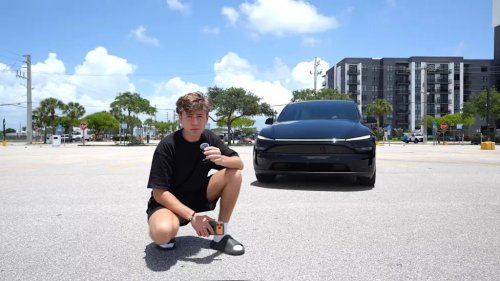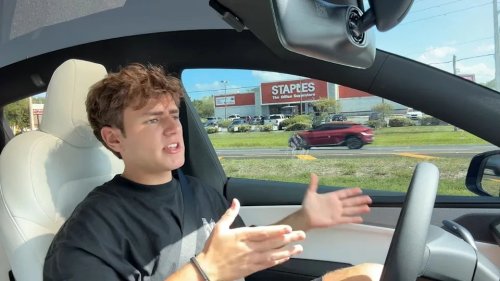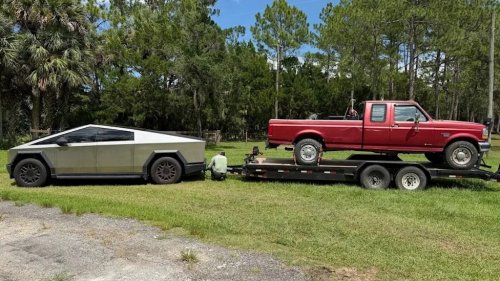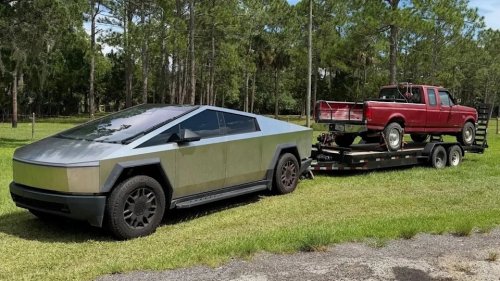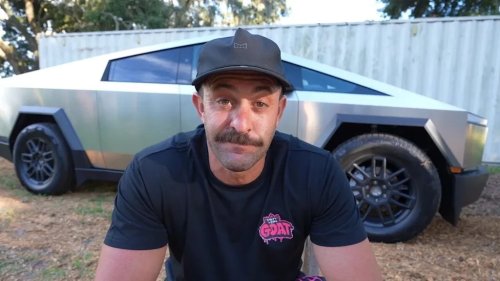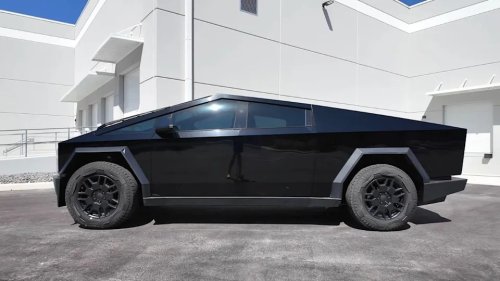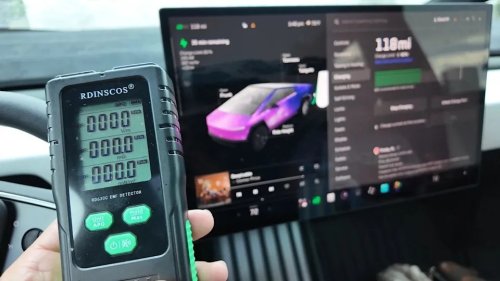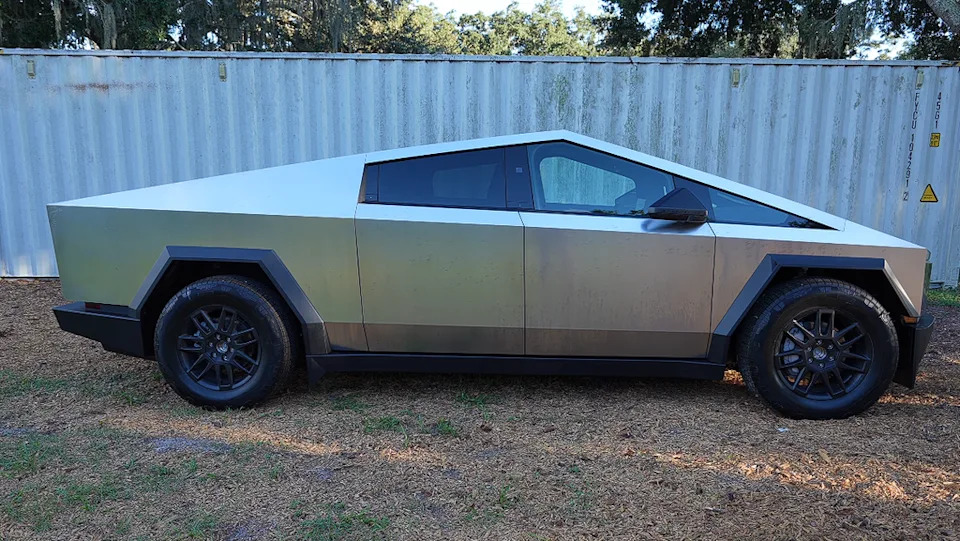
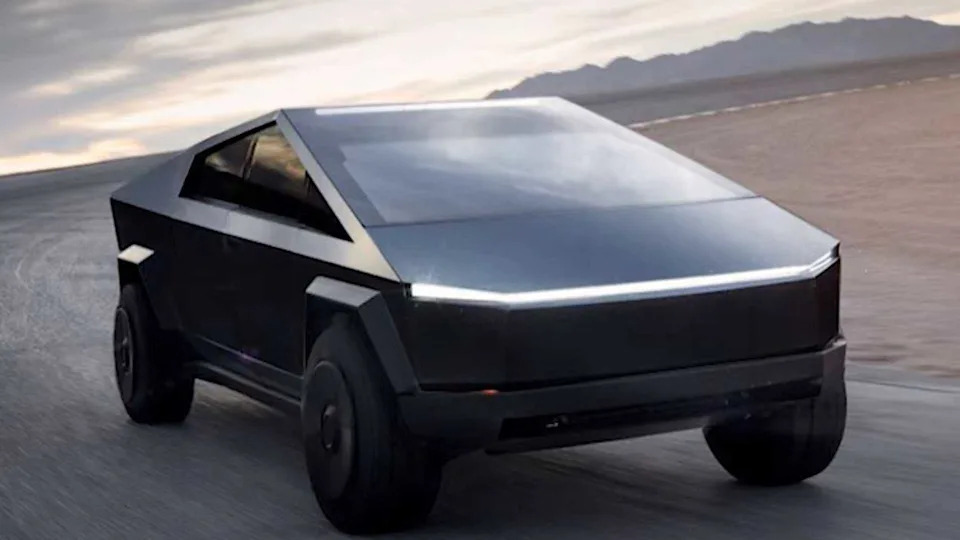
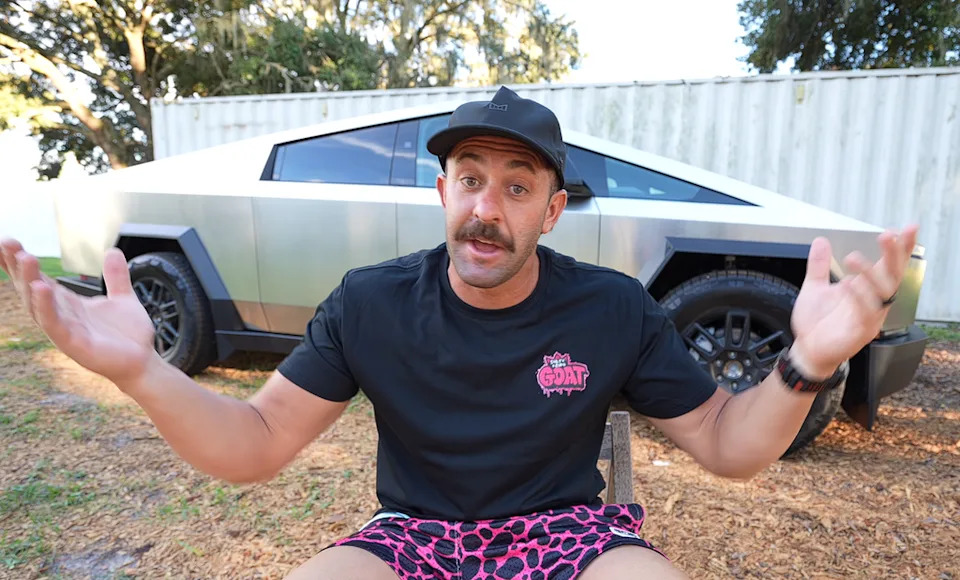


















He Dropped $100K on a Brand-New Cybertruck—and Tesla Handed Him a Greasy DisasterMotorBiscuitRahaan MazumderThu, September 24, 2026 at 6:30 PM UTCAdd us on GoogleWhen Elon Musk first unveiled the Tesla Cybertruck, the raw, unpainted stainless steel exoskeleton was touted as the ultimate, apocalypse-proof exterior. No paint to scratch, no clear coat to chip. But in the real world, owners are quickly discovering that the futuristic metal comes with a massive hidden cost: it is an absolute nightmare to keep clean.David Moss Jr., the host of the DMJR AUTO YouTube channel, recently experienced this stainless steel reality check firsthand. After taking delivery of a brand-new Premium All-Wheel Drive Cybertruck, his excitement quickly turned into a frantic desire to cover the entire vehicle up."I get it now…. I really didn't get it at first when I started seeing Cybertrucks on the road," Moss admitted from the driver's seat just 24 hours into ownership. "You could see all the fingerprints, you could see all the water marks… the stainless steel looks really, really cool until it doesn't".The Dirty Delivery ProblemMoss's frustrations began before he even left the Tesla lot in Tampa, Florida. While he was thrilled to receive his truck just 17 days after placing the order—an incredibly rare turnaround time in the EV world—the vehicle's presentation was appalling.AdvertisementAdvertisement"I don't think I've ever seen a car brand new so dirty," Moss complained. "The outside is covered in grease, the wheels and tires covered in grease, the bed was sprayed with something that smells terrible".This isn't an isolated incident. According to The Wall Street Journal and Jalopnik, Tesla delivery centers have notoriously struggled to prep the massive trucks. While a standard Tesla Model Y takes about 45 minutes to detail, former employees claim the Cybertruck's sharp, bare-metal geometry takes at least two hours to properly clean.With thin staffing and high volume, dozens of owners have reported receiving six-figure trucks covered in muddy handprints, factory dust, and even leftover trash in the door cubbies.For Moss, a self-described health-conscious "biohacker" sensitive to chemical smells, the delivery prep was a disaster. The sloppy application of tire shine at the dealership had already splattered down the side of the raw metal before he even drove home.AdvertisementAdvertisement"It looks crappy. It looks bad," he lamented. "It looks like this is an old Cybertruck, but it's brand new. It has 30 miles on it".The $4,000 Wrap "Tax"Moss quickly realized the secret behind the explosion of brightly colored and matte-black Cybertrucks flooding American highways."The reason 50% or more of the Cybertrucks you see on the road have wraps it's not because people are advertising their business or they like the fancy colors. It's literally because this thing's a pain in the butt to keep clean," Moss explained.A tesla Cybertruck with a matte black wrapTesla Cybertruck | TeslaBecause raw stainless steel reacts poorly to road salt, bird droppings, and the oils from human fingerprints, wraps have become an unofficial requirement for ownership. According to specialized EV wrap shops, a standard vinyl color change for the Cybertruck typically costs between $4,000 and $6,000, while self-healing color Paint Protection Film (PPF) can easily push the invoice past $8,000.AdvertisementAdvertisementMoss immediately booked an appointment to cover his truck in a matte black wrap, noting that buyers need to automatically factor that massive expense into their budget.The "Microwave on Wheels" and the Battery DrainBeyond the exterior aesthetics, Moss also used his first 24 hours to test a popular conspiracy theory within the biohacking community: that driving a highly connected EV exposes occupants to dangerous levels of electromagnetic fields (EMF)."A lot of my friends who are in the biohacking space are like, 'Bro, you can't have a Tesla; that's like a microwave on wheels'," Moss laughed. However, after extensively testing the cabin with a handheld EMF meter while driving and supercharging, he found the radiation levels were no different than his standard GMC Yukon or the ambient levels inside his own kitchen.What was draining, however, was the truck's battery. Living in the 95-degree Florida heat, Moss utilized a feature that automatically turns on the Cybertruck's air conditioning to keep the cabin cool while parked. Because the truck has a massive, untinted glass roof and massive windows, the interior effectively acts like a greenhouse.AdvertisementAdvertisement"I lost 3% in about, I don't know, five hours of just sitting in my driveway in the middle of the sun," Moss noted, adding an expensive ceramic window tint job to his growing list of mandatory day-one modifications.Despite the hidden wrap taxes, the dirty delivery, and the battery drain, Moss remains completely obsessed with the truck for one single reason: Full Self-Driving (FSD). Like the 80-year-old grandmother and the terrified highway driver he met at the dealership, the ability to let the truck's AI navigate the chaotic Florida highways completely overrides the annoyances of owning a giant, stainless-steel fingerprint magnet.