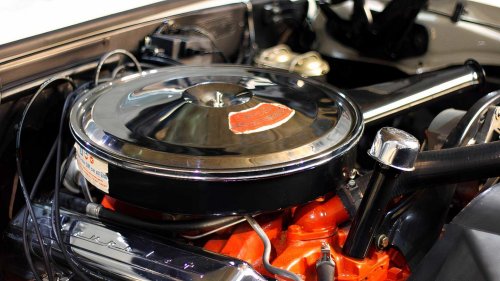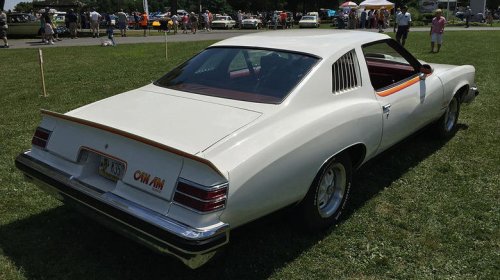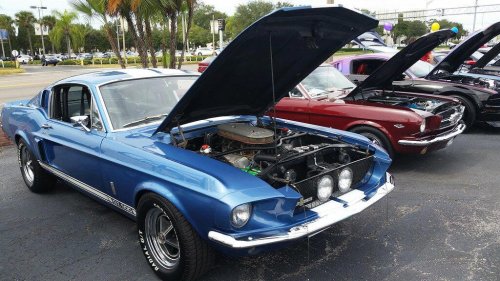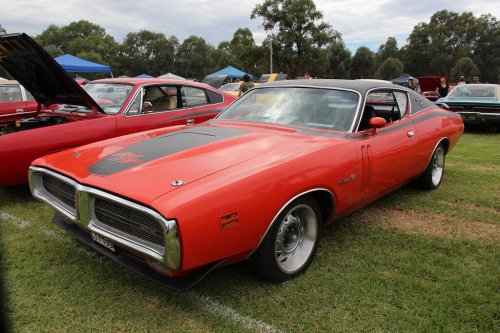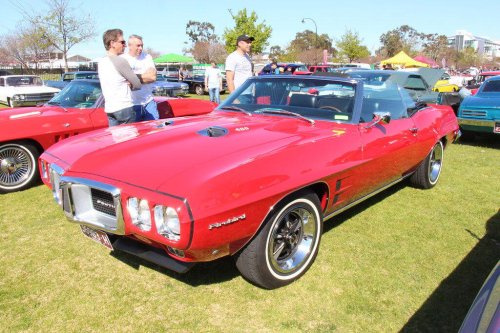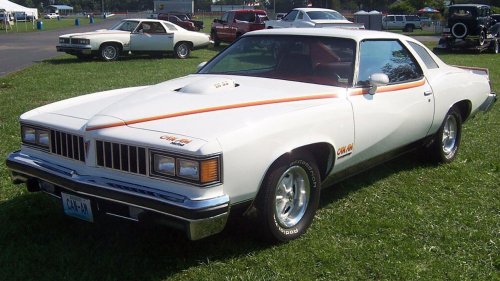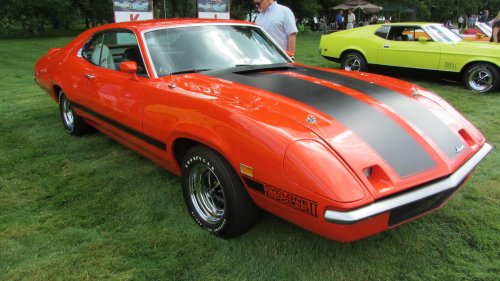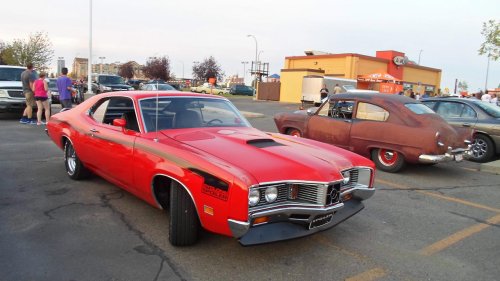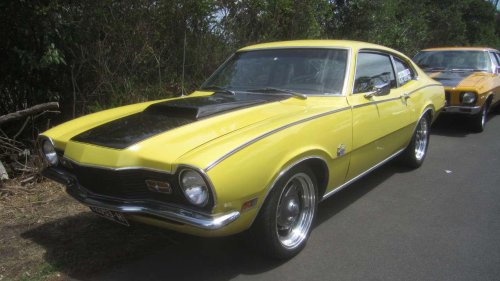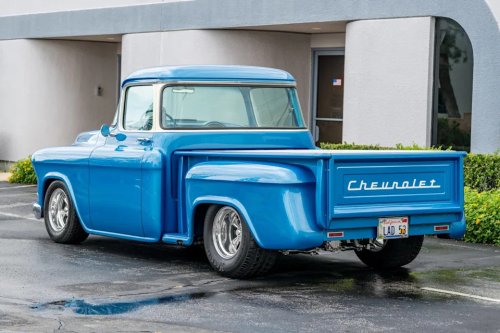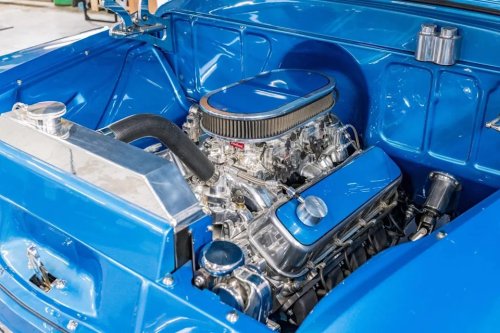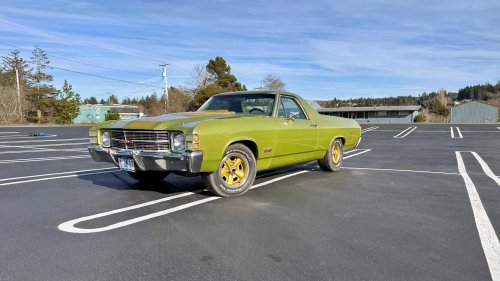
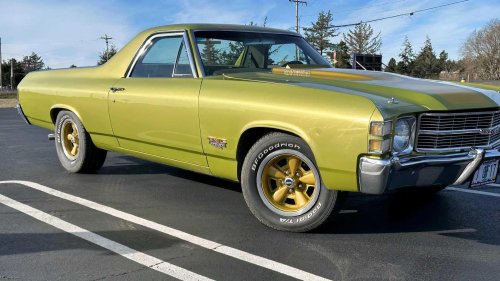
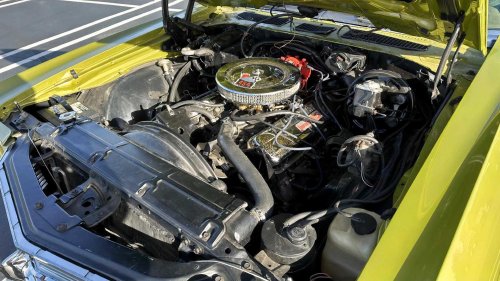
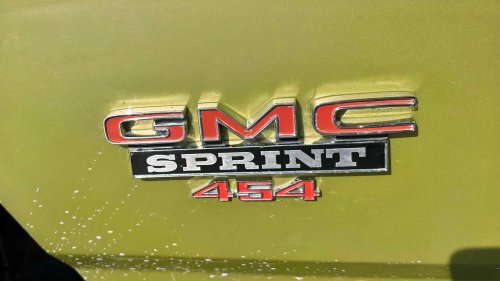
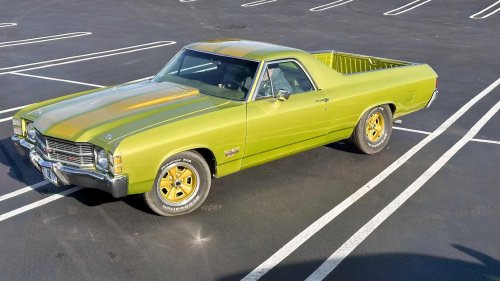
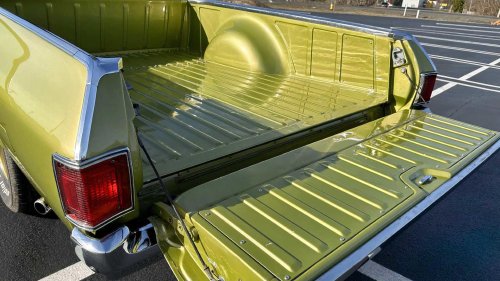
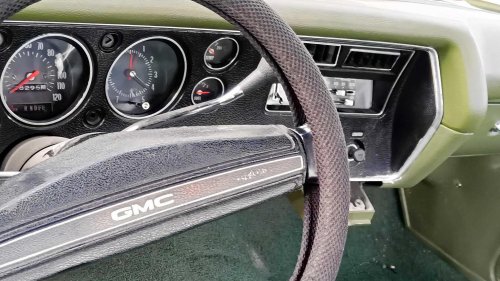
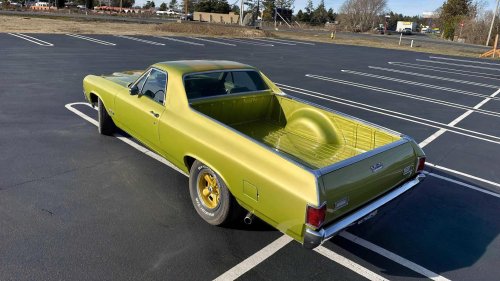
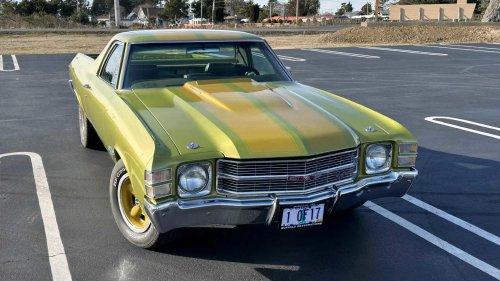



















Most people don’t associate GMC with burnouts, quarter-mile times, or big-block bragging rights. The brand’s image has always leaned toward work ethic and utility, built around trucks meant to haul, tow, and survive hard use rather than chase performance headlines.In 1971, GMC sold a vehicle that checked all the muscle car boxes, complete with a 454 cubic-inch V8 and factory performance hardware. It had the power, the platform, and the parts to back it up. So why did it disappear almost instantly, and why does it still fly under the radar today? GMC Once Built A Legit Muscle Car And Hid It In Plain Sight Bring A TrailerThe vehicle in question was GMC’s own take on the coupe-utility formula, a close cousin to the El Camino but marketed through a completely different lens. Officially, it was called the GMC Sprint SP 454, and it represented the most aggressive version of the Sprint lineup GMC ever offered.Underneath, the Sprint shared GM’s A-body platform, the same basic architecture used by the Chevelle, Monte Carlo, and Malibu. That meant proper rear-wheel-drive proportions, a perimeter-frame A-body chassis suited for V8 power, and suspension hardware already proven in high-performance applications. From a mechanical standpoint, it had everything needed to be taken seriously. The Ute That Could Scoot Bring A TrailerWhere things diverged was branding. Instead of being sold alongside performance Chevrolets, the Sprint SP 454 was marketed through GMC truck dealerships. As you can imagine, that decision shaped how buyers saw it from day one. Rather than being framed as a muscle car that happened to have a bed, GMC positioned it as a performance-oriented utility vehicle. It was meant to appeal to buyers who wanted speed but still identified as truck people.Visually, the Sprint SP 454 didn’t scream for attention (despite the attempt of the example pictured here). It wore subtle badging, factory wheels, and restrained styling compared to the louder muscle cars of the era. That restraint made it easy to miss then and forget later, especially when parked next to flashier GM siblings. The SP 454 Package Turned The Sprint Into A Big-Block Sleeper Bring A TrailerWhat transformed the Sprint from a mild coupe utility into something far more serious was the SP 454 package. This wasn’t a decal kit or a mild appearance upgrade. It centered on GM’s 454 cubic-inch LS5 big-block V8, rated at 365 horsepower for the 1971 model year. That engine was the same core powerplant found in the Chevelle SS 454, delivering massive torque and strong straight-line performance even in emissions-era trim. Split Persona Bring A TrailerThe SP 454 package paired the LS5 big-block with the same A-body underpinnings and heavy-duty hardware used across GM’s high-performance lineup, the intent being to give the Sprint real muscle car capability beneath its utility-focused exterior.What made it especially interesting was how understated the whole thing felt. The Sprint SP 454 could haul cargo during the week and embarrass lighter cars on the weekend. That dual personality was rare even during the height of the muscle era, and it made the Sprint more capable than many dedicated performance cars that lacked any real utility. Why Only 249 Were Ever Built Bring A TrailerProduction numbers tell the biggest part of the story. According to multiple sources, only 249 examples of the Sprint SP 454 were built for 1971. That figure alone explains why so few people have seen one in person, let alone driven one.The SP 454 package was expensive compared to standard Sprint trims. Buyers had to pay a premium for the big-block engine, upgraded hardware, and limited availability. At the same time, muscle car insurance rates were climbing, emissions regulations were tightening, and the era of cheap horsepower was already under pressure.There was also a problem of audience mismatch. GMC buyers typically came to showrooms looking for work trucks, not muscle cars. Meanwhile, performance-focused buyers gravitated toward Chevrolet dealerships, where the Chevelle SS and El Camino SS had stronger recognition and racing associations.Internal competition didn’t help either. The El Camino SS 454 offered nearly identical performance with better visibility and stronger marketing support. From a buyer’s perspective, it was the easier choice, even if the Sprint SP was just as capable. All of that combined to keep production extremely low, turning the Sprint SP 454 into an accidental rarity rather than a planned limited edition. GMC Marketed It Differently And That Hurt Visibility Bring A TrailerGMC’s biggest misstep with the Sprint SP 454 wasn’t the product itself, but how it was presented. Advertising focused heavily on utility, durability, and truck-like toughness. Performance was mentioned, but rarely emphasized the way Chevrolet highlighted horsepower and speed in its muscle car campaigns.The Sprint SP never became a headline car. It wasn’t tied to motorsport programs, magazine cover stories, or pop-culture moments. There was no halo effect pulling attention toward it, and without that exposure, you can see how it faded quickly from public memory. Capable Yet Overlooked Bring A TrailerDealership context mattered too. When customers walked into a GMC showroom, they were surrounded by pickups and commercial vehicles. A big-block coupe utility didn’t naturally stand out in that environment, even if it really deserved more attention.As muscle cars became more extreme and visually aggressive, the Sprint SP’s understated approach worked against it. It didn’t fit the stereotype enthusiasts expected, which made it easier to overlook then and harder to remember now. Why The Sprint SP 454 Is Still Shockingly Affordable Today Bring A TrailerDespite its rarity and credentials, the Sprint SP 454 remains surprisingly attainable (if you can find one, that is). Hagerty values the 1971 SP 454 in excellent condition at just $30,200, with concours-quality cars still valued at $42,600. That puts it well under comparable big-block Chevelle SS models, with a concours-quality 1970 example (as per Hagerty) going for as much as $150,000.One peek at sales data from actual auctions shows just how varied real-world prices have been. A 1971 Sprint equipped with a 454 V8 sold at Bring a Trailer for $16,454 in early 2025, even with the engine swapped in, underscoring how hard it can be to find a true SP 454 and how value still lags compared with . That spread continues elsewhere. A documented 1972 Sprint SP 454 sold through EG Auctions in September 2019 for 28,000 CAD, which converts to roughly $21,000 USD at the time, reinforcing just how far below traditional muscle car money these factory big-block GMCs have traded, even at auction.The lack of widespread nostalgia plays a major role. It doesn’t have the name recognition of a Camaro or Chevelle, and many collectors still see it as a curiosity rather than a must-have. That perception keeps demand lower than the fundamentals might suggest.For buyers who value substance over hype, that’s good news. The Sprint SP 454 offers real big-block performance, genuine rarity, and a unique place in GM history at a price that still makes sense. It’s one of the few remaining ways to buy into factory muscle without paying muscle car premiums. Obscure Back Then, Underrated Today Bring A TrailerThe Sprint SP 454 didn’t fail because it lacked performance, engineering, or character. It failed because it lived in the wrong showroom at the wrong time, marketed to an audience that didn’t know what to do with it. That combination pushed it into obscurity almost immediately.Today, that same obscurity makes it pretty enticing. It stands as proof that GMC once stepped fully into muscle car territory, even if it never shouted about it. For collectors willing to look past badges and expectations, it remains one of the most interesting and overlooked performance cars GM ever built.Sources: Hemmings, Classic, Hooniverse, Hagerty.