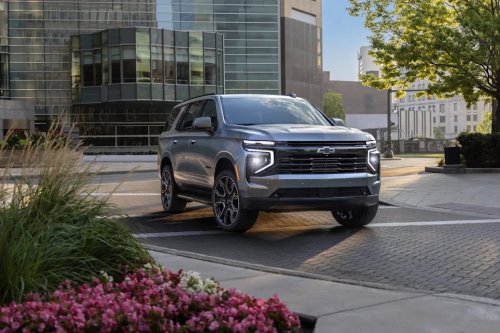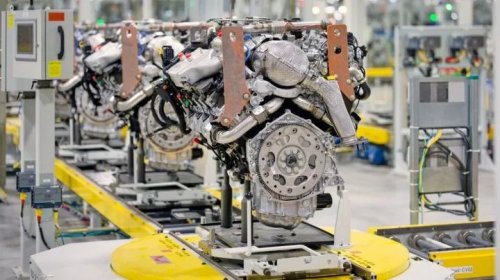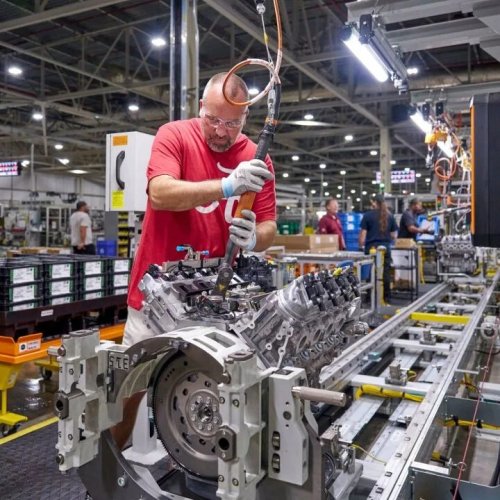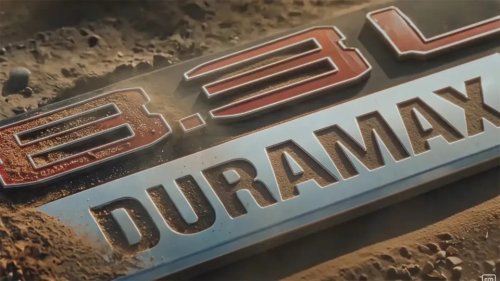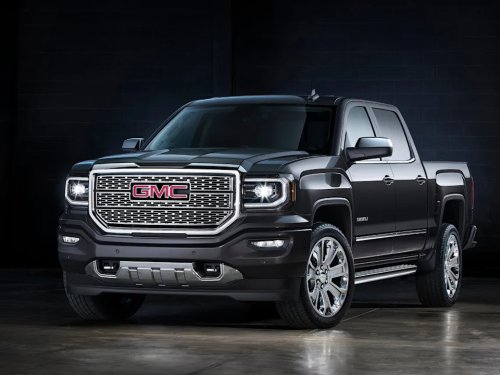



















GM Denies L87 V8 Employee Discount as NHTSA Probes Nearly 1 Million TrucksBackfire NewsEve NowellTue, September 8, 2026 at 9:55 PM UTCAdd us on GoogleGM Denies L87 V8 Employee Discount as NHTSA Probes Nearly 1 Million TrucksWord got around this week that General Motors had quietly rolled out employee pricing for people stuck with 6.2-liter L87 V8s, complete with mailed authorization codes, household transferability, and eligibility across most 2026 models and a slice of 2027s. It's the kind of program that would make sense: a discount as a peace offering to owners who have spent eighteen months wondering whether their crankshaft is going to let go on an on-ramp.GM says it doesn't exist. In a statement, the company said: "GM regularly assesses incentives and customer programs across its business. At this time, there is no L87-related employee pricing offer in place. We remain committed to supporting our customers and continue to review individual circumstances on a case-by-case basis."Read that last clause again. "Case-by-case basis" is corporate for call us and we'll see. It is not a program, it is not published, and you cannot hold anyone to it. If a salesperson tells you an L87 employee discount is waiting for you, ask to see the authorization number in writing before you sign anything, because GM's official position is that no such targeted offer is running.AdvertisementAdvertisementWhat's actually on the recordHere is where the story gets more useful than a rumored incentive, because the federal paperwork is not ambiguous.On August 20, 2026, NHTSA's Office of Defects Investigation opened Engineering Analysis EA26005 covering 997,743 GM vehicles from the 2021 through 2026 model years equipped with the L87. The subject line is blunt: loss of motive power due to engine failure post recall remedy.Related ArticlesInside the Pagani Huayra 70: Transverse Manual V12 and a Missing Third CarWhat Camping World's Shrinking Store Count Really Means for RV BuyersThe numbers inside that document deserve attention. ODI has logged 499 complaints of engines failing after the recall repair was completed. Of those, 473 got the oil viscosity change and 26 got an entirely new engine. Separately, the agency has 191 reports of L87 failures in engines built after the production window covered by the original campaign. GM itself reported receiving 6,953 post-remedy failure complaints.AdvertisementAdvertisementAn engineering analysis is the last investigative stage before regulators can make an initial defect decision. Opening one against a remedy that has already been performed across hundreds of thousands of vehicles is the agency saying, on the record, that it isn't convinced the fix worked.The two-tier remedy, and why one tier looks thinRecall 25V-274 covered 597,630 U.S. vehicles: 2021–2024 Escalade and Escalade ESV, Silverado 1500, Suburban, Tahoe, Sierra 1500, Yukon and Yukon XL. GM traced the problem to supplier manufacturing and quality issues affecting connecting rods and crankshafts.The remedy split two ways, and the split is the whole story. Pull up GM's dealer bulletin N252494001 and the inspection procedure is one step: check for DTC P0016. No code, and the truck passes. The tech drains the factory 0W-20, refills with dexos 0W-40, swaps the oil filter and the oil fill cap, and staples an insert into the owner's manual. Total labor time: half an hour.AdvertisementAdvertisementFail the check and you get the replacement bulletin instead, which pays 18.2 to 18.6 hours depending on model and driveline, plus recovery and recharge time for the A/C system. That gap, 0.5 hours versus 18.5, tells you exactly how the population was expected to sort itself out.Two technical wrinkles worth knowing. First, P0016 is a crankshaft-to-camshaft correlation code. It's a reasonable proxy for a bearing that has already started to go, but it is a lagging indicator, not a prognostic. An engine with sediment in the oil galleries and a crank finish that's out of spec can be perfectly quiet and code-free on a Tuesday morning inspection.Second, and this one surprises people: the replacement bulletin instructs technicians to transfer the original 0W-20 cap to the new engine and fill it with dexos 0W-20. So the trucks that got new engines went back to the thin oil, while the trucks that kept their original engines went to 0W-40. GM's engineers presumably had a reason. Twenty-six post-remedy failures on replacement engines suggest the question isn't fully closed.The replacement bulletin also carves out an exemption most owners never see. Engines built on or after day 24183, which is July 1, 2024, require no action at all.AdvertisementAdvertisementThe extended warranty has teeth, and it has edgesGM's special coverage bulletin N252494003 gives remedied vehicles 10 years or 150,000 miles from the original in-service date, regardless of ownership. That's a legitimately strong backstop and it transfers with the truck, which matters for resale.Now the edges, because they're sharp.The coverage pays for engine failure caused by the rod and crankshaft condition. If your truck comes in with a valvetrain or other top-end problem, the bulletin states plainly that it is not covered. If the dealer finds signs of neglect, low or no oil, evidence of hydrolock, it isn't covered either. And a knocking noise doesn't automatically buy you an engine; the tech runs a PicoScope test and the result decides.AdvertisementAdvertisementGM also wrote in language stating the reimbursement right is personal to the customer and cannot be assigned to third parties, explicitly naming service contract providers, and disclaiming subrogation and third-party beneficiary rights. In plain English: your aftermarket warranty company can't pay your claim and then bill GM. Requests for reimbursement of previously paid repairs were due to dealers by May 31, 2026.The gap nobody is talking aboutHere's the part that should worry owners most, and it comes straight from comparing two documents.Special coverage N252494003 applies to 2021–2024 model year vehicles remedied under the recall bulletins. EA26005 covers 2021 through 2026. Those 191 complaints about engines built after the recall's production window belong to trucks and SUVs that are not in the recall, not in the special coverage, and therefore sitting on nothing more than the standard powertrain warranty.Related ArticlesTruck Engine Fuel Rules Voided: What Federal Rollback Means for DieselsDreame Bought a $10 Million Super Bowl Ad to Sell a Hypercar It Never Actually BuiltAdvertisementAdvertisementIf you bought a 2025 or 2026 Silverado, Tahoe, Yukon or Escalade with the 6.2, you have the shortest safety net of anyone in this mess and the least documentation. Keep every oil change receipt with mileage and date. If the engine goes at 70,000 miles and you're arguing about neglect, paperwork is the entire ballgame.Practical movesCheck your VIN against open recalls directly through NHTSA rather than trusting a dealer's verbal assurance. Verify in writing which of the three bulletins was performed on your vehicle, because "we did the recall" covers three very different outcomes.If you hear a rod knock, stop and tow. Do not drive it in Monday morning. A spun bearing that hasn't yet let go through the block is a cheaper conversation than one that has.AdvertisementAdvertisementOn the insurance side, a seized engine is a mechanical failure, not a covered peril, so your policy won't help. What might is the diminished value argument if you're selling. Trade values on L87 trucks have been carrying a discount, and a documented special coverage transfer is one of the few things that pushes back on it.And if you're shopping a used one right now, run the IVH history before you talk price. A truck that got the half-hour oil change is a different asset than one that got the eighteen-hour engine.