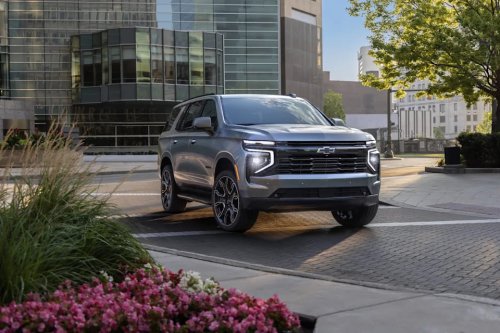
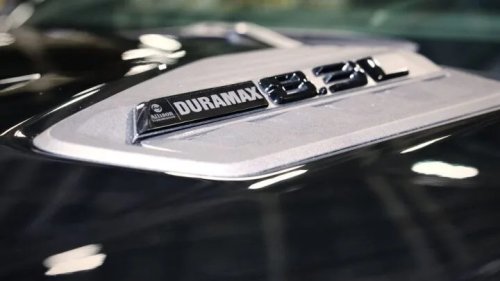
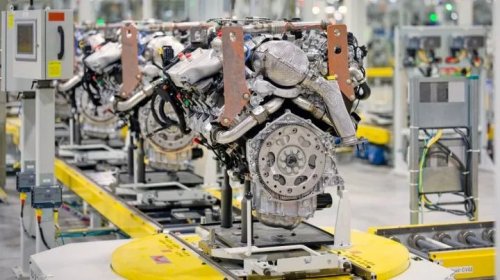
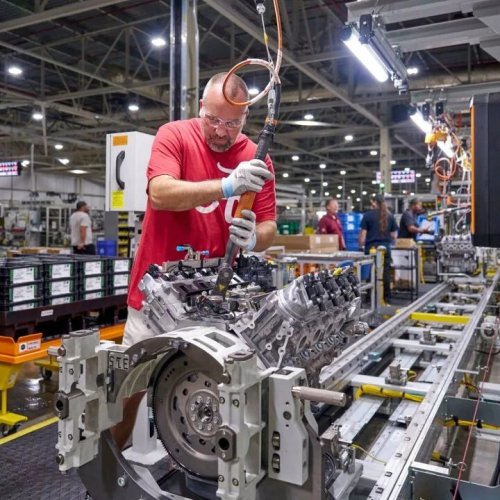
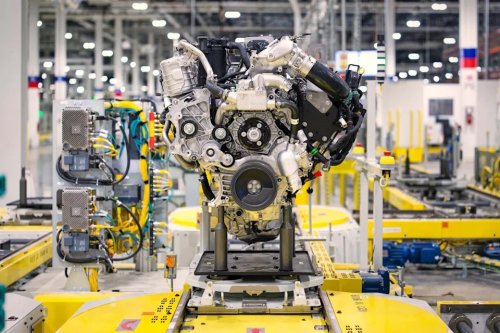
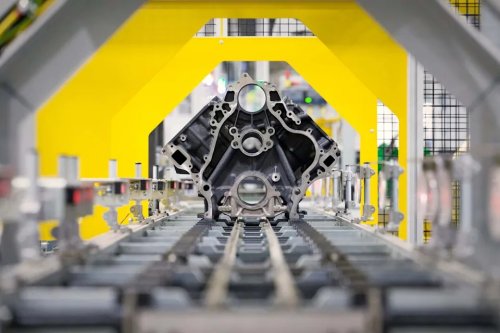
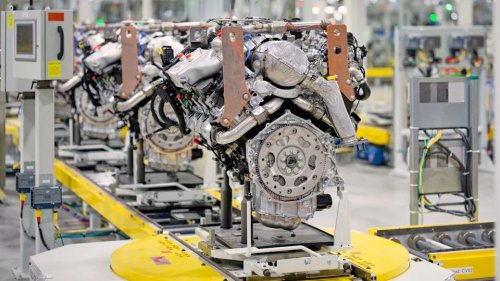
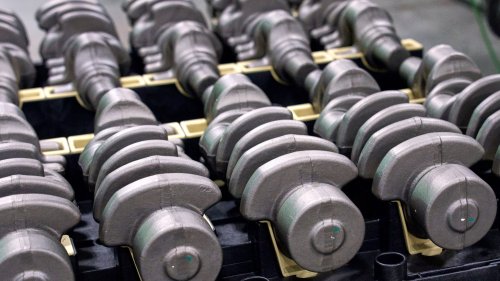
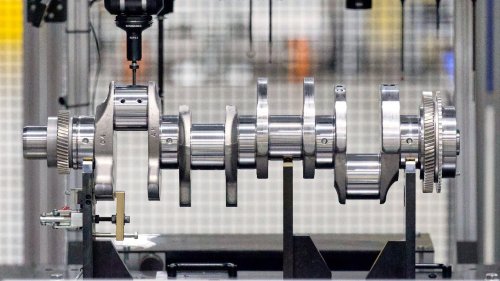
GM 6.2L V8 Engine Failures: What the Federal Investigation Documents Actually ShowThere's a specific kind of trouble an automaker gets into when federal regulators stop asking whether a defect exists and start asking whether the fix works. General Motors is in it.The Office of Defects Investigation opened Recall Query RQ26001 on January 16, and the language in the opening resume is unusually blunt for a document that normally reads like a tax form. ODI received 36 Vehicle Owner Questionnaires alleging engine failure in vehicles subject to Recall 25V274, and in each one, the engine had the recall remedy completed prior to the reported failure. The complaints allege failures of both remedies. The population under review: 597,571 trucks and SUVs. nhtsaBoth remedies. That's the phrase worth sitting with. GM's fix had two branches — pass the inspection and get thicker oil, fail it and get a new engine — and owners are reporting failures down both.AdvertisementAdvertisementBy February 17, when ODI sent GM a formal information request, the office stated it had received 139 reports to date of L87 engine failure. Thirty-six to 139 in roughly a month is not a plateau. nhtsaWhat actually broke, in GM's own wordsThe Part 573 report GM filed on April 24, 2025 is the single most useful document in this whole saga, and almost nobody reads past page one. GM's engine teardown analysis identified two primary root causes, both attributable to supplier manufacturing and quality issues: rod-bearing damage from sediment on connecting rods and crankshaft-oil galleries, and out-of-specification crankshaft dimensions and surface finish. NHTSATwo separate failure mechanisms in one engine family. That matters more than it sounds.Related ArticlesVoyah Passion S Tunnel Loop: The Physics Behind China's Schumacher TributeTrump's 50% Canada Car Tariff Got a Three-Day Pause. The Fine Print Shows It Was Built to Tax Detroit's Own FactoriesAdvertisementAdvertisementThe first is machining debris — swarf — that never got washed out of the connecting rods and the drilled oil passages inside the crankshaft. On startup, oil pressure pushes that debris straight into the rod bearing, where it either embeds in the soft overlay or scores the journal. Once a bearing is scored, it's a countdown.The second is dimensional. Crank journals have tolerances for roundness, taper and surface finish measured in microns. Out-of-spec journals mean the hydrodynamic oil film — the microscopic wedge of pressurized oil that is the only thing keeping steel off steel at 4,000 rpm — has less room to work with.GM identified 28,102 field complaints or incidents in the U.S. potentially related to L87 failure from crankshaft, connecting rod, or bearing failure, of which 14,332 involved allegations of loss of propulsion. Those complaints came in between April 29, 2021 and February 3, 2025. The same filing notes GM had already opened and closed three prior internal investigations into this exact condition — in February 2022, June 2023 and July 2024 — before NHTSA's January 2025 notification prompted a fourth. NHTSANHTSAHere's the number that deserves more attention than it's gotten: on the recall report, GM listed the estimated percentage with defect at 3 percent of 597,630 vehicles. That's roughly 18,000 engines. GM's own field data, in the same document, counted 28,102 complaints. NHTSAWhy thicker oil is a real fix and also not enoughThe 0W-20 to 0W-40 switch got mocked as a Band-Aid. It's more interesting than that, and understanding why explains exactly which failures it can and can't prevent.AdvertisementAdvertisementMinimum oil film thickness in a plain bearing scales with viscosity, speed and load. Raise viscosity at operating temperature and you raise the film. Moving from a typical 0W-20 to a 0W-40 lifts high-temperature high-shear viscosity by roughly 40 percent, and the resulting increase in film thickness is enough to keep a marginally rough journal from touching its bearing under load. Against root cause number two — surface finish and dimensional variance — that's legitimate engineering.Against root cause number one, it does nothing. Embedded debris is already in the bearing. Worse, thicker oil is less effective at carrying particles to the filter. If your engine's problem is swarf, heavier oil buys you nothing except a slightly slower death.Two things owners consistently get wrong here. First, the "0W" is unchanged, so cold-start pumpability is identical — the entire difference is at temperature. Second, the original 0W-20 spec wasn't chosen out of negligence; it was chosen partly for fuel economy, and the recall effectively de-optimizes the engine for it. Your EPA window sticker does not get re-rated when a recall changes your oil.The inspection has its own limitation. Dealers were told to scan for DTC P0016, a crankshaft-to-camshaft correlation code. It's a clever proxy — bearing wear shifts crank position relative to cam timing enough to trip it — but it's a late indicator. By the time P0016 sets, metal has already moved. Passing inspection means "no detectable damage today," not "healthy engine."The document nobody's talking aboutGM's own dealer communications tell you how live this remains. A bulletin GM issued to dealers on January 20, 2026 revised the recall parts table again. GM authorized Mobil 1 FS 0W-40 for L87 field action oil changes, with Mobil 1 Supercar 0W-40 remaining the priority product to sell down existing inventory. Claims using either product were reimbursed in full through March 31, 2026; beginning April 1, 2026, GM would only reimburse oil changes performed with FS 0W-40. nhtsaAdvertisementAdvertisementThat same bulletin references N252494003, a Special Coverage program running alongside the recall — a separate GM warranty-extension mechanism that a lot of affected owners don't know exists and should be asking their dealer about by name. nhtsaThe complaint data tells you something about how this worksThe engineering analysis opened in October 2025 covers a different slice: 286,051 vehicles from 2019-2021 and 2024 that fall outside the recall window, prompted by 1,157 reports of engine bearing failure, of which 173 sit outside recall 25V-274's scope. nhtsaLook at the failure report table in that document and you'll find something instructive. ODI's own consumer-complaint column shows 173 incidents. The manufacturer column shows 5,336. That's roughly a 30-to-1 ratio between what GM knew through Early Warning Reporting and warranty data versus what reached NHTSA through people filing complaints.Which is the practical argument for filing one. Consumer complaints are what open investigations, and investigations are what force manufacturers to hand over the data they already have. If your L87 grenaded, report it. It takes ten minutes and it's the only lever you personally control.What owners should actually doGet an oil analysis. This is the single most useful thing available to you and virtually nobody does it. A $30 lab sample will show copper, lead and tin — the constituent metals of rod bearing overlay — trending upward long before you hear a knock. Rising lead is the fingerprint of a bearing going away. Sample at every change and watch the trend line, not the single reading.AdvertisementAdvertisementShorten your intervals. GM's Oil Life Monitor algorithm was calibrated for a healthy engine on 0W-20. It has no idea what's in your oil galleries.Related Articles259 Plate Searches, Zero Warrants: A Cop Turned Traffic Cameras Into Her Personal Stalking ToolFord 1.0L EcoBoost Timing Belt Failures Trigger NHTSA Engineering AnalysisGet the paperwork right. If you're offered an engine, ask on the repair order whether it's new or remanufactured and what warranty attaches to it. If you've already paid out of pocket for a related repair, GM's 573 filing commits it to reimbursement under a plan submitted May 12, 2023. Ask for it in writing. NHTSAKnow your legal position. Recall repairs are free with no expiration for vehicles under 15 years old, and federal law requires that the remedy actually remove the defect — which is precisely the question RQ26001 exists to answer. A catastrophic failure after a completed recall repair is also the textbook fact pattern for state lemon law and Magnuson-Moss claims. Keep every repair order.AdvertisementAdvertisementInsurance won't save you. Mechanical failure is excluded from every standard auto policy. Comprehensive covers fire, and GM's filing acknowledges 42 potentially related fire allegations in the U.S., but it does not cover a seized bottom end. If you stall in traffic and get hit, that's a collision claim with your deductible on it. NHTSAFor buyersVerify which V8 is in the truck before anything else — the 5.3 isn't in this population, and a lot of listings are vague about it. If it's a 6.2, run the VIN and confirm the recall status, then ask specifically whether the vehicle received the oil-change branch or the engine-replacement branch. Those are two very different used trucks wearing the same badge.And note that 2019 and 2020 trucks sit in an uncomfortable middle: covered by the engineering analysis, not covered by the recall. Whether that changes is exactly what ODI is currently deciding.The federal file on this engine now spans a preliminary evaluation, a recall covering nearly 600,000 vehicles, an engineering analysis covering another 286,000, and a query auditing whether the recall itself worked. Combined, that's a regulatory footprint approaching a million trucks and SUVs — and the agency hasn't closed a single one of them.AdvertisementAdvertisementJoin our Newsletter, follow our Instagram page, and connect with us on Facebook.



















 +74 others