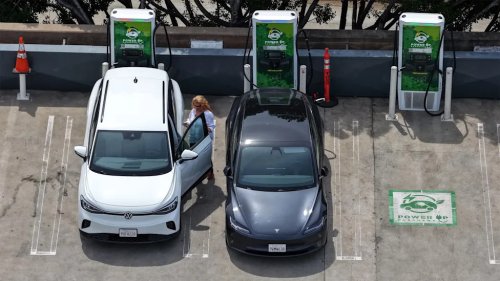



















Image: Pixabay/Nikolaus BaderThe foundation for the new incentive scheme is Germany’s ‘Act on Promoting Climate-Neutral Mobility,’ which the German Bundestag has now passed. However, this act only establishes the legal framework; MPs have yet to vote on the specific details of the incentive. These will be determined by the Federal Government, as Environment Minister Carsten Schneider outlined the key points in January.Even after the Bundestag’s decision, applications will not be possible immediately. The necessary online platform is not yet live. Based on earlier statements, the portal is expected to launch in May, though the exact date remains unspecified—it could be early or late in the month.Although applications will open later, buyers can claim the incentive retroactively from the start of the year, as Schneider announced in January. The Bundestag has now confirmed this, stating that the incentive will generally apply to electric vehicles first registered after 1 January 2026—even if the purchase contract was signed before the application was submitted.Private customers can receive grants of up to €6,000 for battery-electric cars and up to €4,500 for plug-in hybrids, depending on their income and family situation.For battery-electric vehicles, the base incentive starts at €3,000 for households with a taxable annual income of up to €80,000. This increases to €4,000 for incomes up to €60,000 and to €5,000 for incomes up to €45,000. Families can receive additional support: €500 for one child under 18 living in the household, or €1,000 for two or more children. Combined with the highest base incentive of €5,000 (for incomes below €45,000), this results in the maximum grant of €6,000 often cited.For plug-in hybrids and range extenders, the base incentive is €1,500. This amount can also increase—depending on lower income tiers and applicable child bonuses—to a maximum of €4,500.The inclusion of plug-in hybrids and range extenders in the incentive scheme drew criticism during the Bundestag debate. Till Steffen of the Green Party described it as ‘absolutely the wrong incentive,’ arguing that these vehicles essentially run on petrol. Since the key points were presented in January, the structure of the incentive tiers and criteria has also been criticised as flawed.Since then, many manufacturers have launched their own discount campaigns in Germany. However, the industry remains cautious in its assessment of the incentive programme.“The state incentive is not yet fully available in practice because the digital platform—through which customers can apply for the grant and receive a binding confirmation—is still missing. As a result, demand for eligible vehicles from our programme has been subdued so far,” said Volkswagen Sales Director Martin Sander. “Interest is certainly high, but relatively few deals have been concluded to date.” Nevertheless, he remains hopeful: “Once the details are clarified, the incentive will undoubtedly have a positive impact on demand for electric cars.”Even without the incentive—possibly due to the prospect of retroactive applications—sales of electric cars have surged again. The market has long recovered from the dip following the abrupt end of the previous environmental bonus at the end of 2023. March 2026 was the third-strongest month ever for electric car registrations—after the two peaks driven by the environmental bonus in December 2022 and August 2023. With over 70,000 new electric cars registered, nearly one in four new vehicles in Germany was electric.bundestag.de incentive), edison.media (Sander quotes) (all links in German)