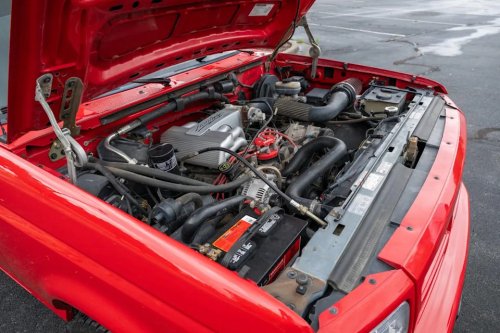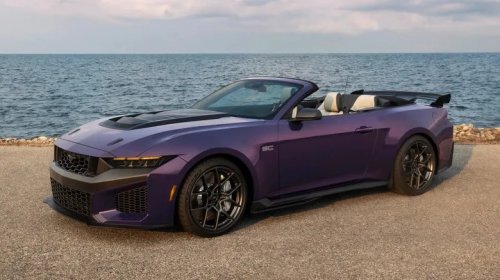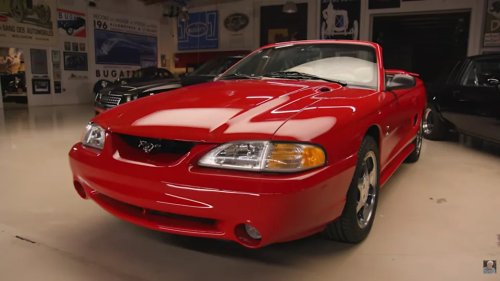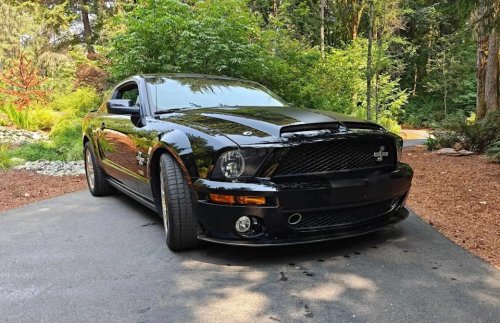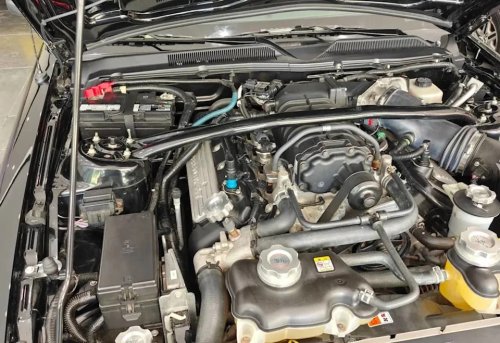


















Ford Recalls 148,663 Mustangs Over a Wire That Can Kill the Engine and the Headlights at Once. The Fix Isn't Coming Until March.Somewhere in the engine bay of a 2024-2026 Ford Mustang sits a small bolted ground connection that, according to Ford's own recall filing, is capable of taking down five separate systems at the same time. Not one at a time. Together. Lose that connection and a Mustang can lose its drive power, its headlights, its windshield washer, its air conditioning, and its engine cooling fan in the same instant, because all of them are quietly leaning on the same few inches of wire.That is the defect behind a new recall covering 148,663 Mustangs, and it is worth slowing down on, because the instinct with any wiring recall is to read it as vague and move on. This one isn't vague. It's specific in a way that says a lot about how modern cars are actually built underneath their sheet metal.The Recall, As Ford Filed ItFord's report, logged with the National Highway Traffic Safety Administration on August 25 and made searchable by VIN on August 28, covers 2024 through 2026 model year Mustangs. The cause, in Ford's own language: the engine compartment wiring harness ground connections may fracture. The consequence: a loss of drive power, or a loss of function in the windshield washing system, the headlights, the air conditioning, or the engine cooling fan. Any one of those can happen on its own. Ford's filing groups them together because, mechanically, they're wired together.AdvertisementAdvertisementThe defect puts affected Mustangs out of compliance with two federal safety standards at once: FMVSS 108, which governs headlights and exterior lighting, and FMVSS 104, which governs windshield wiping and washing systems. That's worth noting on its own. This isn't a comfort recall. It's filed as a lighting and visibility violation and a drive-power safety issue, both under one campaign number, 26V547000. Dealers will replace the engine compartment wiring harness ground terminals at no cost, once parts are available.Why One Wire Can Take Out Five Unrelated SystemsHere's the part most drivers never think about until a recall spells it out. A car's electrical system doesn't run a dedicated return wire from every headlight, fan, and pump all the way back to the battery's negative terminal. That would mean a lot of extra copper and weight. Instead, engineers use the car's own metal, the chassis, the engine block, the body panels, as the return path, and they bolt a handful of ground straps to that metal at a few convenient points. Every circuit near that bolt shares it.That setup is efficient right up until the bolt, the terminal, or the crimp behind it fails, usually from years of engine heat cycling and vibration doing exactly what heat cycling and vibration do to metal over time. When it fails, you don't lose one function. You lose everything that was quietly sharing that ground. That's why Ford's filing reads like a list of unrelated symptoms: drive power, headlights, washer fluid, air conditioning, cooling fan. They aren't unrelated. They're roommates.The Bigger Surprise: Ford Can't Fix It YetHere's the detail that should raise more eyebrows than the defect itself. According to NHTSA's recall report, Ford's interim notification letters, the ones warning owners about the risk, were expected to go out August 31. The actual remedy, the parts and procedure dealers need to correct it, isn't expected to be available until March 2027.AdvertisementAdvertisementThat's roughly a seven-month gap between telling owners their car may lose power and its headlights on the same drive, and actually being able to fix it. It's not unusual, and it isn't really Ford cutting corners. Federal rules require an automaker to notify NHTSA within days of determining a safety defect exists, and to mail owners within 60 days, whether or not a remedy has been engineered and built yet. Interim letters exist for exactly this situation. But the practical result is a stretch of months where the only thing an owner gets is a letter describing a hazard, with no repair to schedule against it.The Mustang's Rougher Two YearsThis is not the current Mustang's first recall, or its second, or even its fourth. Since the redesigned seventh-generation car reached showrooms for the 2024 model year, NHTSA's records show a Mustang brake pedal recall in November 2023, a headlight-and-turn-signal LED driver module recall last August, a separate water-intrusion recall that same month that could cut communication to the tail lights and license plate lamp, an engine piston circlip recall this past March, a wiper motor recall in June, and now this. That's six distinct safety campaigns against one nameplate in under three years on sale, five of them inside the last thirteen months.Four of those five trace back to the electrical system's basic job of moving current and passing signals between modules, or to components failing under exactly the kind of cold and moisture a Michigan winter delivers on schedule. The outlier, the piston circlips, is a straight assembly-line miss with nothing to do with electronics. Ford's newest Mustang isn't unreliable in the old sense, the blown-engine, slipping-transmission sense. It's unreliable in the way modern cars are unreliable: wiring harnesses, control modules, and ground points that have to work perfectly across huge temperature swings and years of vibration, wrapped around a V8-and-solid-axle formula that hasn't changed nearly as much as everything wired to it.The Mustang isn't recalling alone this year, either. Ford opened July with two more Mustang and Mach-E campaigns covering wipers and a cracked axle shaft, a pattern we tracked in detail at the time, and followed it weeks later with a fire-risk recall covering more than half a million Broncos. If you want the running list of what else is currently open across the industry, we keep one updated.What This Means If You Own OneIf you own an affected 2024-2026 Mustang, there's genuinely nothing to schedule yet. Ford's interim letter is meant to make you aware, not to send you to a dealer with a fix in hand. When the remedy does arrive, it sounds like a modest repair, replacing ground terminals, not the labor-intensive harness swap the phrase 'wiring harness' tends to conjure. That's the one piece of good news buried in this filing.AdvertisementAdvertisementThe less comfortable piece is the timeline itself. A recall that tells owners exactly what's wrong without giving them a way to fix it isn't a repair. It's a warning label with a due date seven months out. Ford's Mustang hasn't gotten less reliable because its engine got worse. It's gotten less reliable because everything wired to that engine got a lot more complicated, and complications, unlike V8s, don't always announce themselves until the ground finally gives out.Join our Newsletter, follow our Instagram page, and connect with us on Facebook.