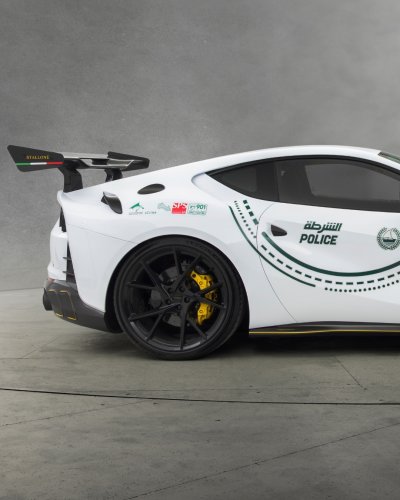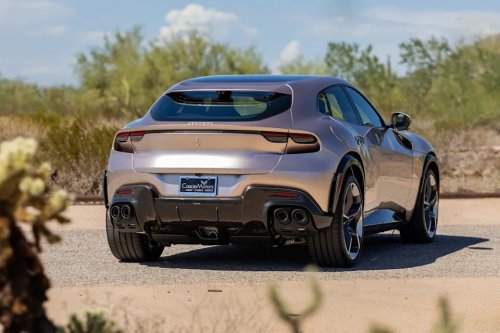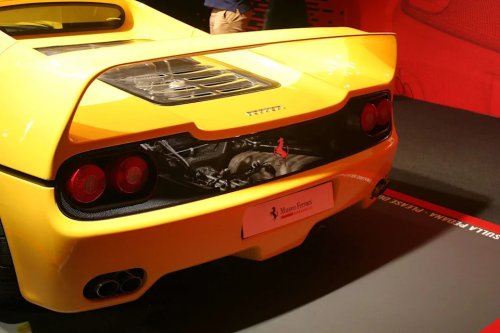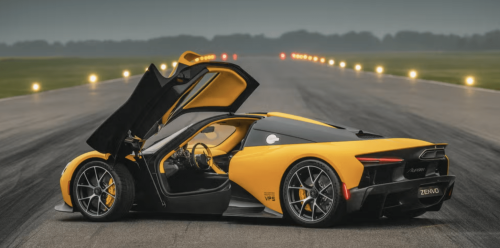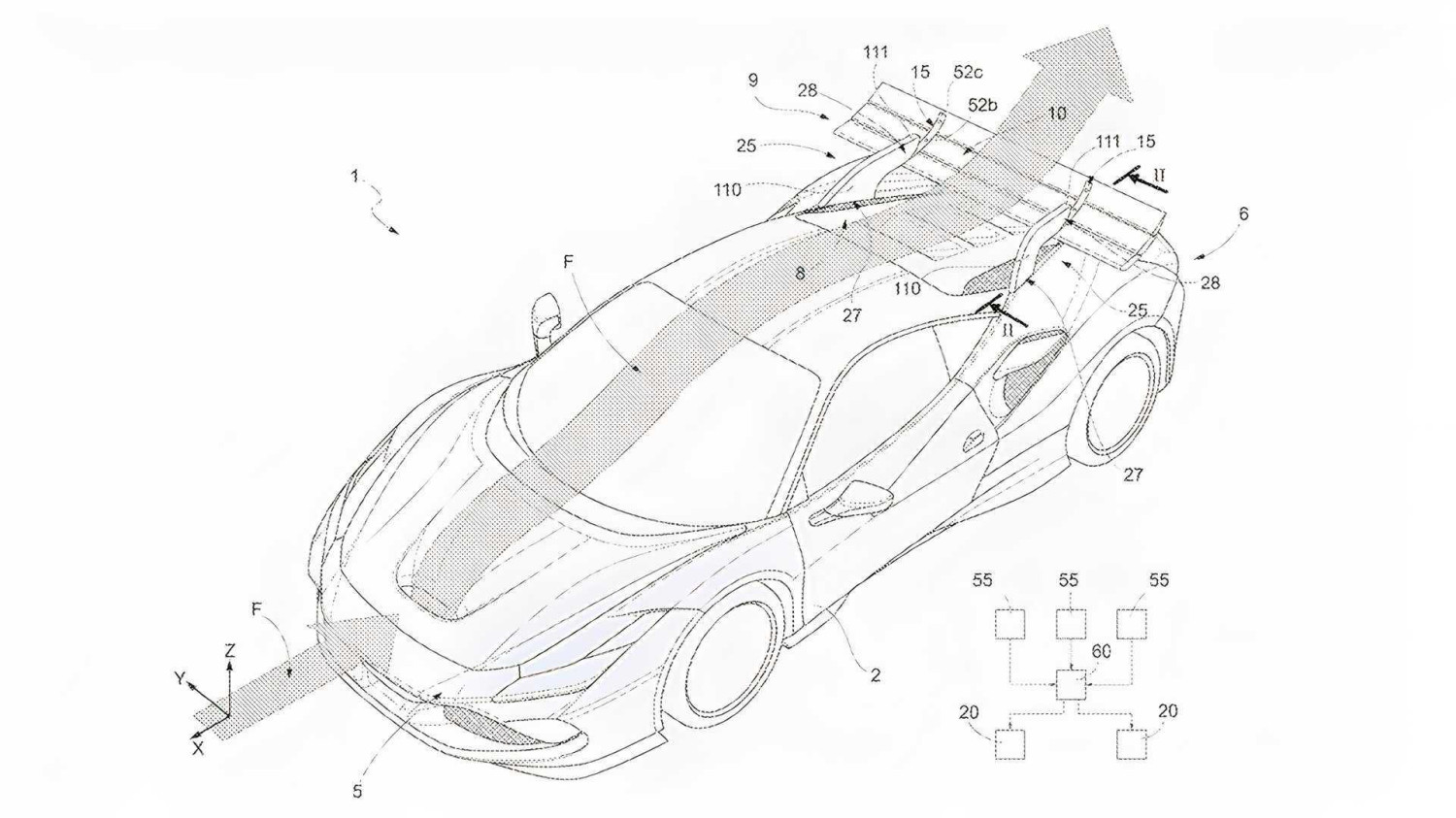
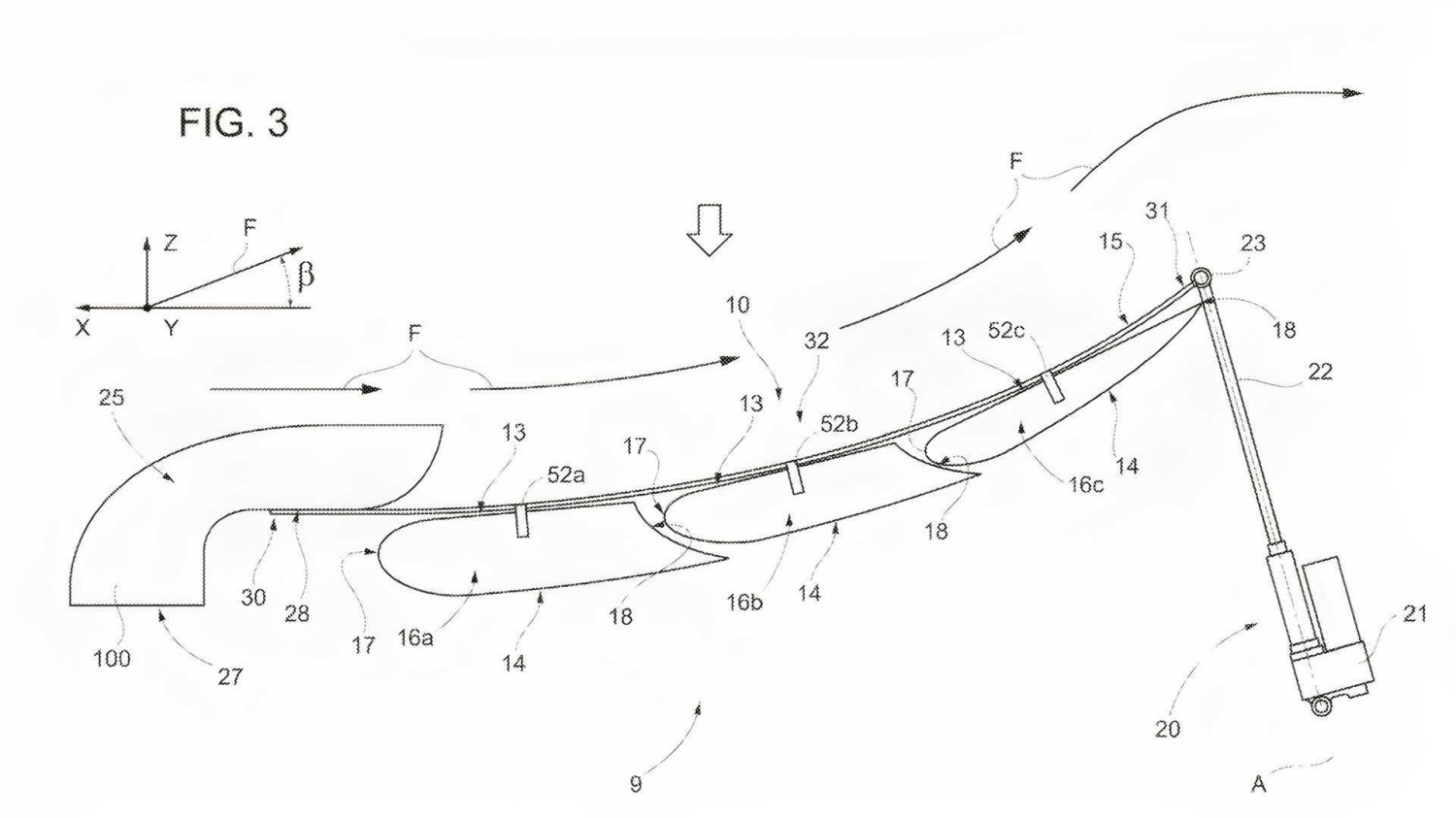



















You may remember Zenvo's multi-axis hydraulic rear 'centripetal' wing that tilted one side up and one side down when it went through corners. The idea was to increase downforce on the inside rear wheel through a corner, which is the corner with the least force on it without aerodynamic aid.It's an outrageous piece of engineering, but Ferrari seems to have glanced at it and decided it should do some thinking even further outside the box when it comes to active aerodynamics. In a patent recently found by CarBuzz, Ferrari does just that. It has outlined an intriguing idea for a rear wing that relies on a material that can be bent using actuators. Deliberately Bending A Rear Wing Ferrari The patent is an incredibly dense blend of engineering speak and legalese, but from what we can gather, instead of using a traditional, rigid wing that tilts up and down on a single hinge, Ferrari's idea uses multiple separate airfoils attached to a flexible, bendable plate. We're thinking of it like window blind slats going crossways attached to a pair of flexible plastic rulers as the supports, and the actuators bend the rulers according to the amount of downforce required.As there is no single-piece wing, the airfoils (slats) can form a curve upward under braking when the flexible structural members (the rulers) are curved by the actuators. As the two flexible members are controlled by separate actuators, in theory, the wing as a whole can be twisted to give more downforce to the inside wheel – like Zenvo's wing. Then, on a straight, the actuators can straighten the supports to reduce downforce.The concept sounds elegant and relatively straightforward on paper. But Ferrari's engineers face a material problem that could make or break the whole idea. A Genius Piece Of Aerodynamics With One Major Flaw Ferrari If we're reading this right, Ferrari's patent uses two structural elements to reshape the wing in many ways, and to a granular level. It's a remarkably simple idea to give a lot of complicated settings for the wing. What Ferrari doesn't specify is the material the flexible supports would be made of. That would be the most complicated aspect of the design.Most materials designed to flex aren't designed to be flexed over and over again, let alone at supercar, hypercar, or race car amounts of aerodynamic pressure. The go-to material, if you wanted the flexible supports to last forever, would be spring steel. But we suspect Ferrari engineers would rather commute to Maranello and back in a Lamborghini than use lumps of steel to build a ridiculously heavy wing. More likely, engineers will work with a polymer company to create a bespoke solution that will last long enough to be useful... before it loses integrity.Patent filings do not guarantee the use of such technology in future vehicles and are often used exclusively as a means of protecting intellectual property. Such a filing cannot be construed as confirmation of production intent. CarBuzz Insight – Why This Matters: It's been a long time since there has been a big breakthrough in aerodynamics, and this solves the complicated part of active aero. This is a patent, meaning it may be an idea Ferrari wants to protect until it becomes feasible, or someone else might make it a reality. It's an idea that's been played with before, but we're in an age where incredible things can be done with polymers. Tires are a perfect example, as they can now take an incredible amount of wear and abuse before needing replacement.Of course, we still wonder just how long such a flexible material might last before a replacement is required. But, in the world of high-tech supercars and race cars, longevity often takes a back seat to performance.Source: US Patent And Trademark Office