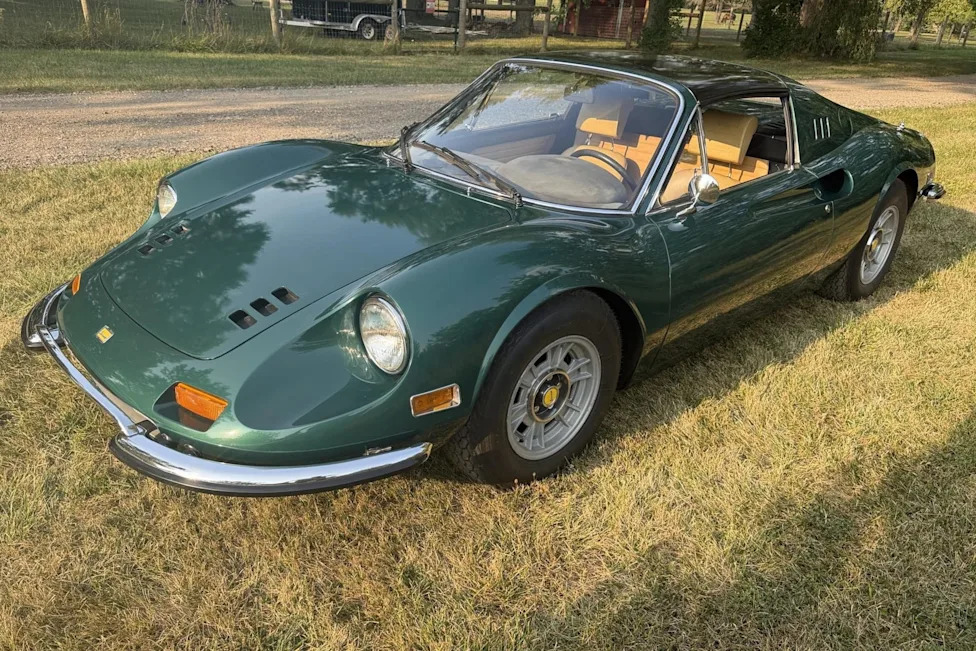
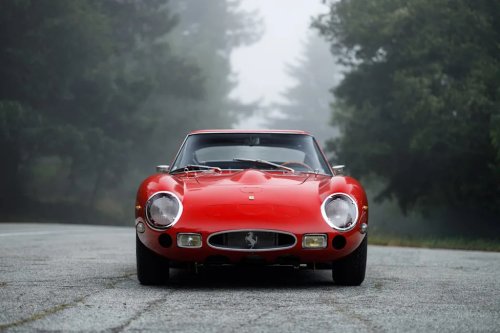
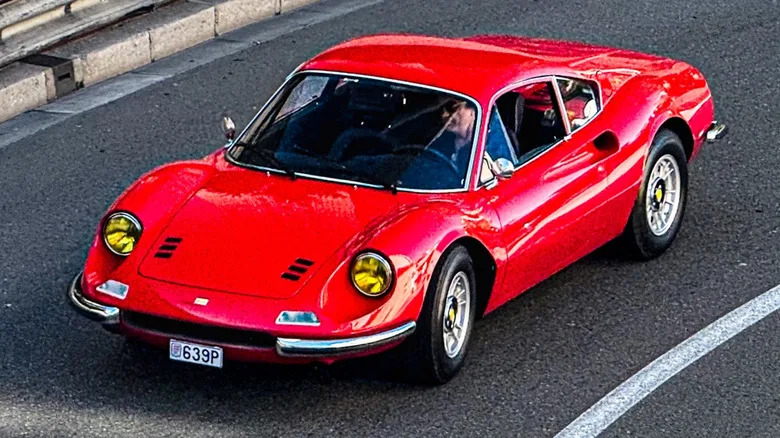
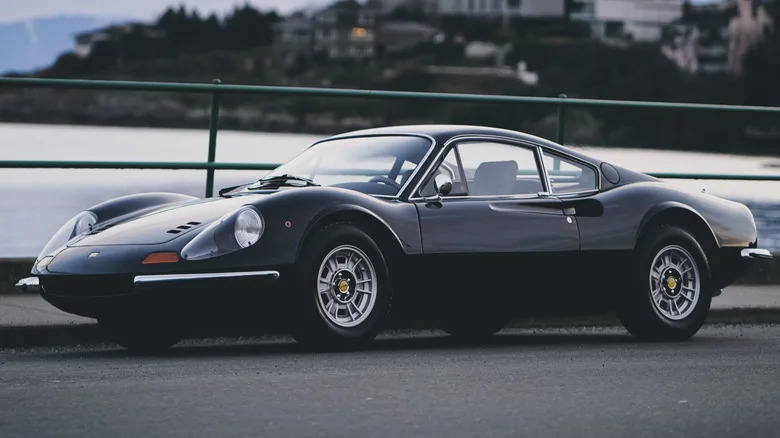
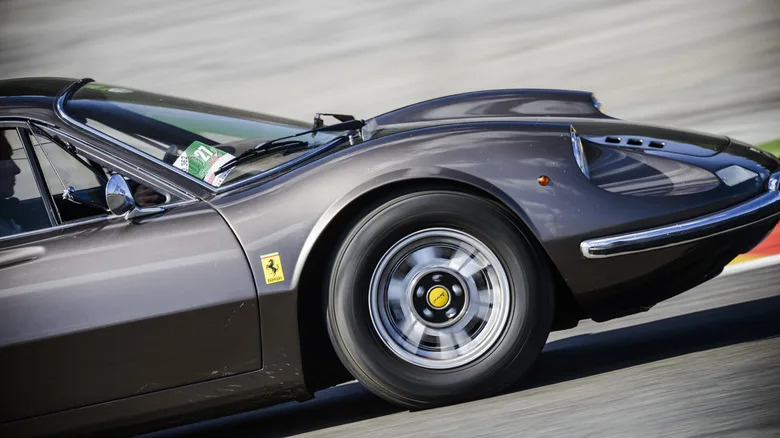
TheCarPhotographer/ShutterstockI'm going to start by saying something controversial, so let's just rip the Band-Aid off. Ferrari hasn't built a truly beautiful car since the Dino, and it wasn't even brave enough to put the Ferrari name on it. The last beautiful car to actually wear a Ferrari badge was the 1964 250 LM, and that's a race car that deserves to be featured in a movie chase scene. Don't fight me on this; I'm right. There have certainly been cool and interesting Ferraris since then, but beautiful? Not even close.When the Dino 206 GT made its debut in 1967, it was easily the prettiest car on the market. It was also considered sacrilege at the time to put a Ferrari badge on anything powered by a V6 engine, so Ferrari's Dino became a sub-brand of its own. When the Formula 2 regulations required that racing engines be production-based with a homologation minimum of 500 units, Ferrari needed to take drastic measures. Building a new lightweight aluminum V6 with Fiat to meet those requirements, shared between the mid-engine beauty Dino 206 and the front-engine Fiat Dino, was the only solution.That original 206 was motivated by a joyful 2-liter V6 with 178 horsepower. Ferrari says the car had a dry weight of just 1,984 pounds. That means it was more than matched on power to its 160-hp contemporary Porsche 911S, while being almost 300 pounds lighter. And when Ferrari introduced a 2.4-liter engine for the 1969 model year, the Dino jumped to 195 horses while the Porsche fell further behind at just 170 German ponies. While the 246 GT Dino grew its wheelbase slightly and gained about 397 pounds swapping alloy bodywork for steel, it still bested the 911's power-to-weight ratio. That's a level of perfection Ferrari hasn't seen since.A true thing of beautyRobert Dening/ShutterstockI challenge you to find a more stunningly beautiful car ever sold than the 246. While I like the original 206's lightweight alloy construction, the steel-bodied 246's slightly lengthened wheelbase was the light tweak the design needed to achieve legendary status. The 246's curvaceous, pointed visage is stunning from every angle. The delicate flying buttresses lend the car's silhouette a smooth taper that really sets it apart. Think of this car's contemporaries, and shudder at what might have been. A Dino could have looked as frumpy as a Lotus Europa or Porsche 914, but instead it looks like this.Based on a 1965 concept from Sergio Pininfarina, the roadgoing Dino was the first mid-engine Ferrari road car. Enzo Ferrari's son Alfredo "Alfredino" or "Dino" Ferrari had called for a mid-engine road car from the brand in the 1950s and helped design a series of small-bore twin-cam V6 engines for Grand Prix racing. While Dino Ferrari died at age 24 of muscular dystrophy before his designs could come to fruition, the car bearing his name became a true icon of style and engineering. Pininfarina, who carried the flame of a mid-engine Ferrari following Alfredo's death, said of his own design, per Motor Trend: "The voluptuous thematic of the curves, stylistically fascinating and aerodynamically exact, goes beyond any hasty criticism which might object to the front, exposed to bumps and mud."Despite Pininfarina's protestations, even dramatically worn from time and use, a Dino looks spectacular. I'm particularly partial to the closed-top GT, though I can see the merits of a lift-out roof GTS as well. Particularly on a twisting coastal road under a cool summer sunset. There's magic to be found in this car's design, and each flick, inlet, and flare is magnificent.What's the Dino like to drive?Sjo/Getty ImagesBy modern supercar standards, a horsepower number beginning with 1 is unacceptable, unless it's a four-digit number. If you're actually an enthusiast who cares about driving instead of grandstanding and peacocking, however, the lightweight, nimble little Dino is a far better driving experience. This car's engine is one of wonder. With a 0-60 time of 8.2 seconds, the Dino is hardly setting the world on fire, but do you really need more? Can't you simply wallow in the spectacular suction of a trio of Weber downdraft carburetors? Let yourself become consumed by an 8,000-rpm wail? Succumb to the splendorous clatter of a gated manual gearbox? Won't you get in a flow state with the breezy, directly responsive steering?I'll let David Lillywhite's drive report for Hagerty convince you of the engine's specialness: "this 192bhp V6 (175bhp for the US) is perfectly suited for the little Dino, lighter and more subtle than a V8, more special than a four-pot ... It's smooth and, when the triple carbs are set up well, it pulls without complaint until it starts to emit a suitably Ferrari-like howl that somehow no other marque quite achieves."Aldo Brovarone at Pininfarina worked magic to develop the concept into the Dino street car, while maintaining connection to Ferrari design language. Despite its not being a traditional long-nose short-deck front-engine layout, there's a connection to the rest of Enzo's lineup from that period. In some ways this car looks as though the drivetrain, wheels, steering, and passenger compartment were blocked out and then a sheet was placed over all of it, carving away the stuff that didn't need to be there. It's pared back and refined down to just what was stylistically necessary. For me, it will always be the one.Want more like this? Join the Jalopnik newsletter to get the latest auto news sent straight to your inbox, and follow us or add us as a preferred search source on Google.


















 +41 others