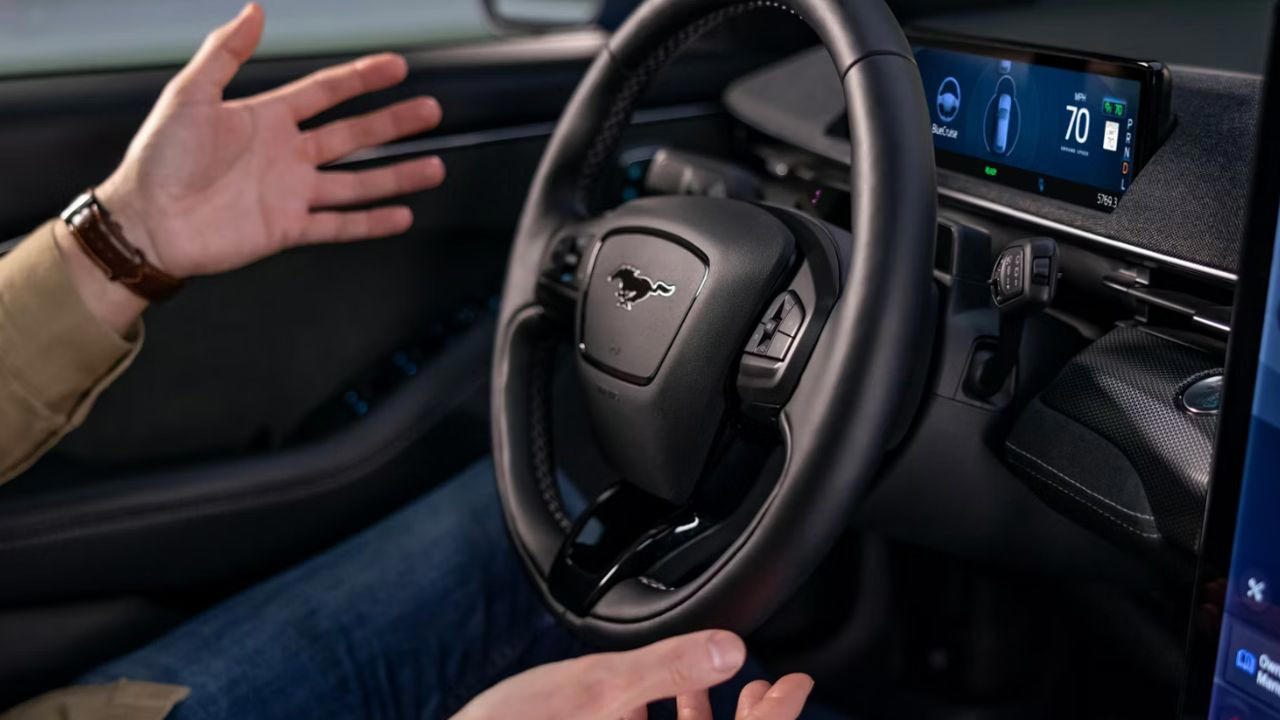
Feds probe deadly Ford BlueCruise crashes in safety investigationFederal safety officials are intensifying scrutiny of Ford’s BlueCruise driver-assistance system after a string of fatal crashes involving Mustang Mach-E SUVs that were reportedly operating with hands-free features engaged. The widening inquiry raises pointed questions about how well partial automation handles real traffic hazards and how clearly drivers understand its limits. Regulators are now treating the crashes not as isolated tragedies but as potential evidence of systemic flaws in the way BlueCruise manages speed, detects obstacles, and monitors driver attention at highway speeds. Federal probe shifts into higher gear The National Highway Traffic Safety Administration has opened and then upgraded a defect investigation into Ford’s hands-free technology, covering more than 129,000 vehicles from the 2021 through 2024 model years that use the BlueCruise system. According to an agency summary, the review has moved into an engineering analysis phase, which allows investigators to dig into software logic, hardware design, and field performance data across the affected fleet of about 129,000 vehicles. The escalation followed at least two deadly rear-end collisions in which Ford Mustang Mach-E SUVs reportedly struck stationary vehicles at freeway speeds at night while using hands-free functions, incidents that prompted officials to treat the issue as a potential defect rather than driver error alone. Regulators had earlier signaled concern by opening a preliminary evaluation into Mustang Mach-E models equipped with BlueCruise after fatal crashes in Texas and Pennsylvania. Those initial cases involved a Ford SUV that hit a stopped vehicle in Texas and another incident in Pennsylvania, both of which drew attention to how the system behaves when traffic ahead is not moving. Subsequent reporting described how the federal probe into self-driving and driver-assistance technology broadened after a fatal crash in San Antonio, and officials also began asking ten other automakers about their own systems as part of a wider look at automated driving features. NTSB joins with detailed crash reconstructions The National Transportation Safety Board is running parallel investigations into several of the fatal BlueCruise crashes, adding independent technical scrutiny to the federal response. In one case that occurred in San Antonio, a team from the NTSB’s Special Investigations Branch of the Office of Highway Safety traveled to the scene to examine how a Ford Mustang Mach-E using BlueCruise interacted with traffic before the collision, including how the driver-assistance system handled lane keeping and speed control in the final seconds. More recently, the NTSB announced a public meeting to discuss fatal 2024 rear-end crashes in which Ford SUVs using the company’s hands-free BlueCruise partial automation system struck stationary vehicles, including a Toyota Corolla whose driver was uninjured, while the Ford driver died, as described in the agency’s notice on fatal crashes involving. Investigators have also focused on a separate crash in Philadelphia that involved a Mustang Mach-E and triggered another federal review of how BlueCruise was used at the time. Together with the San Antonio case, these incidents form a pattern that regulators are trying to understand: high-speed rear-end collisions into stopped or slow-moving vehicles when hands-free features were active or recently engaged. According to summaries of the engineering analysis, officials have been imaging data from event data recorders and other onboard logs, then comparing steering, braking, and accelerator inputs with what the automation should have done in theory. That work, described as an analysis of vehicle data, is central to deciding whether a software defect or a human misuse pattern is at the heart of the problem. What BlueCruise is, and what it is not Ford markets BlueCruise as a hands-free driving feature that can control steering and speed on certain mapped highways, but the company itself describes it as a Level 2 driver assistance system, not a self-driving product. In its own technical overview, Ford stresses that BlueCruise requires constant driver supervision, that the driver must be prepared to take over at any time, and that it is not a crash avoidance system. The system combines adaptive cruise control, lane centering, and a driver monitoring camera that tracks eye and head position to ensure the driver is watching the road, and it only allows hands-free operation within pre-approved “Blue Zones” on divided highways that Ford has mapped. In the fatal crashes that triggered the federal investigation, regulators are now asking whether those safeguards worked as designed. Officials want to know if the driver monitoring camera correctly detected attention, if alerts were issued in time, and whether BlueCruise should have disengaged earlier when conditions exceeded its design limits, particularly when a stationary vehicle appeared in the lane ahead. Ford has told investigators that BlueCruise is intended to be used only under specific conditions, such as clear lane markings and limited access highways, and that drivers are instructed through in-vehicle prompts and manuals to remain responsible for safe operation even when the system is active. Regulators weigh broader automation risks The Ford probe is unfolding as federal officials reassess how advanced driver-assistance systems are affecting real-world crash patterns. The National Highway Traffic Safety Administration has already compiled extensive data on crashes involving partial automation and has signaled that it may adjust performance standards or require additional safeguards for systems that allow hands-free operation, a shift that is reflected in the agency’s growing body of safety investigations. During the same period, safety researchers have raised doubts about how well automatic emergency braking and lane-keeping technologies perform at highway speeds, especially when vehicles ahead are stopped or moving slowly rather than flowing with traffic. The Insurance Institute for Highway Safety has been particularly vocal about these concerns. The Insurance Institute for Highway Safety, or IIHS, has faulted the efficacy of automatic emergency braking at highway speeds and has argued that many current driver-assistance suites should be treated as convenience features, not as safety systems that can be relied upon to prevent crashes, a view laid out in its evaluation of driver assistance performance. Those findings align with the pattern in the Ford crashes, where BlueCruise-equipped vehicles appear to have struggled with stopped traffic, the very scenario where drivers might assume automation will help most. Legal and consumer fallout builds The safety investigations have already attracted the attention of plaintiff attorneys who specialize in product liability and wrongful death. Legal analysis from firms that track automotive litigation has framed the BlueCruise crashes as potential cases of defective design, negligence, or failure to warn, using the phrase Fatal Crashes Trigger Federal Investigation Into Ford Hands Free Technology to describe how the incidents are reshaping expectations around corporate responsibility for driver-assistance systems. Consumer advocates argue that marketing language around hands-free driving can blur the line between assistance and autonomy, leaving some drivers with the impression that the vehicle can manage more complex situations than it actually can. Regulators are listening to those concerns as they review not only Ford’s technical documentation but also its advertising, owner’s manuals, and in-car messaging. The engineering analysis referenced by officials includes a review of how often drivers receive takeover alerts, how quickly they respond, and how the vehicle behaves if they do not, all of which will influence whether the agency ultimately calls for a recall or software update. At the same time, the broader public debate around automation has been shaped by comparisons with other systems, including Tesla’s Autopilot and Full Self Driving features, which have been under their own federal scrutiny for years. The Ford inquiry adds another high-profile example of how partial automation can go wrong when human attention, software assumptions, and real-world traffic collide. Ford’s response and what comes next Ford has said it is cooperating fully with federal investigators and has provided data from affected Mustang Mach-E vehicles as part of the ongoing probe. Company representatives have emphasized that BlueCruise is designed to work with the driver, not replace them, and that the system includes multiple layers of monitoring and alerts intended to keep drivers engaged. More from Fast Lane Only Unboxing the WWII Jeep in a Crate 15 rare Chevys collectors are quietly buying 10 underrated V8s still worth hunting down Police notice this before you even roll window down