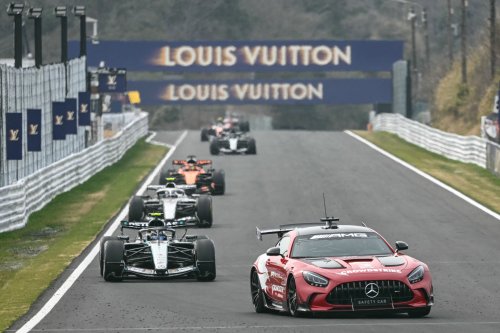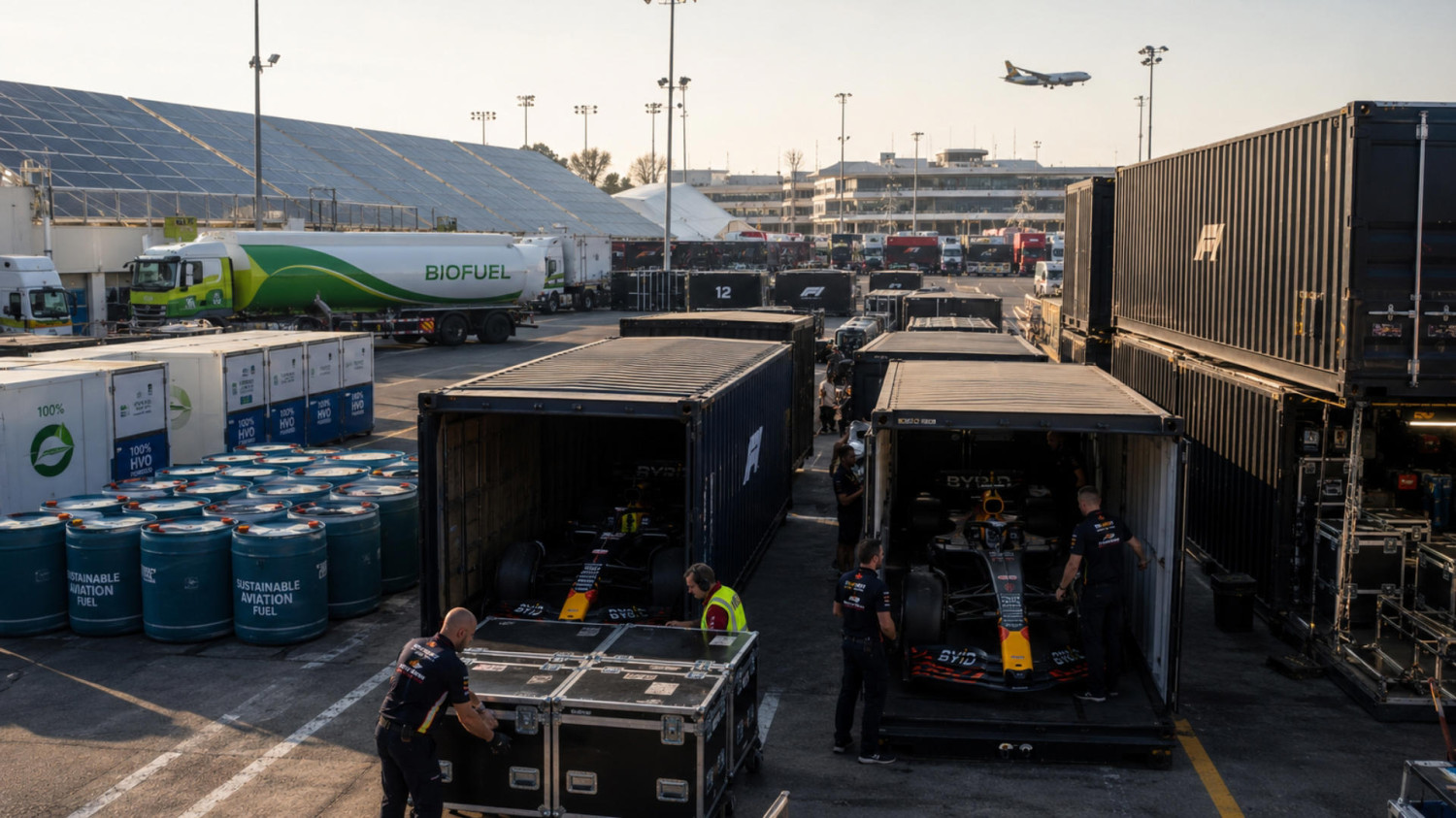



















F1’s Net Zero Progress Now Has to Survive the Reality of a Global CalendarFormula 1’s Greenest Claim Faces Its Hardest TestFormula 1’s sustainability story is no longer only about future ambition.It is now about proof.The championship says it remains on track to reach net zero by 2030 after reducing its carbon footprint by 26 percent compared with its 2018 baseline. That is a significant number for a sport that has grown in the same period, expanded its global audience and operated a 24-race calendar across multiple continents.But that growth is also the point of tension.Formula 1 is not a local championship trying to clean up a small footprint. It is a global entertainment platform that moves cars, equipment, personnel, broadcast infrastructure and hospitality around the world. Its sustainability plan therefore has to survive the most difficult contradiction in the sport: F1 wants to be bigger, but also cleaner.The Calendar Is the Real TestThe race calendar is where Formula 1’s sustainability argument becomes most exposed.A 24-race season creates commercial strength, fan reach and promoter value. It also increases the complexity of freight movement, staff travel and event operations. Even when race cars themselves become more efficient, the championship’s largest environmental challenge sits around everything required to stage the show.That is why calendar flow matters.Moving races into more logical regional groupings can reduce unnecessary long-haul freight movement. Shifting the Canadian Grand Prix to May and Monaco to June from 2026 is part of that broader effort, intended to avoid extra transatlantic crossings and make the European leg more coherent.That kind of change is less glamorous than a new engine rule, but it may be more important to the net-zero target.Sustainable Fuel Is Only One Part of the StoryAdvanced sustainable fuel will attract the most attention because it touches the cars directly.From 2026, Formula 1 cars are set to run entirely on advanced sustainable fuel alongside the new hybrid power units. That creates a cleaner technology narrative and gives the sport a stronger link to road-car relevance, especially because the fuel is intended to be drop-in capable.But the fuel story alone cannot carry the whole sustainability case.Formula 1 has also leaned on sustainable aviation fuel for freight and team travel, biofuel trucks in Europe, renewable energy at factories and events, and remote broadcast operations that reduce how many people and how much equipment need to travel to each race.That breadth matters because F1’s footprint is not created in one place.It is spread across factories, logistics, broadcast operations, travel and race events. Solving only the cars would make for a neat marketing message, not a complete environmental strategy.Growth Makes the Claim More Difficult and More ValuableThe strongest part of Formula 1’s sustainability argument is that it claims progress while the sport has grown.Race attendance and global fan engagement have increased sharply since the 2018 baseline. That makes the emissions reduction more meaningful because it suggests F1 is not simply shrinking its activity to hit a cleaner number. It is trying to decarbonize while operating at larger scale.That is also what makes the next phase harder.The easier gains may already be underway: renewable energy at facilities, remote broadcast expansion, better logistics planning and alternative fuel trials. The next challenge is making those systems work across an even more demanding calendar without creating weak points.In that sense, F1’s net-zero push is moving from policy to execution.The Sport Still Has to Convince SkepticsFormula 1 will always face skepticism on sustainability.That comes with the territory. It is a motorsport series with a global calendar, corporate hospitality, international freight and high-consumption event infrastructure. Even if the race cars themselves become cleaner, many critics will still focus on the scale of travel behind the championship.That skepticism is not automatically unfair.It forces Formula 1 to be clearer about where emissions are actually being reduced, which gains are structural, and which claims depend on offsets for unavoidable emissions. The sport’s credibility will depend on transparency as much as technology.A net-zero target is only useful if fans, sponsors and stakeholders can see how the numbers are being achieved.Formula 1’s Future Depends on Making Performance and Responsibility CoexistThe important point is that Formula 1 does not need to become quiet, slow or local to be more responsible.It does need to prove that speed and sustainability can exist in the same business model. That is a difficult assignment, but it is also exactly the kind of challenge F1 likes to claim it can solve: technical complexity, operational precision and public pressure all meeting at once.The next few years will decide whether that claim holds.Formula 1 has shown measurable progress. Now it has to prove that the progress can survive the reality of a global calendar. That will be the real test of whether net zero is a headline target.This article was created by an external editorial team for the Misha Charoudin brand. It was not personally written by Misha Charoudin.