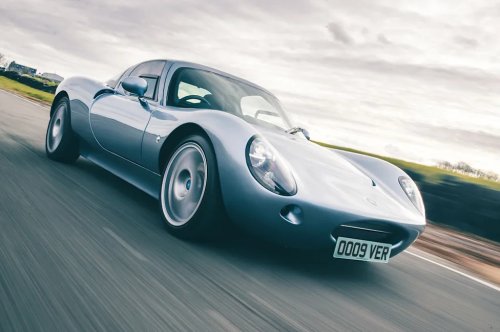
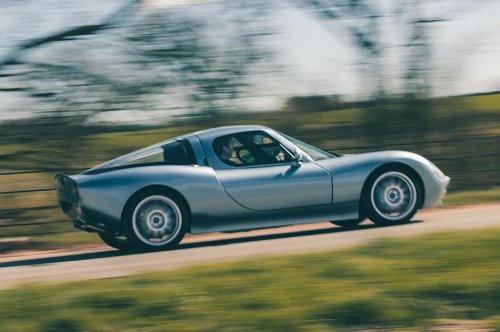
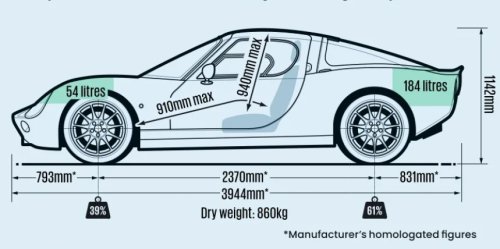
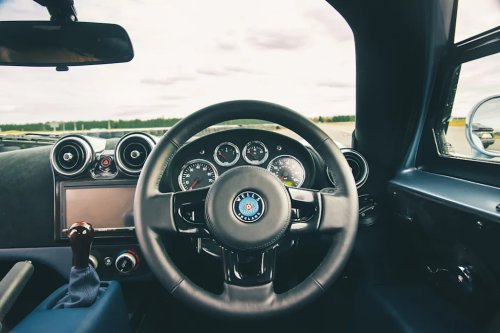
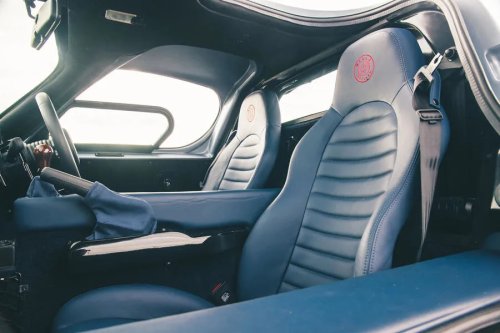
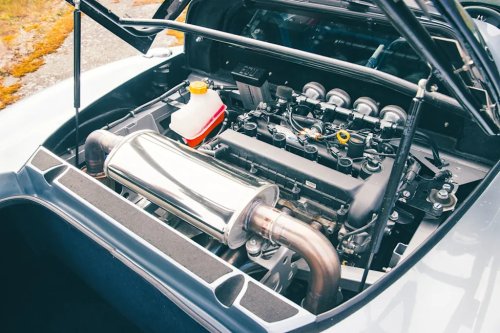
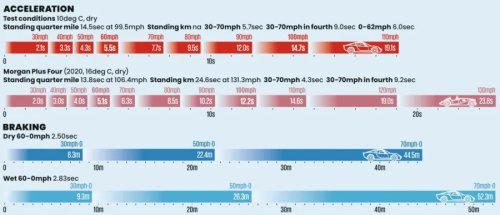
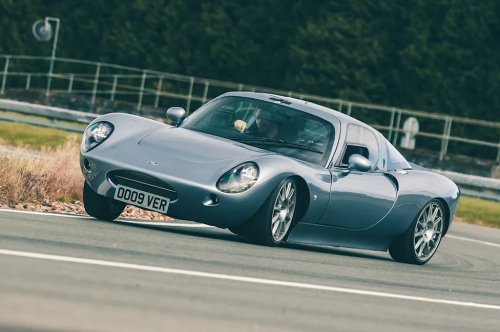
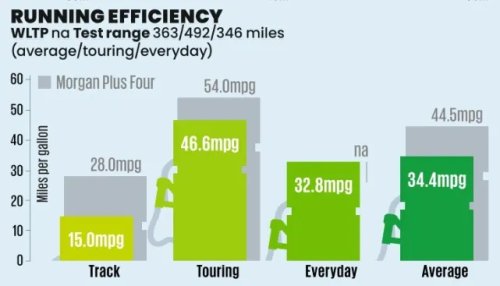
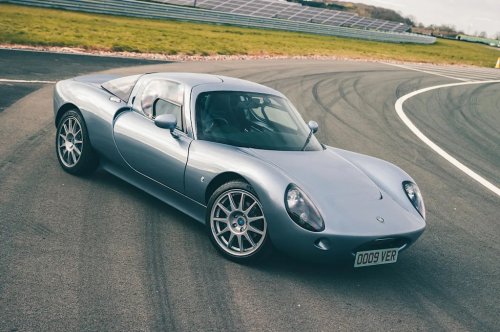



















Wells Vertige review 2026 019Wells Vertige review 2026 019IntroductionThe demise of the old-school, British-built sports car – easy on the eye, gloriously light on its tread blocks and fizzing with feedback – has been exaggerated, according to Robin Wells, founder of Wells Motor Cars.Wells is the entrepreneur who, in 2021, revealed the Vertige at the Goodwood Festival of Speed, having developed the coupé effectively in secret since 2014, with engineering consultant Robin Hall joining in 2016. There is much to like about what he's offering too – not least the sub-tonne kerb weight, the fact that the Vertige is shorter than most modern superminis and the generous output of its naturally aspirated, widely modified Ford engine. Connolly leather, if your pockets are deep enough, and rosewood are also on the menu, and suggest the Vertige is more than a glamorous kit car developed on a shoestring budget.AdvertisementAdvertisementMore broadly, Wells says this car is about accessible fun and involvement over speed (hence the lack of anti-lock or power-assisted brakes, power steering, or any form of ESP or traction control), and right-sized for British B-roads. All of which is music to our ears, though he also assured us running costs and practicality have been important considerations too. More on the ownership element to come.Production volumes out of a facility a five-minute drive from Gaydon, with nine full-time employees, are unsurprisingly minute. An original run of 25 'Founder's Edition' Vertige cars began in 2022 – and now that those are all on the road, Wells is in the process of building a new batch of fruitier R-specification cars, of which our test subject is one of the earliest examples.It's an enticing proposition if you mourn the retirement of the Lotus Elise, have a taste for 1960s design and consider £75,000 a fair outlay for a hand-built, seldom-seen sports car in 2026. Is the Vertige really worth your interest? Let's find out.Design & stylingWells Vertige review 2026 020So diminutive is the Kamm-tailed Vertige that even approaching it generates a fizzle of excitement. At 3944mm the car is a similar length to a Triumph TR6, and is a good deal shorter than its closest modern equivalent, the Alpine A110. In terms of width and wheelbase, the Vertige's deficits to the French car are smaller, which begins to explain its juicily sporting kerbside stance.AdvertisementAdvertisementAs we'll soon discover, such tiny dimensions come with a cost, but in mechanical terms the benefits are clear. The Vertige – with its laser-cut, folded steel tub, onto which triangulated subframes are bolted, all enclosed by a Kevlar-reinforced glassfibre body – trod our scales at 963kg in full running order and with its generous 48-litre fuel tank full. By our reckoning that is 25kg less than a 1.0-litre Kia Picanto in its entry specification, and 134kg less than even the stripped-out A110 R.That tank, by the way, can be topped up from either side of the car via gleaming roller-catch fillers (the Vertige doesn't have double tanks in the style of the Ferrari F40; just double fillers, à la Jaguar XJ12). Wells claims torsional stiffness for the car of around 40,000Nm per degree: an impressive figure about equal to that of an F80-era BMW M3.At 39:61 front to rear, the weight distribution is perhaps a touch more rear-biased than we would typically see from a mid-engined sports car but shouldn't raise any eyebrows. In fact, that rear bias might if anything become a touch more pronounced, if Wells follows through on its plans to offer the Vertige with a Quaife torque-biasing differential – and an engine taken out to 2.5 litres.For now, the driveline consists of a 2.0-litre Ford Duratec inline four that revs to 7750rpm, mated to a Ford six-speed manual gearbox that drives through an open differential. The Vertige initially came with 208bhp, but that has since risen to 225bhp for the standard model and the R takes peak power up again, to 247bhp, thanks to special internals and new electronic calibration.AdvertisementAdvertisementDespite the Vertige R's domed 'exhibition' rear canopy, most of the time the engine is hidden beneath a heat-proof engine cover, though the polished exhaust back box is always visible. Remove the cover and you'll see the Emerald K6 ECU and polished pair of throttle bottles that give the car its considerable voice.Suspension is by filleted cast-aluminium double wishbones and is fully adjustable (for ride height, wheel camber and toe angle). It's controlled by Spax dampers with 24 clicks of manual adjustment, the adjusters being accessible without putting the car up on jacks.InteriorWells Vertige review 2026 039Climbing aboard the Vertige feels in some ways like boarding a classic Lamborghini. Robin Wells himself admits that the look and proportions of the Vertige were established ahead of considerations both mechanical and ergonomic in nature. Anybody taller than six feet will notice the effects of this approach when they swing open the dihedral doors (what theatre), step over the tall sill and drop down into the heavily bolstered driver's seat.It is cosy in here, and the roof panels of the doors have even been scalloped to permit an extra centimetre or so of much-needed head room. Figures of 910mm for front leg room (versus 1080mm in an Alpine A110) and 940mm for head room (990mm) are tight to say the least, and don't put the Vertige far ahead of a Lotus Seven-style roadster for outright space at the wheel. We should add, however, that other examples may differ a bit from our test car as regards leg and head room, the longitudinal positioning of the car's seat squab, the depth of its cushion and even the gearknob height each being tailored for that particular owner, insists Wells. Probably not by enough, though, we would wager, to make the Vertige anything other than a decidedly snug sports car, and one unlikely to suit taller drivers.However, those of smaller stature may well find it an enveloping and genuinely comfortable place to sit, with the high transmission tunnel and fabulous visibility over the flocked dash to sculptural front wings (Wells himself has owned a McLaren 12C since 2016 and wanted to replicate its forwards visibility) making you feel not simply an operator but part of the machine. Rear visibility is equally good, and mitigates the need for a rear-view camera (there is one anyway).AdvertisementAdvertisementVisual cues elsewhere are charmingly straightforward, with almost entirely analogue instruments and switchgear, and there's rich tactility in the soft leather of the spherical steering rim, while the turned gearknob's shift action has been modified to mimic that of the Mazda MX-5, much admired by Wells himself.Admittedly the juxtaposition of beautifully embroidered headrests and expensive-feeling air-vent housings alongside a third-party, 'double-DIN' head unit does jar a little, but the digital sphere is of course where low-volume, ground-up projects are most noticeably limited in their reach. The Sony stereo does at least give the Vertige Apple CarPlay and Android Auto functionality, and there are a pair of USB-C charging points on the centre console, which covers the necessary infotainment bases.As for storage, there isn't much in the cabin, but the Vertige has good capacity elsewhere, with generous luggage compartments at both ends of the car. In this respect it presents as something of a pint-sized Maserati MC20.Engines & performanceWells Vertige review 2026 032Robin Wells says the Vertige is not about raw performance figures but, even so, there will be some for whom 247bhp pushing against less than a tonne, in a £75k package, should result in a sub-5.0sec 0-60mph. We don't subscribe to this view. For a flyweight car with a slender contact patch, the recorded 0-60mph time of 5.5sec and a 30-70mph of 5.7sec strike a strong balance of excitement and usability – this is enlivening speed you can enjoy without being catapulted to the national speed limit in the blink of an eye.Note also that these figures are similar to those of the Honda Civic Type R we road tested last year, and as such are in no way underwhelming in outright terms. You might point to the similarly powerful Alpine A110 being nearly a second quicker to 60mph (4.7sec as tested), but the difference largely comes down to that car's dual-clutch gearbox, which provides ultra-rapid shifts and a launch control function.AdvertisementAdvertisementThe non-numerical nature of the performance is more encouraging still. In this tune, Ford's 2.0-litre comes on cam at 3700rpm and boy do you notice it, the intake note hardening into a bellow and the rev counter thereafter ripping around to nearly 8000rpm in a fashion that feels wholly un-mass-market. Roll-on acceleration is beautifully crisp without requiring racing driver-grade throttle sensitivity, partly because the pedal is long and forgiving. The brake pedal – firm with no servo assistance – is its equal in engagement, and despite the lack of ABS had the feedback to allow consistent threshold braking performances during our fade test.It's a thrilling powertrain whose raw character and soul belies its humble origin. In daily use our only criticisms are the slightly unnatural move across the gearbox from third to second, and the occasional hiccup below 2000rpm on a wide-open throttle (entirely forgivable here).Track NotesIs it possible to enjoy yourself on track in a car this light and this nicely balanced? Absolutely. Just ensure you make appropriate adjustments to the dampers beforehand; the softness that characterises the Vertige's on-road fluidity can result in the tyre making contact with the wheel arch unless you increase damping force.In truth, the Vertige can express itself on track in a way you simply won't uncover on the road, where the soft set-up makes the chassis a little less sensitive to throttle-administered mid-corner adjustments to your line (a Porsche Cayman will decisively tuck its nose in on a lifted throttle). On track you can aggressively trail either brake or throttle and the car will oblige by adopting yaw very naturally indeed. Its balance is such that considerable liberties can be taken in this respect, the Vertige being the kind of car with which you can splice an apex at speed, with the steering wheel straight but the body out of line. Get it right and the lack of a limited-slip differential won't bother you for the exit, though we'd be lying if we said such a device wouldn't add to the overall dynamism.Ride & handlingWells Vertige review 2026 035The diamond-edged directional precision that characterises a Porsche 718 Cayman, or the wrist-flickingly quick response of an Alpine A110, isn't something you'll find in the Vertige. Rather, this car winds back the clock in dynamic terms, returning the driver to a time when sports cars were softly sprung and controlled their vertical movements on the dampers, simpatico with steadily sped steering. It's a hallmark of the British school, and it's something that has the Vertige overflowing with verve and poise if you approach it with an open mind and a tolerance for lurid levels of lean.AdvertisementAdvertisementWhere the Vertige's dynamic calibre surpasses that of a Mazda MX-5 – maybe the closest relatable philosophical match in terms of set-up – is in the control that is meted out. The tail will squat, the nose will dive and the body will roll, but it does so with a good and consistent base of support that encourages you to carry momentum. Grip is communicated through not only the unassisted helm but also these effusive yet regulated body movements that connect you quite beautifully with the topography of the road. Note that, for these photos, the dampers were in a very relaxed setting – at only a quarter of their potential firmness – and so there is potential for owners to trim out the body's freedom considerably.Given all this, it should be no surprise to read that the ride is on a par with that of the often silky A110, if not better still. Small wheels and relatively short sidewalls mean the Vertige is not immune to sharp edges, but for touring work and most country roads alike, it has an easy, likeable manner.MPG & running costsWells Vertige review 2026 019Robin Wells says "any competent garage" should be able to service the Vertige, and given the relative simplicity of the Duratec engine and Ford-sourced gearbox, we have no reason to doubt this.Of course, the company would always prefer you to bring the car back to HQ, but this won't be practical for everyone. Elsewhere, the brakes – both discs and pads – are off-the-shelf items and, as with the Michelin tyres, you can expect a long life from them, owing to the Vertige's sub-tonne kerb weight. The use of glassfibre also means that repairs to the body can be localised and needn't be exorbitant.AdvertisementAdvertisementOur main reservation is the Vertige's factory warranty cover, which at one year is conspicuously short and doesn't make the confident noises customers will expect of a £75k sports car. Wells is looking to extend this in the future.By the standards of at least some other four-cylinder sports cars (which may or may not still be available), that's a fairly pricey positioning for the Vertige R, of course. Compared with the hand-built opponents that Wells would insist are the car's closest notional rivals, however, it's undoubtedly more reasonable. Given what the likes of AC Cars and Ginetta have suggested they might charge for similar sporting propositions in recent years, you might even argue it's something of a bargain.You can expect around 34mpg in mixed driving and more than 45mpg for motorway cruising. Our as-tested touring figure of 46.6mpg translates to 492 miles – long legs for a small car and enough to make European escapades convenient.Mind you, even though the window to the engine bay is double-glazed, it's no match for the Vertige R's wailing intake at high revs (a good thing), or boom at the 3000rpm or so at which you'll be cruising in sixth (not so agreeable – and be aware that future iterations may well have a shorter final drive ratio than this car).VerdictWells Vertige review 2026 049Assuming you fit inside the Wells Vertige, and are willing to accept the manufacturing limitations that come with developing a low-volume, glassfibre-bodied sports car almost entirely from scratch, there is a lot to get excited about here.AdvertisementAdvertisementIn dynamic terms it is an expressive, softly sprung throwback to when sports cars weren't defined by cast-iron body control. At the same time, modern damping, along with assiduously honed suspension geometries, results in surety and predictability. This sub-tonne car, with its wailing motor, can sit back but also begs to be driven hard, at which point its balance comes to the fore.Add to all this good touring manners, generous luggage space, excellent visibility and low running costs. The Vertige is not without quirks but is broad-batted, lovable and today stands as one of a kind.]]>