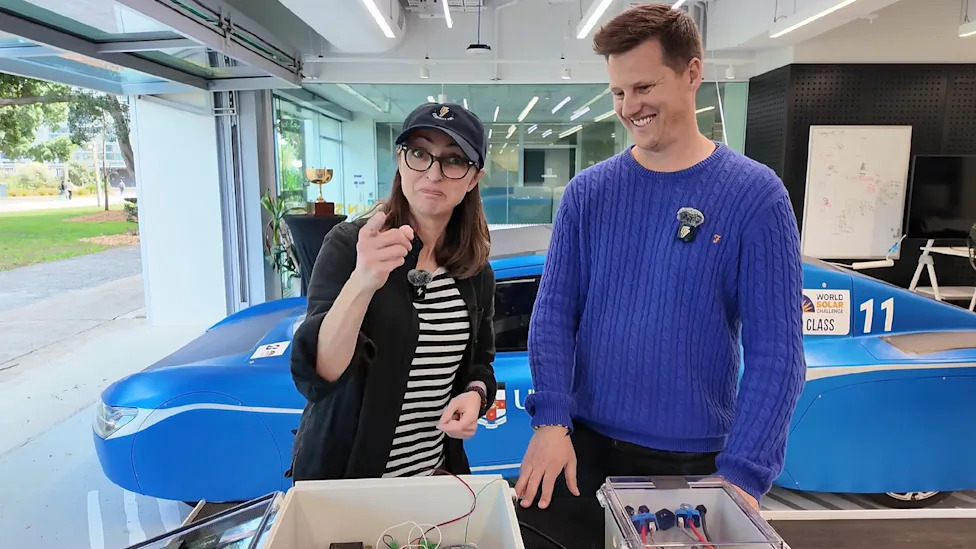
EV owners could skip a $10,000 charger with a V2G device that taps existing solarThe Cool DownLeigh CookSat, September 19, 2026 at 2:07 PM UTCAdd us on GooglePhoto Credit: YouTubeFor electric vehicle owners hoping to use their car battery as part of their home energy setup, the biggest barrier is often the price of the charging hardware. An Australian prototype is trying to lower that hurdle by using equipment many solar-equipped homes may already have.Here's what to knowIn a conversation shared on YouTube with the founders of Australian startup Merge Energy (@MergeEnergyAus), Electrify This (@ElectrifyThis) reported on the company's V2G Key, a device aimed at making vehicle-to-grid charging more attainable for typical EV owners. Instead of requiring a dedicated bidirectional charger that can cost roughly $6,000 to $10,000, the concept relies on a home's existing rooftop-solar inverter.Under that setup, power stored in the EV battery could flow back through the household's current solar system rather than through a separate premium charger. Merge Energy calls the idea "synthetic solar," with the vehicle effectively serving as another power source for the inverter.AdvertisementAdvertisementBidirectional charging has long been seen as one of the most promising money-saving advantages of EV ownership. If drivers can use stored battery power at home, they may be able to cut electric bills, ease demand during peak periods, and make better use of rooftop solar systems they have already paid to install.The report also highlighted two major open questions: whether the system can satisfy Australian grid standards and how much strain it could place on the battery over time. Those issues are likely to shape whether the technology advances beyond the prototype phase.More backgroundVehicle-to-grid, or V2G, has generated excitement for years because it could turn parked EVs into flexible home batteries. In theory, that means a car could charge when electricity is abundant or inexpensive, then help power a house later or even send electricity back to the grid.For many households, though, the economics have been difficult. Even people who already own an EV and rooftop solar may hesitate to spend thousands more on specialized bidirectional charging equipment. A lower-cost workaround could be significant if it proves safe, reliable, and compatible with regulations.AdvertisementAdvertisementIf more homes can store and shift clean electricity, communities could see lower pollution, cleaner air, and greater grid flexibility.What's being done?Merge Energy remains in development, and the company said it plans trials for late 2026. Those tests are expected to help show whether the system can satisfy technical requirements while offering the savings and ease of use that many EV owners want.The interview also covered battery degradation. Any system that cycles energy in and out of an EV battery will need to show that wear remains manageable. If that trade-off remains relatively modest, the financial case for V2G becomes more compelling.The device is meant for "seamlessly switching DC power from your EV battery into your existing inverter to power your home and export energy back to the grid."AdvertisementAdvertisement"This is such a brilliant, simple solution. Please bring a version of this to the North American market!" one commenter wrote. "Outstanding, need of the hour," added another. Where can I learn more?A few examples show how EVs and charging equipment are starting to play a bigger role in home energy setups. They also make the trade-offs easier to see, from buying dedicated hardware to getting more out of solar systems and EV batteries people already have.• Ford's F-150 Lightning lets homeowners power their house with their truck during outages.• One homeowner skipped the battery entirely and paired solar panels with an EV charger.AdvertisementAdvertisement• Another homeowner used 900W of portable panels to cover EV charging without a roof upgrade.Get TCD's free newsletters for easy tips, smart advice, and a chance to earn $5,000 toward home upgrades. To see more stories like this one, change your Google preferences here.