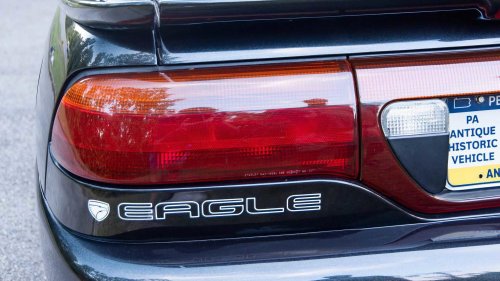
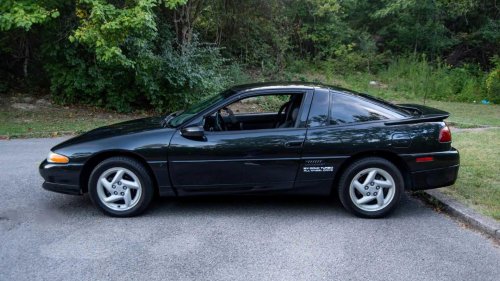
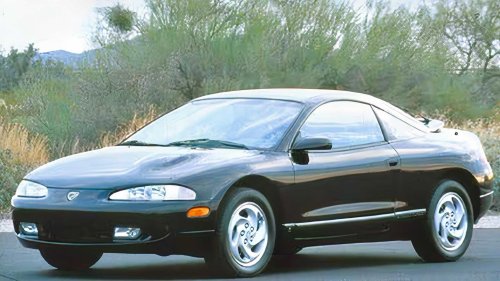
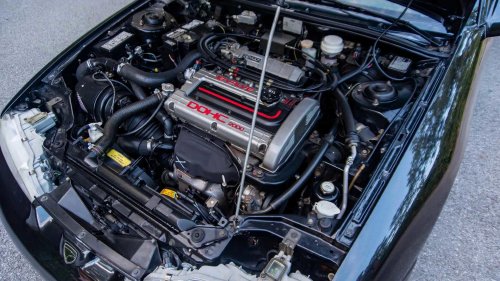
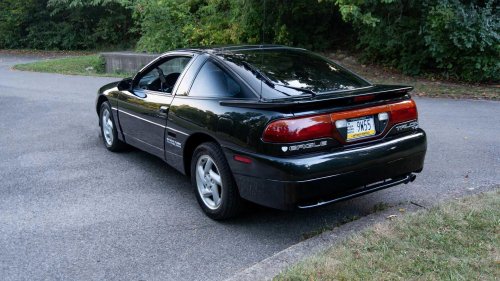
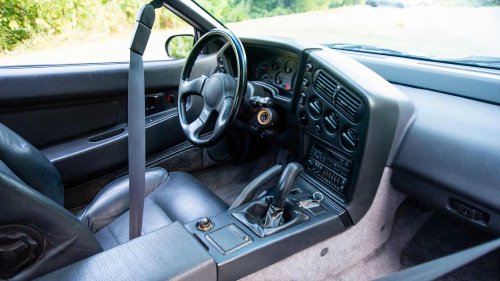
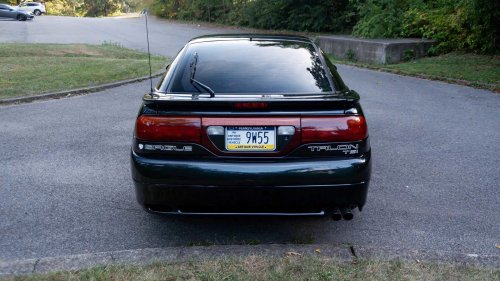
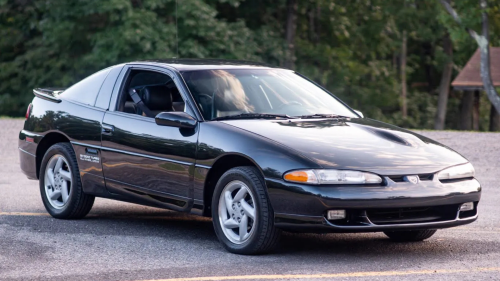




















To traditional gearheads in the early 1990s, real speed required eight cylinders and a rear-wheel-drive layout, and for many, the Mustang GT was the go-to car to get that. If you wanted street cred, you bought a Ford Mustang GT, dropped the clutch on its heavy 5.0-liter engine, and prayed the rear tires found traction through a cloud of tire smoke. But lurking in the shadows was a bizarre, futuristic predator that arrived in the late '80s to gatecrash Detroit's party. This little-known Sports Cars carried an American domestic badge but packed a lethal dose of foreign-engineered technology that made it a menace.On paper, it was built to fend off overseas imports. In reality, it combined a legendary race-bred engine, turbo power, and an advanced all-wheel-drive system to deliver a blistering 6.5-second 0–60 mph sprint, allowing it to hunt down Detroit's heavyweights—including the legendary Fox-body Mustang. But despite its pioneering spirit and legendary performance, its name has been nearly lost to automotive history. With Japanese Imports Dominating American Driveways In The '80s, America Needed An Answer Bring A TrailerBy the time the 1980s rolled around, Detroit was staring down an existential crisis. The oil crises of the previous decade had eroded the performance identity that many Detroit brands established in the 1960s, and showrooms were mostly filled with vehicles that no longer appealed to enthusiasts. People started voting against these heavy, uninspiring American cars with their dollars, and by the mid-80s, Detroit was hemorrhaging market share to Japanese imports. Worse still for the Big Three, Japanese manufacturers were no longer just building economical commuter pods; they were aggressively infiltrating the sports car segment with sleek, high-revving icons like the Nissan Z and Mazda RX-7, helping them capture the hearts—and wallets—of the younger generations.Chrysler, spearheaded by the legendary Lee Iacocca, realized that if you can't beat them, you have to join them. To fight back, Chrysler created a dedicated standalone marque designed to go toe-to-toe with imports in 1988: Eagle. By selling sophisticated and foreign-engineered rebadged vehicles under an entirely new banner, Chrysler hoped it could lure import loyalists back into domestic showrooms. Little did Detroit realize that this brand-new division was about to unleash a car that would terrorize America's own domestic muscle cars on the street. The Joint Venture That Changed American Sports Cars Forever Via Bring a TrailerTo understand how this automotive anomaly came to life, we have to rewind the clock to 1985 — about three years before Chrysler established Eagle. In the early '80s, Chrysler found itself in dire need of small, fuel-efficient cars that would help it compete with imports. At the same time, a fast-rising Mitsubishi was starving for an unrestricted gateway into the lucrative North American market without having to pay expensive import fees. Chrysler was already selling badge-engineered Mitsubishi models by the 1980s, and, seeing an opportunity to help each other even more, the companies entered a corporate marriage of convenience called Diamond-Star Motors (DSM).To turn this corporate paperwork into sheet metal, the duo poured nearly $700 million into building a state-of-the-art assembly plant in Normal, Illinois. Chrysler's newly minted Eagle brand was handed the keys to this hyper-advanced manufacturing hub, resulting in a sleek, weaponized halo car that would completely change the sports car landscape. This underrated car took the best of Japanese forced-induction and all-wheel-drive technology, built it in the American Midwest, and created a mechanical giant-killer that would rewrite the performance rulebook for the next decade. Meet The Eagle Talon TSi AWD: The Underrated Sports Car That Ate Mustang GTs For Breakfast EdmundsThe star of the show is the Eagle Talon TSi AWD, a turbocharged, all-wheel-drive coupe that deserves a lot more love than it gets. Built as part of the DSM joint venture, the Talon shared its platform and powertrain with the Mitsubishi Eclipse, which many gearheads still remember today, and the Plymouth Laser, which is also a forgotten piece of Mopar history. The Talon TSi AWD burst onto the scene in 1990, and right away, everyone could tell there was something special about it even when parked. We're not going to claim that it was the most beautiful American coupe of the day, but its sharp, exotic rear roofline, "power bubble" hood bulge, pop-up headlights, and massive black wraparound rear wing made it look right at home next to far more expensive European exotics.Even more impressive was everything going on underneath the sleek body. The Talon TSi AWD was powered by a boosted inline-four that sent its power to all four wheels via a five-speed manual paired with Mitsubishi's advanced rally-bred all-wheel-drive system, giving it enough off-the-line grunt to threaten established muscle cars despite its massive displacement disadvantage. Mitsubishi's Famous 4G63 Engine Was The Heart Of The Madness Bring A TrailerPop the hood of a TSi AWD, and you weren't greeted by a lazy, low-revving domestic engine. Instead, you found a transverse-mounted, 2.0-liter turbocharged powerhouse known to automotive purists by a simple, legendary alphanumeric code: the 4G63. Mitsubishi fans will recognize that name immediately, since it was the same race-bred engine that would go on to power the unstoppable Mitsubishi Lancer Evolution line to multiple World Rally Championship titles.In its stock 1993 form, this DOHC, 16-valve engine used a Mitsubishi TD05H-14b turbocharger to shove 11-12 psi of boost down its throat, cranking out a highly respectable 195 horsepower and 203 lb-ft of torque. This was enough power to make the lightweight Talon TSi AWD blisteringly quick off the line, but the real charm was the engine's potential. The 4G63 featured a heavily reinforced cast-iron cylinder block that provided unparalleled rigidity and beefed-up internals straight from the factory, making it a great canvas for the burgeoning 1990s aftermarket tuning scene. With a few bolt-ons and a tune, gearheads could easily get it pushing past 300 hp. Some crazy DSM diehards even managed to squeeze four-digit power figures out of the 4G63, though in such cases they had to add some reinforcements and beef up the internals even more. The Mustang GT Couldn't Keep Up Bring A TrailerWhile muscle car owners laughed at the Talon's displacement, their smiles quickly faded away once they lined up next to one on the drag strip. In 1993, the Mustang GT relied on a 5.0-liter V8 pushing out 205 horsepower and 275 lb-ft of torque. However, all that low-end muscle was routed exclusively through a rear-wheel-drive layout and a solid rear axle. Off the line, the Mustang's rear-biased weight distribution and lack of sophisticated traction management meant that extracting its mid-six-second 0–60 mph potential required flawless track conditions and immense driver skill.Meanwhile, the driver in the quirky Eagle Talon TSi AWD didn't need to feather the gas or pray to the traction gods. While the heavy Ford was busy melting its rubber, the Talon's sophisticated, rally-bred viscous-coupling all-wheel-drive system split the torque dynamically between all four wheels. Period tests had the Talon TSi AWD sprinting from 0 to 60 mph in 6.5 seconds—matching or beating the Mustang GT while offering an athletic cornering precision that left the live-axle pony car utterly outclassed. The Talon TSi AWD Was The First American Turbocharged AWD Car Bring A TrailerBy the time Eagle was launching the Talon, turbocharged all-wheel-drive performance cars were already sold in the American market. However, none of the available options was offered by a domestic company. When it debuted in the 1990 model year, the Eagle Talon TSi AWD secured an immortal place in American history books as the very first turbocharged, all-wheel-drive sports car sold by a domestic American automaker. This high-tech sports car offered an entirely new vision of American speed, proving that a domestic badge could represent sophisticated, foul-weather-defying engineering rather than just straight-line muscle.While General Motors would utilize a similar mechanical strategy for the limited-run 1991 GMC Syclone pickup and 1992 Typhoon SUV, the Talon beat them to the punch by an entire model year. Why No One Remembers It Today Bring A TrailerIf the Eagle Talon TSi AWD was such a revolutionary giant-killer, why has it vanished so completely from the collective automotive memory? The answer lies in a tragic combination of factors, starting with the badge it wore. Chrysler never truly figured out what to do with the Eagle brand. It was the awkward stepchild of the lineup, squeezed between the blue-collar muscle of Dodge and the entry-level practicality of Plymouth, and this hurt sales numbers. Chrysler's decision to shut it down in 1998 killed the Talon abruptly, leaving it with less time in the spotlight than its platform-mates, especially the Mitsubishi Eclipse GSX.The Eclipse itself is the other reason why the Talon is forgotten. When the tuning car scene exploded in the late 1990s and early 2000s, Hollywood—specifically the Fast & Furious franchise—cast a bright green Mitsubishi Eclipse as its star car. Overnight, the Eclipse became a household name for a generation of gearheads, while the Eagle Talon was left in the shadows. While the cars share their hardware and performance DNA, the Eclipse basks in endless acclaim while the Talon remains under-appreciated. The Talon TSi AWD Is A Collector Bargain Today via Bring A TrailerSource: Hagerty Valuation ToolThe first-gen Talon ran from 1990 to 1994, then the second-gen car ran from 1995 to 1998. When it arrived in showrooms, the top-tier TSi AWD commanded an original MSRP of roughly $16,000 to $18,500—a relative steal for turbocharged all-wheel-drive propulsion. But finding a good one today requires serious detective work. While total Talon production of base models was roughly 200,000, the turbocharged AWD variants were produced in far scarcer quantities. The vast majority of these sports coupes were also modified, raced, or destroyed by rust, which is why pristine survivors are quite rare.Still, despite its historical significance, prices have remained grounded, especially when compared to contemporary Japanese-engineered rivals like the Toyota Supra or Nissan 300ZX Turbo. The average price for a Talon TSi in good condition is below $10,000, while one in excellent condition sits at $16,600, a highly accessible price for a stylish turbocharged AWD '90s sports car with a stick shift. Exceptionally preserved, unmodified examples can touch $20,000 to $30,000. Of course, prospective buyers must conduct thorough mechanical due diligence. The biggest red flag is the dreaded 4G63 "crankwalk," where the crankshaft moves around and destroys internal components. Also, check for rotted strut towers, worn-out transmission synchros, failing ECU capacitors, aging timing belts, and transfer case leaks.Find a straight one, and you'll own a legendary piece of American-Japanese engineering that can still hurt the egos of modern muscle cars.Sources: Car and Driver, Hagerty, Bring a Trailer