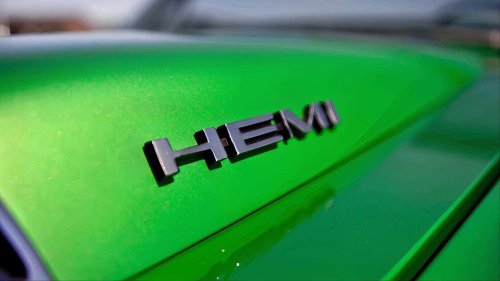
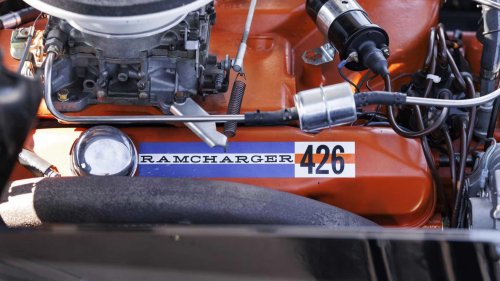
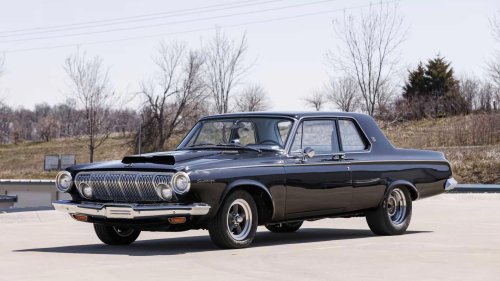
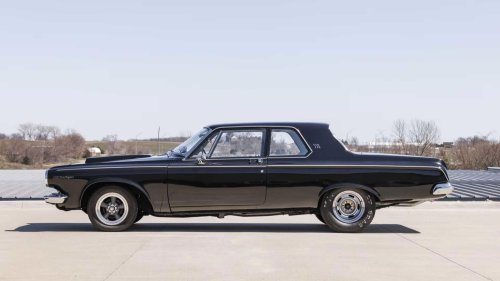
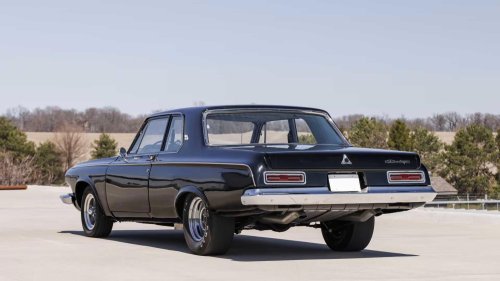
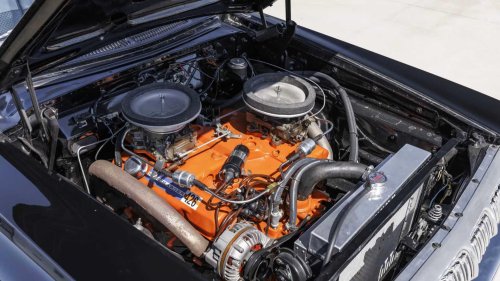
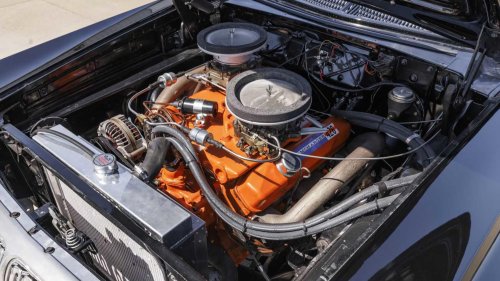
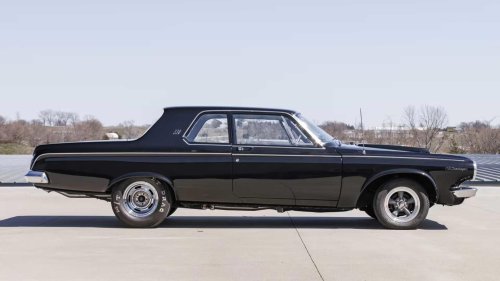
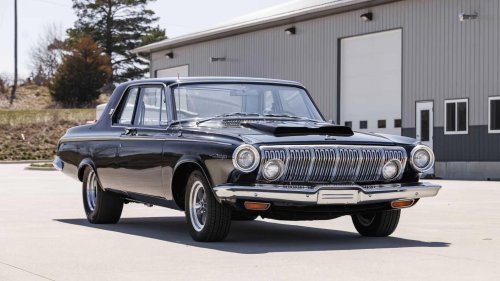
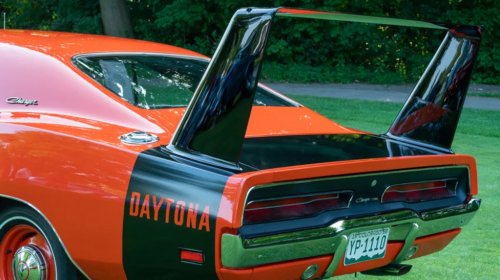
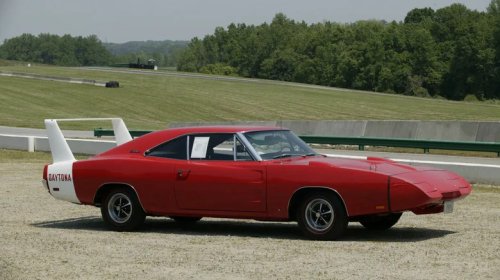
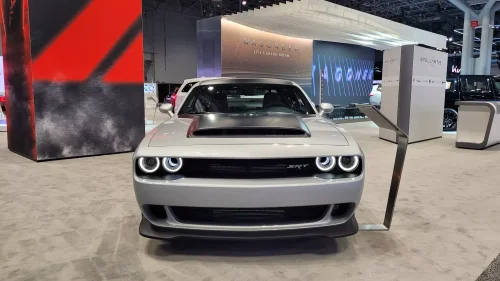
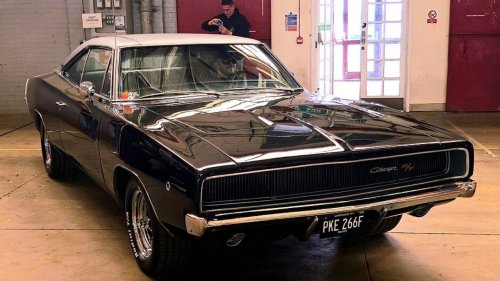
Dodge has been one of the most dominant forces in the performance world since the very beginning. From Hemi-powered golden era icons such as the 1969 Charger Daytona, to modern legends like the Challenger SRT Demon 170, Dodge has built models that left their mark at the dawn of the segment and is one of the few automakers that have kept the spirit of the American muscle car alive in the 21st century.But even before the muscle car blueprint was established in the mid-1960s, Dodge still knew a thing or two about making a proper performance car. In the early '60s, Dodge produced a special mid-size two-door that carried a powerful race-sourced V8, had real motorsport credibility, and was built with the sole goal of dominating drag strips. Yet, somehow, it never gets the spotlight it deserves today. Hemi-Powered Dodges Dominate The Headlines MecumWhen asked to name a classic Dodge muscle car, most enthusiasts immediately think of something with a 426 Hemi, which is undoubtedly one of the greatest Detroit V8s ever. It helped Mopar shine in motorsports with legends like the A990 drag cars, and when it trickled down to road cars, it created cultural icons like the Charger R/T, Coronet R/T, Super Bee, and Challenger R/T.Mopar enthusiasts and collectors love Hemi-powered classic Dodges, and some of the rarest models are firmly in blue-chip territory. However, as great as the 426 Hemi was, it retroactively compresses Dodge's muscle car history in the public mind, making it seem as if factory wildness only began with the second-half of the '60s. This couldn't be further from the truth. Before Hemi Mania, Dodge Already Had Something Wild Via Mecum AuctionsIt might come as a surprise to some, but before the 426 Hemi era kicked off in 1964, Dodge and Plymouth were already dominating drag strips with the Max Wedge engine, which was specifically designed for NHRA Super Stock racing. Officially called the Maximum Performance Wedge, this wedge-headed 426 cubic-inch beast was a factory-built racing weapon that forced rivals like Ford and GM to scramble for their own high-performance answers.The Max Wedge was the most powerful Mopar engine during its short reign from 1962 to 1964. When paired with a bare-knuckle Dodge intermediate, it created a monster that painted NHRA drag strips with rubber and awakened the muscle car spirit before the market had even named it. But while the Hemi-powered legends that came after it bask in endless acclaim, it remains obscure outside dedicated Mopar circles. The 1963 Dodge 330 Max Wedge Oozed Muscle Before It Was Cool Via Mecum AuctionsThe star of the show today is the 1963 Dodge 330 Max Wedge, a machine that embodied the spirit of the American muscle car before everyone else caught on. The 330 was the entry-level model in Dodge's intermediate B-body lineup in the early '60s. The mid-range 440 slotted in above it with added comfort features and the chrome-capped Polara topped the range with a slew of high-end upgrades.The 330 was known as the 'working man's Dodge' since it had a plain-Jane look compared to the more extroverted Polara. While some viewed that as a flaw, serious drag racers saw the potential. Especially after Mopar unleashed the Max Wedge in 1962. Pairing the 'stripped-down' 330 with the almighty Max Wedge created a no-compromise factory drag weapon. A Factory Super Stock Weapon in Street-Car Clothing Via Mecum AuctionsThe stripped-down nature of the 330 made it an ideal candidate for the race-spec Max Wedge, which featured a stratospheric 13.5:1 compression ratio and pumped out 425 horsepower in 1963. It also boasted a cross-ram intake system that allowed it to breathe better at high RPMs and heavy-duty internals to ensure it could take the abuse.Racers preferred the two-door sedan "post" car with a fixed B-pillar, as it had superior structural rigidity to the hardtop and was safer in rollover accidents. Transmission options included a robust three-speed TorqueFlite A727 automatic and a Borg-Warner T85 three-speed manual. The chassis utilized specialized Super Stock springs and an 8.75-inch rear end with aggressive 3.91:1, 4.10:1, or 4.56:1 gears.For professional NHRA Super Stock competition, Dodge took things up a notch by offering a lightweight version of the already brutal 330. It featured aluminum body panels and deleted amenities that brought the weight down to around 3,300 pounds. Only 34 of these ultra-rare lightweights were produced in 1963 out of roughly 162 Max Wedge 330s overall, and they were the closest thing to a factory-built race car in the Dodge family. The lightweight 330 completely ruled the 1963 drag racing scene with famous Mr. Stock Eliminator titles at the 1963 NHRA Winternationals and 1963 NHRA U.S. Nationals. How a Dodge Drag Legend Slipped Out of the Spotlight Via Mecum AuctionsThe 1963 Dodge 330 Max Wedge had all the ingredients it needed to become a cultural icon, but a combination of factors turned it into one of the forgotten superheroes of the muscle car world. For starters, the 330 Max Wedge arrived just before the muscle car wave kicked off. While its modest look was acceptable in the early '60s, it became outdated once the golden age of muscle started, since young performance-oriented buyers wanted a more aggressive design.The 330 Max Wedge also lacked the 'street hero' image that the most famous muscle cars had, since it was essentially a race car that you could drive on the road. It wasn't easy to live with for regular guys who just wanted to win stoplight-to-stoplight battles. Lastly, the street Hemi replaced the Max Wedge as Mopar's top-tier engine in 1966, and the flashy muscle cars that carried it overshadowed the 330 Max Wedge. A Closer Look At The Max Wedge Engine Via Mecum AuctionsThe Maximum Performance Wedge was born from a secret development project by Chrysler's Tom Hoover and his Ramcharger team in 1959. It was designed specifically to give Chrysler a winning edge in NHRA Super Stock and other factory-stock drag racing events against cross-town Detroit rivals. The team used the knowledge gained over several years to build the Max Wedge, and in 1962, it debuted as the 413 cubic-inch "Ramcharger 413" in Dodge models and "Super Stock 413" in Plymouth models.In 1963, Chrysler bored the Max Wedge out to 426 cubic inches, increasing output along the way. The Max Wedge looked ready to dominate the decade, but Chrysler had other plans. It debuted the 426 Hemi in racing in 1964; the street Hemi followed for production cars in 1966, while Chrysler's wedge-head RB engine family later evolved into the 440 that powered the Mopar family throughout the golden era. Built For Drag Strip Domination Via Mecum AuctionsWhile Max Wedge-equipped Dodges were street-legal, the engine was built for track dominance. The wedge-shaped combustion chambers brought compression as high as 13.5:1, requiring high-octane fuel. This paired nicely with high-flow capabilities and massive valves. It featured beefed-up internals like a forged steel crankshaft and aluminum pistons. Perhaps the most iconic feature was the cross-ram intake, whose design reportedly created a natural supercharging effect above 4,000 RPM.In 1963, Dodge introduced stages. The Stage II option added larger carburetors, a modified intake to match, a more aggressive cam, and it also moved the battery to the back for improved weight transfer during launches. As the lightest Max Wedge Dodge B-body, the 1963 could cover the quarter-mile in the high 12s to low 13s range, with some reports claiming that the lightweights could sneak into the 11s. The Other Mopars That Got Max Wedge Power Via Mecum AuctionsThe Max Wedge was exclusively available in B-body Plymouths and Dodges. In Dodge's line, Max Wedge power appeared most famously in the 330, but could also be ordered in better-trimmed 440 and Polara variants.In the Plymouth family, the Max Wedge lived under the hood of the Savoy, Belvedere, Fury, and Sport Fury models. Plymouth mirrored Dodge's B-body lineup, and the Savoy was the stripped-down equivalent of the Dodge 330. The Fury Sport mirrored the Polara 500 as the top-ranging model.In 1962, a Max-Wedge-equipped Plymouth Savoy shattered the existing perception of what a factory car could do when it covered the quarter-mile in 11.93 seconds at 118.57 mph. This made it the first production-engined "stock" machine to officially clock a sub-12-second pass. 1963 Dodge 330 Max Wedge Collectibility Today Via Mecum AuctionsWhile it's still largely overlooked, the 1963 Dodge 330 Max Wedge now commands significant attention at elite auctions due to its status as a factory-built drag racer from the era before the Hemi took over, particularly from Mopar purists. It has evolved into a holy grail model for Mopar collectors, prized for its raw racing history and extreme rarity. However, prices don't quite reflect that, with values hovering around the $70,000 to $100,000 range based on past auctions. The rare 330 lightweights can sneak into six-figure territory, but they're still well below the $200,000-plus command of iconic Hemi models.The 330's pre-muscle-era release, hostile street manners, lack of pop culture presence, plain design, and inferior perception compared to the Hemi have something to do with why it's often forgotten. We think it deserved more respect. In the eyes of Mopar historians, the 1963 Max Wedge is the true architect of the muscle car era as it proved that a big engine in a light, mid-sized body was the winning formula.