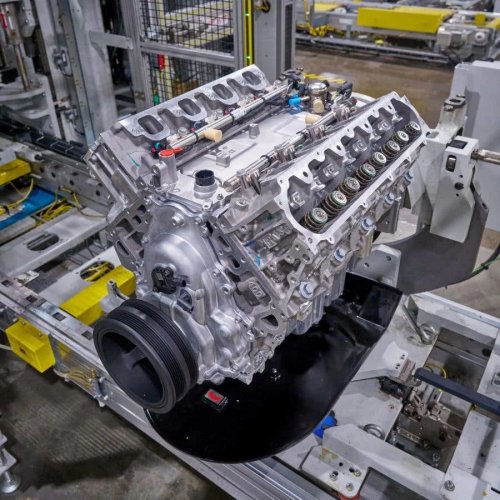
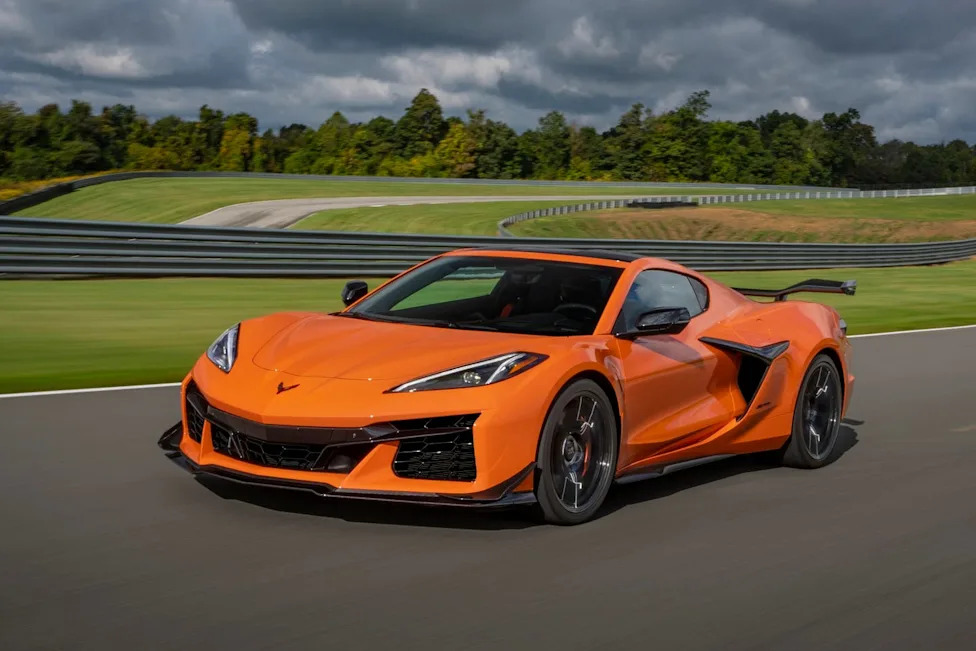
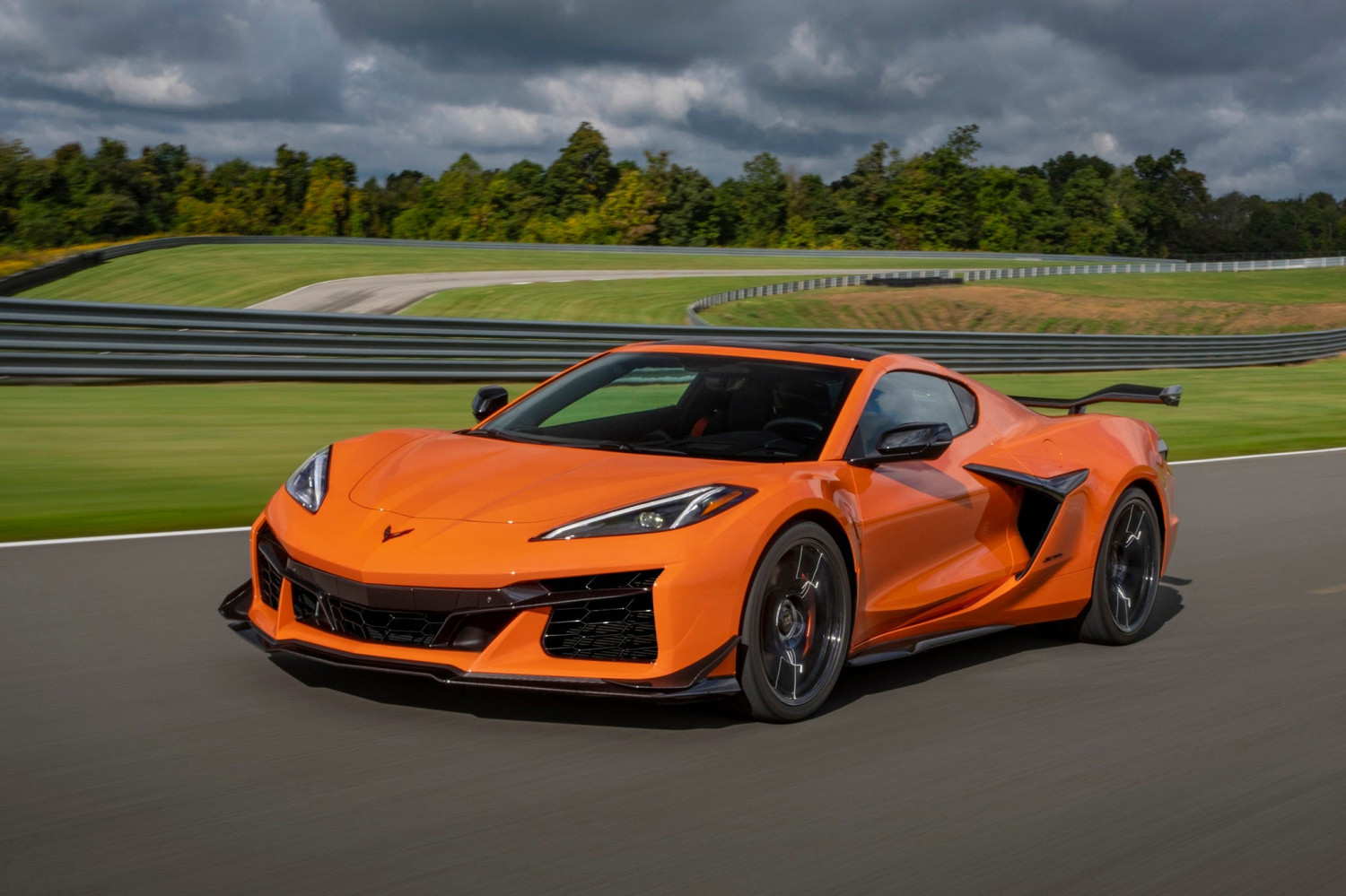
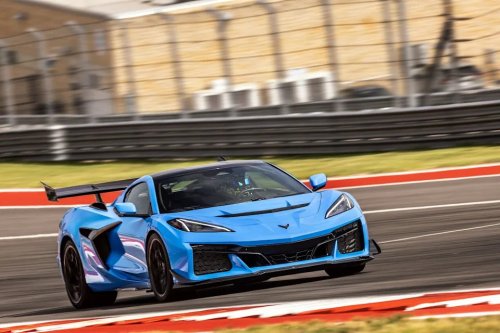
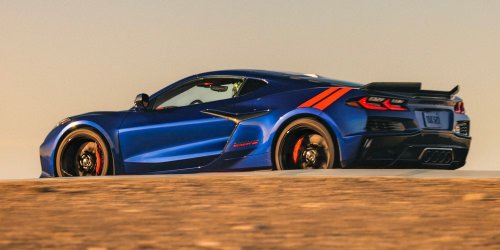
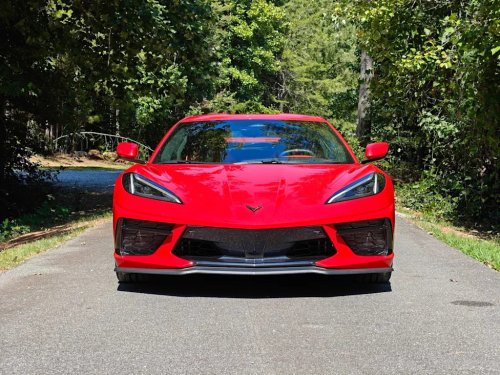
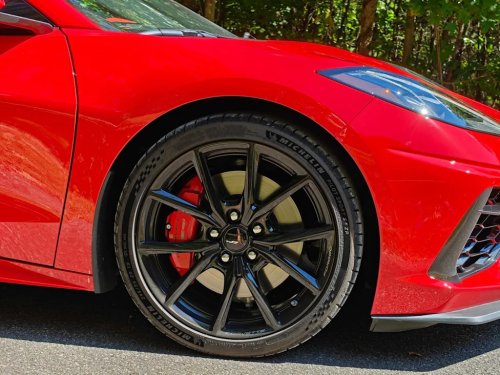
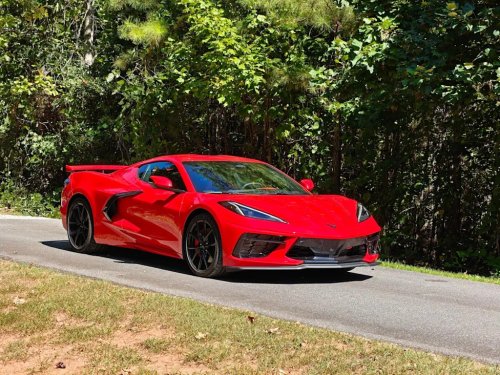
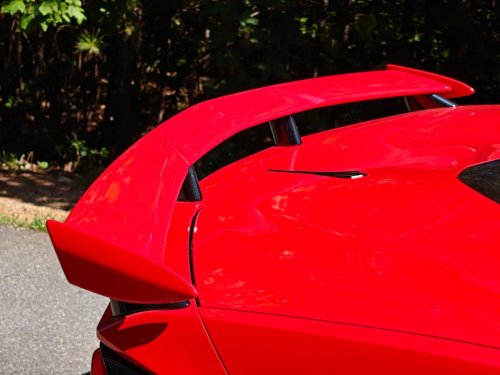
How ZR1 Development Led To a Better StingrayZac PalmerThe obvious change to the 2027 Chevrolet Corvette Stingray is the addition of General Motors's new LS6, the sixth-gen small block V-8 that now comes in at a mighty 6.7 liters of displacement. And yet somehow, that's only the tip of the iceberg when it comes to tweaks made to Chevy's entry-level 'Vette.Road & Track caught up with Corvette chief engineer Tony Roma to dive deeper into what exactly is going on with the new Stingray, because while it looks the same, the depth of upgrades is far deeper than you might expect from Chevy's press kit description. Oddly enough, it was Michelin coming to Chevy and offering to develop a new tire for the Stingray Z51, the Pilot Sport S 5, that kicked this whole process off."Whereas Michelin saw the opportunity to update the tire, we had to do the certification anyways," Roma says, referring to re-certifying the Stingray with the new V-8 engine. "So it was a win-win deal. And then that led us to ... oh, we gotta do a new tire. Oh, we can do the new MR [MagneRide] calibration, and oh that steering stuff we learned on ZR1 ... And pretty soon, everybody in the building has new stuff going on with Z51."Zac PalmerIn other words, this rethink of the Stingray wasn't in the C8 Corvette's initial roadmap. In fact, Roma tells us that the tools and modeling necessary for the 2027 Stingray's updates didn't even exist in 2020. We already had a lot to thank the Corvette ZR1 and ZR1X for, and now, we can add the improved Stingray to the list.AdvertisementAdvertisement"It's not like we just tuned it differently," Roma tells me. "It's literally algorithms that we invented to address problems we found on ZR1. So it's software that didn't even exist in 2020 ... so it's not like, oh, gee, why didn't you get it right in 2020? We've just been consistently solving problems, and we learned a lot over six years, new tricks and new patents. Fantastic to have gone all the way up to 1250 horsepower and then come back down, and just pour it into cars that just became way more capable because of that."Zac PalmerOne of the most impactful changes comes in the form of traction modeling. GM didn't have the tools to figure out how to properly rein in the ZR1 and ZR1X, so it had to build them. But it turns out these more advanced models are just as beneficial when it comes to sorting out the less-powerful vehicles. "And when you learn that on a ZR1X, out of necessity, and then you go backwards and you apply that to the LS6 version, you go, oh, man, this is way better," Roma said. "We didn't even know how much better it could be until we found this problem and solved it on ZR1X."It all happens in the background, but Chevy has new strategies to make car control all that more seamless on the Stingray. Whether it's adding some brake pressure on one front corner or the other, or using PTM to grab the torque in one spot, the Stingray is engineered to behave much more fluidly and competently at the limit. Roma goes on and on, noting "the steering software has upgrades; the MagneRide dampers, the LSD guys have upgrades; the transmission stuff is significantly different than it was in 2020."Zac PalmerIt continues: Chevy tweaked the angle of the Z51 pack's rear wing to better balance the downforce with the stickier new tires. The brake controller has "a list of new patents" for how it's being used to control the attitude of the car. All of these changes were dialed in alongside the Grand Sport, too, as Roma tells us it brought both Stingrays and Grand Sports along for track testing. Does that mean the new Stingray has a little Grand Sport magic in it? Perhaps, but I'd still take the Grand Sport and its much more focused approach to the racetrack over a Z51-pack Stingray. But regardless of whether you pick a Grand Sport or Stingray in 2027 and beyond, the trickle-down from the top-dog ZR1 is exciting stuff.You Might Also LikeIf You Can Only Own One Car, Make It One of TheseThese Are the Most Popular Cars by State



















 +3 others