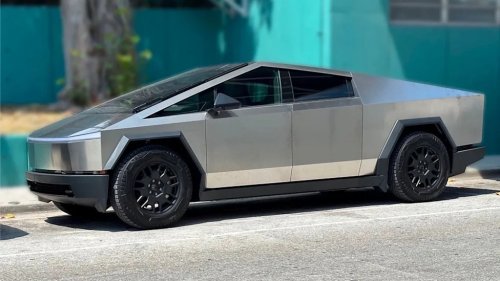
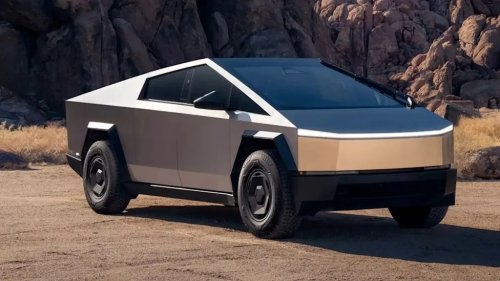
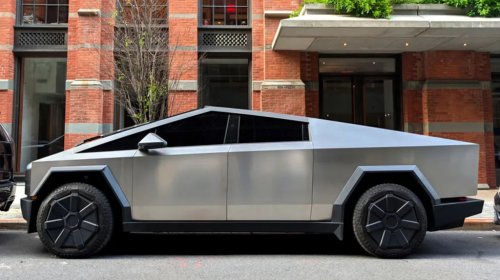
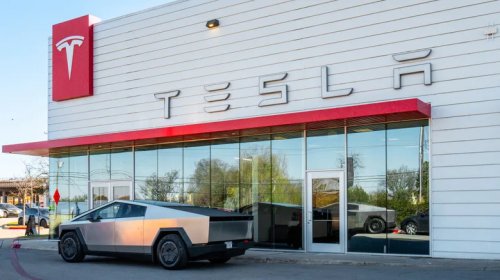
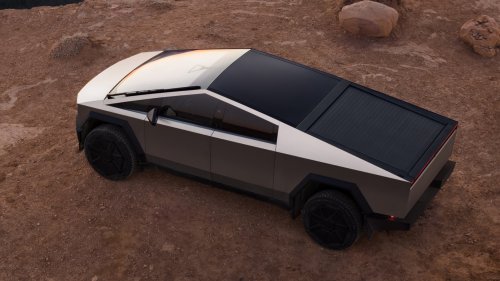
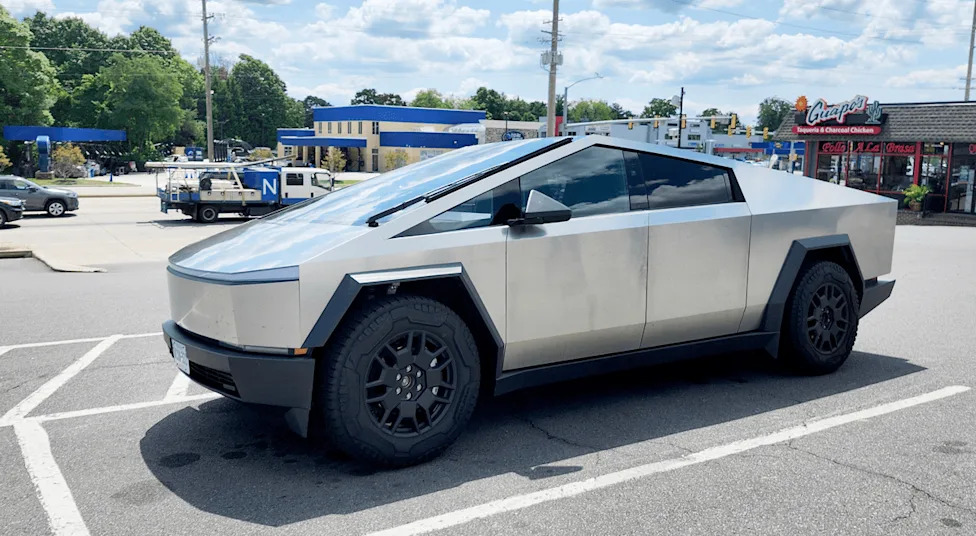
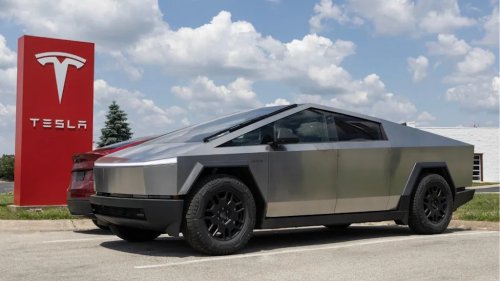
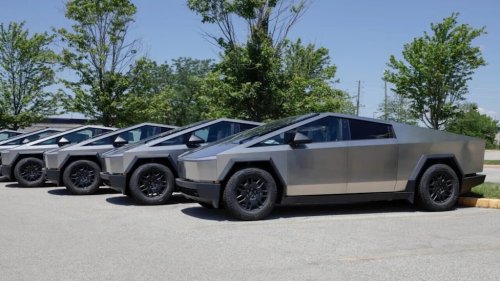
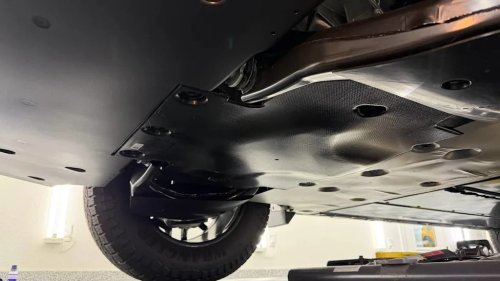
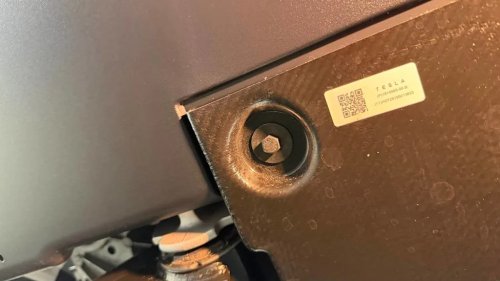
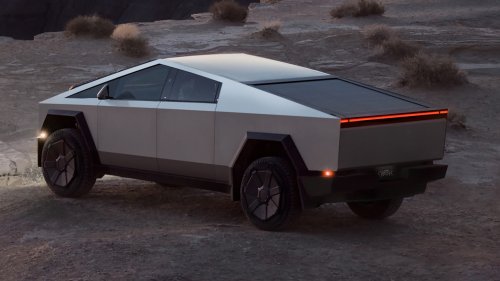
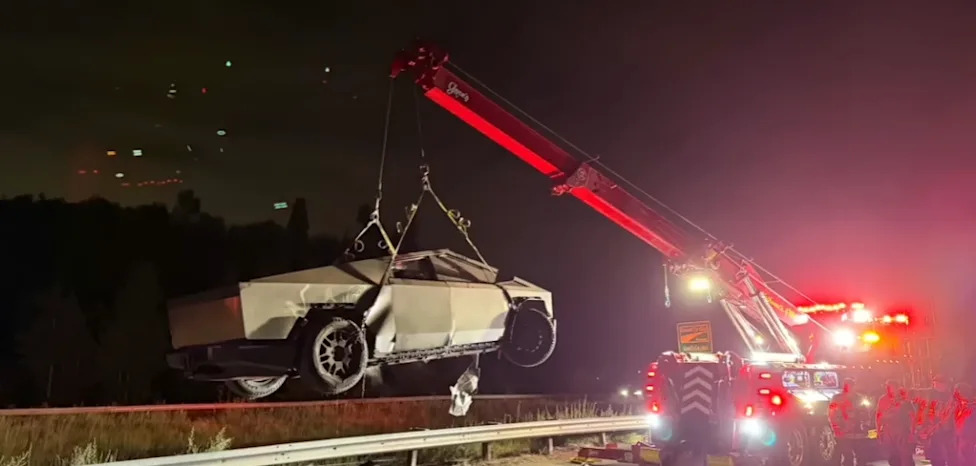
Image Credit: StacheD Training / YouTube.A routine-sounding fender bender on a Washington state highway turned into a nearly four-hour emergency response that put a spotlight on one of the most complicated realities of the electric vehicle era: what happens when a high-voltage battery pack gets punctured, and why putting out the fire is only half the problem.On the evening of June 4, 2026, a Tesla Cybertruck traveling northbound on State Route 167 near Pacific, Washington made an improper lane change, struck a Chevrolet Silverado, lost control, and rode the center median cable barrier.The driver and his passenger were transported to the hospital. The Silverado's driver walked away uninjured. The Cybertruck, however, was about to make life considerably more complicated for three fire crews and the people who happened to be nearby trying to help.AdvertisementAdvertisementThe cable barrier posts punched into the bottom of the Cybertruck's battery pack, triggering thermal runaway in the cells. What followed wasn't a dramatic wall of flame — it was something arguably worse for first responders: a slow, persistent off-gassing event producing a whitish-gray toxic vapor cloud that offered very little fire to fight and very little indication of when it might stop.Bystanders attempting to assist with fire extinguishers were exposed to that cloud. Three fire engines responded and deployed a pancake nozzle under the vehicle in an attempt to cool the pack. More than 2,000 gallons of water later, it took until roughly 2:45 in the morning to confirm the fire was extinguished and the vehicle removed.That's approximately six hours from crash to cleared roadway for an incident where the occupants had minor injuries and there was, by most accounts, very little visible fire. If that timeline seems disproportionate to the severity of the crash, welcome to the current state of EV fire response — a discipline that is evolving quickly but still catching up to the vehicles already on public roads.Why the Cybertruck's Battery Design Both Helped and HurtThe Cybertruck's battery pack is built opposite to most EVs on the market. Where a typical electric vehicle has the tray on the bottom and the cover on top, the Cybertruck flips that arrangement: the tray sits on top, the cover faces the road, and between that cover and the actual cells sits an intentional air gap of roughly an inch and a half. Tesla engineered that void to serve two purposes — as a road hazard buffer absorbing impacts before they reach the cells, and as a venting channel that routes gases from any thermal event downward and away from the passenger cabin.AdvertisementAdvertisementIn this crash, that design likely prevented a far more destructive fire. Photos from the scene show the cable barrier posts punched into the battery cover, but the cabin remained largely intact — no significant heat damage to the rockers, interior mostly in one piece despite deployed airbags. The gap did its job as a buffer, and the venting directed gases away from passengers. That's the good news.The same gap, however, is precisely what made the firefighting response so difficult. Water applied to the underside of the vehicle hits that road-facing cover and stops there, leaving the cells sitting about an inch and a half above it continuing their reaction unimpeded.Cooling the battery with large amounts of water is generally the best approach for EV fires, but that tactic is complicated by the fact that EV batteries are usually housed within an inaccessible enclosure, often on the underside of the vehicle, making it difficult to flow water directly onto the cells. In the Cybertruck's case, an engineering feature that protects occupants also functions as a shield against the primary tool firefighters have available. NFPAThermal Runaway Is Not a Conventional Car FireAnyone expecting this kind of incident to look like a gasoline fire will be disappointed — and potentially wrong about whether the danger has passed. Unlike a fuel tank, which burns until its contents are consumed, a lithium-ion battery can sustain its own reaction.AdvertisementAdvertisementThis process occurs when a cell overheats and triggers a cascading failure in neighboring cells. Heat, gas, and pressure build internally, and once the reaction starts, it can continue even after visible flames are extinguished.That creates a specific operational problem: a vehicle can appear safe while still actively failing inside the pack. Reignition is not unusual, sometimes occurring minutes or even hours later. In this incident, the slow, low-flame nature of the failure was both a mercy (the cabin stayed intact, injuries were minor) and a complication — a prolonged chemical reaction with no clean ending point gives responders little to work with and a lot to wait on. Temperatures during thermal runaway can exceed 1,000°C, and the runoff from water application carries heavy metals and toxic compounds, including hydrofluoric acid — meaning the cleanup isn't just a matter of washing down a road.Getting the Vehicle Off the Scene Is Only Half the BattleOnce the Cybertruck was stable enough to move, crews used a rotator to lift it vertically onto a flatbed — a deliberate choice to avoid further disturbing a compromised battery pack — and the fire department then escorted the tow truck directly to a salvage yard.AdvertisementAdvertisementThat escort isn't a courtesy; it's a documented safety protocol. The risk of reignition during transport with a damaged high-voltage battery is well-established, and a tow truck driver alone on a highway with a vehicle that decides to reignite is a genuinely dangerous scenario.At the receiving yard, the Cybertruck went into a purpose-built concrete containment stall rather than being parked alongside other vehicles in the conventional mirror-to-mirror configuration that works fine for internal combustion cars.That's notable because most tow yards are nowhere near that prepared. Current research from the Fire Safety Research Institute recommends a minimum 20-foot exclusion zone around damaged EVs in storage. Without proper containment, a delayed thermal runaway event in a tow yard has the potential to spread to dozens of vehicles in a matter of minutes.What This Incident Reveals About Where EV Safety Response StandsThe response to the June 4 crash was, by most measures, handled correctly. The right equipment was used, the vehicle was transported safely, and it ended up in a facility actually equipped to receive it. But that outcome required significant resources — far above what would typically be needed for a conventional gasoline car fire — and a chain of decisions that most emergency responders and tow operators are still learning to make.AdvertisementAdvertisementFor fire services, this is not a theoretical concern but an operational shift already underway. The electric vehicle fleet on public roads is growing, and the incidents are accumulating. Battery pack designs vary by manufacturer, which means firefighting approaches that work for one vehicle may be less effective for another. Training gaps exist at every level of the response chain, from the crews arriving on scene to the yards accepting damaged vehicles at the end of the night. The Cybertruck's inverted battery design offered a real protective benefit in this crash. It also, almost perfectly, illustrated why the way we fight these fires still needs to catch up to the way these vehicles are built.If you want more stories like this, follow Guessing Headlights on Yahoo so you don't miss what's coming next.



















 +8 others