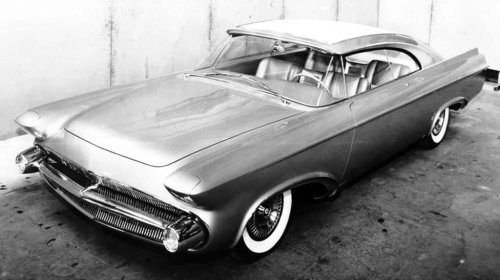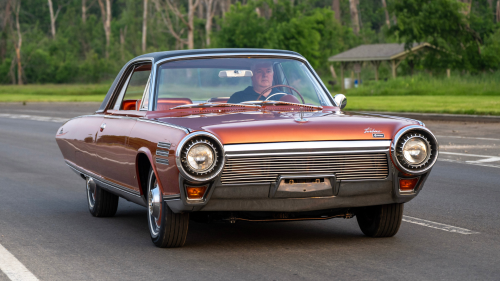
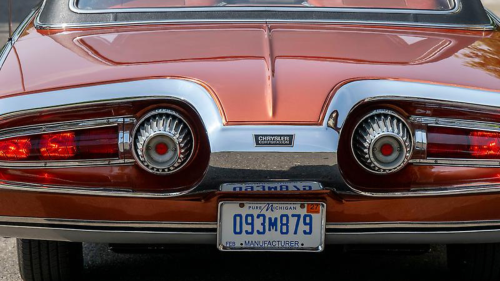
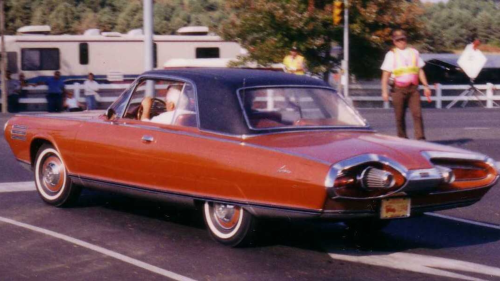
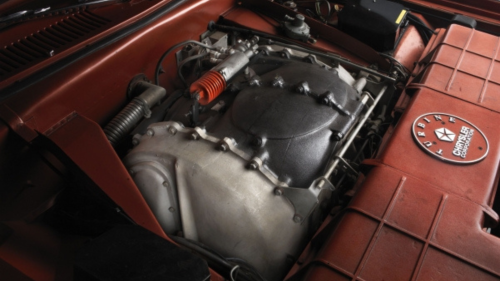
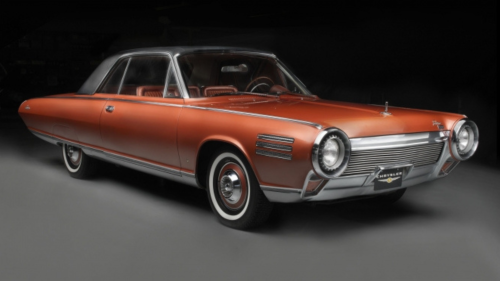
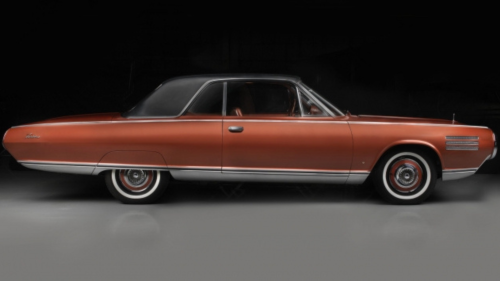
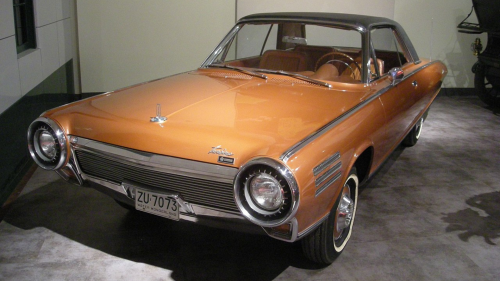
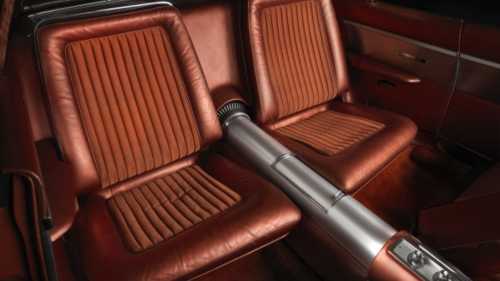


















Every now and then, a car comes along that doesn't just break the mold. No, it completely forgets there was a mold to begin with. In the heart of America'smuscle car era, when V8s were king and displacement was a bragging right, one automaker went in a direction nobody expected.What they built wasn't louder, or faster, or covered in stripes. It didn't burn rubber at stoplights or roar down quarter miles. But it might just be the wildest thing ever to roll out of Detroit.It was strange, futuristic, and so far ahead of its time that it never even made it to showroom floors. And yet, decades later, it's still one of the most talked-about concept cars in history. It's a true one-off in the world of rare muscle cars. This is the story of a forgotten jet-powered "muscle car" that almost changed everything. The Jet-Powered Chrysler That Shocked The Muscle Car World via Stellantis MediaIn the golden age of American performance, when muscle car history was still being written and bragging rights were earned one quarter-mile at a time, Chrysler took a left turn so wild it still feels like science fiction. While other automakers were busy stuffing V8s into coupes and calling it a performance revolution, Chrysler rolled out a sleek, bronze-bodied machine powered by something completely different: a jet engine.Officially known as the Chrysler Turbine Car, this 1963 experiment wasn't just another Detroit concept. It was a fully drivable, road-legal prototype powered by a gas turbine engine. And, yes, it shared a very similar technology to what is used in a jet aircraft.via Stellantis Media Chrysler didn't just build one or two for car shows, either. They built 55 of them. And, according to Mopar Insiders, what's even wilder is that Chrysler handed over the keys of these prototypes to real people across America to drive like everyday commuters. Yes, really. Chrysler enrolled 203 lucky drivers across 133 U.S. cities. The trial program ran from October 1963 until January 1966. Each driver got to cruise around in a real-life car with a turbine powerplant for a three-month stint.The idea behind these turbine power plants wasn't just to turn heads. No, Chrysler believed turbine technology could revolutionize the automobile industry. Per Star Insure, this is because the turbine engine had fewer moving parts and ran on just about any combustible fuel, including kerosene, diesel, and even tequila. Thus, a turbine-powered car could potentially outlast a traditional piston engine with less maintenance. It was bold, futuristic, and completely out of left field.via Wikimedia Commons (Christopher Ziemnowicz) At a glance, the car looked like a sophisticated luxury muscle coupe, but under the sheetmetal, it was a rolling laboratory. The 1960s Chrysler Turbine was a jet-powered car dropped right into suburbia. No one had ever done anything quite like it before, and no one has tried since. In a decade filled with legendary muscle machines, the Turbine Car wasn't just different. It was from another galaxy.And while it might not have smoked tires like a HEMI Charger, it belongs in the conversation. It's not just a footnote in muscle car history. You see, even though it was never mass-produced, when it comes down to it, the 1963 Chrysler Turbine Car is the most radical powertrain ever offered in a factory-backed performance car. How Chrysler’s Turbine Engine Actually Worked via Frist Art MuseumWhile it looked like a sleek jet‑powered car, the Chrysler Turbine Car wasn't exactly powered by a true jet turbine. You see, the 1963 Chrysler Turbine Car featured a turbine engine, not a jet engine. Were they quite similar? Absolutely. Were they exactly the same? Not quite. A key difference between a traditional jet turbine engine and the turbine engine used to power the Chrysler Turbine Car was the introduction of a second-stage power turbine. According to Hagerty, the second-stage unit used a 10:1 gear reduction, safely slowing the primary turbine's 40,000–50,000 rpm output down to a speed the rear axle could handle. Essentially, the second-stage power turbine transformed the raw engine output into usable torque for the rear wheels. It also tuned the turbine powerplant for street use. 1963 Chrysler Turbine Car Specs Sources: Hagerty, Henry Ford Museum While it wasn't housing a true jet engine, the 1963 Chrysler Turbine Car's turbine engine was unlike anything the average commuter had ever seen or heard before. Spinning at up to 50,000 rpm, this gas turbine didn't need spark plugs, pistons, or even a radiator. Instead, it delivered a steady 130 horsepower and an impressive 425 lb-ft of torque straight from idle, according to the Henry Ford Museum. The engine idled at a wild 18,000 rpm, yet ran smoother than most V8s at cruising speed. And because it had just 60 moving parts, according to Legendary Collector Cars, it needed way less maintenance than traditional piston engines.No, the Chrysler Turbine Car wasn't fast off the line, but the throttle response was silky, and cold starts in sub-zero temps were effortless. In short, this wasn't just futuristic. It was a rolling showcase of what gas turbine technology could do when tuned for the real world. Why The Jet Engine Muscle Car Never Made It Into Mass Production via Frist Art MuseumFor all its futuristic promise, the Chrysler Turbine Car never made it past the trial phase. It wasn’t because people didn’t like it. Sources suggest that most of the 203 drivers who participated in Chrysler’s public test program were impressed. However, building a jet-like car for the masses turned out to be a whole different challenge.According to Hagerty, the biggest hurdle was emissions. While the turbine engine ran on just about anything, it produced high levels of nitrogen oxides. Of course, these are the pollutants that regulators were just beginning to crack down on. On top of that, the car guzzled fuel in stop-and-go driving, and the turbine’s sluggish throttle response made it less than ideal in traffic.via Frist Art MuseumThen came the cost. The exotic materials, the Italian-built bodies from Ghia, the limited supplier base, everything about this jet-like car screamed expensive. And with no clear way to scale production or bring down costs, Chrysler just couldn’t make the math work.So in the end, the Chrysler Turbine Car was canceled, and 46 of the 55 units were unceremoniously crushed. According to Hemmings, the suggested theory is that Chrysler went ahead and destroyed 46 of the Turbine cars in an effort to avoid paying any import duties.Thus, between jet car emissions, production headaches, and looming government regulations, the most radical engine Detroit ever backed was quietly buried before it ever had a chance to go mainstream. The Legacy Of America’s Jet-Powered 1960s Muscle Car via Wikimedia Commons (Michael Barera) Decades after Chrysler shredded most of them, the Chrysler Turbine legacy lives on. However, not on drag strips, but in museums, collectors' garages, and car-culture lore. Out of the original 55 Turbine Cars, only nine survive today, making them true celebrity-status rarities in the muscle car world.So, where are the remaining Chrysler Turbine Cars today? Well, all but two of these cultural icons reside in museums across the United States.via Frist Art Museum One is located at the National Museum of Transportation in Kirkwood, Missouri.Another is displayed in Detroit at the Detroit Historical Museum.One can be found in Dearborn, Michigan, at the Henry Ford Museum.Another survivor resides in Los Angeles at the Petersen Automotive Museum, and yet another in Washington, D.C., at the Smithsonian Institution.Two more reside in Chrysler's Corporate collection, formerly the Walter P. Chrysler Museum, in Auburn Hills, Michigan. A third Chrysler Turbine Car previously resided there as well, until Jay Leno convinced the museum to sell one to him to add to his private car collection in California.The ninth and final surviving Chrysler Turbine Car also resides in a private collection, the Stahls Automotive Collection in Chesterfield, Michigan.Jay Leno purchased his Turbine Car from Chrysler in 2009, and when its turbine seized, he turned to Williams International, the company founded by Sam B. Williams, the original designer of Chrysler's turbine engine.According to Mopar Insiders, Williams International helped Leno reverse-engineer and rebuild the engine using original blueprints and even 3D-printed new parts. Now, fully functional again, Leno's Turbine cruises publicly and even made an appearance at the Woodward Dream Cruise.Culturally, the Chrysler Turbine Car occupies a mythical corner of concept car history. It wasn't just a prototype. No, it was a rolling ambition, loaned to hundreds of drivers during Chrysler's bold user‑test program, capturing imaginations across America.Today, the 1963 Chrysler Turbine Car is both a piece of automotive curiosity and a lesson in how far a dream can go. While it never expanded into a full production line piece, the Turbine Car left a legacy that still spins heads in car shows, invites headlines in collector circles, and fuels speculation in gearhead forums.In short, Chrysler never built a mass-market jet engine car, but thanks to the Chrysler Turbine's legacy, its story still roars like a jet engine every time it is shared.Sources: Hagerty, Hemmings, Henry Ford Museum, Legendary Collector Cars, Mopar Insiders, Star Insure.